
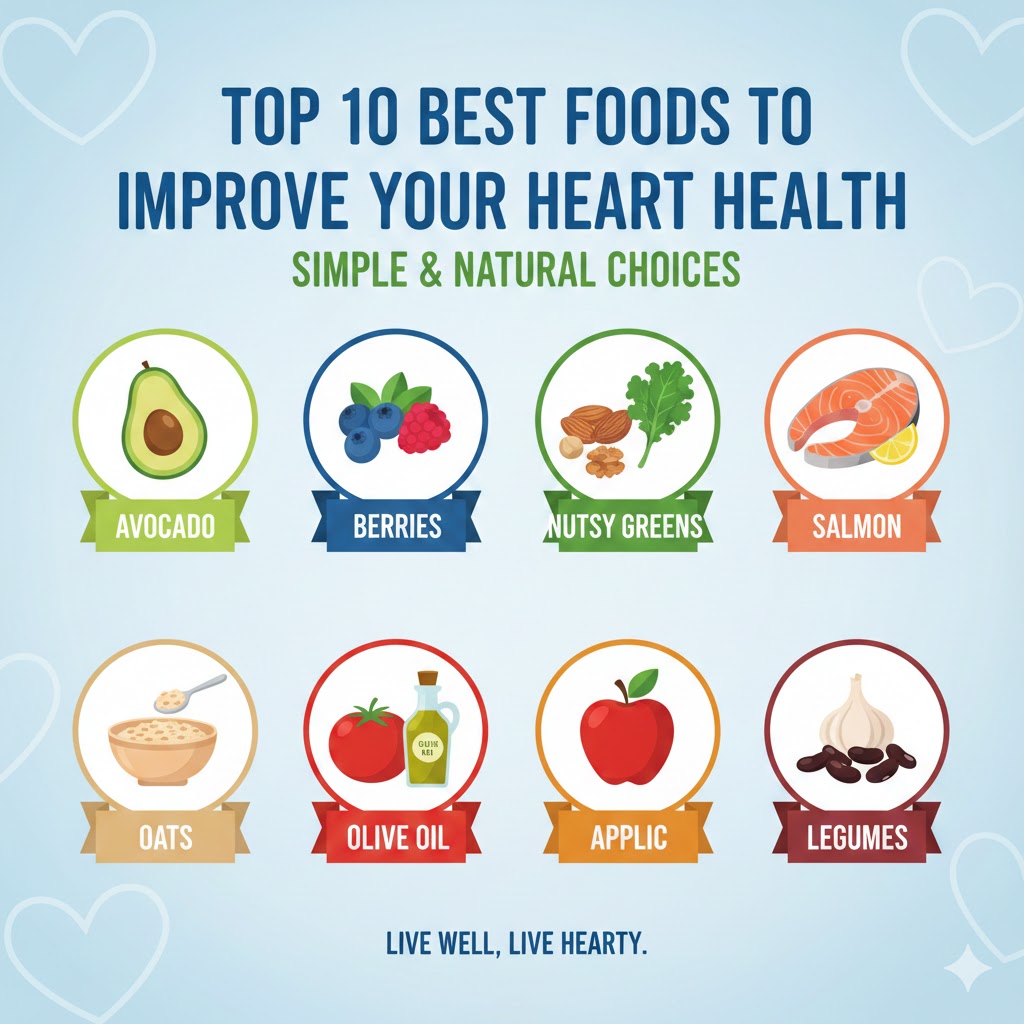
Heart health isn’t built in a day, and it doesn’t come from one miracle food. It’s shaped quietly, over time, by daily choices — especially what you eat.
The good news is that you don’t need exotic supplements or extreme diets. Many of the Best Foods to Improve Your Heart Health are simple, affordable, and already available in most kitchens.
This guide breaks down the top heart-friendly foods, explains why they matter, and shows how to include them naturally in everyday meals.
1. Fatty Fish (Omega-3 Powerhouse)
Fatty fish consistently rank among the Best Foods to Improve Your Heart Health.
Why they help:
- Rich in omega-3 fatty acids
- Support healthy cholesterol balance
- Help reduce inflammation
- Support normal heart rhythm
Examples:
- Salmon
- Sardines
- Mackerel
- Trout
Aim for two servings per week rather than daily consumption.
2. Leafy Green Vegetables
Leafy greens provide nutrients that directly support cardiovascular function.
Benefits include:
- High levels of vitamins and minerals
- Natural nitrates that support blood flow
- Antioxidants that reduce oxidative stress
Best options:
- Spinach
- Kale
- Swiss chard
- Arugula
Simple additions like salads or sautéed greens make a big difference.
3. Berries
Berries are small but powerful when it comes to heart health.
Why they matter:
- Packed with antioxidants
- Support healthy blood vessels
- Help manage inflammation
- Naturally low in sugar compared to many fruits
Heart-friendly choices:
- Blueberries
- Strawberries
- Raspberries
- Blackberries
They’re an easy upgrade to breakfast or snacks.
4. Whole Grains
Whole grains are foundational among the Best Foods to Improve Your Heart Health.
How they help:
- Support healthy cholesterol levels
- Improve blood sugar stability
- Provide fiber for digestive and heart health
Good options:
- Oats
- Brown rice
- Quinoa
- Whole-grain bread
Focus on minimally processed grains rather than refined ones.
5. Nuts and Seeds
Nuts and seeds offer healthy fats and essential nutrients.
Key benefits:
- Improve lipid profiles
- Provide plant-based protein
- Support artery health
Heart-friendly choices:
- Almonds
- Walnuts
- Chia seeds
- Flaxseeds
Portion control matters — a small handful is enough.
6. Olive Oil
Olive oil is a cornerstone of heart-healthy eating patterns.
Why it stands out:
- Rich in monounsaturated fats
- Supports healthy cholesterol balance
- Contains anti-inflammatory compounds
Best use:
- Drizzle over salads
- Use for low-heat cooking
- Replace butter when possible
Extra-virgin olive oil offers the most benefits.
7. Legumes (Beans and Lentils)
Legumes are underrated but powerful heart-friendly foods.
Benefits include:
- High fiber content
- Plant-based protein
- Support blood sugar and cholesterol control
Examples:
- Lentils
- Chickpeas
- Black beans
- Kidney beans
They’re affordable, filling, and versatile.
8. Avocados
Avocados provide healthy fats that support cardiovascular health.
Why they help:
- Improve HDL (“good”) cholesterol
- Provide potassium for blood pressure balance
- Support overall metabolic health
Enjoy them:
- On toast
- In salads
- As a substitute for processed spreads
Moderation is key due to calorie density.
9. Dark Chocolate (In Moderation)
Yes, chocolate can be heart-friendly — with conditions.
What makes it beneficial:
- High cocoa content antioxidants
- Supports blood vessel function
- May improve circulation
Choose:
- 70% cocoa or higher
- Minimal added sugar
Think of it as a small, mindful treat.
10. Garlic
Garlic has been used for centuries in traditional diets linked to heart health.
Potential benefits:
- Supports healthy blood pressure
- May help cholesterol balance
- Contains sulfur compounds linked to heart function
Use fresh garlic regularly rather than supplements for everyday cooking.
11. How to Combine the Best Foods to Improve Your Heart Health
The biggest impact comes from patterns, not perfection.
Simple strategies:
- Build meals around vegetables and whole foods
- Replace refined fats with olive oil
- Choose fish or legumes instead of processed meats
- Snack on nuts or berries instead of packaged foods
Consistency matters more than strict rules.
12. Foods to Limit for Better Heart Health
Knowing what to reduce is as important as knowing what to eat.
Limit:
- Highly processed foods
- Excess added sugars
- Trans fats
- Excess sodium
Improving heart health is often about substitution, not restriction.
13. Lifestyle Habits That Support Heart-Healthy Eating
Food works best alongside healthy habits.
Support your diet with:
- Regular movement
- Adequate sleep
- Stress management
- Hydration
The Best Foods to Improve Your Heart Health work best as part of a balanced lifestyle.
14. Common Myths About Heart-Healthy Foods
Let’s clear up confusion:
- Fat is not the enemy — type of fat matters
- Superfoods don’t cancel poor habits
- Supplements don’t replace whole foods
- Expensive foods aren’t always better
Simple, consistent choices win long-term.
15. Final Thoughts: Simple Choices, Long-Term Impact
Heart health isn’t about drastic changes. It’s about choosing better foods more often.
By focusing on the Best Foods to Improve Your Heart Health, you support your body naturally — without extreme diets or complicated plans.
Small improvements, repeated daily, create the biggest results.
FAQ: Best Foods to Improve Your Heart Health
What are the best foods to improve your heart health naturally?
Fatty fish, leafy greens, whole grains, nuts, berries, olive oil, and legumes are among the top choices.
How often should I eat heart-healthy foods?
Daily inclusion is ideal, with variety across the week.
Can heart-healthy foods lower cholesterol?
They can support healthy cholesterol levels as part of an overall balanced diet.
Is meat bad for heart health?
Lean meats in moderation can fit, but plant-based proteins and fish are generally more heart-friendly.
Are supplements better than food for heart health?
Whole foods are preferred; supplements should only be used when advised by a professional.
How quickly do heart-healthy foods make a difference?
Small improvements can begin within weeks, but long-term benefits come from consistency.
Do I need to avoid fat completely for heart health?
No. Healthy fats like those in olive oil, nuts, and fish are beneficial.
More Related Topics:
Red Light Therapy for Muscle Recovery: Science vs Hype in 2026 (What Actually Works)
I Lost 40 Pounds on Semaglutide—The Good, Bad, and Ugly Truth (No Hype, Just Reality)
I Tracked My Biological Age for 6 Months—Here’s What Actually Moved the Needle (Real Data, No Hype)