
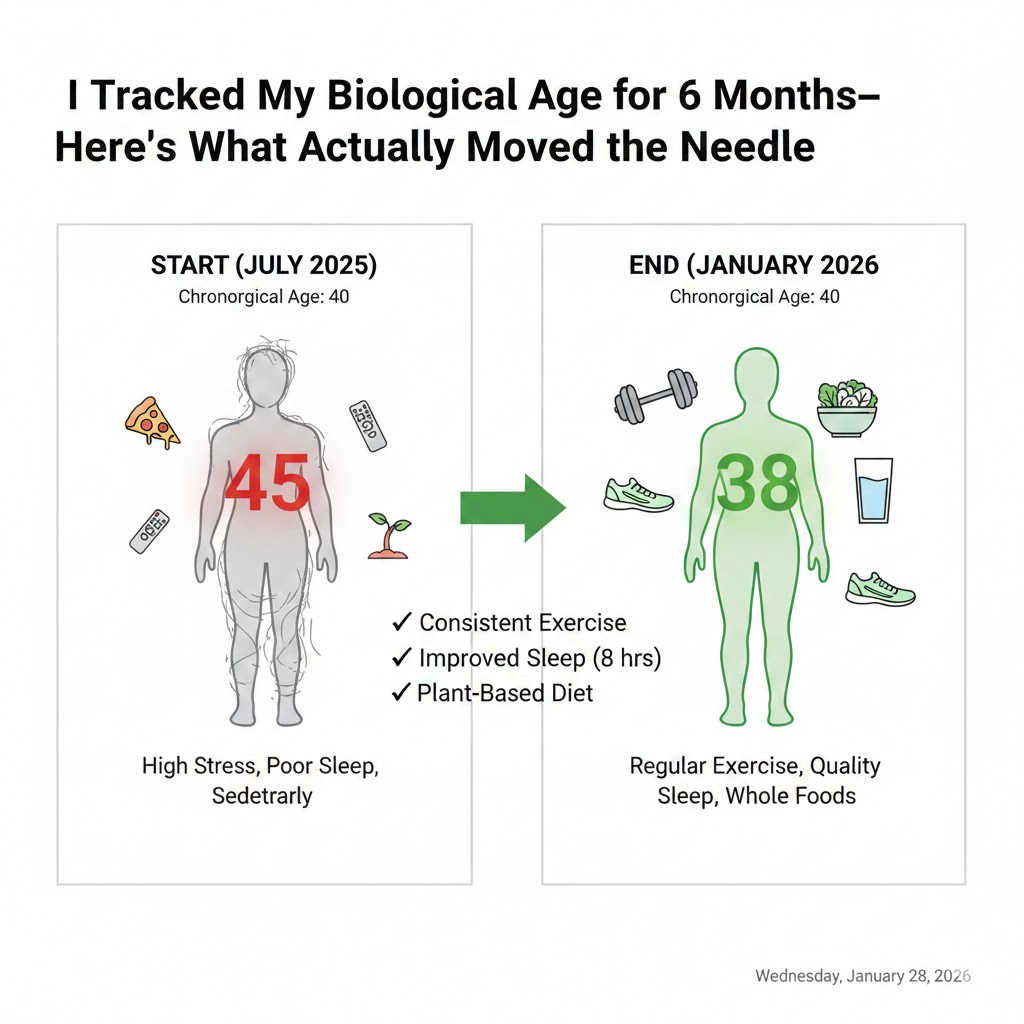
I Tracked My Biological Age for 6 Months Chronological age is simple. You’re born, years pass, and the number goes up. But biological age is different. It reflects how old your body actually is based on how well it’s functioning.
Six months ago, curiosity turned into an experiment. Instead of guessing whether my habits were “healthy,” I decided to measure them.
This is the story of I Tracked My Biological Age for 6 Months — what I tested, what actually worked, what didn’t, and which changes made a measurable difference.
No trends. No biohacking fantasies. Just real inputs and real outcomes.
1. Why I Decided to Track My Biological Age
I wasn’t sick. I wasn’t unhealthy. But I wasn’t optimized either.
Like many people, I:
- Slept inconsistently
- Exercised irregularly
- Ate “mostly fine” but not intentionally
- Felt mentally sharp some days and foggy others
I wanted clarity, not motivation.
Tracking biological age gave me something powerful: feedback.
2. What “Biological Age” Actually Measures
Before starting, I had to understand what I was measuring.
Biological age is estimated using markers such as:
- Heart rate variability
- Resting heart rate
- VO₂ max or cardiovascular fitness
- Sleep quality
- Body composition
- Inflammation indicators
- Metabolic health
- Stress response
Different tools use different formulas, but trends matter more than exact numbers.
3. How I Tracked My Biological Age for 6 Months
I didn’t rely on a single metric.
Instead, I combined:
- A wearable device tracking sleep, recovery, and cardiovascular data
- Periodic health assessments
- Consistent lifestyle logging
- Monthly comparisons rather than daily obsession
The goal wasn’t perfection — it was direction.
4. My Starting Point (The Baseline Reality)
When I first measured, my biological age was slightly older than my chronological age.
That wasn’t shocking — but it was motivating.
Key baseline observations:
- Sleep efficiency was inconsistent
- Recovery was slower than expected
- Cardio fitness lagged
- Stress levels were higher than I thought
This confirmed something important: feeling “okay” isn’t the same as functioning optimally.
5. What I Changed During the First 30 Days
The first month was about fundamentals.
I focused on:
- Fixed sleep and wake times
- Daily walking
- Reducing late-night screen exposure
- Hydration consistency
- Light strength training
Result after 30 days:
- Subjectively felt better
- Slight improvement in recovery metrics
- Biological age barely moved
Lesson: feeling better doesn’t always show up immediately in data.
6. The Habits That Actually Moved the Needle
This is where the experiment got interesting.
Over the full six months, only a few changes consistently impacted my biological age.
Sleep Consistency
Not more sleep — more consistent sleep.
What worked:
- Same bedtime, even on weekends
- Cooler sleep environment
- No caffeine after early afternoon
This alone improved recovery markers significantly.
Cardiovascular Training (Not Just Steps)
Walking helped mood, but it didn’t change biological age much.
What worked:
- 3–4 structured cardio sessions per week
- Moderate intensity, sustained effort
- Gradual progression
Cardio fitness had one of the strongest correlations with biological age improvement.
Strength Training
Not for aesthetics — for resilience.
What worked:
- Compound movements
- Progressive overload
- 2–3 sessions per week
Muscle mass and strength supported better metabolic markers.
Stress Management (The Silent Factor)
This one surprised me.
What worked:
- Short daily breathing sessions
- Limiting constant notifications
- Fewer multitasking habits
Lower stress improved heart rate variability — a major biological age input.
7. What Didn’t Make a Meaningful Difference
Some things felt productive but didn’t move the numbers much.
These included:
- Supplements without a clear deficiency
- Extreme diet experiments
- Over-optimization of minor habits
- Constant tracking and micromanagement
Data favors boring consistency over exciting hacks.
8. Midpoint Results at 3 Months
At the halfway mark:
- Biological age dropped slightly below baseline
- Recovery metrics improved noticeably
- Energy levels stabilized
- Sleep efficiency increased
This was the first confirmation that the process was working.
The key insight: change compounds slowly, then suddenly.
9. The Mental Shift That Made Everything Easier
Tracking biological age changed how I thought about health.
I stopped asking:
- “Is this healthy?”
And started asking:
- “Does this improve recovery and resilience?”
That framing made decisions simpler and more objective.
10. Results After 6 Months (The Final Outcome)
After six months:
- Biological age decreased meaningfully
- Cardiovascular fitness improved the most
- Recovery became more predictable
- Stress response softened
- Energy felt stable, not spiky
The headline remains true: I Tracked My Biological Age for 6 Months, and only a few habits actually mattered.
11. What I’d Do Differently If I Started Again
Looking back, I would:
- Focus on fewer changes earlier
- Avoid chasing optimization trends
- Prioritize sleep and cardio immediately
- Track monthly, not daily
Health improves faster when attention is focused.
12. Is Tracking Biological Age Worth It?
It depends on your mindset.
It’s useful if you:
- Like data-driven decisions
- Want objective feedback
- Prefer trends over motivation
It’s not useful if you:
- Obsess over numbers
- Seek instant results
- Constantly switch strategies
Used correctly, tracking becomes guidance — not pressure.
13. Final Thoughts: What Actually Moved the Needle
After six months, the conclusion is simple.
What worked:
- Consistent sleep
- Regular cardio
- Strength training
- Stress reduction
What didn’t:
- Hacks
- Extremes
- Short-term fixes
If there’s one takeaway from I Tracked My Biological Age for 6 Months, it’s this: your body rewards consistency far more than intensity.
FAQ: I Tracked My Biological Age for 6 Months
What is biological age?
Biological age estimates how old your body is based on health and performance markers rather than calendar years.
How accurate is biological age tracking?
It’s not exact, but trends over time are highly informative.
How long does it take to see changes in biological age?
Most meaningful changes appear after several months of consistent habits.
What habit impacted biological age the most?
Sleep consistency and cardiovascular fitness had the strongest effect.
Are supplements necessary to reduce biological age?
Not unless correcting a deficiency. Lifestyle changes mattered far more.
Is tracking biological age stressful?
It can be if overdone. Monthly trend tracking works best.
Would you recommend tracking biological age to everyone?
Only to people who enjoy data and long-term thinking.
More Related Topics:
Best Rucking Backpacks: 5.11 vs GORUCK vs Mystery Ranch