
Weight loss stories online often sound magical. Fast results, zero struggle, life-changing confidence. But real experiences are rarely that clean.
Six months ago, I made a decision that felt both hopeful and intimidating. I started semaglutide as part of a medically supervised weight-loss plan. What followed wasn’t a miracle — it was a complicated, uncomfortable, eye-opening journey.
This is the honest breakdown of I Lost 40 Pounds on Semaglutide — what worked, what surprised me, what no one warned me about, and what I wish I had known before starting.
This is not medical advice. It’s one person’s lived experience.
1. Why I Chose Semaglutide in the First Place
I didn’t wake up one day wanting medication.
I had already tried:
- Calorie tracking
- Intermittent fasting
- Gym routines
- “Lifestyle changes”
The problem wasn’t knowledge. It was sustainability.
Food noise controlled my day. Hunger wasn’t physical — it was constant mental chatter. Semaglutide entered the picture when my doctor framed it not as a shortcut, but as a tool.
2. What Semaglutide Actually Changed for Me
The biggest shift wasn’t weight loss — it was appetite regulation.
Within weeks:
- Hunger cues softened
- Portion sizes naturally dropped
- Cravings lost intensity
- Emotional eating decreased
For the first time, eating felt neutral instead of urgent.
That’s the core reason I Lost 40 Pounds on Semaglutide — not because I tried harder, but because the constant battle quieted down.
3. The First Month: Shock to the System
The beginning was rough.
Early experiences included:
- Nausea
- Fatigue
- Reduced desire for food
- Occasional dizziness
Eating too fast or too much made symptoms worse. I had to relearn how to eat slowly and intentionally.
The first month was less about weight loss and more about adaptation.
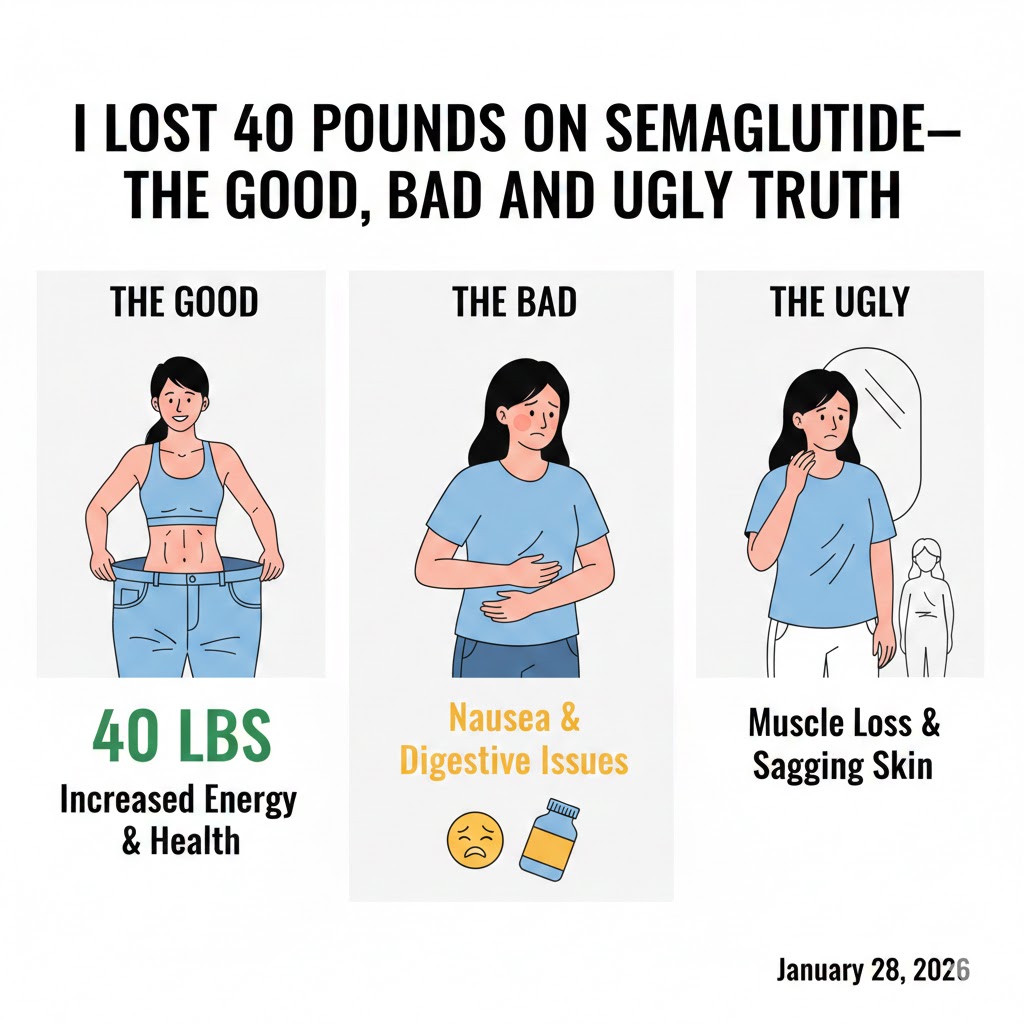
4. The Good: What Worked Better Than Expected
Once my body adjusted, the positives became obvious.
Weight Loss Felt Sustainable
- No extreme dieting
- No obsession with food
- Steady, predictable progress
Mental Relief Was Real
- Less food-related anxiety
- No constant planning around meals
- Improved sense of control
Habits Became Easier
- Smaller portions felt natural
- Healthier choices required less willpower
- Emotional eating reduced dramatically
This is the part people highlight when they say I Lost 40 Pounds on Semaglutide — and it’s real.
5. The Bad: Side Effects People Downplay
The side effects didn’t disappear — they became manageable.
Ongoing challenges included:
- Occasional nausea
- Sensitivity to greasy or heavy foods
- Reduced energy some days
- Digestive discomfort
Social eating became complicated. Restaurant portions felt overwhelming. Food enjoyment changed — not disappeared, but muted.
6. The Ugly: What No One Likes to Talk About
This is where honesty matters.
Rapid Weight Loss Has Consequences
- Muscle loss if protein and movement aren’t prioritized
- Loose skin concerns
- Changes in how clothes fit before confidence catches up
Identity Shifts Are Emotional
- Compliments felt confusing
- Fear of regain crept in
- Questioning whether success was “earned”
Losing weight didn’t automatically fix self-image.
7. The Scale vs. The Mirror Reality
By the time I reached the 40-pound mark:
- The scale told one story
- The mirror told another
- My brain lagged behind both
Weight loss happened faster than mental adjustment.
That’s something rarely mentioned when people say I Lost 40 Pounds on Semaglutide.
8. What Actually Helped Beyond the Medication
Semaglutide wasn’t enough on its own.
What made the biggest difference:
- Protein-focused meals
- Strength training to protect muscle
- Hydration discipline
- Slower eating habits
- Realistic expectations
Medication opened the door. Habits determined how well I walked through it.
9. Fear of Stopping: The Silent Anxiety
One uncomfortable truth is dependency fear.
Questions that came up:
- What happens if I stop?
- Will hunger return full force?
- Is this temporary success?
These thoughts are common — and rarely discussed openly.
10. Did Semaglutide “Fix” My Relationship With Food?
No. But it gave me space to work on it.
It helped me:
- Recognize real hunger
- Separate emotion from appetite
- Practice moderation without white-knuckling
The work still matters. The difference is that it finally felt possible.
11. Would I Do It Again Knowing Everything Now?
Yes — but with clearer expectations.
I would:
- Prioritize strength training earlier
- Eat more protein from day one
- Focus less on speed
- Prepare mentally for identity shifts
Semaglutide didn’t change my life overnight — it changed the trajectory.
12. Who Semaglutide Might Not Be Right For
Based on my experience, it may not suit people who:
- Expect effortless results
- Ignore nutrition and movement
- Struggle with severe side effects
- Want a short-term fix
This tool demands responsibility.
13. Final Thoughts: The Honest Takeaway
When people say I Lost 40 Pounds on Semaglutide, the truth sits in the middle.
It’s not magic.
It’s not cheating.
It’s not easy.
It’s a powerful aid that can change outcomes — but only when paired with realistic expectations, patience, and self-awareness.
The good is real.
The bad is manageable.
The ugly deserves honesty.
FAQ: I Lost 40 Pounds on Semaglutide
How long did it take to lose 40 pounds on semaglutide?
For me, it took several months with gradual, steady loss rather than rapid drops.
Was semaglutide the only reason you lost weight?
No. Appetite control helped, but nutrition choices and movement mattered.
Did you experience side effects?
Yes. Mostly nausea and food sensitivity, especially early on.
Is the weight loss permanent?
Long-term results depend on habits, not medication alone.
Did semaglutide affect your mental health?
It reduced food anxiety but introduced new emotional challenges around identity and maintenance.
Would you recommend semaglutide to others?
Only under medical supervision and with realistic expectations.
What’s the biggest misconception about semaglutide?
That it works without effort. It doesn’t.
More Related Topics:
I Tracked My Biological Age for 6 Months—Here’s What Actually Moved the Needle (Real Data, No Hype)