
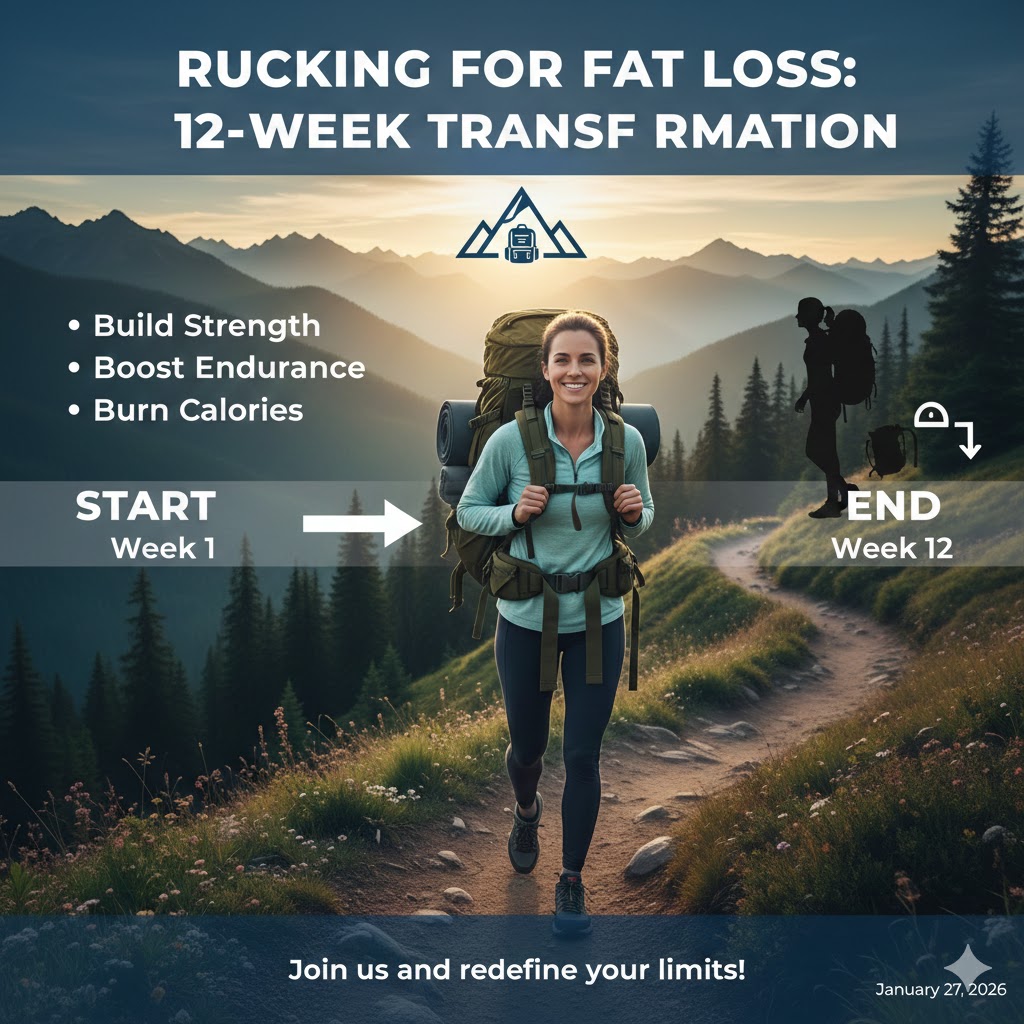
If traditional cardio feels boring and high-impact workouts leave you sore or burned out, there’s a surprisingly effective alternative gaining momentum: Rucking for Fat Loss. Simple in concept—walking with weight in a backpack—rucking combines low-impact movement with resistance, turning ordinary walks into powerful fat-burning sessions.
What makes rucking different isn’t intensity—it’s consistency. Over 12 weeks, rucking can reshape body composition, improve cardiovascular fitness, and build functional strength without wrecking joints or requiring a gym.
This guide explains how Rucking for Fat Loss works and lays out a realistic 12-week transformation plan.
1. What Is Rucking and Why It Works for Fat Loss
Rucking originated in military training, where soldiers carried heavy packs over long distances. For fitness, rucking is scaled down to manageable loads suitable for everyday people.
Rucking works for fat loss because it:
- Increases calorie burn compared to walking
- Adds resistance without impact
- Engages core, legs, and upper body
- Can be sustained for long durations
This makes Rucking for Fat Loss ideal for people who struggle with running or high-intensity workouts.
2. Why Rucking Beats Traditional Cardio for Many People
Unlike running or HIIT, rucking:
- Places less stress on knees and hips
- Allows longer sessions at moderate intensity
- Improves posture and core stability
- Encourages outdoor movement
Consistency is easier when exercise doesn’t feel punishing—and consistency is the engine behind Rucking for Fat Loss.
3. Calorie Burn and Metabolic Benefits
Adding weight significantly increases energy expenditure.
Compared to walking:
- Light ruck loads increase calorie burn noticeably
- Moderate loads can rival jogging
- Longer sessions promote fat oxidation
Over time, Rucking for Fat Loss improves metabolic efficiency without triggering excessive fatigue.
4. Equipment You Need (Simple and Affordable)
You don’t need specialized gear to start.
Basic setup:
- Sturdy backpack
- Weight plates, dumbbells, or sandbags
- Comfortable walking shoes
Weight should be secured and balanced. Comfort matters more than load.
5. Starting Weight: Less Is More
One of the biggest mistakes is starting too heavy.
Begin with:
- Light load that feels challenging but sustainable
- Focus on posture and breathing
- Gradually increase weight over weeks
Smart progression prevents injury and keeps Rucking for Fat Loss sustainable.
6. The 12-Week Rucking for Fat Loss Plan
Weeks 1–4: Foundation Phase
- Light ruck weight
- 20–30 minutes per session
- 3–4 days per week
- Focus on posture and consistency
Weeks 5–8: Progression Phase
- Slightly increase weight
- 30–45 minutes per session
- 4–5 days per week
- Add hills or varied terrain
Weeks 9–12: Transformation Phase
- Moderate weight increase
- 45–60 minutes per session
- 5 days per week
- Maintain steady pace
This gradual structure makes Rucking for Fat Loss achievable without burnout.
7. What Physical Changes to Expect
Over 12 weeks, many people notice:
- Reduced body fat
- Leaner legs and core
- Improved posture
- Better endurance
Rucking reshapes the body through volume—not exhaustion.
8. Nutrition Support for Rucking-Based Fat Loss
Rucking works best with simple nutritional support:
- Adequate protein intake
- Slight calorie deficit
- Hydration
- Electrolyte balance
Extreme dieting undermines performance and recovery.
9. Common Mistakes That Stall Progress
Avoid:
- Starting too heavy
- Poor backpack fit
- Overtraining without rest
- Ignoring posture
Proper form and recovery keep Rucking for Fat Loss effective long-term.
10. Who Rucking Is Perfect For
Rucking is ideal for:
- Beginners and overweight individuals
- Those with joint sensitivity
- Busy people who prefer walking
- Anyone wanting sustainable fat loss
It’s not flashy—but it works.
Why Rucking Is Sustainable Beyond 12 Weeks
Unlike short-term programs, rucking fits real life.
Benefits include:
- Easy integration into daily routine
- Low injury risk
- Mental health boost from outdoor activity
- Long-term adherence
This makes Rucking for Fat Loss a lifestyle, not just a program.
Frequently Asked Questions (FAQ)
Is Rucking for Fat Loss effective without running?
Yes. Rucking significantly increases calorie burn while remaining low-impact.
How much weight should I start with?
Start light and focus on consistency. Progress gradually.
Can rucking replace gym workouts?
It can replace cardio and support strength, but some may add resistance training.
How often should I ruck per week?
3–5 sessions per week works well for most people.
Is rucking safe for older adults?
Yes, when weight is appropriate and posture is maintained.
How long before results show?
Many notice changes within 4–6 weeks, with clear transformation by 12 weeks.
Final Thoughts
Rucking for Fat Loss proves that effective fitness doesn’t have to be extreme. By combining movement, resistance, and consistency, rucking offers a practical path to fat loss that fits real schedules and real bodies.
Over 12 weeks, the transformation isn’t just physical—it’s behavioral. You build strength, endurance, and confidence step by step. And that’s why rucking works when so many other fitness trends fade away.
More Related Topics:
Vagal Tone Exercises: Stimulating Parasympathetic Response
Dopamine Deficiency Symptoms: Natural Boosting Methods
Best Nootropic Stacks for Focus: Caffeine + L-Theanine Alternatives