
Dopamine is often called the “motivation molecule,” but its role goes far beyond pleasure. It helps you focus, initiate action, feel rewarded by effort, and maintain emotional balance. When dopamine levels are low, life doesn’t necessarily feel sad—it feels flat. Tasks feel heavier, motivation disappears, and even rest doesn’t feel refreshing.
Understanding Dopamine Deficiency Symptoms is the first step toward restoring balance naturally—without relying on stimulants, quick fixes, or constant external validation.
This guide explains how dopamine deficiency shows up, why it happens, and how to support dopamine production using sustainable, science-backed methods.
1. What Dopamine Deficiency Really Is
Dopamine deficiency doesn’t usually mean zero dopamine. It means impaired dopamine signaling—your brain either isn’t producing enough, releasing it properly, or responding efficiently to it.
This imbalance affects:
- Motivation
- Focus
- Reward processing
- Emotional drive
Recognizing Dopamine Deficiency Symptoms early can prevent burnout, dependency cycles, and chronic mental fatigue.
2. Common Dopamine Deficiency Symptoms
Low dopamine often shows up subtly before it becomes disruptive.
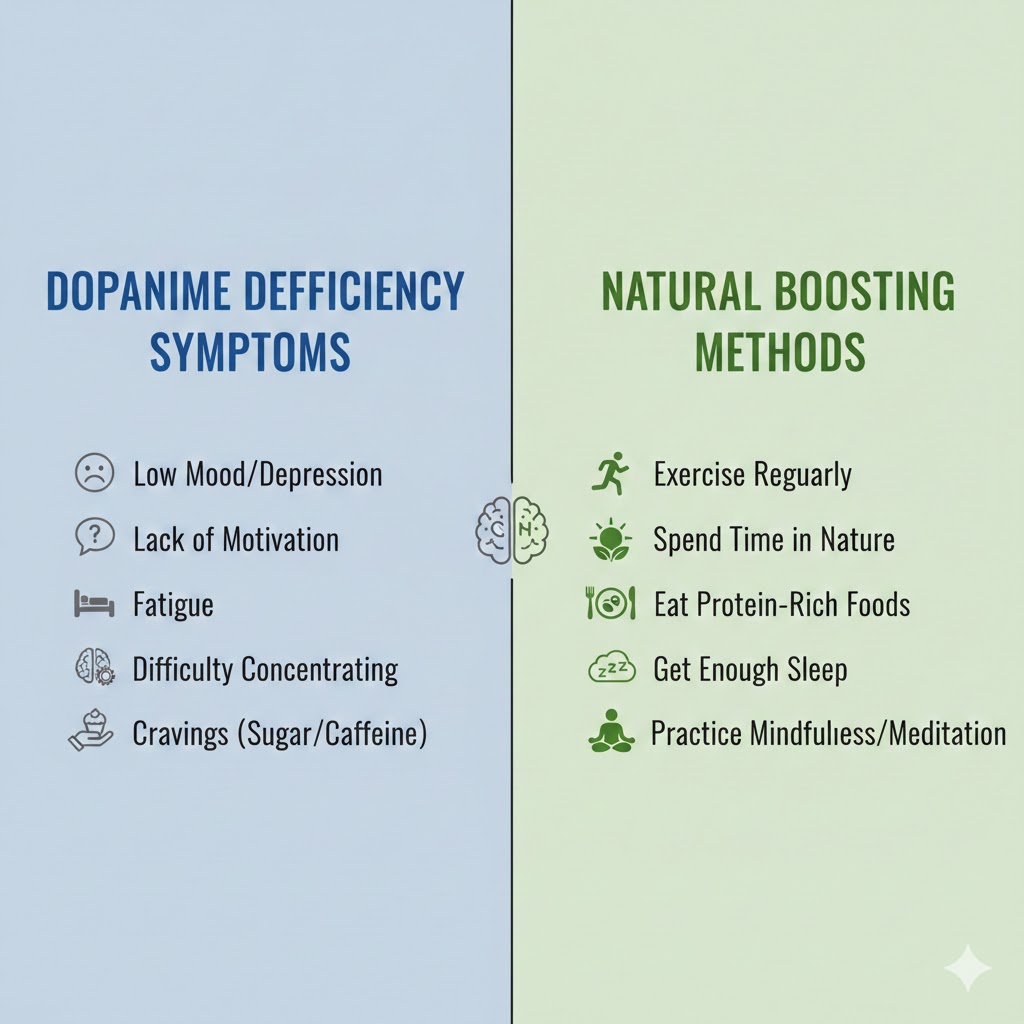
Typical Dopamine Deficiency Symptoms include:
- Lack of motivation or drive
- Difficulty focusing or sustaining attention
- Procrastination and avoidance
- Low pleasure from activities you once enjoyed
- Mental fatigue or brain fog
- Reduced confidence and decisiveness
These symptoms are often misattributed to laziness or lack of discipline—but they’re neurochemical signals.
3. Emotional and Behavioral Signs to Watch For
Beyond productivity issues, dopamine deficiency affects mood and behavior.
You may notice:
- Increased reliance on caffeine or sugar
- Compulsive scrolling or novelty-seeking
- Feeling “bored but tired”
- Low tolerance for effort
- Emotional numbness rather than sadness
These patterns reinforce Dopamine Deficiency Symptoms over time.
4. What Causes Dopamine Deficiency
Several modern lifestyle factors reduce dopamine efficiency.
Key contributors include:
- Chronic stress
- Poor sleep quality
- Excessive screen stimulation
- Ultra-processed diets
- Lack of physical movement
- Constant instant gratification
Dopamine isn’t depleted by effort—it’s depleted by overstimulation without recovery.
5. Why Quick Dopamine Hits Make Things Worse
Scrolling, junk food, and constant entertainment spike dopamine briefly—but lower baseline sensitivity over time.
This leads to:
- Tolerance (needing more stimulation)
- Reduced motivation for real-world tasks
- Emotional flattening
Addressing Dopamine Deficiency Symptoms requires rebuilding sensitivity, not chasing spikes.
6. Natural Method #1: Morning Sunlight Exposure
Sunlight is one of the most powerful natural dopamine regulators.
Benefits include:
- Improved dopamine receptor sensitivity
- Better circadian rhythm alignment
- Enhanced motivation later in the day
Even 10–15 minutes of morning light supports dopamine balance more effectively than stimulants.
7. Natural Method #2: Exercise (Especially Effort-Based)
Movement increases dopamine—but not all exercise works equally.
Best options:
- Resistance training
- Brisk walking
- Short, challenging workouts
Effort-based movement restores the reward connection between action and outcome, directly countering Dopamine Deficiency Symptoms.
8. Natural Method #3: Protein and Dopamine Precursors
Dopamine is made from amino acids, primarily tyrosine.
Support production by including:
- Eggs
- Fish
- Lean meats
- Dairy
- Legumes
Undereating protein can quietly worsen Dopamine Deficiency Symptoms.
9. Natural Method #4: Reduce Constant Stimulation
This step is uncomfortable—but powerful.
Helpful practices:
- Delaying phone use in the morning
- Limiting multitasking
- Reducing background noise
- Allowing boredom occasionally
When stimulation decreases, dopamine sensitivity recovers.
10. Natural Method #5: Goal Completion (Even Small Ones)
Dopamine is released when effort leads to completion.
Rebuild dopamine signaling by:
- Setting small, achievable goals
- Completing tasks fully
- Tracking progress visibly
This retrains your brain to associate effort with reward—essential for reversing Dopamine Deficiency Symptoms.
11. Natural Method #6: Quality Sleep
Sleep deprivation disrupts dopamine receptors directly.
To support dopamine:
- Maintain consistent sleep times
- Avoid screens before bed
- Get morning light
- Prioritize sleep depth over duration
No supplement can replace sleep for dopamine health.
12. Natural Method #7: Stress Regulation
Chronic stress blunts dopamine signaling.
Support balance with:
- Breathing exercises
- Mindfulness practices
- Time in nature
- Reducing unnecessary urgency
Calm is not the opposite of motivation—it’s the foundation of it.
When Dopamine Deficiency May Need Professional Help
Seek guidance if Dopamine Deficiency Symptoms:
- Persist for months
- Worsen despite lifestyle changes
- Interfere with daily functioning
- Coexist with depression or neurological conditions
Dopamine-related issues can overlap with ADHD, depression, and other conditions.
Frequently Asked Questions (FAQ)
What are the main Dopamine Deficiency Symptoms?
Low motivation, poor focus, lack of pleasure, mental fatigue, and procrastination.
Is dopamine deficiency the same as depression?
No, but they can overlap. Dopamine deficiency is more about motivation than sadness.
Can dopamine levels be increased naturally?
Yes. Lifestyle changes are often the most effective long-term solution.
Do supplements fix dopamine deficiency?
Supplements may help support production, but lifestyle factors matter more.
Does quitting social media help dopamine?
Reducing excessive stimulation often improves dopamine sensitivity.
How long does it take to feel better?
Many people notice improvements within weeks of consistent changes.
Final Thoughts
Dopamine Deficiency Symptoms are not a personal failure—they’re a biological response to modern overstimulation and chronic stress. The solution isn’t more motivation hacks or stronger stimulants. It’s restoring balance.
When effort feels rewarding again, motivation returns naturally.
And when dopamine works the way it’s meant to, progress stops feeling forced—and starts feeling possible again.
More Related Topics:
Best Nootropic Stacks for Focus: Caffeine + L-Theanine Alternatives