
Carnivore Diet Side Effects Switching to a carnivore diet can feel like flipping a metabolic switch overnight. One day you’re eating carbohydrates, fiber, and plants—next, your plate is entirely animal-based. While many people report benefits like appetite control and mental clarity, the transition isn’t always smooth.
Understanding Carnivore Diet Side Effects during the adaptation period can help you avoid unnecessary discomfort and know what’s normal versus what needs attention.
This guide breaks down what happens in your body, why side effects occur, how long they last, and how to adapt safely.
1. What the Carnivore Diet Really Is
The carnivore diet is an animal-based eating approach that eliminates:
- Plant foods
- Carbohydrates
- Fiber
- Most sugars
Meals typically include:
- Meat (beef, lamb, pork)
- Eggs
- Fish and seafood
- Animal fats
Because this represents a dramatic metabolic shift, Carnivore Diet Side Effects are most common in the first few weeks.
2. Why Side Effects Happen During Adaptation
Your body is highly adaptable—but not instantly.
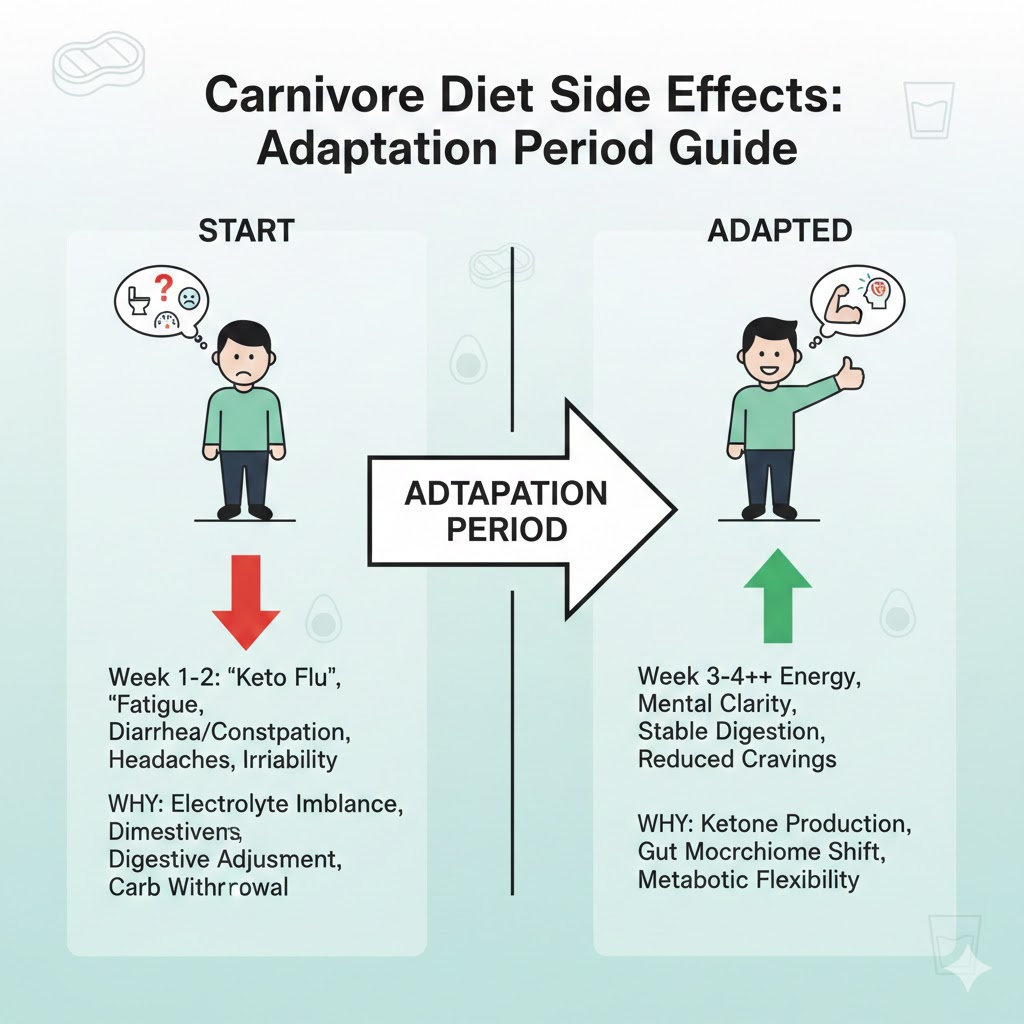
Side effects occur because:
- The body shifts from glucose to fat/ketone metabolism
- Electrolyte balance changes
- Gut bacteria composition shifts
- Insulin levels drop rapidly
These changes explain most early Carnivore Diet Side Effects, not nutrient deficiency or failure.
3. The Adaptation Timeline (What to Expect)
Most people experience adaptation in stages:
- Days 1–5: Fatigue, cravings, headaches
- Days 6–14: Digestive changes, energy fluctuations
- Weeks 3–4: Improved stability, reduced symptoms
Understanding this timeline helps prevent unnecessary panic during normal Carnivore Diet Side Effects.
4. Common Carnivore Diet Side Effects
Fatigue and Low Energy
As your body learns to burn fat efficiently, energy may temporarily drop.
Headaches and Brain Fog
Often caused by electrolyte shifts, especially sodium loss.
Digestive Changes
Diarrhea or constipation can occur as the gut adapts to fat digestion.
Muscle Cramps
Linked to low potassium or magnesium.
Increased Thirst
Reduced insulin causes kidneys to excrete more water and sodium.
These are the most frequently reported Carnivore Diet Side Effects during adaptation.
5. Electrolyte Imbalance: The Real Culprit
Many side effects are not caused by meat—but by electrolyte loss.
When carbohydrates are removed:
- Insulin drops
- Sodium excretion increases
- Water loss increases
This can lead to headaches, dizziness, and weakness unless electrolytes are replaced.
6. Digestive Adaptation: What’s Normal
Your digestive system adjusts bile production and fat-processing enzymes over time.
Normal short-term changes include:
- Loose stools
- Reduced bowel movement frequency
- Changes in stool odor or texture
These usually stabilize within a few weeks as the gut adapts.
7. Managing Carnivore Diet Side Effects Safely
To ease adaptation:
- Increase sodium intake intentionally
- Stay hydrated
- Eat enough fat—not just lean meat
- Avoid undereating
- Transition gradually if needed
These steps dramatically reduce Carnivore Diet Side Effects for most people.
8. When Side Effects Are a Warning Sign
Not all symptoms should be ignored.
Seek professional advice if you experience:
- Persistent dizziness
- Severe digestive distress
- Heart palpitations
- Unexplained weakness beyond 4–6 weeks
A diet should challenge your metabolism—not harm your health.
9. Who Adapts More Easily
Adaptation tends to be smoother for people who:
- Previously followed low-carb or keto diets
- Have stable metabolic health
- Manage electrolytes proactively
Those coming from high-carb diets may experience stronger Carnivore Diet Side Effects initially.
10. Long-Term Perspective on Side Effects
Most adaptation-related symptoms are temporary.
Once adapted, many report:
- Stable energy
- Reduced hunger
- Improved digestion
- Mental clarity
The key is understanding that early discomfort does not predict long-term outcomes.
Frequently Asked Questions (FAQ)
How long do Carnivore Diet Side Effects last?
Most side effects improve within 2–4 weeks, though full adaptation can take longer.
Are Carnivore Diet Side Effects dangerous?
Mild symptoms are usually normal during adaptation. Severe or persistent symptoms should be evaluated.
Do I need supplements on a carnivore diet?
Electrolytes may help during adaptation. Other supplements depend on individual needs.
Is diarrhea normal at the start?
Yes, digestive changes are common as fat digestion adapts.
Should I stop if I feel bad?
Short-term discomfort is normal, but listen to your body and consult a professional if symptoms persist.
Can I reduce side effects by transitioning slowly?
Yes. Gradual carb reduction often reduces adaptation stress.
Final Thoughts
The carnivore diet represents one of the most radical dietary shifts possible. Experiencing Carnivore Diet Side Effects during adaptation doesn’t mean the diet is failing—it means your metabolism is changing.
With patience, proper hydration, and electrolyte awareness, most side effects fade as your body adjusts. The key isn’t to push through blindly—but to understand what your body is asking for during the transition.
More Related Topics:
Low Dopamine Morning Routine: Starting Day Without Phone