
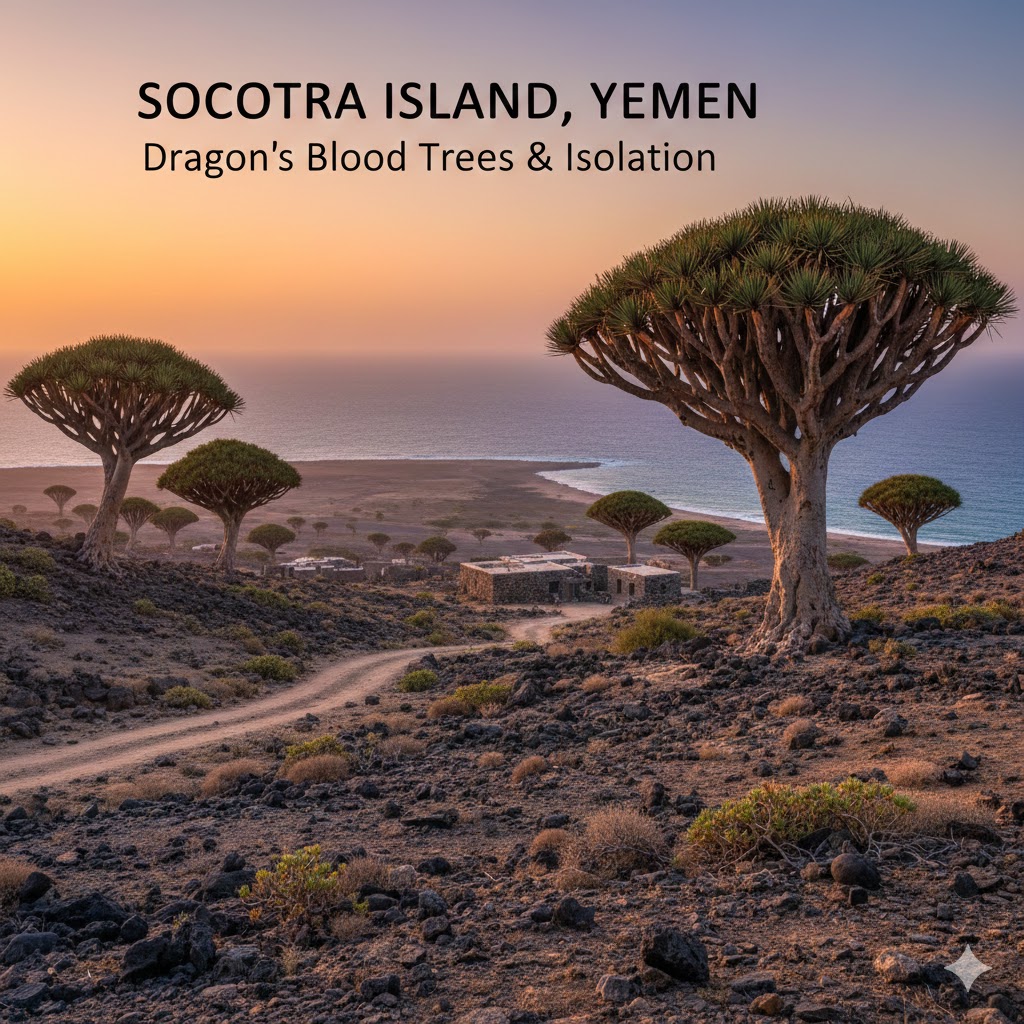
There are places on Earth that feel untouched by time. Then there is Socotra Island Yemen—a land so biologically unique and geographically isolated that it’s often described as the most alien-looking place on the planet. Floating in the Arabian Sea, closer to Africa than mainland Yemen, Socotra feels less like a destination and more like a parallel world.
Known for its surreal landscapes, extreme isolation, and iconic Dragon Blood Trees, Socotra Island Yemen represents one of the last truly wild frontiers of travel. This is not luxury tourism. It is raw, remote, and deeply humbling.
This guide explores why Socotra is so unique, how isolation shaped it, and what makes it one of the most extraordinary places on Earth.
1. Where Socotra Island Yemen Is Located
Socotra Island Yemen lies in the Arabian Sea, near the Horn of Africa. Despite being politically part of Yemen, its geography, climate, and biodiversity are vastly different from the mainland.
Key features:
- Isolated for millions of years
- Limited access by air or sea
- Minimal development
- Small, tightly connected population
This isolation is the foundation of everything that makes Socotra unique.
2. Why Socotra Is Called the “Galápagos of the Indian Ocean”
Over one-third of Socotra’s plant life exists nowhere else on Earth.
The reason:
- Long-term geographic isolation
- Harsh climate conditions
- Limited human interference
On Socotra Island Yemen, evolution followed its own rules—creating forms that feel prehistoric and otherworldly.
3. The Dragon Blood Tree: Symbol of Socotra
The most iconic feature of Socotra Island Yemen is the Dragon Blood Tree.
These umbrella-shaped trees:
- Store moisture in their dense canopies
- Produce red resin known as “dragon’s blood”
- Can live for centuries
- Grow only in specific highland regions
The resin has been used historically for medicine, dye, and ritual—adding to the tree’s mythical reputation.
4. Landscapes That Don’t Feel Real
Socotra Island Yemen offers dramatic contrasts within short distances.
You’ll find:
- White sand beaches with turquoise waters
- Limestone plateaus and caves
- Jagged mountain ranges
- Desert-like plains dotted with alien plants
The absence of large-scale development makes the terrain feel untouched and powerful.
5. Extreme Isolation and Limited Tourism
Isolation is not just a characteristic—it’s a defining experience.
Socotra Island Yemen has:
- Limited flights per week
- Few paved roads
- No mass tourism infrastructure
- Minimal internet and phone connectivity
Visitors must adapt to the island—not the other way around.
6. Life on the Island: Simple and Resilient
The people of Socotra live closely with the land.
Daily life involves:
- Fishing
- Herding goats
- Small-scale agriculture
- Strong community bonds
Modern conveniences are limited, but cultural continuity is strong.
7. Why Socotra Remains So Well Preserved
Several factors protect Socotra Island Yemen:
- Geographic remoteness
- UNESCO World Heritage status
- Limited accessibility
- Local conservation awareness
Unlike many natural wonders, Socotra hasn’t been reshaped for tourism—and that’s its greatest strength.
8. Traveling to Socotra: What to Expect
Traveling to Socotra Island Yemen is not casual.
Expect:
- Guided expeditions
- Basic accommodations or camping
- Flexible schedules
- Environmental responsibility
This is expedition-style travel, not resort tourism.
9. Who Socotra Is (and Isn’t) For
Socotra Island Yemen is ideal for:
- Adventurous travelers
- Nature photographers
- Scientists and researchers
- Those seeking deep solitude
It’s not suitable for travelers looking for comfort, nightlife, or convenience.
10. Why Socotra Feels Spiritually Powerful
Many visitors describe a deep sense of stillness.
Reasons include:
- Silence broken only by wind and waves
- Vast, open landscapes
- Lack of digital distraction
- Ancient natural forms
Socotra Island Yemen doesn’t entertain—it confronts, humbles, and grounds.
11. Conservation Challenges Ahead
Despite its isolation, Socotra faces threats:
- Climate change
- Overgrazing
- Limited resources
- Political instability in the region
Preserving Socotra Island Yemen requires careful balance between access and protection.
12. Why Socotra Matters to the World
Socotra is more than a destination—it’s a reminder.
It shows:
- What Earth looked like before mass development
- How isolation drives biodiversity
- Why conservation matters
Once places like this are lost, they cannot be recreated.
Frequently Asked Questions (FAQ)
Where is Socotra Island Yemen located?
It lies in the Arabian Sea, near the Horn of Africa, and is politically part of Yemen.
Is Socotra Island Yemen safe to visit?
Travel is generally conducted through organized tours with local guidance, and safety depends on current conditions and planning.
Why are Dragon Blood Trees unique?
They grow almost exclusively on Socotra and produce red resin with historical medicinal and cultural uses.
Can tourists travel independently on Socotra?
No. Travel is typically arranged through guided expeditions due to limited infrastructure.
Is Socotra affected by Yemen’s conflict?
Socotra is geographically separate and often insulated, but access depends on regional stability.
Why is Socotra considered alien-looking?
Its endemic plant species and unusual landscapes evolved in long isolation, creating unfamiliar forms.
Final Thoughts
Socotra Island Yemen is not a place you visit casually—it’s a place you experience deeply. Its Dragon Blood Trees stand as living symbols of endurance, isolation, and time stretching far beyond human history.
In a world increasingly shaped by speed and sameness, Socotra remains defiantly different. And that difference is exactly what makes it one of the most extraordinary places left on Earth.
Also read this:
Music Festival Season Europe: Tomorrowland to Glastonbury