
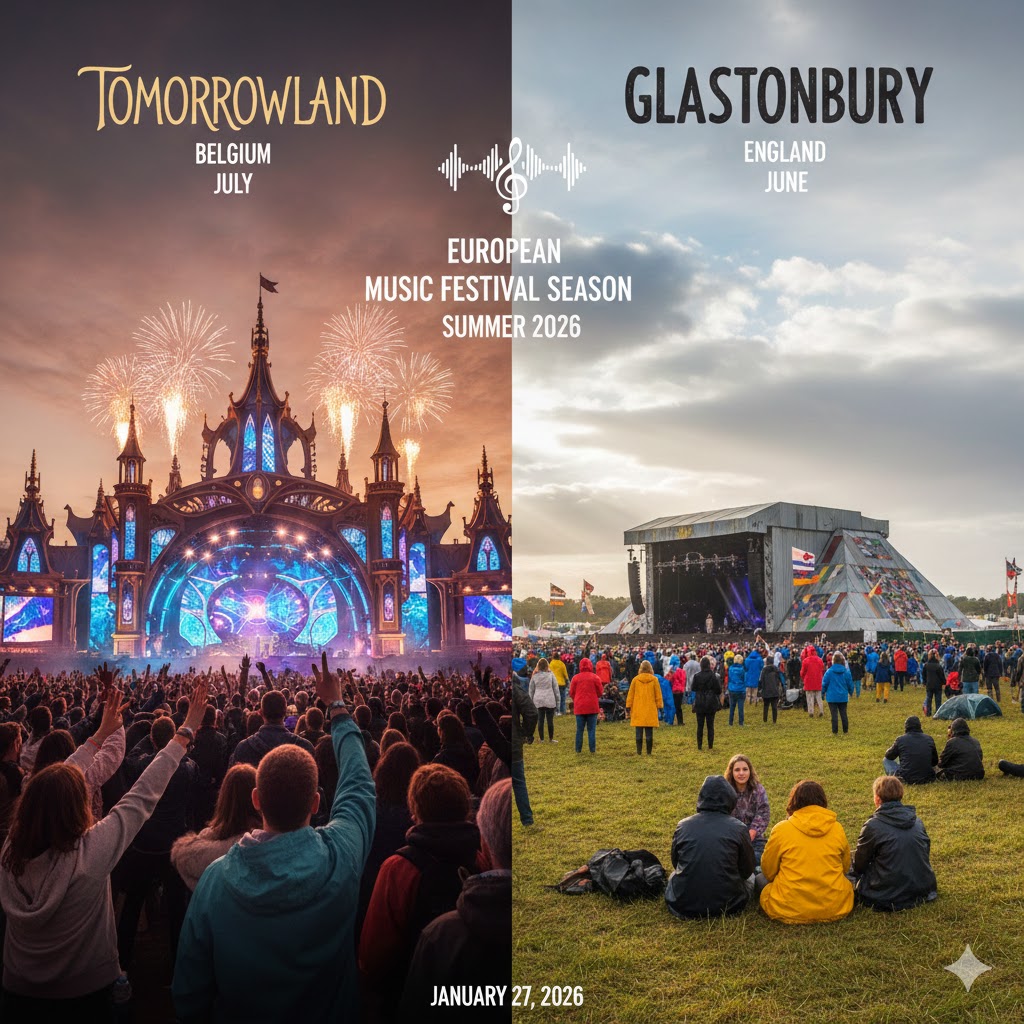
Music Festival Season Europe Every summer, Europe transforms into one giant open-air stage. Fields, forests, beaches, and city parks fill with music lovers from around the world, all chasing the same thing: unforgettable live experiences. From the high-energy spectacle of Tomorrowland to the legendary muddy magic of Glastonbury, Music Festival Season Europe is more than entertainment—it’s a cultural pilgrimage.
In 2026, festival culture is bigger, more diverse, and more intentional than ever. Whether you’re into electronic dance music, rock, indie, pop, or experimental sounds, Europe’s festival circuit offers something for every kind of traveler.
This guide breaks down what makes Music Festival Season Europe special, highlights iconic festivals, and helps you plan smarter.
1. Why Music Festival Season Europe Is Globally Iconic
Europe’s festival scene stands apart for one simple reason: variety.
During Music Festival Season Europe, you’ll find:
- World-class production values
- Deep musical heritage
- Multi-genre lineups
- Strong cultural identity at each festival
Unlike single-genre circuits elsewhere, Europe blends music, art, fashion, activism, and travel into one experience.
2. Tomorrowland: The Global Capital of EDM
Held in Belgium, Tomorrowland is one of the most visually spectacular festivals in the world.
What makes it unique:
- Massive fantasy-themed stage designs
- Top-tier EDM and electronic artists
- International crowd from over 200 countries
- Impeccable organization
For many fans, Tomorrowland is the crown jewel of Music Festival Season Europe—less a concert and more a fully immersive universe.
3. Glastonbury: A Cultural Institution, Not Just a Festival
Glastonbury in the UK is legendary for reasons beyond its lineup.
Key elements include:
- Genre-spanning performances
- Political and social commentary
- Iconic Pyramid Stage moments
- Unpredictable weather and muddy fields
Glastonbury represents the soul of Music Festival Season Europe—raw, expressive, chaotic, and deeply meaningful.
4. Diversity of Festivals Across Europe
One of the biggest strengths of Music Festival Season Europe is its range.
Across the continent you’ll find:
- Electronic festivals in Belgium, Netherlands, and Croatia
- Rock and indie festivals in the UK, Germany, and Spain
- Alternative and experimental scenes in Eastern Europe
- Coastal festivals combining music and travel
Each country brings its own energy, crowd style, and musical identity.
5. Festival Travel: Music Meets Exploration
European festivals double as travel experiences.
Many are located near:
- Historic cities
- Beaches and islands
- Countryside landscapes
- Cultural landmarks
Music Festival Season Europe often becomes a multi-country journey rather than a single event.
6. Camping vs City Festivals
European festivals generally fall into two categories.
Camping festivals:
- Glastonbury
- Tomorrowland (DreamVille)
- Many rural festivals
City-based festivals:
- Easier accommodation
- Shorter travel times
- More flexible schedules
Your choice affects comfort, budget, and overall experience during Music Festival Season Europe.
7. Crowd Culture and Festival Etiquette
European festival crowds are known for:
- International diversity
- Strong sense of community
- Respect for music and artists
Each festival has its own etiquette—understanding it enhances your experience and helps you blend in naturally.
8. Costs and Budgeting for Festival Season
Costs vary widely depending on location and style.
Budget considerations include:
- Tickets (often sell out fast)
- Accommodation or camping gear
- Food and drinks
- Transportation between countries
Planning ahead is essential for navigating Music Festival Season Europe without overspending.
9. Sustainability and the Future of Festivals
European festivals are increasingly focused on sustainability.
Trends include:
- Plastic-free initiatives
- Renewable energy stages
- Public transport incentives
- Waste reduction programs
Music Festival Season Europe is evolving to balance scale with responsibility.
10. How to Plan the Ultimate Festival Route
Smart planning turns chaos into flow.
Helpful tips:
- Choose festivals by date proximity
- Book transport early
- Pack for weather variation
- Balance big festivals with smaller ones
A well-planned route lets you experience multiple highlights of Music Festival Season Europe in one summer.
Who Music Festival Season Europe Is For
This season is perfect for:
- Music-first travelers
- Cultural explorers
- Digital nomads on summer routes
- Groups of friends planning shared memories
It’s less about luxury and more about immersion.
Frequently Asked Questions (FAQ)
When is Music Festival Season Europe?
Typically from late May to early September, with peak months in June and July.
Which festival is bigger: Tomorrowland or Glastonbury?
Tomorrowland is bigger in production and EDM focus, while Glastonbury is larger in cultural impact and genre diversity.
Do European festivals sell out quickly?
Yes. Major festivals often sell out within hours or days.
Is it safe to travel between festivals?
Generally yes. Europe has strong transport infrastructure and festival security.
Can beginners enjoy Music Festival Season Europe?
Absolutely. Many festivals are well-organized and welcoming to first-timers.
Do I need visas to attend multiple festivals?
Visa requirements depend on nationality and destination countries.
Final Thoughts
Music Festival Season Europe is more than a lineup of events—it’s a shared summer rhythm that moves from country to country. From the cinematic spectacle of Tomorrowland to the soulful chaos of Glastonbury, these festivals offer moments that live far beyond the final encore.
If you’re chasing music that feels bigger than a stage, louder than a playlist, and richer than a single destination, Europe’s festival season delivers it—year after unforgettable year.
Also read this:
Flying First Class for Free: Points Strategy 2026