
As we age, nutrition stops being about calories and starts being about function. After 70, the body processes protein differently, absorbs nutrients less efficiently, and becomes more vulnerable to bone loss, fractures, and muscle weakness.
That’s why when an Orthopedic Surgeon Reveals dietary priorities for seniors, the focus is rarely on trendy superfoods. Instead, it’s on what truly supports bones, joints, and muscle tissue.
One surprising recommendation that often comes up?
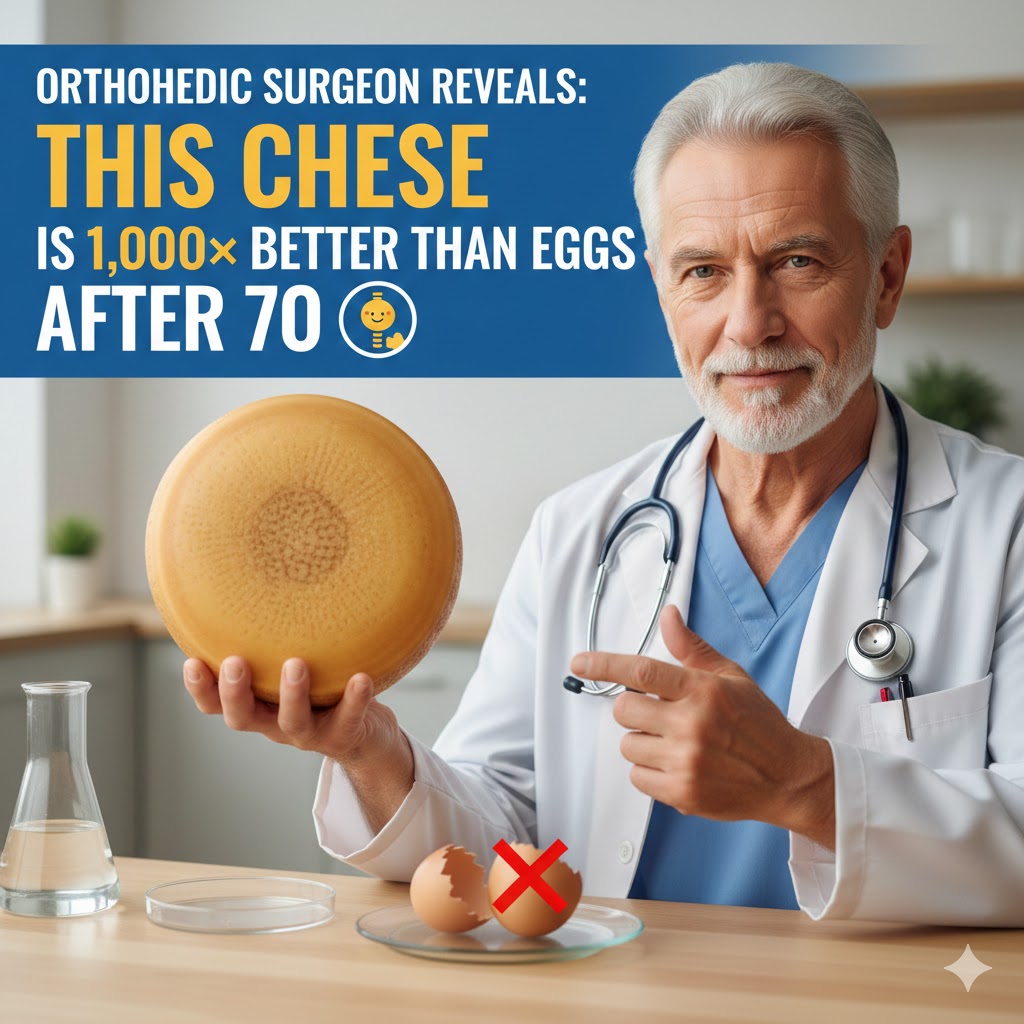
A specific type of cheese — frequently suggested as a better daily option than eggs for many adults over 70.
This article explains why that cheese matters, what makes it different, and how it supports aging bodies — without exaggeration or hype.
1. Why Nutrition Changes After 70
After 70, the body undergoes key physiological changes:
- Reduced calcium absorption
- Lower vitamin D synthesis
- Accelerated muscle loss (sarcopenia)
- Increased fracture risk
- Slower protein utilization
An orthopedic perspective prioritizes bone density, joint protection, and muscle preservation, not just protein intake.
This is where food choices become strategic.
2. Orthopedic Surgeon Reveals Why Eggs Aren’t Always Ideal After 70
Eggs are nutritious, but they’re not perfect for everyone — especially older adults.
Potential limitations of eggs for seniors:
- Low calcium content
- No vitamin K2 (important for bone mineralization)
- Protein absorption can be less efficient
- Some seniors struggle with digestion
When an Orthopedic Surgeon Reveals alternatives, the goal isn’t to demonize eggs — it’s to optimize outcomes.
3. The Cheese Orthopedic Surgeons Often Recommend
The cheese most commonly referenced in orthopedic and geriatric nutrition discussions is:
Aged, fermented cheese — particularly hard cheeses like Parmesan (Parmigiano-Reggiano).
This isn’t about processed cheese slices. It’s about traditional, aged cheese with a unique nutritional profile.
4. Why This Cheese Supports Bone Health Better Than Eggs
Here’s what sets it apart:
- Extremely high calcium density
- Naturally contains vitamin K2
- Rich in phosphorus (critical for bone structure)
- Long aging improves digestibility
- Provides bioavailable protein
This combination is rare in single foods.
From an orthopedic lens, this cheese supports bone remodeling, not just protein intake.
5. The Role of Vitamin K2 (Often Overlooked)
One reason an Orthopedic Surgeon Reveals this cheese as superior is vitamin K2.
Vitamin K2:
- Directs calcium into bones (not arteries)
- Supports bone mineral density
- Works synergistically with vitamin D
Eggs contain minimal K2. Aged cheeses contain meaningful amounts.
6. Muscle Preservation Matters as Much as Bone Density
After 70, muscle loss increases fall risk.
This cheese helps because:
- It provides complete protein
- Amino acids are more easily absorbed
- Lower lactose content reduces digestive stress
Small portions deliver high nutritional value — ideal for seniors with reduced appetite.
7. Joint Health and Inflammation Considerations
Chronic inflammation accelerates joint degeneration.
Aged cheeses:
- Are low in lactose
- May be easier on the gut
- Often better tolerated than eggs in older adults
When digestion improves, nutrient absorption improves — indirectly supporting joint health.
8. Portion Size Is the Key (Not Overconsumption)
This is where misinformation spreads online.
Orthopedic recommendations emphasize:
- Small daily portions
- Quality over quantity
- Consistency over excess
Typically:
- 20–30 grams per serving
- Combined with vegetables or whole foods
“1,000× better” is not about volume — it’s about nutrient efficiency per bite.
9. Who Should Be Cautious With Cheese
Even when an Orthopedic Surgeon Reveals benefits, individual factors matter.
Be cautious if you:
- Have advanced kidney disease
- Need strict sodium restriction
- Are sensitive to histamines
Always individualize dietary choices.
10. How to Add This Cheese Safely After 70
Simple, practical ways:
- Grated over vegetables
- Added to soups
- Combined with legumes
- Paired with olive oil and greens
No need for drastic dietary changes.
11. Why Orthopedic Specialists Focus on Food, Not Supplements
Many seniors rely heavily on supplements.
Orthopedic professionals often prefer food because:
- Nutrients are better absorbed
- Lower risk of imbalance
- Supports digestion and appetite
- Reduces pill burden
This is why, when an Orthopedic Surgeon Reveals dietary advice, it often starts in the kitchen.
12. Eggs vs Cheese: A Fair Comparison
This isn’t a competition — it’s context.
Eggs offer:
- Protein
- B vitamins
Aged cheese offers:
- Calcium
- Vitamin K2
- Bone-supportive minerals
For seniors focused on fracture prevention, cheese often wins.
13. What “1,000× Better” Really Means
It does not mean:
- Eggs are bad
- Cheese is magic
- You should eat unlimited cheese
It means:
- Per bite, this cheese delivers bone-critical nutrients eggs lack
- For aging bones, nutrient density matters more than protein alone
14. Final Thoughts: Aging Strong, Not Just Longer
Longevity without mobility is not success.
When an Orthopedic Surgeon Reveals nutrition priorities after 70, the message is clear:
- Protect bones
- Preserve muscle
- Reduce fracture risk
- Eat efficiently
Sometimes, the most powerful foods are the simplest — when chosen wisely.
FAQ: Orthopedic Surgeon Reveals
Which cheese is considered best for bone health after 70?
Aged cheeses like Parmigiano-Reggiano are often recommended due to calcium and vitamin K2 content.
Is cheese really better than eggs for seniors?
For bone health specifically, certain cheeses provide nutrients eggs lack.
How much cheese should seniors eat daily?
Usually small portions (20–30 grams), depending on health needs.
Can seniors still eat eggs?
Yes. Eggs can still be part of a balanced diet.
Why do orthopedic surgeons care about diet?
Nutrition directly impacts bone strength, fracture risk, and recovery.
Is vitamin K2 important after 70?
Yes. It helps guide calcium into bones and supports bone density.
Should seniors replace supplements with food?
Food is often preferred, but individual needs vary — consult a professional.
More Related Topics:
Top 10 Best Foods to Improve Your Heart Health | Simple & Natural Choices
Red Light Therapy for Muscle Recovery: Science vs Hype in 2026 (What Actually Works)
I Lost 40 Pounds on Semaglutide—The Good, Bad, and Ugly Truth (No Hype, Just Reality)