
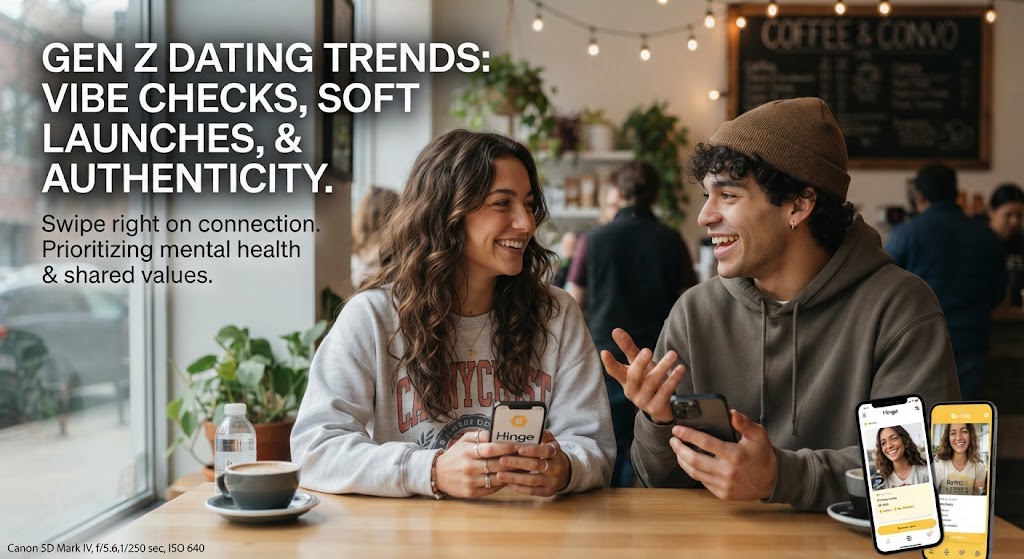
You’ve probably already seen terms like situationship, soft launch, ghosting, and slow dating everywhere. But understanding the slang doesn’t always make modern dating easier to understand.
The biggest Gen Z dating trends reflect broader changes in how people meet, communicate, define relationships, set boundaries, and present their romantic lives online. From dating-app fatigue and intentional dating to situationships and social-media signaling, Gen Z is reshaping relationship culture while still showing interest in meaningful, long-term connections.
In this guide, you’ll learn what the major Gen Z dating trends mean, why they are becoming popular, how dating apps and social media are influencing relationships, and how to navigate modern dating with greater clarity.
What Are Gen Z Dating Trends?
Gen Z dating trends are evolving behaviors, communication styles, relationship expectations, and dating preferences commonly associated with Generation Z. They influence how young adults meet partners, communicate digitally, define relationships, use dating apps, and decide what parts of their romantic lives remain private or become public.
Gen Z grew up with smartphones, messaging platforms, social media, and dating apps as normal parts of everyday life. A romantic connection may begin through a dating app, continue through Instagram or WhatsApp, and eventually move offline after several conversations.
However, Gen Z dating culture is not one universal set of behaviors. Preferences vary based on the individual, location, sexuality, age, and relationship goals.
The common thread is greater flexibility in how people define and communicate romantic relationships.
For example, one person may want a traditional committed relationship, while another may prefer to date slowly before deciding whether exclusivity makes sense.
Why Do Gen Z Dating Trends Matter?
Gen Z dating trends matter because technology, dating apps, social media, changing expectations around commitment, and greater awareness of personal boundaries are reshaping how romantic connections develop.
Dating apps have become an important part of modern relationship formation, while platforms are increasingly experimenting with features designed to encourage more meaningful interactions. Match Group says dating apps are currently the #1 way people meet, based on its average of 2025 research waves.
Source: Match Group, 2026.
At the same time, research suggests Gen Z still values long-term relationships despite the stereotype that younger adults are primarily interested in casual dating. A 2026 report covering Tinder and Harris Poll research found that 80% of Gen Z singles surveyed believed they would find true love, while 74% believed they would get married.
Source: Tinder/Harris Poll, 2026.
For example, someone may use a dating app casually while still hoping to eventually build a committed partnership.
Yet modern dating can become complicated because people can communicate constantly without necessarily defining the relationship.
More communication does not automatically create more clarity.
What Are the Biggest Gen Z Dating Trends?
The biggest Gen Z dating trends include situationships, slow dating, intentional dating, soft launching, dating-app fatigue, greater relationship transparency, and a stronger emphasis on emotional compatibility.
1. Situationships Are Common
Situationships describe romantic or sexual connections that have some characteristics of a relationship but lack clearly defined commitment or status.
Two people might text every day, go on dates, spend nights together, and behave like a couple without agreeing that they are officially together.
Situationships can provide flexibility, particularly for people who do not want to immediately adopt traditional relationship labels. However, ambiguity can become stressful when both people want different outcomes.
For more context, see our guide to situationship meaning.
2. Slow Dating Is Growing
Slow dating emphasizes taking more time to build a connection instead of quickly progressing from matching to a committed relationship.
For example, two matches might have a video call, meet in a group setting, and go on several low-pressure dates before discussing exclusivity.
Tinder’s 2025 India research described Gen Z dating as increasingly focused on comfort, clear intentions, emotional intelligence, and alternatives to traditional first-date expectations.
Source: Tinder, 2025.
This approach can reduce the pressure to decide immediately whether someone is “the one.” Instead, daters can pay attention to compatibility, communication, comfort, and consistency over time.
3. Intentional Dating Is More Visible
Intentional dating means approaching dating with a clearer understanding of your values, relationship goals, boundaries, and expectations.
Someone seeking a long-term relationship, for example, may communicate that goal early instead of spending months trying to guess what a match wants.
Intentional dating does not mean rushing into commitment. Instead, it focuses on making conscious decisions rather than allowing a relationship to develop entirely through assumptions.
4. Soft Launching Has Become Relationship Signaling
Soft launching a relationship means subtly revealing a romantic partner or relationship on social media without making a formal public announcement.
Someone might post two coffee cups, a partner’s hand, a silhouette, or a blurred photo before eventually sharing a clear couple picture.
Soft launching can allow people to acknowledge a relationship while maintaining greater privacy and control over how much they share publicly.
5. Dating-App Fatigue Is Changing Behavior
Dating-app fatigue describes frustration, boredom, emotional exhaustion, or reduced enthusiasm caused by repeated swiping, matching, messaging, and disappointing interactions.
For example, someone may delete an app after receiving dozens of matches but having very few meaningful conversations.
A 2026 industry report cited 79% of surveyed Gen Z users reporting dating-app fatigue, while another analysis noted that platforms are increasingly experimenting with offline interaction and authenticity-focused features.
Source: Dating Industry Insights, 2026.
As a result, some young daters are becoming more selective about how much time they spend on dating apps and are showing greater interest in offline experiences and more meaningful interactions.
Why Is Gen Z Dating Differently From Previous Generations?
Gen Z is dating differently because technology, social norms, communication habits, and expectations around personal boundaries have changed the environment in which relationships develop.
Gen Z can communicate through text, voice notes, video calls, social media, and dating apps before meeting someone face-to-face. A person can also learn about a potential partner’s interests through their dating profile and social content before agreeing to a date.
Younger daters are also increasingly emphasizing emotional compatibility and communication instead of relying only on traditional relationship milestones.
One Gen Z research report found that 72% identified communication skills as a top romantic-partner quality, followed by emotional compatibility at 64% and common interests at 61%.
Source: Make Opinion, 2026.
Importantly, this does not necessarily mean Gen Z is rejecting commitment. Recent Tinder/Harris Poll research found that Gen Z singles expressed strong belief in both true love and marriage.
Source: Tinder/Harris Poll, 2026.
For example, a Gen Z dater may want marriage eventually but still prefer to move through dating, exclusivity, and commitment at a slower pace.
How Is Gen Z Changing Dating-App Culture?
Gen Z is changing dating-app culture by placing greater emphasis on authenticity, safety, emotional compatibility, intentional conversations, and offline experiences instead of endless swiping.
Gen Z Wants More Meaningful Matches
Dating profiles can function as early compatibility filters rather than simply being judged by photographs.
Interests, humor, communication style, values, lifestyle, and personality can all influence whether someone receives a like.
For example, a profile mentioning hiking, books, gaming, or a specific music community can create an immediate conversation starter and make it easier to identify shared interests.
Gen Z Is Moving Beyond Endless Messaging
Dating platforms are experimenting with video chats, group dates, and other formats that can reduce the pressure associated with traditional first dates.
Tinder reported that its 2025 India research found young daters were embracing video calls, group hangs, and clearer intentions.
Source: Tinder, 2025.
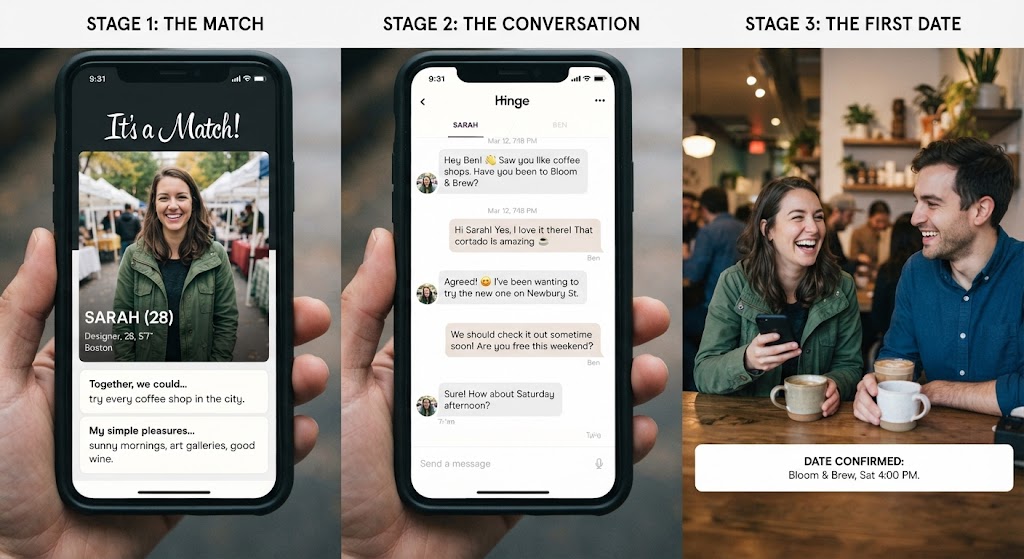
Furthermore, Financial Times reporting in 2025 highlighted dating platforms’ growing focus on offline interaction, safety, and authenticity as they respond to dating fatigue among younger users.
Source: Financial Times, 2025.
These changes suggest that dating-app culture is moving beyond simple matching. The experience increasingly includes how people communicate, verify compatibility, establish safety, and eventually transition from digital interaction to real-world connection.
What Is a Situationship and Why Is It Popular Among Gen Z?
A situationship is an emotionally or physically intimate connection that resembles a relationship but does not have clearly defined commitment or status.
Situationships can appeal to people who want companionship without immediately adopting traditional relationship labels.
For example, two people may agree to date exclusively but avoid calling themselves boyfriend and girlfriend.
However, situationships can become difficult when expectations differ. One person may assume the connection is becoming serious while the other sees it as temporary.
Ambiguity works only when everyone involved understands and accepts the ambiguity.
A situationship is therefore not automatically unhealthy or casual. The important factor is whether everyone understands what the connection means and whether the arrangement works for those involved.
What Is Slow Dating and Why Is Gen Z Embracing It?
Slow dating is an approach that prioritizes gradual connection-building instead of rushing from matching to emotional or relationship commitment.
It can involve fewer matches, longer conversations, more intentional dates, and taking time to observe compatibility.
For example, someone might choose one meaningful date instead of maintaining conversations with ten different matches.
Slow dating also fits a broader desire for authenticity and comfort. Bumble’s 2025 global research found that 49% of Gen Z singles surveyed in its India sample considered sharing a fandom or common interest a form of intimacy.
Source: Bumble, 2025.
Shared interests can therefore become an important part of modern connection. Joining a book club, run club, gaming community, or music event can create opportunities to meet people through something both individuals already enjoy.
How Does Social Media Affect Gen Z Dating and Relationships?
Social media affects Gen Z dating by influencing how people meet, communicate, display relationships, establish boundaries, and interpret romantic signals.
A relationship can become visible online without being officially announced. Someone might appear repeatedly in Stories before becoming part of a formal relationship announcement.
Social media also creates a distinction between private relationships and publicly performed relationships. Some couples share nearly everything online, while others intentionally keep romantic experiences offline.
Bumble’s 2025 research found that 92% of single Indians surveyed agreed that small behaviors such as sending memes, playlists, or sharing inside jokes now count as ways of expressing affection.
Source: Bumble, 2025.
Digital communication can therefore become part of emotional intimacy itself. A shared meme, playlist, inside joke, or recurring message may communicate affection without requiring a traditional romantic gesture.
What Does Soft Launching a Relationship Mean?
Soft launching a relationship means revealing a romantic connection indirectly on social media rather than making a direct public announcement.
For example, someone might post their partner’s silhouette, hand, shoes, or dinner plate without showing their face.
Soft launching can provide a middle ground between complete privacy and a highly public relationship announcement.
A relationship does not need to be publicly announced to be emotionally real.
What Are the Most Common Gen Z Dating Terms and Their Meanings?
Gen Z dating terms describe specific communication patterns, relationship structures, and behaviors associated with modern dating culture.
| Term | Meaning | Example |
|---|---|---|
| Situationship | Romantic connection without clear relationship status | Dating regularly without defining exclusivity |
| Soft launch | Subtle relationship reveal online | Posting a partner’s hand |
| Hard launch | Direct public relationship announcement | Posting a clear couple photo |
| Ghosting | Suddenly ending communication without explanation | Stopping replies completely |
| Breadcrumbing | Giving occasional attention without meaningful progress | Sending flirty messages every few weeks |
| Orbiting | Staying digitally connected after romantic contact ends | Watching every Story after ghosting |
| Benching | Keeping someone as a backup option | Messaging occasionally while dating others |
| Slow dating | Building connection gradually | Taking several dates before exclusivity |
| Intentional dating | Dating with clear goals and values | Saying you want a serious relationship |
These labels can help people describe confusing dating experiences. Recognizing breadcrumbing, for example, can help someone distinguish genuine interest from occasional attention.
Ghosting and breadcrumbing are not the only behaviors worth recognizing. If someone disappears and later returns without addressing the original disappearance, what is zombieing in dating explains that pattern more specifically.
Understanding these terms is useful because dating language often provides a shortcut for describing experiences that might otherwise be difficult to explain.
What Does Gen Z Want From a Romantic Relationship?
Gen Z increasingly values authenticity, communication, emotional compatibility, boundaries, independence, shared values, and flexibility around traditional relationship milestones.
Communication appears particularly important in recent research. A Gen Z survey reported communication skills as the leading romantic-partner quality among the characteristics measured.
Source: Make Opinion, 2026.
Emotional compatibility can also matter alongside physical attraction. Someone may prioritize feeling understood, being able to discuss conflict, sharing similar values, and feeling emotionally safe before deciding whether physical chemistry is enough.
At the same time, Gen Z’s relationship goals should not be reduced to avoiding commitment. Recent research indicates that many young singles still expect to find love and marry.
Source: Tinder/Harris Poll, 2026.
Gen Z is not necessarily abandoning commitment; it is often redefining how people reach it.
What Are the Benefits and Challenges of Gen Z Dating Trends?
Gen Z dating trends offer greater flexibility, self-expression, and awareness of boundaries, but they can also create ambiguity, digital exhaustion, and communication problems.
Benefits of Modern Dating
Modern dating gives people more ways to meet compatible partners and communicate their relationship preferences.
Someone can use a dating app to filter for interests, meet through a community, or connect through social media before deciding whether to date.
The main benefits include:
- More relationship flexibility
- Greater awareness of boundaries
- More opportunities to meet people
- Greater visibility of emotional compatibility
- More freedom around traditional relationship roles
- More ways to communicate before meeting
These options can make dating more personalized. Instead of following a single traditional relationship path, people can make choices based on their goals and comfort levels.
Challenges of Modern Dating
Digital dating can also create new problems.
Constant matching and messaging can produce emotional fatigue even when someone genuinely wants a relationship. Similarly, ambiguous labels can make expectations difficult to manage.
A person who considers a connection casual may be surprised when the other person expects exclusivity.
The biggest challenge of modern dating is often not finding communication channels but creating clarity within them.
How Can You Navigate Modern Gen Z Dating Successfully?
You can navigate modern Gen Z dating more successfully by communicating intentions, setting boundaries, checking consistency, discussing exclusivity, and avoiding unnecessary ambiguity.
1. Communicate Your Intentions
Communicate your intentions early without turning the conversation into an interview.
For example, saying “I’m dating to see if I can build something serious” provides useful context without demanding immediate commitment.
2. Establish Clear Boundaries
Discuss boundaries before problems appear.
Depending on the relationship, this could include expectations around:
- Exclusivity
- Physical intimacy
- Texting frequency
- Social-media posting
- Privacy
- Time together
- Communication during conflict
3. Look for Consistency
Evaluate consistency rather than focusing only on chemistry.
Someone who communicates intensely for two days and disappears for two weeks is providing useful behavioral information. Patterns often reveal more than isolated moments of attention.
4. Ask Direct Questions
When a relationship becomes unclear, direct questions can reduce unnecessary guessing.
- What are you looking for right now?
- Are we dating other people?
- Do you want to become exclusive?
- How private or public do you want this relationship to be?
- Are our expectations actually compatible?
5. Protect Your Digital Boundaries
You do not need to share passwords, post your partner online, respond instantly, or maintain constant communication to prove affection.
Healthy relationships can include digital boundaries as well as emotional and physical boundaries.
What Tools Can Help You Navigate Modern Dating?
Dating apps, communication tools, and safety features can help people meet and evaluate potential partners, but no tool can replace judgment and direct communication.
Use dating apps as discovery tools rather than compatibility guarantees. Profile prompts, interests, verification features, video calls, and safety tools can help reduce uncertainty before meeting.
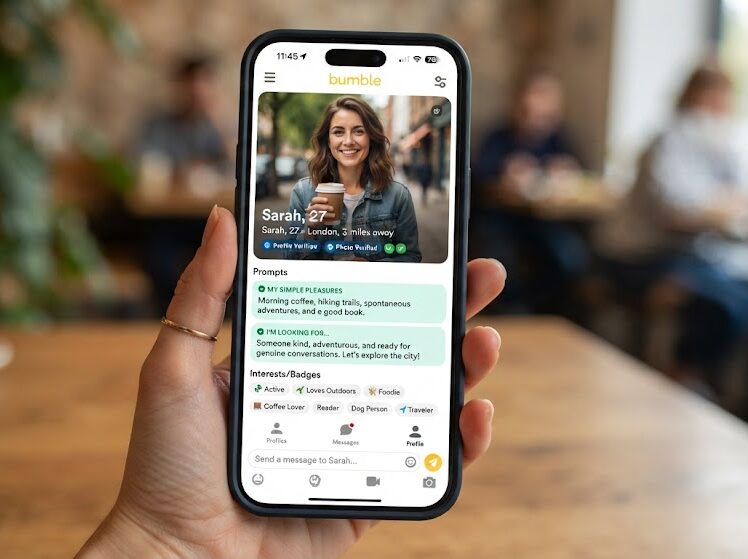
Social platforms can provide additional context, but they should not become substitutes for actual conversations. A profile can show someone’s interests without revealing how they communicate during conflict or treat boundaries.
Free options such as ordinary video calling, messaging, and community events can also support slower dating without requiring premium dating-app features.

What’s Next for Gen Z Dating?
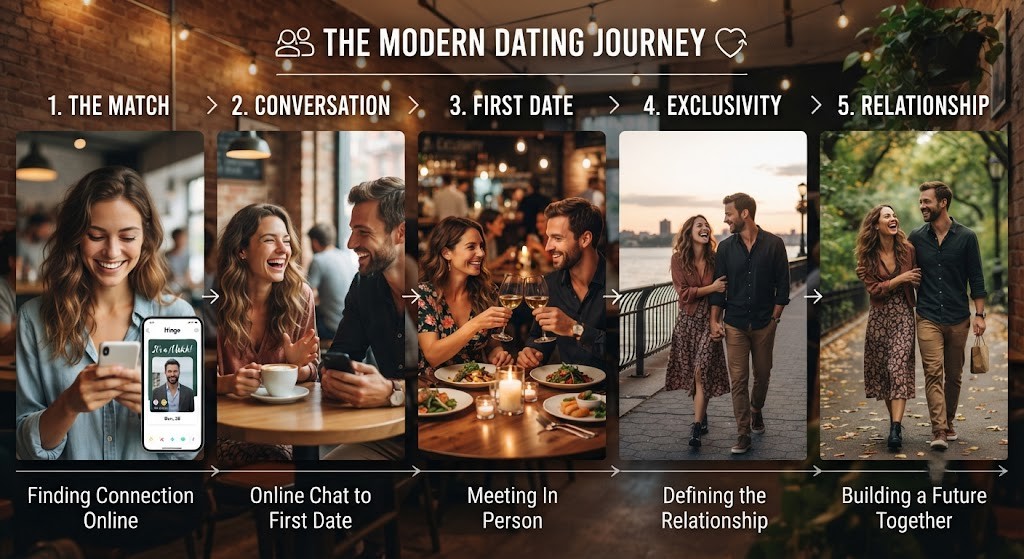
The future of Gen Z dating is likely to combine digital convenience with stronger demand for authentic, comfortable, and meaningful connection.
Dating apps are already experimenting with AI-assisted experiences, offline events, group dating, video interactions, and tools designed to reduce repetitive swiping.
Financial Times reporting in 2025 highlighted this broader industry shift toward authenticity, safety, and offline interaction.
Source: Financial Times, 2025.
AI may increasingly help with profile creation, conversation prompts, matching, and dating advice. However, technology can optimize the introduction; it cannot manufacture genuine compatibility.
Social-media relationship culture may also continue moving toward selective visibility. Bumble’s research showed strong interest in smaller, personal forms of affection such as memes, playlists, and inside jokes.
Source: Bumble, 2025.
For example, future relationships may be increasingly visible through private digital interactions rather than public couple posts.
Conclusion: Gen Z Dating Is Becoming More Intentional and Flexible
Gen Z dating trends reflect a dating culture shaped by technology, social media, emotional awareness, flexible relationship structures, and changing expectations around commitment.
Situationships, slow dating, intentional dating, soft launching, and dating-app fatigue describe different parts of this evolving landscape. One person may prefer a private slow-build relationship, while another may prefer direct conversations about exclusivity from the beginning.
Ultimately, there is no single correct way to date as Gen Z.
Healthy dating depends less on following a trend and more on communication, compatibility, consent, consistency, and clearly expressed expectations.
By understanding modern dating terminology and recognizing your own boundaries, you can make better decisions without allowing social-media pressure or dating-app culture to define your relationships.
FAQs
What are Gen Z dating trends?
Gen Z dating trends are modern dating behaviors such as situationships, slow dating, soft launching, and intentional dating.
What is a situationship?
A situationship is a romantic connection without a clearly defined relationship status.
What is slow dating?
Slow dating means taking more time to build a connection before committing.
What is intentional dating?
Intentional dating means dating with clear goals, values, and expectations.
What does soft launching mean in dating?
Soft launching means subtly revealing a romantic relationship on social media.
What is ghosting in dating?
Ghosting means suddenly ending communication without giving an explanation.
What is breadcrumbing?
Breadcrumbing means giving someone occasional attention without meaningful relationship progress.
What is orbiting in dating?
Orbiting means staying connected on social media after romantic contact ends.
Is Gen Z interested in serious relationships?
Yes, many Gen Z singles still want meaningful relationships, love, and marriage.
What is dating-app fatigue?
Dating-app fatigue is emotional exhaustion caused by repeated swiping, matching, and messaging.
How is social media changing Gen Z dating?
Social media affects how Gen Z meets, communicates, shows affection, and shares relationships.
How can Gen Z date more healthily?
Clear communication, boundaries, consistency, and honest intentions can support healthier dating.