
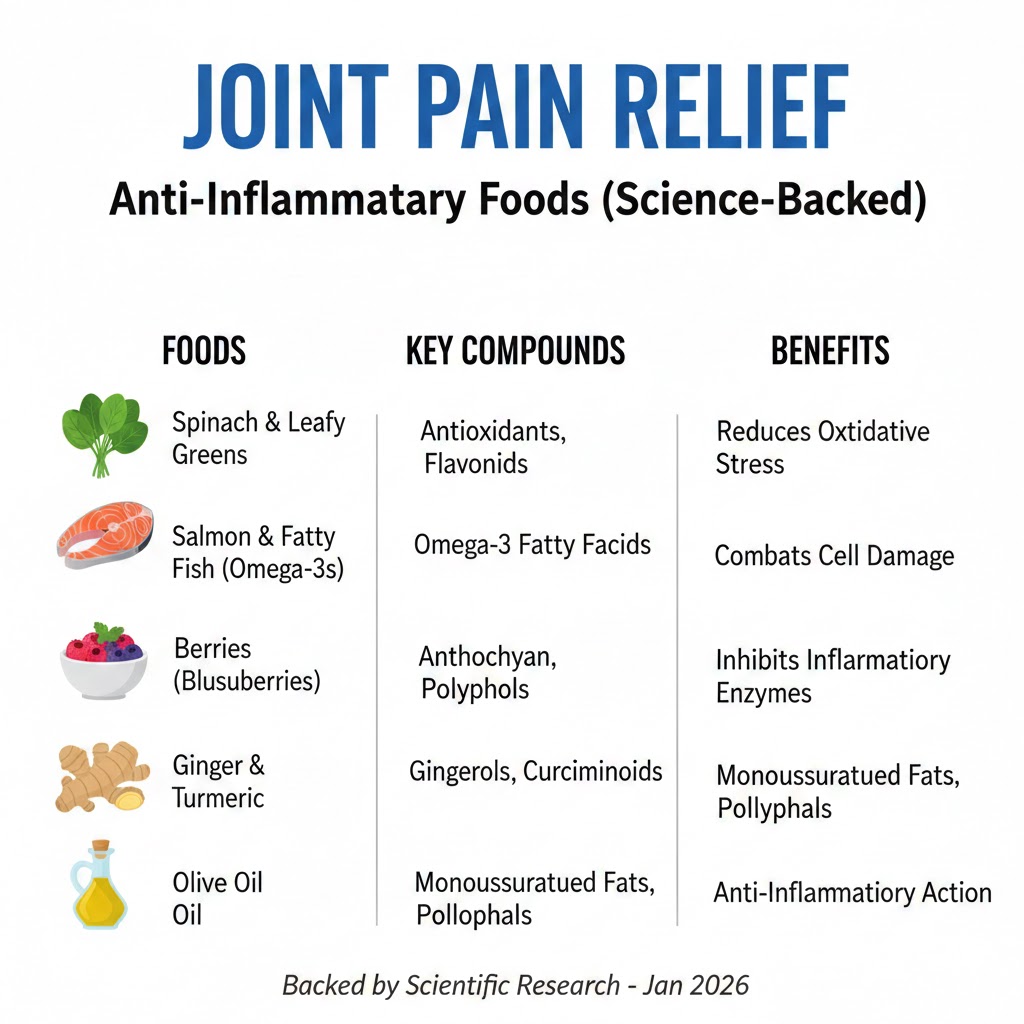
Joint pain is one of the most common reasons people lose mobility, confidence, and quality of life as they age. Whether it’s knees, hips, shoulders, or fingers, chronic inflammation plays a central role in stiffness, swelling, and discomfort.
While medications can help manage symptoms, long-term relief often begins with daily nutrition. Research consistently shows that certain Anti-Inflammatory Foods can reduce inflammatory markers in the body and support joint health naturally.
This guide breaks down the best Anti-Inflammatory Foods for joint pain relief, explains how they work, and shows how to include them without extreme diets or unrealistic restrictions.
1. Why Inflammation Is the Root of Most Joint Pain
Inflammation isn’t always bad. It’s part of the body’s healing process. The problem occurs when inflammation becomes chronic.
Chronic joint inflammation is linked to:
- Osteoarthritis
- Rheumatoid arthritis
- Tendon irritation
- Cartilage breakdown
- Reduced joint mobility
Food directly influences inflammatory pathways, which is why diet matters more than many people realize.
2. How Anti-Inflammatory Foods Actually Work
Anti-Inflammatory Foods don’t “cure” joint pain overnight. They work by gradually shifting the body’s internal environment.
They help by:
- Reducing pro-inflammatory compounds
- Supporting antioxidant defenses
- Improving gut health (linked to inflammation)
- Stabilizing blood sugar
- Supporting healthy fat metabolism
Consistency matters more than perfection.
3. Fatty Fish (Omega-3 Powerhouse)
Fatty fish consistently top the list of Anti-Inflammatory Foods supported by science.
Why they help joints:
- Rich in omega-3 fatty acids
- Reduce inflammatory cytokines
- Support cartilage and joint lubrication
Best choices:
- Salmon
- Sardines
- Mackerel
- Trout
Aim for 2 servings per week for measurable benefits.
4. Extra Virgin Olive Oil
Olive oil is a cornerstone of anti-inflammatory eating patterns.
Joint-supporting benefits:
- Contains oleocanthal (similar to mild anti-inflammatory effects)
- Supports healthy cholesterol balance
- Reduces oxidative stress
Best use:
- Salad dressings
- Light cooking
- Drizzled over vegetables
Replace refined oils with olive oil whenever possible.
5. Leafy Green Vegetables
Leafy greens support joints by addressing inflammation at the cellular level.
Why they matter:
- High antioxidant content
- Rich in vitamin C and polyphenols
- Support collagen and connective tissue
Top options:
- Spinach
- Kale
- Swiss chard
- Arugula
Daily intake supports long-term joint health.
6. Berries
Berries are small but powerful Anti-Inflammatory Foods.
Joint benefits include:
- High levels of anthocyanins
- Reduced oxidative damage
- Support for blood vessel and joint tissue health
Best choices:
- Blueberries
- Strawberries
- Raspberries
- Blackberries
They’re easy to add to breakfast or snacks.
7. Nuts and Seeds
Nuts and seeds provide healthy fats that calm inflammation.
Why they help:
- Omega-3 and omega-6 balance
- Magnesium for muscle and joint function
- Antioxidant compounds
Best options:
- Walnuts
- Almonds
- Chia seeds
- Flaxseeds
Stick to small portions for best results.
8. Turmeric (With Black Pepper)
Turmeric is one of the most studied Anti-Inflammatory Foods.
Why it’s effective:
- Curcumin reduces inflammatory pathways
- Supports joint comfort and mobility
- May help reduce stiffness
How to use:
- Add to cooking
- Combine with black pepper for absorption
- Use consistently, not occasionally
Food-based use is safer for long-term support.
9. Ginger
Ginger supports joint health through multiple mechanisms.
Benefits include:
- Reduced inflammation markers
- Improved circulation
- Support for pain modulation
Use it:
- Fresh in meals
- As tea
- In soups or stir-fries
Gentle and effective for daily use.
10. Legumes (Beans and Lentils)
Legumes support joint health indirectly through gut and metabolic health.
Why they matter:
- High fiber reduces systemic inflammation
- Plant protein supports muscle around joints
- Stabilizes blood sugar
Examples:
- Lentils
- Chickpeas
- Black beans
Affordable and joint-friendly.
11. Foods That Can Worsen Joint Inflammation
Knowing what to reduce is just as important.
Limit:
- Highly processed foods
- Excess sugar
- Trans fats
- Refined carbohydrates
- Excess alcohol
Replacing inflammatory foods with Anti-Inflammatory Foods creates the biggest improvement.
12. How to Build a Joint-Friendly Daily Plate
Simple structure works best.
A joint-supportive plate includes:
- Vegetables as the base
- Healthy fats (olive oil, nuts)
- Lean protein (fish or legumes)
- Minimal ultra-processed foods
No extreme diets required.
13. Lifestyle Habits That Enhance Anti-Inflammatory Foods
Food works best with supportive habits.
Pair nutrition with:
- Regular low-impact movement
- Adequate sleep
- Stress management
- Hydration
Joint pain improves faster when inflammation is addressed holistically.
14. Common Myths About Anti-Inflammatory Diets
Let’s clear confusion:
- You don’t need to eliminate all carbs
- Fat is not the enemy — quality matters
- Supplements don’t replace whole foods
- Results take time, not days
Consistency beats intensity.
15. Final Thoughts: Eat to Move Better
Joint pain doesn’t improve by chance — it improves through daily decisions.
By prioritizing Anti-Inflammatory Foods, you support:
- Reduced stiffness
- Better mobility
- Healthier joints over time
Small changes, repeated daily, create the strongest long-term relief.
FAQ: Anti-Inflammatory Foods
What are the best anti-inflammatory foods for joint pain?
Fatty fish, olive oil, leafy greens, berries, nuts, turmeric, and ginger are among the best.
How long does it take for anti-inflammatory foods to help joints?
Most people notice gradual improvement within a few weeks of consistent eating.
Can anti-inflammatory foods replace pain medication?
They can support joint health but should not replace medical treatment without professional advice.
Are anti-inflammatory foods safe for daily use?
Yes, when consumed as whole foods in balanced amounts.
Do supplements work better than food?
Whole foods are generally more effective and safer long-term.
Is weight important for joint inflammation?
Yes. Maintaining a healthy weight reduces stress and inflammation in joints.
Can anti-inflammatory foods help arthritis?
They can help manage symptoms and support joint function as part of a comprehensive approach.
More Related Topics:
Top 10 Best Foods to Improve Your Heart Health | Simple & Natural Choices
Red Light Therapy for Muscle Recovery: Science vs Hype in 2026 (What Actually Works)