
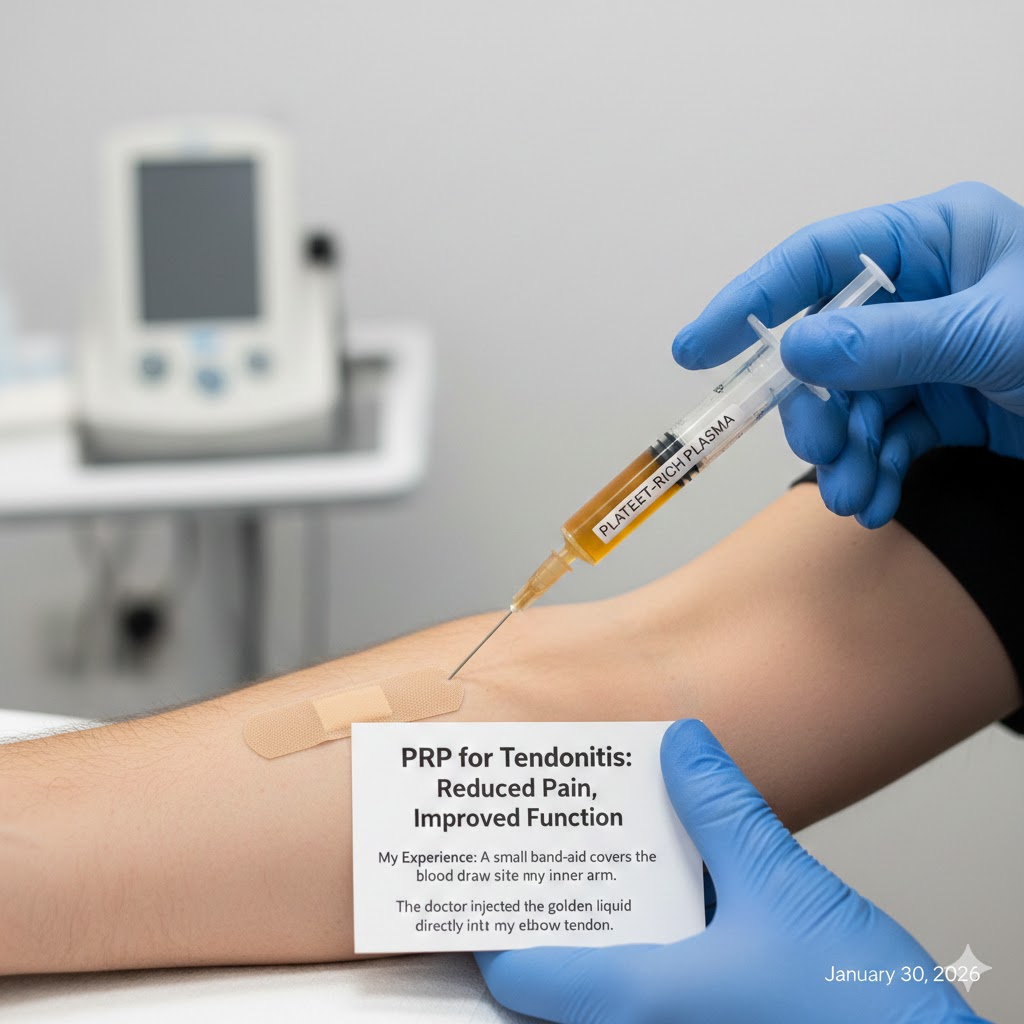
Platelet-Rich Plasma Injections Tendonitis has a way of quietly taking over your life. It starts as mild discomfort, then becomes a constant reminder every time you move, lift, or exercise. Rest helps temporarily. Painkillers mask symptoms. Physical therapy works — until it doesn’t.
After months of frustration, I reached a point where I wanted something that addressed healing, not just pain. That’s when my doctor suggested Platelet-Rich Plasma Injections, commonly known as PRP.
This is my personal experience trying PRP for tendonitis — what it involved, how it felt, what improved, what didn’t, and whether I’d do it again.
This is not medical advice — just a real-world account.
1. Why I Considered Platelet-Rich Plasma Injections
I didn’t jump into PRP casually.
Before considering Platelet-Rich Plasma Injections, I had already tried:
- Extended rest
- Anti-inflammatory medications
- Physical therapy
- Activity modification
The pain kept returning. Not severe enough for surgery — but persistent enough to affect daily life.
PRP was presented as a regenerative option, not a quick fix.
2. What Platelet-Rich Plasma Injections Actually Are
PRP uses your own blood to support tissue healing.
The process involves:
- Drawing a small amount of blood
- Spinning it in a centrifuge
- Concentrating platelets and growth factors
- Injecting that concentration into the injured tendon
The idea is that platelets release signals that support tissue repair.
That’s the theory behind Platelet-Rich Plasma Injections.
3. My Tendonitis Diagnosis and Expectations
My tendonitis was chronic, not acute.
Important context:
- Symptoms lasted several months
- Imaging showed tendon degeneration, not tearing
- Conservative treatments plateaued
My doctor was clear: PRP wasn’t guaranteed — but it might stimulate healing where inflammation alone wasn’t resolving.
4. The PRP Injection Day: What It Was Like
The appointment itself was straightforward.
Here’s how it went:
- Blood draw took a few minutes
- Processing took about 15–20 minutes
- Injection was ultrasound-guided
- Discomfort was noticeable but brief
The injection itself felt like deep pressure rather than sharp pain.
5. Immediate Aftermath: The First 72 Hours
This surprised me.
After the injection:
- Pain increased temporarily
- Area felt sore and stiff
- Anti-inflammatories were discouraged
- Rest was strongly recommended
This flare-up is expected — PRP intentionally triggers a healing response.
6. The First Two Weeks: Slow and Uncomfortable
The first two weeks were not encouraging.
What I noticed:
- Pain levels fluctuated
- Some days felt worse than baseline
- Activity was limited
- No instant relief
This is where many people quit mentally. Platelet-Rich Plasma Injections are not fast-acting.
7. When Things Started to Change
Around weeks 3–4, subtle improvements appeared.
Changes included:
- Less morning stiffness
- Reduced pain during daily movement
- Improved tolerance to light activity
Nothing dramatic — but consistent.
That consistency mattered.
8. The Role of Rehabilitation After PRP
PRP alone isn’t enough.
My recovery depended heavily on:
- Gradual physical therapy
- Controlled loading of the tendon
- Avoiding reinjury
- Patience
PRP created a window for healing — rehab determined how well I used it.
9. Results After 8–12 Weeks
This is where I could honestly assess the outcome.
By 2–3 months:
- Pain was noticeably reduced
- Daily function improved
- Flare-ups were less frequent
- Confidence in movement returned
It wasn’t a miracle cure — but it was meaningful improvement.
10. What Platelet-Rich Plasma Injections Did NOT Do
Being honest matters.
PRP did not:
- Eliminate pain overnight
- Replace rehab work
- Make me invincible
- Guarantee permanent results
It supported healing — it didn’t replace responsibility.
11. Cost, Insurance, and Practical Reality
This is an important consideration.
For me:
- Insurance did not cover PRP
- Cost was out-of-pocket
- Value depended on outcome
PRP is an investment — not a guaranteed purchase.
12. Who Platelet-Rich Plasma Injections May Help Most
Based on my experience and discussions with professionals, PRP may suit people who:
- Have chronic tendon issues
- Haven’t responded to conservative care
- Want to avoid surgery
- Are committed to rehab
It’s not ideal for everyone.
13. Who Should Be Cautious About PRP
PRP may be less effective if:
- Tendon damage is severe
- Structural tears are present
- Expectations are unrealistic
- Rehab is skipped
Patient selection matters a lot.
14. Would I Try Platelet-Rich Plasma Injections Again?
Yes — with clear expectations.
I’d do it again because:
- It improved function
- It reduced chronic pain
- It supported healing, not masking
But I wouldn’t expect miracles.
15. Final Thoughts: The Honest Takeaway
Platelet-Rich Plasma Injections aren’t hype — but they’re not magic either.
For my tendonitis:
- They helped
- They required patience
- They worked best with rehab
- They weren’t instant
If you’re considering PRP, go in informed, realistic, and committed.
FAQ: Platelet-Rich Plasma Injections
What are Platelet-Rich Plasma Injections used for?
They’re commonly used for tendon injuries, joint issues, and certain soft tissue conditions.
Does PRP hurt?
The injection can be uncomfortable, but pain is usually short-lived.
How long does PRP take to work?
Improvement often begins after several weeks, with results developing over months.
Is PRP better than steroid injections?
PRP aims to support healing, while steroids primarily reduce inflammation. They serve different purposes.
How many PRP injections are needed?
Some people need one; others may need multiple, depending on the condition.
Is PRP safe?
Because it uses your own blood, risks are generally low when performed properly.
Is PRP worth the cost?
It depends on the individual, condition severity, and response to treatment.
More Related Topics:
Best Anti-Inflammatory Foods for Joint Pain Relief (Backed by Science)
Top 10 Best Foods to Improve Your Heart Health | Simple & Natural Choices