
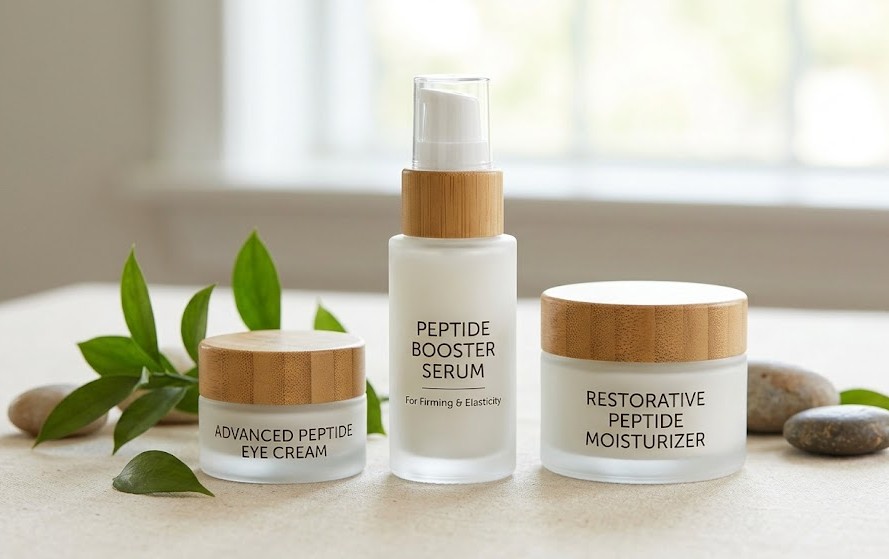
You’ve probably seen peptides listed on skincare labels and heard claims about firmer, younger-looking skin. What many people do not realize is that not all peptide products work the same way, and choosing the wrong one can limit your results. In this guide, you’ll learn what peptides are, how they benefit the skin, how to choose the right peptide product, and how to build an effective peptide skincare routine.
Key Takeaways
- Peptides are short chains of amino acids that help support collagen production and skin repair.
- Peptide skincare products are commonly used to improve skin firmness, elasticity, and overall texture.
- Different peptide types target concerns such as wrinkles, hydration, barrier support, and skin resilience.
- Peptide serums and moisturizers are among the most effective ways to introduce peptides into a skincare routine.
- Consistency matters more than occasional use when it comes to peptide skincare results.
- Peptides work well with ingredients such as hyaluronic acid, niacinamide, and ceramides.
- Choosing products based on your skin type and goals improves the likelihood of achieving noticeable results.
What Are Skin Products with Peptides?
Skin products with peptides are skincare formulations that contain short chains of amino acids designed to support skin health, hydration, and firmness.
First, peptides are naturally occurring compounds that act as building blocks for important proteins in the skin. Peptides are short chains of amino acids that act as building blocks for proteins such as collagen and elastin in the skin.
Moreover, collagen and elastin are responsible for maintaining skin structure and elasticity. As natural collagen production declines with age, many skincare brands incorporate peptides into serums, moisturizers, eye creams, and masks.
For example, a peptide serum may contain signal peptides that communicate with the skin and encourage processes associated with a firmer appearance. This makes peptide skincare products particularly popular among people concerned about aging skin.
According to the American Academy of Dermatology, collagen production gradually decreases with age, contributing to wrinkles and skin laxity — Source: American Academy of Dermatology, 2024.
What Are Peptides in Skincare Products?
Peptides in skincare products are lab-created or naturally derived amino acid chains formulated to support healthy-looking skin.
In addition, peptide skincare products are formulated to support skin firmness, hydration, and the appearance of smoother skin. Unlike more aggressive ingredients, peptides are generally considered suitable for a wide range of skin types.
Why Are Peptides Important for Skin Health and Aging?
Peptides are important because they help support the proteins responsible for skin strength, elasticity, and resilience.
First, healthy skin relies on structural proteins to maintain a smooth and youthful appearance. When these proteins decline over time, visible signs of aging often become more noticeable.
Moreover, peptide-based products can complement a complete anti-aging skincare routine. complete anti-aging skincare routine
For example, many consumers use peptides alongside sunscreen, moisturizers, and antioxidant serums to create a more comprehensive skincare approach.
Research published in dermatology journals continues to investigate peptide technology as a promising category of anti-aging ingredients — Source: Journal of Cosmetic Dermatology, 2024.
Why Peptides Matter in Modern Skincare
Modern skincare increasingly focuses on supporting skin function rather than simply masking visible concerns.
Furthermore, peptides fit this approach because they help support the skin’s natural processes. This makes them appealing to consumers seeking long-term skincare strategies rather than temporary cosmetic improvements.
How Do Peptides Help Boost Collagen Production?
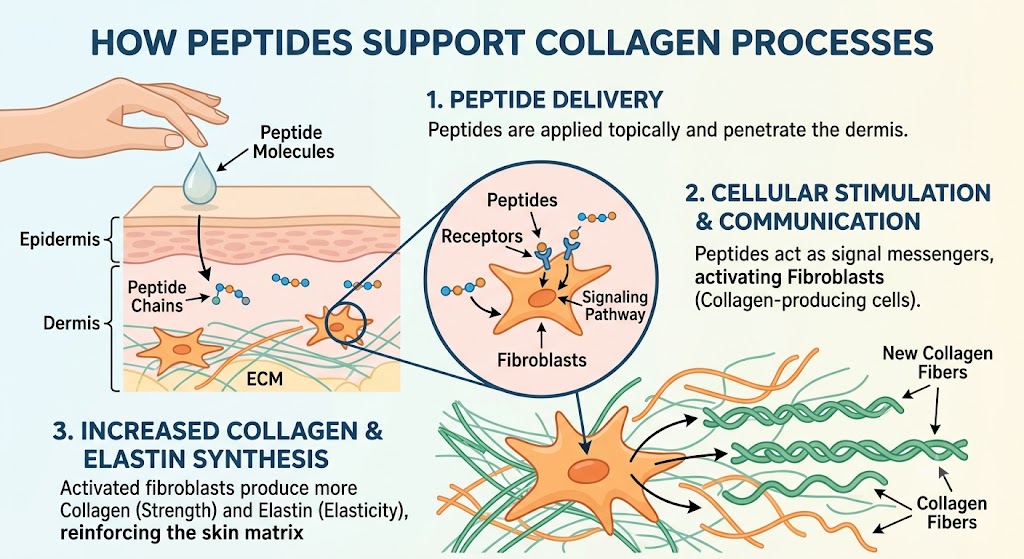
Collagen-supporting peptides help signal the skin to produce proteins that contribute to a firmer and more youthful appearance.
First, certain peptides act as messengers. These peptides communicate with skin cells and encourage biological processes associated with collagen maintenance.
Moreover, collagen is one of the most abundant proteins in the skin. Maintaining healthy collagen levels can help reduce the appearance of fine lines and improve skin texture.
For example, signal peptides found in many peptide facial serum formulations are specifically included to support collagen-related functions.
You can learn more about the benefits of collagen for skin health here: benefits of collagen for skin health
How Peptides Work to Support Skin Health
Peptides support skin health by assisting hydration, barrier function, and structural integrity.
Additionally, some peptides may help improve moisture retention. Better hydration often results in skin that appears smoother and more supple.
A peptide serum is a concentrated skincare product designed to deliver peptides directly to the skin’s surface.
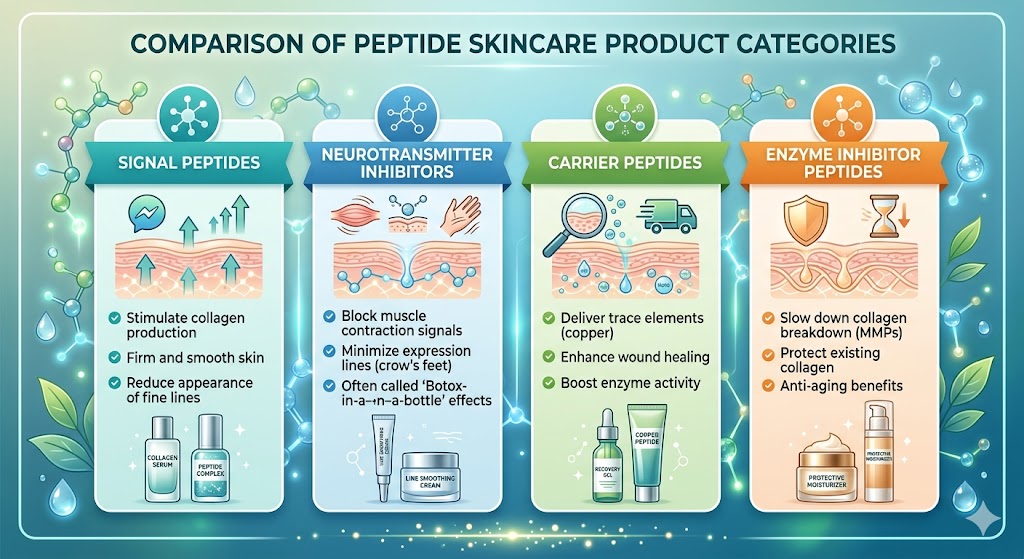
What Are the Different Types of Peptides Used in Skincare?
Different types of peptides are designed to address specific skincare concerns such as wrinkles, hydration, and skin barrier support.
Signal Peptides
Signal peptides are peptides that help communicate with skin cells regarding collagen-related processes.
For example, these peptides are commonly found in anti aging peptides and firming skincare products.
Carrier Peptides
Carrier peptides are peptides that help transport trace elements needed for various skin functions.
For example, copper peptides for skin are among the most recognized carrier peptides in skincare.
Neurotransmitter-Inhibiting Peptides
Neurotransmitter-inhibiting peptides are peptides designed to reduce the appearance of expression-related wrinkles.
Moreover, these peptides are frequently included in products marketed toward mature skin.
Enzyme-Inhibitor Peptides
Enzyme-inhibitor peptides are peptides that help protect existing skin proteins from breakdown.
These formulations are commonly found in peptide anti aging products focused on long-term skin maintenance.
| Peptide Type | Primary Purpose | Common Use |
|---|---|---|
| Signal Peptides | Support collagen-related processes | Firming serums |
| Carrier Peptides | Deliver beneficial trace elements | Copper peptide products |
| Neurotransmitter-Inhibiting Peptides | Target expression lines | Anti-aging creams |
| Enzyme-Inhibitor Peptides | Help preserve skin proteins | Mature skin products |
What Are the Benefits of Skin Products with Peptides?
Skin products with peptides can help improve the appearance of firmness, hydration, elasticity, and overall skin texture.
First, peptide skincare products are frequently used to address visible signs of aging. Many users report improvements in skin smoothness and resilience with consistent use.
Moreover, peptides are generally versatile ingredients suitable for different skincare goals.
Improved Firmness and Elasticity
Peptides for wrinkles are commonly used because they help support firmer-looking skin.
For example, collagen-supporting peptides are often included in peptide face cream products marketed toward mature skin.
Better Hydration and Barrier Support
Peptides can contribute to healthier skin barrier function and moisture retention.
In addition, stronger barrier function can reduce dryness and improve comfort. Learn more about a skin barrier repair routine here: skin barrier repair routine
Support for Mature Skin
Peptides for mature skin are often included in comprehensive anti-aging routines.
Furthermore, they pair well with many other skincare ingredients commonly recommended as the best ingredients for mature skin.
Who Should Use Peptide-Based Skincare Products?
Peptide-based skincare products are suitable for individuals seeking support for aging concerns, hydration, and skin resilience.
First, people experiencing fine lines or reduced skin firmness may benefit from incorporating peptide skincare products.
Moreover, individuals with sensitive skin often appreciate peptides because they are generally less irritating than some stronger active ingredients.
Are Peptide Skin Products Safe for Sensitive Skin?
Peptide skin products are generally considered suitable for sensitive skin when properly formulated.
For example, peptide moisturizers containing ceramides and soothing ingredients can provide both hydration and barrier support.
How Do You Choose the Best Peptide Product for Your Skin Type?
Choosing the best peptide product requires matching the formulation to your skin type, sensitivity level, and skincare goals.
Choosing a peptide product based on skin type, sensitivity level, and skincare goals increases the likelihood of achieving noticeable results.
For Dry Skin
Choose peptide moisturizers containing:
- Ceramides
- Hyaluronic acid
- Squalane
- Barrier-supporting ingredients
For Oily Skin
Choose lightweight:
- Peptide serum formulas
- Gel moisturizers
- Non-comedogenic products
For Mature Skin
Choose:
- Peptide face cream products
- Multi-peptide serums
- Copper peptide formulations
For more guidance on how to choose skincare products,
What Is the Difference Between Peptide Serums and Peptide Moisturizers?
Peptide serums are concentrated treatment products, while peptide moisturizers focus on hydration and barrier support.
Peptide Serums
A peptide serum is typically designed to deliver higher concentrations of active ingredients directly to the skin.
For example, many of the best peptide skincare products are serum-based because they allow targeted application.
Explore additional options among the best facial serums for aging skin.
Peptide Moisturizers
A peptide moisturizer combines peptides with hydrating ingredients to support daily skin maintenance.
Moreover, moisturizers are often easier for beginners because they integrate seamlessly into existing routines.
Can Peptides Be Used with Retinol, Vitamin C, and Hyaluronic Acid?
Peptides can generally be combined with retinol, vitamin C, hyaluronic acid, niacinamide, and ceramides.
Peptides can be combined with ingredients such as hyaluronic acid, niacinamide, and ceramides to support overall skin health.
Peptides and Hyaluronic Acid
Hyaluronic acid and peptides create a complementary hydration-focused combination.
Learn more in our hyaluronic acid skincare guide.
Peptides and Niacinamide
Niacinamide and peptides support skin barrier health and overall skin appearance.
Explore additional niacinamide benefits for skin here. niacinamide benefits for skin
Peptides and Retinol
Retinol and peptides can work together in many skincare routines when introduced carefully.
For beginners, review a retinol beginner’s guide before combining advanced actives.
How Long Does It Take for Peptide Skincare Products to Show Results?
Peptide skincare products typically require consistent use over several weeks to months before visible improvements become noticeable.
First, skincare improvements occur gradually because collagen-related processes take time.
Moreover, consistent use of peptide-based skincare products is generally more important than using high concentrations infrequently.
For example, many users evaluate results after 8 to 12 weeks of regular use rather than after only a few applications.
How Can You Build an Effective Skincare Routine with Peptides?
An effective peptide skincare routine combines cleansing, treatment products, hydration, and daily sun protection.
Morning Routine
- Gentle cleanser
- Peptide serum
- Moisturizer
- Sunscreen SPF 30+
Evening Routine
- Cleanser
- Treatment products
- Peptide moisturizer
- Barrier-supporting cream if needed
For a complete breakdown of daily skincare routine steps,
Example Routine for Beginners
A beginner-friendly routine focuses on consistency rather than complexity.
For example, adding a single peptide facial serum before moisturizer is often enough to start experiencing the benefits of peptide skincare.
Examples of Popular Peptide Product Categories and Use Cases
Popular peptide product categories include serums, moisturizers, eye creams, masks, and targeted anti-aging treatments.
- Peptide serum — General anti-aging support
- Peptide moisturizer — Daily hydration and barrier support
- Peptide eye cream — Fine lines around the eyes
- Peptide face cream — Mature skin support
- Copper peptides for skin — Advanced anti-aging routines
- Collagen boosting skincare products — Firmness-focused routines
What Mistakes Should You Avoid When Using Peptide Products?
The biggest mistakes involve inconsistency, unrealistic expectations, and choosing products that do not match your skin needs.
Common Errors
- Switching products too quickly
- Ignoring sunscreen
- Overcomplicating routines
- Expecting overnight results
- Choosing products based only on marketing claims
Review additional common skincare mistakes to avoid here: common skincare mistakes to avoid
Practical Application: How to Evaluate Peptide Products
Evaluating peptide products requires reviewing ingredient lists, formulation quality, and intended skin benefits.

Free resources for research include:
- Ingredient databases
- Dermatologist educational websites
- Product comparison tools
What’s Next: Creating a Long-Term Anti-Aging Skincare Strategy?
A long-term anti-aging skincare strategy focuses on consistency, sun protection, healthy habits, and evidence-based ingredients.
First, peptides work best when viewed as part of a broader skincare approach rather than a standalone solution.
Moreover, daily sunscreen remains one of the most effective anti-aging practices available. Research consistently identifies UV exposure as a major contributor to visible skin aging — Source: World Health Organization, 2024.
For example, combining peptides with moisturization, sun protection, and healthy lifestyle habits often produces more sustainable results.
Explore additional healthy skin habits for long-term results here: healthy skin habits for long-term results
Quotable Insights
- Peptides support the proteins that help skin maintain firmness and resilience.
- Consistent skincare habits often matter more than individual hero ingredients.
- Peptide serums deliver targeted treatment, while peptide moisturizers prioritize hydration and maintenance.
- Healthy skin aging depends on both skincare products and daily sun protection.
- Choosing skincare based on your skin type improves long-term results.
Conclusion: Achieving Healthier, More Resilient Skin with Peptides
Skin products with peptides are science-backed skincare formulations designed to support healthier, firmer, and smoother-looking skin.
Throughout this guide, you’ve learned how peptides work, the different types available, who can benefit from them, and how to build an effective peptide skin care routine. Whether you choose a peptide serum, peptide moisturizer, or peptide eye cream, consistency and product selection are key.
By choosing products that match your skin type and combining them with proven ingredients like hyaluronic acid, niacinamide, and sunscreen, you can create a skincare routine that supports healthier skin for years to come.
FAQs
What are peptides in skincare?
Peptides are short chains of amino acids that help support the skin’s natural proteins, including collagen and elastin.
What are the benefits of skin products with peptides?
Peptide-based skincare products may help improve skin firmness, hydration, elasticity, and the appearance of fine lines and wrinkles.
Do peptides help with wrinkles?
Yes, peptides may help reduce the appearance of fine lines and wrinkles by supporting collagen production and skin renewal.
Are peptide skincare products suitable for all skin types?
Yes, peptide products are generally suitable for most skin types, including sensitive, dry, oily, and combination skin.
Can peptides improve skin firmness?
Peptides may help improve skin firmness and elasticity by supporting the skin’s structural proteins.
How long do peptides take to work on the skin?
Many people notice improvements in skin texture and hydration within a few weeks, while visible anti-aging benefits may take longer.
Can you use peptides with retinol?
Yes, peptides are often used alongside retinol to support skin repair and help reduce dryness or irritation.
Can peptides be used with vitamin C?
Yes, peptides and vitamin C are commonly combined in skincare routines to support brighter, healthier-looking skin.
When should you apply peptide skincare products?
Peptide serums and moisturizers are typically applied after cleansing and before sunscreen during the day or as part of a nighttime routine.
Are peptide skincare products worth using?
Many people use peptide-based products to support healthier, smoother, and more youthful-looking skin as part of a consistent skincare routine.