
You’ve probably seen collagen powders, capsules, and beauty drinks everywhere—from skincare influencers to wellness stores. But most people still don’t know which collagen supplements actually help skin, how long they take to work, or what ingredients truly matter. In this guide, you’ll learn the science behind collagen supplements for skin, how to choose effective products, and how to build a realistic anti-aging routine that supports healthier-looking skin.
Key Takeaways
- Collagen supplements provide amino acids that support the skin’s natural collagen production and structural integrity.
- Hydrolyzed collagen peptides are the most commonly studied form of collagen for skin elasticity and hydration benefits.
- Skin collagen decline naturally increases with age, sun exposure, smoking, stress, and poor nutrition.
- Marine collagen and bovine collagen differ in sourcing, collagen types, and amino acid composition.
- Vitamin C is essential for collagen synthesis because it helps stabilize and form collagen molecules in the body.
- Consistent collagen supplementation typically requires several weeks or months before visible skin improvements appear.
- Evidence-based collagen routines work best when combined with sun protection, hydration, protein intake, and skincare habits.
What Are Collagen Supplements for Skin and How Do They Work?
Collagen supplements for skin are dietary products that provide collagen peptides intended to support skin elasticity, hydration, and structural integrity. Most collagen supplements contain hydrolyzed collagen proteins that are broken into smaller amino acid chains for easier digestion and absorption.
First, collagen is the most abundant protein in the human body. It acts like a structural framework for your skin, helping maintain firmness, elasticity, and smooth texture. For example, youthful skin contains dense collagen fibers that keep the skin resilient and hydrated.
Moreover, hydrolyzed collagen peptides are broken-down collagen proteins designed for easier digestion and absorption. These peptides travel through the bloodstream after digestion and provide amino acids such as glycine, proline, and hydroxyproline that support collagen-building processes.
Why Is Collagen Important for Skin Structure?
Collagen is essential for skin strength, elasticity, and hydration because it forms the connective support network beneath the skin’s surface.
Second, collagen works together with elastin and hyaluronic acid to maintain healthy-looking skin. Elastin helps skin stretch and rebound, while hyaluronic acid helps retain moisture.
For example, reduced collagen levels can contribute to:
- Fine lines
- Wrinkles
- Sagging skin
- Dryness
- Thinner skin texture
According to the American Academy of Dermatology, collagen production begins declining gradually in early adulthood and decreases faster after menopause — Source: American Academy of Dermatology, 2024.
What Is the Difference Between Collagen Peptides, Hydrolyzed Collagen, and Marine Collagen?
Collagen peptides and hydrolyzed collagen are essentially the same thing, while marine collagen refers to collagen sourced from fish.
Let’s explore the differences:
| Type | Definition | Main Source | Best Known Use |
|---|---|---|---|
| Collagen Peptides | Broken-down collagen proteins | Bovine or marine | Skin and joint support |
| Hydrolyzed Collagen | Enzymatically processed collagen | Animal-derived | Better absorption |
| Marine Collagen | Fish-derived Type I collagen | Fish skin/scales | Skin-focused supplementation |
In addition, marine collagen primarily contains Type I collagen, the collagen type most abundant in human skin.
Why Does Skin Collagen Decline With Age?
Collagen production naturally declines with age, contributing to wrinkles, sagging skin, and reduced elasticity.
First, the body produces less collagen starting in the mid-20s. Research suggests adults may lose approximately 1% of collagen annually after early adulthood — Source: Harvard Health Publishing, 2023.
Moreover, hormonal changes accelerate collagen decline. For example, women can lose up to 30% of skin collagen during the first five years after menopause — Source: Dermato-Endocrinology Journal, 2023.
How Lifestyle Factors Damage Collagen
Environmental stressors accelerate collagen breakdown by increasing oxidative stress and inflammation in the skin.
For example, the biggest collagen-damaging factors include:
- UV radiation
- Smoking
- High sugar intake
- Chronic stress
- Poor sleep
- Air pollution
In particular, UV exposure activates enzymes called matrix metalloproteinases that break down collagen fibers. This process contributes heavily to premature aging and sun damage.
how sun exposure accelerates skin aging
Why Collagen Supplements Became Popular
Collagen supplements became popular because consumers increasingly want beauty-from-within approaches for anti-aging and skin wellness.
At the same time, social media and wellness trends increased awareness of collagen-based skincare routines. According to Grand View Research, the global collagen supplements market is projected to exceed $9 billion by 2030 — Source: Grand View Research, 2025.
Additionally, many users prefer supplements because topical skincare products cannot fully replace structural collagen loss beneath the skin surface.
best anti-aging skincare ingredients
Do Collagen Supplements Actually Improve Skin Elasticity and Wrinkles?
Clinical research suggests collagen supplements may improve skin hydration, elasticity, and wrinkle appearance when used consistently.
First, several randomized controlled studies have shown positive skin outcomes from collagen peptide supplementation.
For example, a 2021 systematic review published in the International Journal of Dermatology found that oral collagen supplementation improved skin elasticity and hydration in multiple clinical trials — Source: International Journal of Dermatology, 2021.
What Studies Say About Collagen for Skin
Most studies on collagen supplements report visible skin improvements after consistent use for 8 to 12 weeks.
Let’s look at common research findings:
| Benefit | Typical Timeline | Evidence Strength |
|---|---|---|
| Improved hydration | 4-8 weeks | Moderate |
| Better elasticity | 8-12 weeks | Moderate |
| Reduced wrinkle depth | 8-12 weeks | Emerging |
| Improved skin smoothness | 6-12 weeks | Moderate |
Moreover, many studies use doses between 2.5g and 10g daily of hydrolyzed collagen peptides.
Limitations of Current Research
Collagen research still has limitations because many studies are industry-funded and use small participant groups.
That being said, positive findings appear relatively consistent across different studies and supplement forms.
For example, researchers still debate:
- Optimal collagen dosage
- Long-term effectiveness
- Differences between collagen sources
- Individual response variability
Which Type of Collagen Is Best for Skin Health?
Type I collagen is generally considered the best collagen type for skin health because it is the primary collagen found in human skin.
First, different collagen types serve different functions in the body.
Type I, II, and III Collagen Explained
| Collagen Type | Primary Function | Common Source |
|---|---|---|
| Type I | Skin, hair, nails, bones | Marine and bovine |
| Type II | Cartilage and joints | Chicken collagen |
| Type III | Skin and connective tissue | Bovine collagen |
In addition, many skin-focused supplements combine Types I and III for broader structural support.
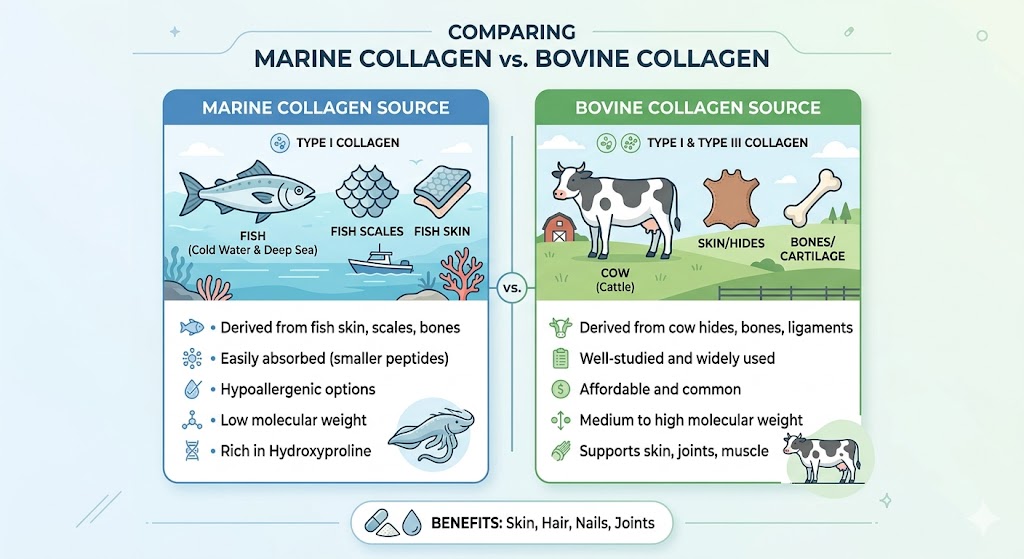
What Is the Difference Between Marine Collagen and Bovine Collagen?
Marine collagen comes from fish, while bovine collagen comes from cows and usually contains Types I and III collagen.
Marine collagen benefits often include:
- High Type I collagen content
- Smaller peptide size
- Skin-focused formulations
Bovine collagen benefits often include:
- Broader amino acid profile
- Lower cost
- Joint and skin support combination
For example, people with fish allergies should avoid marine collagen supplements due to potential allergen exposure.
Can Vegan Supplements Replace Traditional Collagen Supplements?
Vegan collagen supplements do not contain actual collagen but may include nutrients that support natural collagen production.
Most vegan formulas contain:
- Vitamin C
- Silica
- Zinc
- Amino acids
- Antioxidants
At the same time, vegan collagen boosters may still support skin health indirectly by improving collagen synthesis pathways.
benefits of vitamin C for skin
Is Powder, Liquid, or Capsule Collagen Better for Skin Benefits?
Collagen powder is often preferred because it allows higher doses and flexible usage, although capsules and liquids can also be effective.
First, supplement format mainly affects convenience rather than collagen effectiveness.
Comparing Collagen Formats
| Format | Pros | Cons |
|---|---|---|
| Powder | Flexible dosing, cost-effective | Requires mixing |
| Capsules | Convenient travel option | Lower collagen amounts |
| Liquid | Easy consumption | Higher cost |
| Gummies | Tasty and simple | Often lower protein content |
For example, many clinical trials use powdered hydrolyzed collagen because it easily delivers 5-10 grams daily.
What Matters More Than Format
Ingredient quality and peptide bioavailability matter more than whether collagen comes in powder, capsule, or liquid form.
Look for:
- Hydrolyzed collagen peptides
- Transparent sourcing
- Third-party testing
- Minimal fillers
- Clinically supported dosages

What Ingredients Should You Combine With Collagen for Better Results?
Vitamin C, hyaluronic acid, and adequate protein intake can improve the effectiveness of collagen-supporting routines.
First, vitamin C is essential for collagen synthesis because it helps stabilize and form collagen molecules in the body.
Without enough vitamin C, collagen production becomes less efficient.
Best Complementary Ingredients for Skin Support
| Ingredient | Main Benefit |
|---|---|
| Vitamin C | Collagen synthesis support |
| Hyaluronic Acid | Skin hydration |
| Biotin | Hair and nail support |
| Zinc | Tissue repair |
| Ceramides | Skin barrier function |
For example, collagen and hyaluronic acid combinations are popular because they support both skin structure and hydration simultaneously.
Why Protein Intake Matters
Protein intake supports collagen production because collagen itself is made from amino acids.
Moreover, inadequate dietary protein may limit the body’s ability to maintain healthy skin structure.
According to the Recommended Dietary Allowance guidelines, adults generally need at least 0.8 grams of protein per kilogram of body weight daily — Source: National Institutes of Health, 2024.
How Long Does It Take for Collagen Supplements to Work on Skin?
Most people need 8 to 12 weeks of consistent collagen supplementation before noticing visible skin improvements.
First, collagen remodeling is a slow biological process. Your body needs time to digest collagen peptides, distribute amino acids, and support new collagen formation.
For example, hydration improvements may appear earlier than wrinkle reduction.
Realistic Timeline Expectations
| Timeline | Potential Changes |
|---|---|
| 2-4 weeks | Mild hydration support |
| 6-8 weeks | Improved softness and texture |
| 8-12 weeks | Elasticity and fine line improvements |
| 3-6 months | More noticeable long-term benefits |
At the same time, results vary based on:
- Age
- Nutrition
- Sun exposure
- Smoking habits
- Sleep quality
- Existing skincare routine
What Improves Results Faster
Healthy lifestyle habits amplify collagen supplement effectiveness by reducing collagen breakdown and supporting skin repair.
You can improve results by:
- Wearing sunscreen daily
- Staying hydrated
- Eating enough protein
- Avoiding smoking
- Sleeping 7-9 hours nightly
How Do You Choose a High-Quality Collagen Supplement for Skin?
High-quality collagen supplements use hydrolyzed peptides, transparent sourcing, and third-party testing for purity and safety.
First, many collagen products contain unnecessary fillers, artificial sweeteners, or underdosed ingredients.
What to Look for on the Label
Look for these quality indicators:
- Hydrolyzed collagen peptides
- Clearly listed collagen source
- Third-party testing
- GMP-certified manufacturing
- Clinically supported dosages
- Added vitamin C
For example, reputable brands often publish contaminant testing for heavy metals and microbial safety.
Additives to Avoid
Some collagen supplements include excessive sugars, artificial flavors, or unnecessary proprietary blends that reduce transparency.
Avoid products with:
- Excessive added sugar
- Unclear collagen amounts
- Artificial dyes
- Hidden proprietary blends
best supplements for healthy hair and nails

Are Collagen Supplements Safe for Daily Use?
Collagen supplements are generally considered safe for most healthy adults when used as directed.
First, collagen supplements are widely used in wellness and sports nutrition products with relatively low rates of serious adverse effects.
Moreover, collagen is fundamentally a protein source composed of amino acids naturally found in the body.
What Are the Possible Side Effects of Collagen Supplements?
Possible collagen supplement side effects include digestive discomfort, bloating, fullness, and allergy-related reactions.
For example, some users report:
- Mild bloating
- Upset stomach
- Aftertaste
- Fish-related allergic reactions
Marine collagen users should carefully check sourcing information if they have seafood allergies.
Who Should Talk to a Doctor First?
Pregnant individuals, people with food allergies, and those taking medications should consult healthcare professionals before starting collagen supplements.
In addition, people with chronic kidney disease or protein metabolism disorders may need individualized guidance regarding protein supplementation.
Practical Usage Guide and Examples for Collagen Supplements
A practical collagen routine combines consistent supplementation with skincare, hydration, nutrition, and sun protection habits.
First, consistency matters more than taking extremely high doses occasionally.
Sample Daily Collagen Routine
Morning
- Collagen peptides in coffee or smoothie
- Vitamin C-rich breakfast
- Sunscreen application
Afternoon
- Hydration focus
- Protein-rich lunch
Evening
- Retinoid or peptide skincare products
- Sleep-focused recovery routine
Best Dietary Sources of Collagen-Supporting Nutrients
Foods that support collagen production include:
- Citrus fruits
- Eggs
- Bone broth
- Salmon
- Chicken
- Leafy greens
- Berries
For example, vitamin C-rich foods help support collagen synthesis naturally.

What’s Next: Creating a Long-Term Skin Health Strategy
Long-term skin health requires combining collagen supplementation with skincare, nutrition, hydration, and lifestyle habits.
First, supplements alone cannot completely reverse aging or replace healthy skin practices.
Build a Sustainable Anti-Aging Routine
A realistic skin health strategy includes:
- Daily sunscreen
- Consistent sleep
- Protein-rich nutrition
- Stress management
- Hydration
- Evidence-based skincare
For example, sunscreen remains one of the most effective tools for preventing collagen breakdown caused by UV exposure.
When Should You Consult a Dermatologist?
Persistent skin concerns, severe acne scarring, or rapid skin changes should be evaluated by a dermatologist.
In addition, professional guidance can help identify whether collagen supplements fit your broader skincare goals.
Conclusion
Collagen supplements for skin can support hydration, elasticity, and healthy aging when combined with realistic lifestyle habits and evidence-based skincare.
First, collagen peptides provide amino acids that may help support the skin’s natural structural framework over time. However, supplements work best alongside sunscreen, hydration, protein intake, sleep quality, and consistent skincare habits.
Moreover, choosing high-quality hydrolyzed collagen products with transparent sourcing and complementary nutrients like vitamin C can improve your chances of seeing meaningful results.
Ultimately, healthy skin is built through consistency rather than quick fixes. By making informed, science-backed decisions, you can create a sustainable routine that supports stronger, healthier-looking skin for the long term.
FAQs
What are Collagen supplements?
Collagen supplements are products made from collagen peptides or proteins designed to support skin, hair, nails, joints, and overall connective tissue health.
Can collagen supplements improve skin health?
Some studies suggest collagen supplements may help improve skin hydration, elasticity, and smoothness over time.
How does collagen help the skin?
Collagen is a structural protein that helps maintain skin firmness, elasticity, and a youthful appearance.
How long does it take for collagen supplements to work?
Many people notice visible skin improvements after several weeks to a few months of consistent use.
What type of collagen is best for skin?
Type I and Type III collagen are commonly used for skin health and beauty support.
Can collagen supplements reduce wrinkles?
Collagen may help reduce the appearance of fine lines and wrinkles by improving skin elasticity and hydration.
Are collagen supplements safe?
Collagen supplements are generally considered safe for most healthy adults when used as directed.
What foods naturally support collagen production?
Foods rich in vitamin C, protein, zinc, and antioxidants may help support the body’s natural collagen production.
Can vegetarians or vegans take collagen supplements?
Most collagen comes from animal sources, but some plant-based products are designed to support natural collagen production.
What is the best time to take collagen supplements?
Collagen can be taken at any time of day, though many people add it to morning coffee, smoothies, or post-workout drinks.