
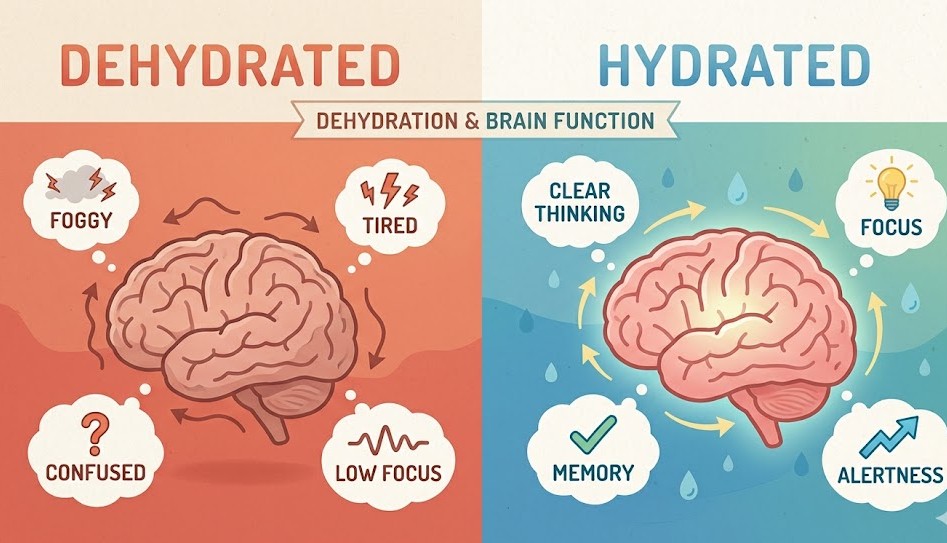
Most people know dehydration causes thirst and fatigue, but far fewer realize how quickly it can affect the brain. Even mild dehydration may reduce focus, memory, mood, and mental performance before obvious physical symptoms appear. In this guide, you’ll learn exactly how dehydration impacts brain function, the science behind brain fog, and the best ways to stay mentally sharp through proper hydration.
Key Takeaways
- Dehydration reduces brain performance by affecting focus, memory, reaction time, and emotional regulation.
- Mild dehydration can impair cognitive function even before intense thirst develops.
- Brain fog caused by dehydration often includes fatigue, headaches, dizziness, and difficulty concentrating.
- Electrolytes support brain signaling by helping maintain fluid balance and nerve communication.
- Consistent hydration habits improve productivity by supporting energy levels, attention span, and mental clarity.
- Water-rich foods and sleep quality influence hydration and can affect daily cognitive performance.
- Hydration tracking strategies help prevent recurring symptoms such as mental fatigue and poor concentration.
What Is Dehydration and How Does It Affect Brain Function?
Dehydration is a condition in which the body loses more fluids than it takes in, reducing the brain’s ability to regulate cognition and mood. Because the brain is made up of roughly 73% water, even small drops in hydration can affect mental performance, concentration, and emotional stability.
First, dehydration changes the balance of electrolytes like sodium and potassium that help brain cells communicate. When these signals become less efficient, you may experience slower thinking, reduced focus, and mental fatigue. For example, many people notice brain fog during long workdays when they forget to drink water.
Moreover, dehydration can reduce blood flow and oxygen delivery to the brain. This process may contribute to headaches, dizziness, and slower reaction times. According to research published in Nutrients, even mild dehydration can negatively influence mood and cognitive function — Source: Nutrients, 2018.
Mild dehydration can impair attention, memory, and reaction time even before severe thirst develops. This is one reason students, athletes, and office workers often experience productivity declines without realizing hydration is part of the problem.
Why Proper Hydration Matters for Cognitive Health
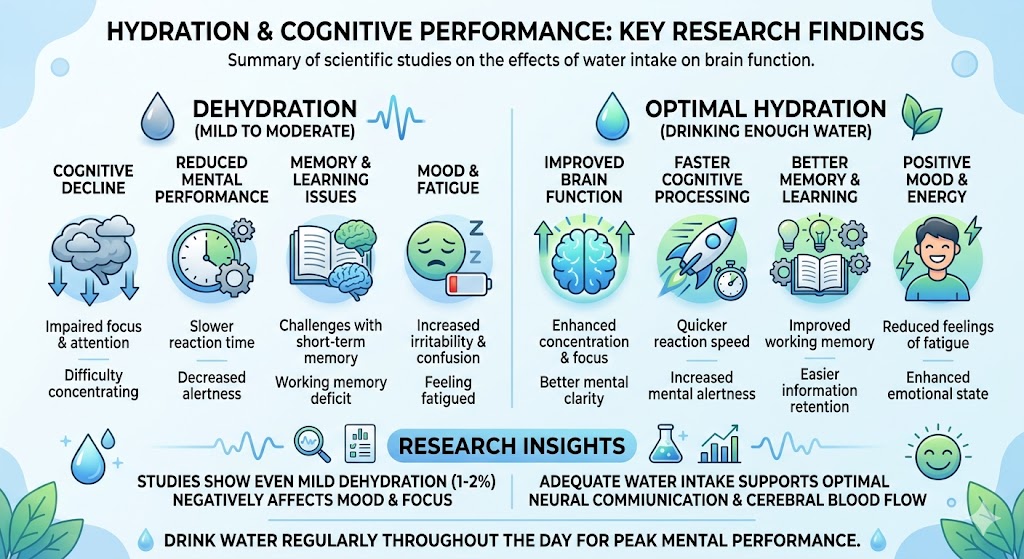
Proper hydration matters for cognitive health because water supports circulation, temperature regulation, nutrient transport, and electrical signaling inside the brain. Without enough fluids, the brain must work harder to complete normal mental tasks.
Second, hydration directly affects mental endurance. Research from the Journal of Nutrition found that women with mild dehydration experienced more fatigue, headaches, and concentration difficulties — Source: Journal of Nutrition, 2012. Men also showed reduced alertness and increased tiredness in similar studies.
At the same time, hydration influences emotional balance. People who are dehydrated often report irritability, anxiety, or low mood. This connection exists partly because dehydration increases stress hormone activity and physical discomfort.
In addition, proper hydration supports workplace productivity and learning performance. For example, students who drink enough water during exams often maintain better focus and reaction speed compared to dehydrated peers.
Why Does the Brain Need Water to Function Properly?
The brain needs water to function properly because water supports neurotransmitter activity, nutrient delivery, and cellular communication. Every thought, memory, and movement depends on these processes.
Furthermore, water helps maintain the protective environment surrounding brain cells. When hydration levels drop, the brain temporarily shrinks slightly due to reduced fluid volume. MRI studies have shown measurable changes in brain tissue during dehydration — Source: Human Brain Mapping, 2009.
For example, if you spend hours exercising outdoors without enough fluids, your brain may struggle to process information efficiently. This can lead to slower decisions and reduced coordination.
Proper hydration supports cognitive performance by improving blood flow, oxygen delivery, and nutrient transport to the brain. This is why hydration is closely linked to mental clarity and productivity.
Can Mild Dehydration Cause Brain Fog and Poor Concentration?
Mild dehydration can cause brain fog and poor concentration by reducing the efficiency of brain signaling and energy production. Many people experience cognitive symptoms before noticing physical thirst.
First, dehydration affects short-term attention span. Tasks that require sustained focus become harder when the brain lacks sufficient hydration. For example, office workers may reread emails multiple times or struggle to complete simple tasks.
Second, dehydration increases mental fatigue. The brain uses significant energy throughout the day, and reduced fluid balance can make cognitive processing feel slower and more exhausting.
Brain fog caused by dehydration often includes fatigue, difficulty concentrating, headaches, and slower mental processing. These symptoms are especially common during hot weather, intense workouts, illness, or long hours without drinking fluids.
According to the European Journal of Clinical Nutrition, dehydration as low as 1–2% of body weight can impair cognitive performance — Source: European Journal of Clinical Nutrition, 2011.
Common Signs of Dehydration-Related Brain Fog
Dehydration-related brain fog includes cognitive and physical symptoms linked to reduced fluid balance. These symptoms often develop gradually throughout the day.
Common symptoms include:
- Difficulty concentrating
- Slower thinking speed
- Fatigue and low motivation
- Headaches or migraines
- Dizziness
- Dry mouth
- Irritability
- Poor short-term memory
- Increased mental errors
For example, someone working in an air-conditioned office may become dehydrated without noticing excessive sweating. By afternoon, they may feel mentally sluggish and unfocused.
| Symptom | Possible Cognitive Impact |
|---|---|
| Headaches | Reduced concentration |
| Fatigue | Lower productivity |
| Dizziness | Slower reaction time |
| Dry mouth | Early dehydration warning |
| Brain fog | Poor mental clarity |
| Irritability | Emotional instability |
How Does Dehydration Affect Memory, Focus, and Reaction Time?
Dehydration affects memory, focus, and reaction time by impairing communication between brain cells and reducing mental efficiency. Even small hydration deficits can interfere with cognitive performance.
First, dehydration weakens working memory. Working memory helps you temporarily hold and process information. For example, forgetting instructions moments after hearing them may reflect cognitive fatigue related to poor hydration.
Second, dehydration slows reaction speed. Athletes and drivers may respond more slowly when dehydrated because brain processing becomes less efficient.
Third, hydration strongly influences attention span. Studies show people perform worse on tasks requiring vigilance when dehydrated — Source: Psychophysiology, 2015.
Hydration and concentration are closely connected because the brain depends on stable fluid levels for optimal neural signaling. This explains why drinking water sometimes improves alertness within minutes.
How Much Water Does the Brain Need for Optimal Performance?
The brain needs consistent hydration throughout the day rather than a single large amount of water at once. Fluid requirements vary based on activity level, climate, age, and diet.
According to the U.S. National Academies, average daily fluid intake recommendations are approximately:
- 3.7 liters daily for men
- 2.7 liters daily for women
These totals include water from beverages and food — Source: National Academies of Sciences, 2020.
Moreover, physical activity and heat exposure increase fluid needs substantially. For example, athletes exercising in warm conditions can lose multiple liters of fluid through sweat.
Can Dehydration Cause Anxiety, Headaches, Fatigue, and Poor Sleep?
Dehydration can cause anxiety, headaches, fatigue, and poor sleep because fluid imbalance affects stress hormones, circulation, and nervous system regulation. Many people underestimate the emotional effects of dehydration.
First, dehydration may increase cortisol activity, which is associated with stress and anxiety symptoms. People often report feeling restless or emotionally overwhelmed when dehydrated.
Second, dehydration commonly triggers headaches. Reduced blood flow and electrolyte imbalance can contribute to tension headaches and migraines.
Third, dehydration may worsen sleep quality. Dry mouth, overheating, and nighttime muscle cramps can disrupt restorative sleep cycles.
For example, someone who drinks excessive caffeine but insufficient water may experience anxiety, mental fatigue, and poor sleep simultaneously.
Can dehydration cause anxiety? Research suggests dehydration can contribute to mood instability, irritability, and increased stress sensitivity.
What Do Scientific Studies Say About Hydration and Brain Function?
Scientific studies consistently show that hydration status influences mood, cognitive performance, memory, and attention. Researchers have studied hydration and mental performance across students, athletes, children, and older adults.
First, a study in Frontiers in Human Neuroscience found dehydration negatively affected executive function and working memory — Source: Frontiers in Human Neuroscience, 2018.
Second, research involving children showed improved cognitive performance after water consumption during school activities — Source: Appetite, 2009.
Third, studies on athletes demonstrate that dehydration reduces reaction speed and decision-making accuracy during intense exercise.
Key Research Findings on Dehydration and Cognition
| Study Focus | Main Finding | Source |
|---|---|---|
| Mild dehydration | Reduced attention and mood | Nutrients, 2018 |
| School hydration | Improved student cognition | Appetite, 2009 |
| Exercise dehydration | Slower reaction time | Psychophysiology, 2015 |
| MRI dehydration studies | Temporary brain volume changes | Human Brain Mapping, 2009 |
Water and cognitive function are closely linked because hydration supports nearly every neurological process involved in thinking and concentration.
Which People Are Most at Risk for Dehydration-Related Cognitive Problems?
Certain groups are more vulnerable to dehydration-related cognitive problems because of increased fluid loss, reduced thirst awareness, or higher mental demands.
High-risk groups include:
- Older adults
- Athletes
- Children
- Students during exams
- Outdoor workers
- People with chronic illness
- Individuals consuming excessive caffeine or alcohol
For example, older adults often experience reduced thirst sensation, making dehydration harder to detect. Athletes, meanwhile, lose large amounts of fluid through sweat during training.
Moreover, busy office workers frequently forget to hydrate during long meetings or screen-heavy workdays. This pattern can gradually reduce mental clarity and energy.
exercise recovery hydration tips
What Are the Best Hydration Strategies for Mental Clarity and Productivity?
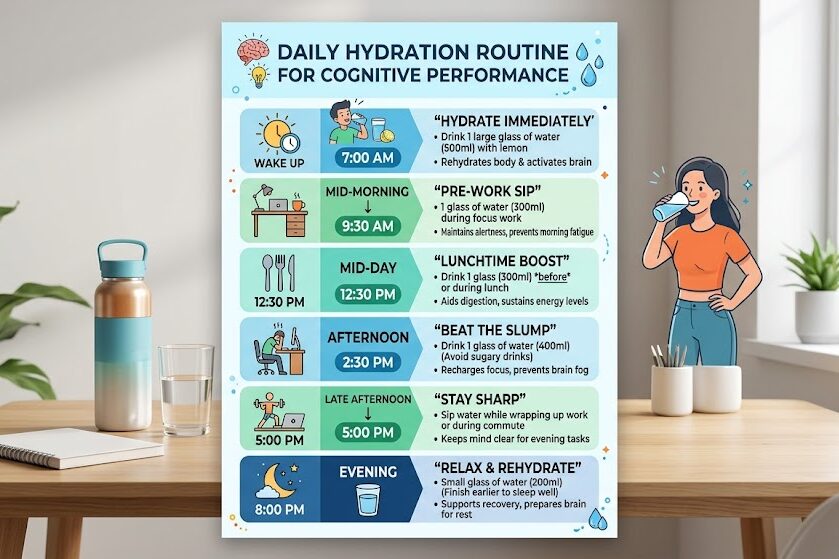
The best hydration strategies for mental clarity focus on consistency, electrolyte balance, and daily hydration awareness. Drinking water only when extremely thirsty is usually too late for optimal cognitive performance.
Practical Hydration Habits That Support Brain Function
First, start your morning with water before caffeine. Overnight fluid loss can contribute to morning fatigue and headaches.
Second, drink smaller amounts consistently throughout the day instead of consuming large amounts at once.
Third, increase hydration during workouts, hot weather, or illness. Sweat loss significantly raises fluid requirements.
Fourth, monitor urine color as a quick hydration indicator. Pale yellow generally suggests better hydration.
Fifth, combine hydration with nutrient-rich meals. Water absorption improves when paired with balanced electrolytes and minerals.
morning habits for mental clarity
Healthy Drinks That Support Cognitive Performance
Healthy hydration drinks support brain performance by improving fluid balance and electrolyte intake. However, not all beverages hydrate equally.
Good hydration options include:
- Water
- Coconut water
- Milk
- Herbal teas
- Electrolyte beverages
- Water-rich smoothies
Meanwhile, excessive alcohol and sugary drinks may worsen dehydration.
Do Electrolytes Improve Brain Function During Dehydration?
Electrolytes improve brain function during dehydration because they regulate nerve signaling, muscle contractions, and fluid balance. Sodium, potassium, magnesium, and calcium all contribute to neurological function.
Electrolytes help maintain fluid balance and support the electrical signaling required for healthy brain function. Without adequate electrolyte levels, brain cells struggle to communicate efficiently.
For example, endurance athletes often consume electrolyte drinks during prolonged workouts to maintain cognitive and physical performance.
However, most people can maintain electrolyte balance through a healthy diet containing fruits, vegetables, dairy, and balanced fluids.
Good electrolyte-rich foods include:
- Bananas
- Avocados
- Yogurt
- Spinach
- Watermelon
- Oranges
What Are Common Hydration Mistakes That Harm Brain Function?
Common hydration mistakes harm brain function by creating inconsistent fluid balance and reducing mental performance throughout the day.
Frequent mistakes include:
- Waiting until intense thirst develops
- Drinking excessive caffeine without water
- Ignoring hydration during workouts
- Consuming too much alcohol
- Relying entirely on sugary beverages
- Forgetting electrolytes during heavy sweating
For example, many people drink several cups of coffee while barely consuming water. This habit can contribute to headaches, fatigue, and reduced concentration later in the day.
Moreover, some individuals overhydrate without balancing electrolytes. Excessive water intake without minerals may dilute sodium levels and cause additional health issues.
Tools, Apps, and Practical Daily Hydration Tracking Methods
Hydration tracking tools help prevent dehydration by creating consistent awareness and daily habits. Many people simply forget to drink fluids during busy schedules.
Popular hydration tools include:
- WaterMinder
- Hydro Coach
- MyFitnessPal hydration tracking
- Smart water bottles with reminders
- Apple Health hydration tracking
For example, hydration reminder apps send notifications throughout the day to encourage consistent fluid intake.
Simple Hydration Tracking Methods
You can improve hydration awareness using these practical methods:
- Carry a reusable water bottle
- Set hourly reminders
- Drink water before meals
- Track urine color
- Pair hydration with existing habits
This routine can improve mental clarity and reduce afternoon brain fog episodes.
What to Do Next if You Frequently Experience Brain Fog or Dehydration Symptoms
Frequent brain fog or dehydration symptoms may require lifestyle adjustments or medical evaluation if symptoms persist despite adequate hydration.
First, track your fluid intake for one week. Many people underestimate how little water they actually consume.
Second, evaluate contributing factors such as caffeine intake, sleep deprivation, excessive sweating, medications, or poor nutrition.
Third, improve recovery habits. Sleep, balanced nutrition, and exercise recovery all influence hydration and cognitive performance.
For example, chronic stress combined with poor hydration and inadequate sleep can significantly worsen mental fatigue.
Moreover, consult a healthcare professional if symptoms become severe or persistent. Chronic dizziness, confusion, migraines, or unusual fatigue may signal underlying medical issues.
best supplements for brain health
Conclusion: Protecting Long-Term Brain Function Through Better Hydration Habits
Protecting long-term brain function starts with consistent hydration habits that support mental clarity, mood stability, and cognitive performance. Even mild dehydration can impair attention, memory, and productivity before strong thirst appears.
Fortunately, small daily habits can make a major difference. By drinking fluids consistently, balancing electrolytes, improving sleep quality, and monitoring hydration patterns, you can support better focus and mental energy throughout the day.
Most importantly, hydration is one of the simplest and most affordable ways to improve cognitive health. Your brain depends on water every hour of the day, and better hydration habits can help you think more clearly, feel more energized, and perform at your best.
FAQs
How does dehydration affect brain function?
Dehydration can reduce concentration, memory, alertness, and mental performance by limiting proper brain hydration and blood flow.
Can dehydration cause brain fog?
Yes, even mild dehydration may contribute to brain fog, fatigue, slower thinking, and difficulty focusing.
What are the signs of dehydration affecting the brain?
Common signs include headaches, dizziness, poor concentration, confusion, irritability, and mental fatigue.
How much water does the brain need to function properly?
The brain relies on consistent hydration, and daily water needs vary based on age, activity, climate, and overall health.
Can dehydration affect memory and focus?
Yes, research suggests dehydration may negatively impact short-term memory, attention span, and focus.
Does dehydration cause headaches?
Yes, dehydration is a common trigger for headaches and can worsen mental fatigue.
How quickly can dehydration impact cognitive performance?
Even mild fluid loss may begin affecting mood, attention, and mental clarity within hours.
What is the best way to stay hydrated for brain health?
Drink water regularly, eat water-rich foods, and replace electrolytes after intense sweating or exercise.
Can caffeine contribute to dehydration?
Moderate caffeine intake is usually safe, but excessive consumption without enough water may contribute to dehydration in some people.
Does proper hydration improve mental clarity?
Yes, staying hydrated may help support better focus, mood, reaction time, and overall cognitive performance.