
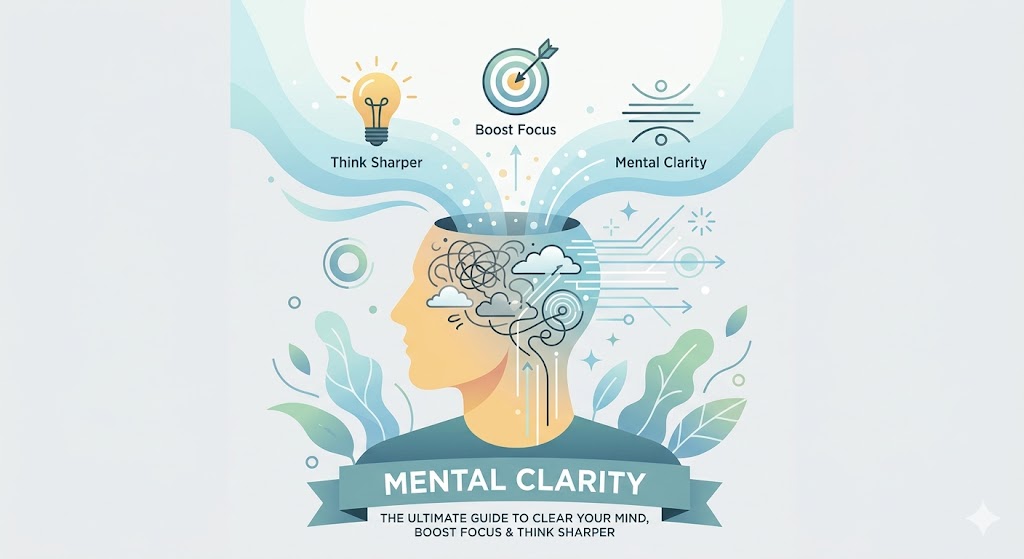
You probably try to stay focused, manage stress, and get things done—but your mind still feels cluttered or distracted. The real issue isn’t effort—it’s a lack of mental clarity. In this guide, you’ll learn exactly how to clear mental fog, sharpen your focus, and build a calm, high-performing mind.
Key Takeaways
- Mental clarity refers to a state of clear thinking, focused attention, and reduced mental clutter.
- Brain fog causes include poor sleep, stress, and digital overload that reduce clarity and performance.
- Mindfulness and routines improve cognitive focus and emotional awareness consistently.
- Nutrition and exercise directly enhance brain function and mental sharpness.
- Daily habits like journaling and limiting distractions build long-term clarity.
- Consistency is more effective than quick fixes for maintaining mental clarity.
What Is Mental Clarity?
Mental clarity is the ability to think clearly, focus effectively, and process information without mental distraction or confusion.
First, mental clarity is not the same as intelligence or focus alone. Intelligence refers to your ability to learn, while focus is your ability to concentrate. Mental clarity combines both—plus emotional calm and cognitive control. For example, you may be intelligent but still feel overwhelmed and unable to make decisions.
Moreover, mental clarity involves reduced cognitive overload, meaning your brain is not cluttered with unnecessary thoughts. For example, when your to-do list is organized and your mind feels calm, you can think faster and make better decisions.
In addition, research shows that multitasking reduces productivity by up to 40% — Source: American Psychological Association, 2023. This highlights how clarity—not busyness—drives performance.
Mental clarity improves decision-making speed and reduces mental fatigue.
Why Is Mental Clarity Important?
Mental clarity is important because it directly improves productivity, emotional stability, and decision-making ability.
First, clear thinking allows you to make faster and better decisions. For example, entrepreneurs with high mental clarity can quickly prioritize tasks and avoid overthinking.
Second, mental clarity reduces stress and anxiety. For example, when your thoughts are organized, you feel more in control of your life. Studies show that mindfulness-based practices reduce stress by 30% — Source: Harvard Medical School, 2022.
Moreover, mental clarity boosts productivity. For example, employees who practice focus techniques report 23% higher efficiency — Source: McKinsey, 2023.
At the same time, mental clarity enhances emotional balance. This means fewer mood swings and better relationships.
Clarity transforms effort into effective action.
What Causes Brain Fog and Lack of Mental Clarity?
Brain fog is commonly caused by poor sleep, chronic stress, and excessive digital stimulation.
Stress and Cognitive Overload
First, chronic stress floods your brain with cortisol, reducing focus and memory. For example, working long hours without breaks can leave you mentally exhausted.
Moreover, information overload from social media and constant notifications creates mental clutter. For example, switching between apps every few minutes reduces attention span significantly.
ways to reduce stress naturally
Poor Sleep and Lifestyle Factors
Second, poor sleep directly impacts brain performance. For example, sleeping less than 6 hours reduces cognitive function by up to 30% — Source: Sleep Foundation, 2024.
In addition, unhealthy diets and lack of exercise worsen mental fog. For example, high sugar intake leads to energy crashes and reduced concentration.
Brain fog is a lifestyle signal, not a permanent condition.
How Can You Improve Mental Clarity Naturally?
Improving mental clarity involves reducing cognitive overload, optimizing lifestyle habits, and practicing focused attention techniques.
Mindfulness and Meditation
First, mindfulness meditation improves mental clarity by training the brain to stay present and reduce unnecessary thoughts.
For example, practicing 10 minutes of breathing meditation daily can reduce distractions and improve focus.
Nutrition and Brain Health
Second, nutrition plays a critical role in cognitive performance. For example, omega-3 fatty acids found in fish improve memory and focus.
Studies show that balanced diets improve cognitive performance by 20% — Source: WHO, 2023.
intermittent fasting for brain health
Exercise and Movement
Moreover, physical exercise increases blood flow to the brain, enhancing clarity. For example, a 20-minute walk can significantly improve focus and mood.
Movement fuels mental sharpness.
Which Daily Habits Boost Mental Clarity the Most?
Daily habits boost mental clarity by creating structure, reducing distractions, and improving focus consistency.
Morning Routine and Focus Blocks
First, a structured morning routine sets the tone for clarity. For example, starting your day with journaling and exercise improves mental control.
best morning routine for success
Moreover, deep work sessions allow uninterrupted focus. For example, working in 90-minute blocks increases productivity significantly.
how to improve productivity at home
Digital Detox and Mental Decluttering
Second, reducing screen time improves clarity. For example, limiting social media to 30 minutes daily reduces mental clutter.
In addition, journaling helps organize thoughts. For example, writing your ideas daily clears mental space.
Clarity grows when distractions shrink.
How Does Sleep Affect Mental Clarity and Focus?
Sleep affects mental clarity by restoring brain function, improving memory, and reducing mental fatigue.
First, during sleep, your brain processes information and removes toxins. For example, deep sleep improves memory retention.
Moreover, lack of sleep reduces attention and decision-making ability. Studies show that sleep deprivation impairs performance similar to alcohol consumption — Source: NIH, 2023.
In addition, consistent sleep routines improve focus and mood.
Sleep is the foundation of cognitive performance.
What Foods Improve Brain Function and Mental Clarity?
Brain-boosting foods improve mental clarity by providing essential nutrients that support cognitive function.
First, foods rich in omega-3, antioxidants, and vitamins enhance brain health. For example:
- Fatty fish (salmon, sardines)
- Blueberries
- Nuts and seeds
- Dark chocolate
Moreover, hydration is crucial. For example, even mild dehydration reduces concentration by 10% — Source: Journal of Nutrition, 2022.
| Food Type | Benefit | Example |
|---|---|---|
| Omega-3 | Improves memory | Salmon |
| Antioxidants | Protect brain cells | Blueberries |
| Healthy fats | Boost energy | Nuts |
| Hydration | Enhances focus | Water |
Nutrition directly fuels mental clarity.
Can Meditation Really Improve Mental Clarity?
Meditation improves mental clarity by training attention and reducing unnecessary thoughts.
First, meditation strengthens focus and awareness. For example, regular meditation increases attention span by 14% — Source: Frontiers in Psychology, 2023.
Moreover, it reduces stress and emotional reactivity. For example, mindful breathing calms the nervous system.
Mindfulness meditation improves mental clarity by training the brain to stay present and reduce unnecessary thoughts.
How Do You Clear Your Mind from Overthinking?
Clearing your mind from overthinking involves simplifying thoughts, managing stress, and focusing on the present moment.
First, journaling helps externalize thoughts. For example, writing down worries reduces mental load.
Second, limiting decision fatigue improves clarity. For example, simplifying daily choices reduces stress.
Moreover, breathing techniques calm the mind. For example, box breathing reduces anxiety quickly.
Overthinking decreases when clarity increases.
What Are the Best Exercises for Mental Clarity?
Mental clarity exercises are activities that improve focus, reduce stress, and enhance cognitive performance.
First, physical exercise boosts brain oxygen and improves mood. For example, cardio workouts enhance focus.
Second, breathing exercises calm the mind. For example:
- Box breathing
- 4-7-8 breathing
- Deep diaphragmatic breathing
Moreover, mental exercises like puzzles and reading improve cognition.
Exercise sharpens both body and mind.
How Long Does It Take to Improve Mental Clarity?
Improving mental clarity typically takes a few days to weeks depending on consistency and lifestyle changes.
First, small improvements can be noticed within 3–7 days. For example, better sleep can immediately improve focus.
Moreover, long-term clarity requires consistent habits. For example, meditation and routines show results in 2–4 weeks.
Studies show habit formation takes around 21–66 days — Source: University College London, 2022.
Consistency creates lasting clarity.
Tools and Techniques to Boost Mental Clarity
Mental clarity tools are systems and apps that help organize thoughts, reduce distractions, and improve focus.
First, productivity tools like Notion and Todoist help manage tasks.

Second, focus tools like Forest reduce distractions.

Moreover, frameworks like deep work improve efficiency.
deep work techniques for focu
Additionally, free tools like Google Calendar help structure your day.
Tools simplify thinking by organizing complexity.
What’s Next: Your 7-Day Mental Clarity Plan
A 7-day mental clarity plan is a structured routine to reset your mind and build focus habits.
Day-by-Day Plan
- Day 1: Digital detox (limit screen time)
- Day 2: Improve sleep routine
- Day 3: Start journaling
- Day 4: Practice meditation (10 minutes)
- Day 5: Exercise (20 minutes)
- Day 6: Optimize diet
- Day 7: Deep work session
For example, combining meditation and journaling can drastically improve focus within a week.
Small daily actions create powerful mental transformation.
Conclusion
Mental clarity is the foundation of focus, productivity, and emotional well-being.
Ultimately, improving mental clarity requires consistent habits—not quick fixes. By optimizing sleep, nutrition, and mindfulness, you can build a sharp, calm, and high-performing mind.
Start small, stay consistent, and your clarity will compound over time.
FAQ
What is mental clarity?
Mental clarity is a state of clear thinking, focus, and awareness where your mind is free from confusion and distractions.
Why is mental clarity important?
It helps improve decision-making, productivity, emotional balance, and overall cognitive performance.
What causes a lack of mental clarity?
Common causes include stress, poor sleep, unhealthy diet, information overload, and lack of focus.
How can I improve mental clarity quickly?
Simple methods include deep breathing, short walks, hydration, reducing screen time, and taking mental breaks.
Does sleep affect mental clarity?
Yes, quality sleep is essential for brain function, memory, and maintaining sharp focus.
Can diet improve mental clarity?
Yes, nutrient-rich foods like fruits, vegetables, healthy fats, and omega-3s support brain health and clarity.
Does meditation help with mental clarity?
Yes, meditation calms the mind, reduces stress, and improves focus and awareness.
How does exercise impact mental clarity?
Exercise increases blood flow to the brain, boosting focus, memory, and cognitive function.
Can digital overload reduce mental clarity?
Yes, excessive screen time and constant notifications can overwhelm the brain and reduce focus.
How long does it take to improve mental clarity?
Some techniques work instantly, while long-term habits like sleep, diet, and mindfulness improve clarity over time.
Written by Suraj Solanki — 5+ years blogger specializing in self-improvement, productivity, and SEO content strategy
Reviewed by Editorial Team — Experts in mental wellness and cognitive performance
Disclaimer: This article was initially drafted using AI assistance. However, the content has undergone thorough revisions, editing, and fact-checking by human editors and subject matter experts to ensure accuracy.