
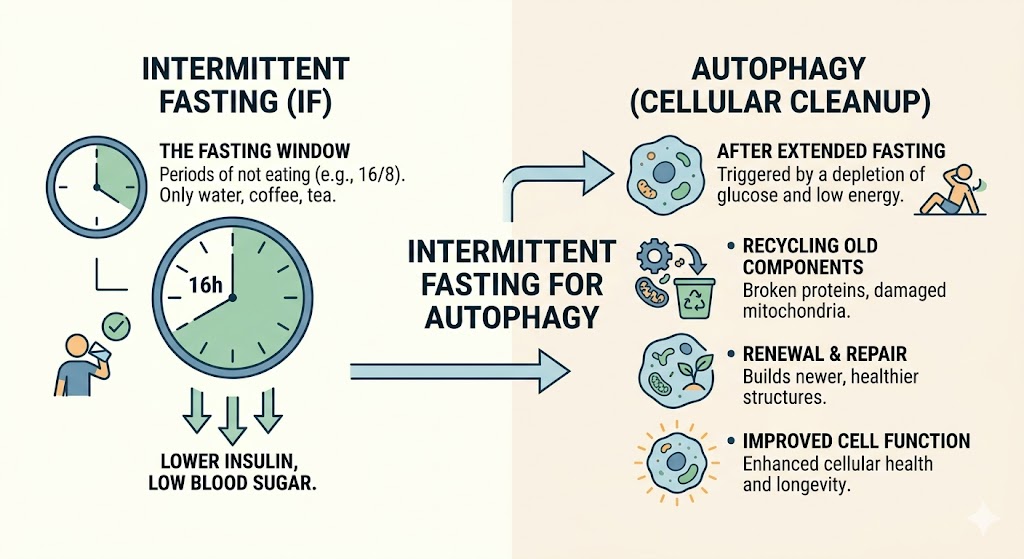
You’ve probably heard that intermittent fasting helps with weight loss and health—but there’s a deeper benefit most people overlook. What many don’t realize is how fasting activates a powerful cellular repair process called autophagy. In this guide, you’ll learn exactly how intermittent fasting triggers autophagy, how long it takes, and how to do it safely for maximum results.
Key Takeaways
- Intermittent fasting is an eating pattern that cycles between fasting and eating periods to trigger metabolic changes.
- Autophagy is a cellular process where the body removes damaged cells and regenerates healthier ones.
- Fasting durations of 12–24 hours are commonly associated with increased autophagy activity.
- Popular methods include 16:8 fasting, OMAD, and extended fasting protocols depending on experience level.
- Hydration and nutrition are essential for safe fasting and sustainable results.
- Combining fasting with sleep and exercise enhances autophagy benefits.
- Consistency beats extremes for long-term health and longevity gains.
What Is Intermittent Fasting for Autophagy?
Intermittent fasting for autophagy is a dietary approach that uses timed fasting periods to activate the body’s natural cellular repair system.
First, intermittent fasting involves cycling between periods of eating and fasting to trigger metabolic and hormonal changes. For example, a 16:8 schedule means fasting for 16 hours and eating within an 8-hour window.
Second, autophagy is a cellular process in which the body removes damaged cells and recycles components to maintain optimal function. For example, your body breaks down dysfunctional proteins and reuses them to build healthier cells.
At the same time, fasting acts as a trigger. When you stop eating, your body shifts from using glucose to burning stored fat, activating repair mechanisms like autophagy.
👉 For a deeper overview, read our intermittent fasting benefits guide
Why Intermittent Fasting Matters for Autophagy
Intermittent fasting matters for autophagy because it enhances cellular repair, supports longevity, and improves metabolic health.
First, cellular repair improves overall health by clearing damaged proteins. For example, studies show autophagy helps protect against neurodegenerative diseases — Source: Nature Reviews, 2021.
Second, anti-aging benefits are significant because autophagy reduces cellular damage accumulation. For example, animal studies link fasting to increased lifespan — Source: Cell Metabolism, 2020.
Third, fat loss and metabolic health improve as fasting lowers insulin levels. For example, fasting reduces insulin by up to 31% — Source: Journal of Translational Medicine, 2014.
Finally, disease prevention potential increases through cellular detoxification. For example, autophagy plays a role in cancer prevention by removing damaged cells.
👉 Combine this with smart nutrition using best fat loss diet plans
How Does Intermittent Fasting Trigger Autophagy?
Intermittent fasting triggers autophagy by lowering insulin levels and forcing the body to shift into fat-burning mode.
Role of Insulin Reduction
First, low insulin signals the body to stop storing energy and start repairing cells. For example, after 12 hours of fasting, insulin drops significantly, activating cellular cleanup.
Glycogen Depletion Timeline
Second, glycogen depletion is the turning point for autophagy activation. For example, your liver’s glycogen stores are usually depleted within 12–24 hours.
Ketosis and Cellular Recycling
At the same time, fasting pushes the body into ketosis, where fat becomes the primary fuel source. For example, this metabolic shift accelerates autophagy processes.
👉 Learn more about fat metabolism in how ketosis works for fat loss
Autophagy typically begins after 12–24 hours of fasting, depending on individual metabolism and activity levels.
How Long Do You Need to Fast to Reach Autophagy?
Autophagy typically starts after 12–24 hours of fasting, but deeper activation occurs with longer fasting durations.
First, short fasting (12–16 hours) begins the process. For example, 16:8 fasting can initiate mild autophagy.
Second, moderate fasting (18–24 hours) increases cellular recycling. For example, OMAD (one meal a day) boosts autophagy more effectively.
Third, extended fasting (36–48 hours) maximizes autophagy. For example, prolonged fasting significantly enhances cellular repair — Source: Autophagy Journal, 2018.
Short fasts start the process, but longer fasts amplify it.
Which Intermittent Fasting Method Is Best for Autophagy?
The best intermittent fasting method for autophagy depends on your experience level and health goals.
| Method | Fasting Duration | Autophagy Level | Best For |
|---|---|---|---|
| 16:8 | 16 hours | Moderate | Beginners |
| 18:6 | 18 hours | Moderate-High | Intermediate |
| OMAD | 23 hours | High | Advanced |
| 36–48 hrs | Extended | Very High | Experienced users |
Can You Achieve Autophagy with 16:8 Fasting?
First, 16:8 fasting can trigger early autophagy but at a lower intensity. For example, beginners often start here for sustainability.
Is Extended Fasting More Effective for Autophagy?
Second, extended fasting increases autophagy activity but should be practiced carefully under proper guidance. For example, fasting beyond 36 hours requires medical supervision.
👉 Explore advanced fasting in OMAD diet plan explained
How Can Beginners Start Fasting for Autophagy Safely?
Beginners can start fasting for autophagy by gradually increasing fasting duration while maintaining proper nutrition and hydration.
Step-by-Step Beginner Plan
- Start with 12-hour fasting
- Move to 14–16 hours
- Progress to 18 hours if comfortable
- Try OMAD occasionally
What to Eat Before and After Fasting
First, nutrient-dense foods support recovery. For example, include protein, healthy fats, and vegetables.
👉 Get meal ideas from healthy meal prep ideas
Hydration Tips
Second, hydration prevents fatigue and supports metabolism. For example, drink water, black coffee, or herbal tea.
👉 Follow hydration tips for fasting
Common Mistakes to Avoid
- Overeating after fasting
- Ignoring hydration
- Jumping into long fasts too quickly
👉 Avoid errors with common fasting mistakes
What Foods Support Autophagy During Eating Windows?
Foods that support autophagy are nutrient-dense, low in sugar, and rich in antioxidants.
First, low-carb foods help maintain ketosis. For example, leafy greens and healthy fats improve metabolic flexibility.
Second, antioxidant-rich foods enhance cellular repair. For example, berries and green tea support oxidative balance.
Third, protein supports cell rebuilding. For example, eggs and lean meat aid recovery after fasting.
What Are the Risks of Fasting for Autophagy?
Fasting for autophagy carries risks such as fatigue, nutrient deficiencies, and hormonal imbalance if done improperly.
First, short-term side effects include headaches and low energy. For example, beginners often experience temporary fatigue.
Second, long-term risks include nutrient deficiencies. For example, poor diet during eating windows reduces benefits.
Third, extreme fasting can harm metabolism. For example, prolonged fasting may reduce muscle mass — Source: American Journal of Clinical Nutrition, 2019.
Who Should Avoid Intermittent Fasting?
Certain individuals should avoid intermittent fasting, including those with medical conditions or special nutritional needs.
- Pregnant or breastfeeding women
- People with diabetes or eating disorders
- Underweight individuals
- Those on specific medications
Medical guidance is essential before starting extended fasting protocols.
Tools, Examples, and Practical Applications
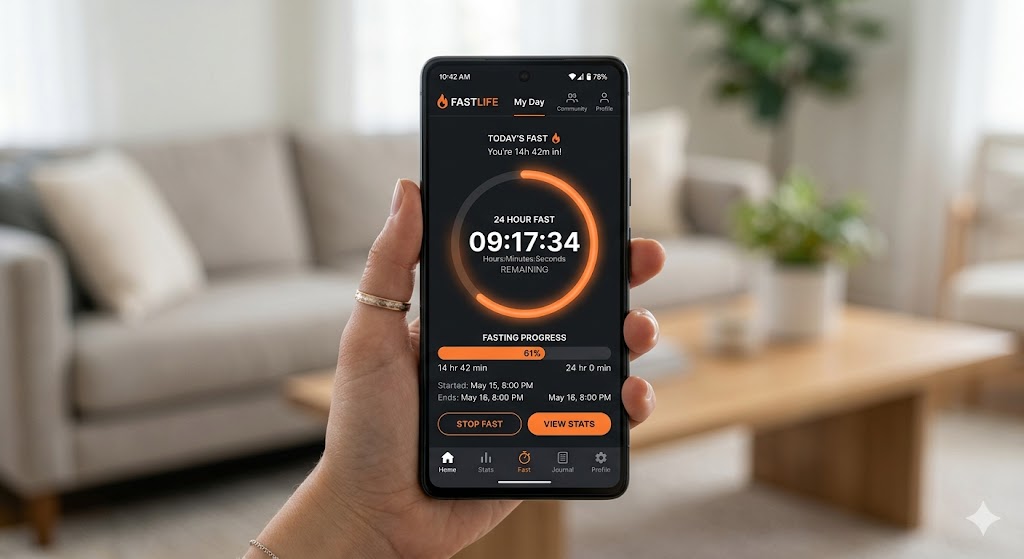
Fasting tools help track progress, improve consistency, and optimize results.
Popular Fasting Apps
- Zero
- Life Fasting Tracker
- Fastic
Sample Weekly Plan
- Monday–Friday: 16:8 fasting
- Saturday: 18:6 fasting
- Sunday: Normal eating
Real-Life Example
For example, a working professional might fast from 8 PM to 12 PM daily, improving energy and fat loss.
👉 Follow a structured beginner fasting schedule
What’s Next: Optimizing Autophagy Naturally
Optimizing autophagy requires combining fasting with lifestyle habits like exercise, sleep, and proper nutrition.
First, exercise accelerates fat burning and cellular repair. For example, strength training enhances metabolic efficiency.
👉 Improve results with exercise for fat burning
Second, sleep regulates hormones and recovery. For example, poor sleep reduces autophagy efficiency.
👉 Learn more in benefits of sleep for metabolism
Third, diet quality enhances results. For example, whole foods improve cellular health and recovery.
Conclusion
Intermittent fasting for autophagy is a powerful strategy for improving cellular health, fat loss, and longevity.
In summary, fasting triggers autophagy by lowering insulin, depleting glycogen, and activating fat-burning pathways. By starting gradually and focusing on consistency, you can safely unlock these benefits.
Sustainable fasting routines deliver better long-term results than extreme approaches. Start small, stay consistent, and let your body adapt naturally.
FAQ
What is autophagy in intermittent fasting?
Autophagy is a natural cellular process where the body removes damaged cells and regenerates new ones, and it is stimulated during fasting periods.
How long do you need to fast to trigger autophagy?
Autophagy may begin after 12–16 hours of fasting, but deeper cellular repair typically increases after 24 hours or longer.
Does intermittent fasting really increase autophagy?
Yes, fasting lowers insulin levels and encourages the body to enter a repair mode, which promotes autophagy.
What is the best fasting method for autophagy?
Methods like 16:8, 18:6, and occasional 24-hour fasts are commonly used to support autophagy.
Can you drink water during fasting for autophagy?
Yes, drinking water is essential and does not break a fast or stop autophagy.
Does coffee or tea break autophagy?
Black coffee and plain tea generally do not break fasting and may even support autophagy if consumed without sugar or milk.
Is autophagy safe for everyone?
Not always, people who are pregnant, underweight, or have medical conditions should consult a doctor before fasting.
How often should you fast for autophagy benefits?
Most people benefit from daily time-restricted eating or occasional longer fasts depending on their health goals.
Can exercise boost autophagy during fasting?
Yes, exercise can enhance autophagy by increasing cellular stress and energy demand.
What are the signs your body is in autophagy?
There are no direct visible signs, but increased fat burning, mental clarity, and improved energy may indicate it.
Written by Suraj — 5+ Years Experienced Blogger & SEO Specialist
Reviewed by Health & Nutrition Editorial Team
Disclaimer: This article was initially drafted using AI assistance. However, the content has undergone thorough revisions, editing, and fact-checking by human editors and subject matter experts to ensure accuracy.