
You’ve probably seen soursop promoted as a powerful tropical superfruit packed with health benefits. But most articles either exaggerate its effects or fail to explain what the science actually says. In this guide, you’ll learn what soursop is good for, its real nutritional benefits, how to use it safely, and which popular health claims are fact versus hype.
Key Takeaways
- Soursop is a tropical fruit rich in vitamin C, fiber, antioxidants, and potassium that may support overall wellness.
- Antioxidants in soursop help protect cells from oxidative stress linked to aging and inflammation.
- Dietary fiber in soursop supports digestion and may help improve feelings of fullness after meals.
- Soursop juice, smoothies, tea, and fresh pulp are the most common ways people consume the fruit.
- Scientific evidence supports soursop’s nutritional benefits, but major disease-treatment claims remain unproven in humans.
- Excessive intake of soursop supplements may carry risks, especially when consumed frequently in large amounts.
- Balanced nutrition and moderation are essential when adding any superfruit to a healthy lifestyle.
What Is Soursop and Why Is It Called a Tropical Superfruit?
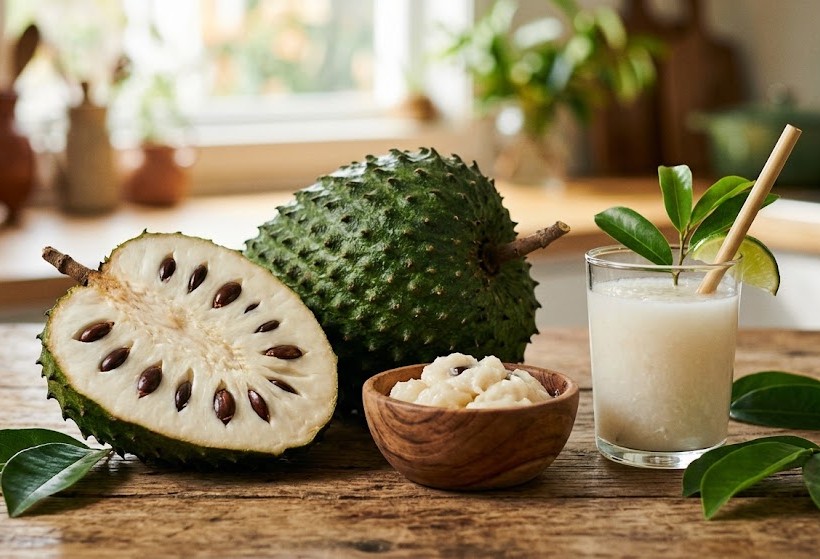
Soursop is a tropical fruit known for its creamy texture, sweet-tart flavor, and nutrient-rich profile. It is also called graviola or guanabana and grows mainly in tropical regions of Central America, South America, the Caribbean, Southeast Asia, and parts of Africa.
First, soursop comes from the Annona muricata tree, which produces large green fruits covered in soft spines. The inside contains soft white pulp with a flavor often compared to pineapple, strawberry, banana, and citrus combined. For example, many people use soursop pulp in smoothies because its creamy consistency blends easily with yogurt or coconut milk.
Moreover, soursop is considered a “superfruit” because it contains vitamin C, fiber, antioxidants, potassium, and magnesium in one whole-food package. According to the USDA FoodData Central database, fruits high in vitamin C and fiber may support immune function and digestive health when consumed regularly — Source: USDA, 2025.
Soursop can be consumed in several forms:
- Fresh fruit
- Frozen pulp
- Juice
- Smoothies
- Herbal tea
- Dietary supplements
Soursop can be eaten fresh or consumed as juice, smoothies, tea, or frozen pulp.
Why Does Soursop Matter for Health and Wellness?
Soursop matters for health and wellness because it provides nutrients and antioxidants that may support multiple body functions.
First, many health-conscious consumers are searching for foods with natural antioxidant content. According to the International Food Information Council, 52% of consumers actively seek foods that support immune and overall wellness — Source: IFIC Food & Health Survey, 2024.
Second, soursop contains plant compounds called polyphenols and flavonoids. These compounds may help protect cells from oxidative stress caused by unstable molecules known as free radicals.
Antioxidants in soursop help protect cells from oxidative stress caused by free radicals.
At the same time, interest in tropical superfoods has increased significantly through wellness blogs, social media, and AI-generated nutrition content. However, many online claims exaggerate what the fruit can actually do. For example, some websites incorrectly present laboratory findings as proven human medical treatments.
That is why evidence-based understanding matters. Nutritional benefits supported by science should be separated from unverified medical claims.

What Nutrients Are Found in Soursop Fruit?
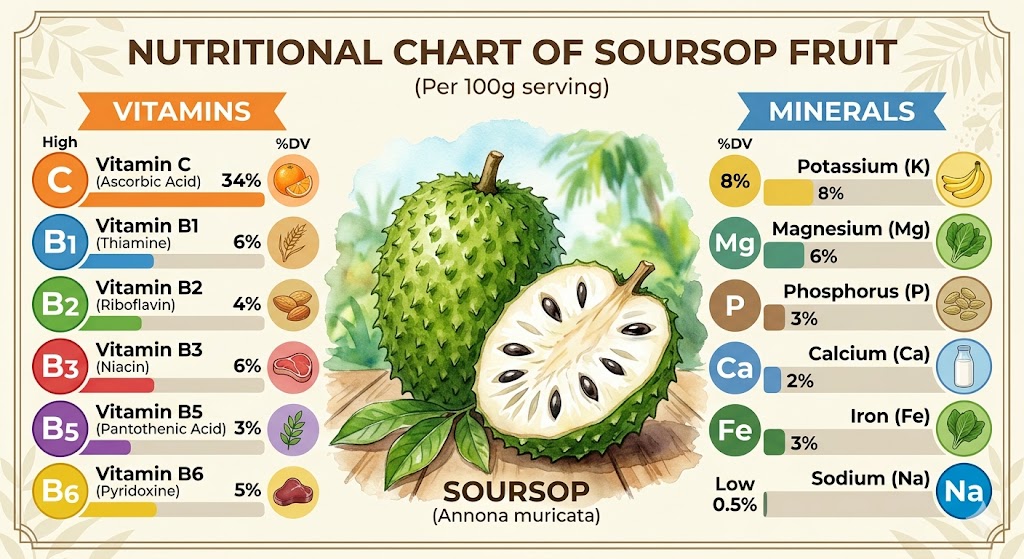
Soursop contains vitamin C, fiber, carbohydrates, potassium, magnesium, and several antioxidant compounds.
First, a typical serving of soursop provides energy through natural carbohydrates while also contributing fiber for digestive support. According to USDA FoodData Central, 100 grams of raw soursop contains approximately:
| Nutrient | Approximate Amount |
|---|---|
| Calories | 66 kcal |
| Carbohydrates | 16.8 g |
| Fiber | 3.3 g |
| Vitamin C | 20.6 mg |
| Potassium | 278 mg |
| Magnesium | 21 mg |
— Source: USDA FoodData Central, 2025
Moreover, vitamin C plays a major role in collagen production and immune support. Soursop is a tropical fruit rich in vitamin C, fiber, antioxidants, and potassium.
For example, one serving of soursop can provide over 20% of the recommended daily intake for vitamin C in many adults. This can help support normal immune system function and tissue repair.
In addition, soursop contains antioxidants such as:
- Acetogenins
- Flavonoids
- Phenolic compounds
These compounds are currently being studied for their biological activity. However, researchers still need larger human studies before drawing major health conclusions.
What Is Soursop Good For in Everyday Health?
Soursop is good for supporting hydration, digestion, immune health, and overall nutrient intake as part of a balanced diet.
First, soursop contains both water and potassium, which may support hydration. Potassium helps regulate fluid balance and normal muscle function. According to the World Health Organization, diets rich in potassium-rich fruits and vegetables are associated with better cardiovascular health — Source: WHO, 2024.
Second, soursop contains dietary fiber that supports digestive regularity. Soursop contains dietary fiber, which supports digestion and promotes feelings of fullness.
For example, adding soursop to a breakfast smoothie may help reduce hunger between meals because fiber slows digestion.
Moreover, soursop contains natural carbohydrates that can support energy metabolism. This makes it a practical ingredient in post-workout smoothies or recovery bowls.
At the same time, soursop may contribute antioxidants that help the body manage oxidative stress associated with daily environmental exposure.
How Does Soursop Support Immune System Health?
Soursop supports immune system health mainly through its vitamin C and antioxidant content.
First, vitamin C contributes to normal immune cell function. According to the National Institutes of Health, vitamin C helps support immune defense and collagen synthesis — Source: NIH Office of Dietary Supplements, 2025.
Moreover, antioxidants in fruits may help reduce oxidative damage caused by environmental stressors such as pollution or intense exercise.
For example, pairing soursop with citrus fruits and berries can create a nutrient-dense smoothie rich in immune-supportive compounds.
Can Soursop Help With Digestion and Gut Health?
Soursop may help digestion because it contains dietary fiber that supports bowel regularity and gut function.
First, fiber helps add bulk to stool and supports smoother digestion. According to Harvard T.H. Chan School of Public Health, fiber-rich diets are associated with improved digestive health — Source: Harvard Nutrition Source, 2024.
For example, people who regularly consume fiber-rich fruits often experience improved fullness after meals.
In addition, fiber may support healthy gut bacteria when consumed as part of a varied diet containing fruits, vegetables, legumes, and whole grains.
Does Soursop Contain Antioxidants That Reduce Inflammation?
Soursop contains antioxidants that may help the body manage oxidative stress linked to inflammation.
First, oxidative stress occurs when free radicals outnumber protective antioxidants in the body. Fruits rich in plant compounds may help balance this process.
For example, flavonoids and polyphenols found in fruits are commonly associated with antioxidant activity in nutrition research.
However, it is important to understand that no single fruit “cures” inflammation. Instead, long-term dietary patterns matter most.
Is Soursop Good for Skin Health and Hydration?
Soursop may support skin health because it contains vitamin C, antioxidants, and water-rich fruit pulp.
First, vitamin C contributes to collagen formation, which supports skin structure. According to the American Academy of Dermatology, antioxidants and hydration can help support healthier-looking skin — Source: AAD, 2024.
Moreover, water-rich fruits may contribute to daily hydration goals, especially during warmer seasons.
For example, chilled soursop smoothies can work well as refreshing summer beverages after outdoor activity.
How Do You Eat Soursop Safely and Correctly?
Soursop is typically eaten fresh, blended into drinks, or prepared as tea using moderate portions.
First, fresh soursop should be peeled carefully because the seeds are not edible. The white pulp can then be scooped out and blended into smoothies or desserts.
Fresh Soursop Preparation
- Wash the fruit thoroughly.
- Slice it open lengthwise.
- Remove the black seeds.
- Scoop out the pulp.
- Blend or eat chilled.
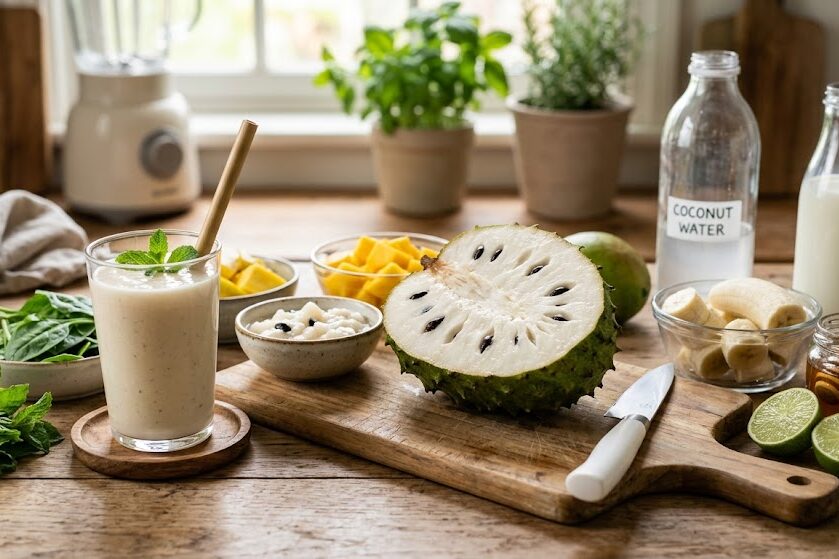
For example, many people combine soursop pulp with banana, yogurt, and ice for a creamy smoothie.
Soursop Tea and Juice
Soursop tea is usually made from dried leaves, while soursop juice uses fresh pulp or frozen puree.
First, tea products are popular in wellness communities because they are easy to prepare. However, concentrated teas and supplements should be used cautiously.
Second, juice versions often contain added sugar. As such, unsweetened pulp or homemade smoothies are generally healthier choices.
Portion Recommendations
Moderate servings of soursop are generally considered safer than excessive intake.
Most nutrition experts recommend treating soursop like other fruits rather than consuming large concentrated doses daily.
For example, one serving several times weekly is more balanced than consuming large supplement amounts every day.

What Is the Difference Between Soursop Fruit, Tea, and Supplements?
Fresh soursop fruit, tea, and supplements differ in nutrient density, concentration, and safety considerations.
First, fresh fruit provides fiber and hydration alongside nutrients. This makes whole fruit the most balanced option for most people.
Second, soursop tea may contain plant compounds extracted from leaves. However, concentrations vary widely between products.
Third, supplements can deliver highly concentrated extracts. This increases the possibility of excessive intake.
| Form | Main Benefit | Potential Concern |
|---|---|---|
| Fresh Fruit | Fiber + hydration | Natural sugar intake |
| Juice | Convenient | Added sugars |
| Tea | Easy preparation | Variable potency |
| Supplements | Concentrated extracts | Overconsumption risks |
Moreover, supplement quality can vary significantly between brands because herbal products are not always standardized globally.
What Are the Possible Side Effects of Soursop?
Soursop may cause risks when consumed excessively, especially in concentrated supplement form.
First, some research has raised concerns about compounds in soursop potentially affecting nerve function when consumed in very high amounts over long periods.
According to Memorial Sloan Kettering Cancer Center, excessive intake of certain graviola products may be linked to neurological concerns, although more human research is needed — Source: MSKCC, 2025.
Medication Interactions
Soursop supplements may interact with certain medications and should be used cautiously.
For example, soursop may affect blood pressure or blood sugar levels in some individuals. People taking medications for diabetes or hypertension should speak with a healthcare professional before using concentrated extracts regularly.
Pregnancy and Medical Precautions
Pregnant individuals and people with chronic medical conditions should consult a doctor before using herbal supplements.
At the same time, fresh fruit in moderate amounts is generally considered less concerning than concentrated products.
Does Soursop Really Fight Cancer or Is It a Myth?
Research on soursop and cancer has mostly been limited to laboratory studies, not large human clinical trials.
First, some lab-based studies have examined compounds from soursop in test tubes or animal models. These studies explored how certain compounds interact with cancer cells under controlled conditions.
However, laboratory findings do not automatically prove effectiveness in humans.
Research on soursop and cancer has mostly been limited to laboratory studies, not large human clinical trials.
According to the National Cancer Institute, no rigorous human clinical evidence currently proves that soursop can treat or prevent cancer — Source: National Cancer Institute, 2025.
Moreover, online content often exaggerates early research findings. For example, headlines may incorrectly describe preliminary laboratory observations as “cures.”
That is why professional medical guidance is essential. Soursop should never replace evidence-based cancer treatment prescribed by healthcare professionals.

What Are Practical Ways to Use Soursop in a Healthy Diet?
Soursop works best in a healthy diet when combined with balanced meals, hydration, and whole-food nutrition habits.
Soursop Smoothie Recipe
Soursop smoothies are one of the easiest ways to enjoy the fruit regularly.
Simple smoothie recipe:
- 1 cup frozen soursop pulp
- 1 banana
- 1/2 cup Greek yogurt
- Coconut water
- Chia seeds
For example, this combination provides carbohydrates, protein, hydration, and fiber in one meal.
healthy smoothie recipes for energy
Breakfast Bowl Ideas
Soursop pairs well with oats, yogurt, seeds, and tropical fruits.
Try combining:
- Soursop pulp
- Oats
- Blueberries
- Pumpkin seeds
- Coconut flakes
This can create a nutrient-dense breakfast with fiber and antioxidants.
Post-Workout Recovery Uses
Soursop can support post-workout nutrition through carbohydrates, fluids, and potassium.
For example, athletes sometimes blend tropical fruits with protein-rich ingredients after exercise to replenish energy.
How Often Should You Eat Soursop?
Moderate weekly consumption of soursop is generally more balanced than excessive daily intake.
First, variety matters more than relying heavily on one “superfood.” Nutrition experts consistently recommend diverse fruit intake rather than extreme dietary patterns.
For example, rotating soursop with berries, citrus fruits, mango, kiwi, and papaya can provide broader nutrient diversity.
Is Soursop Better Fresh, Frozen, or as Juice?
Fresh and frozen soursop are usually better choices than sugary processed juice products.
First, fresh fruit provides the least processed option. Frozen pulp is also convenient because it often preserves nutrients well.
Second, packaged juices may contain excess sugar and fewer beneficial fibers.
What’s Next: How to Add Soursop to a Healthy Diet
Adding soursop to a healthy diet works best when combined with balanced nutrition habits and moderation.
First, start with small servings to see how your body responds. For example, adding frozen pulp to smoothies once or twice weekly is a practical starting point.
Second, prioritize whole foods over heavily processed products. Fresh fruit generally offers more fiber and fewer additives.
Third, combine soursop with other nutrient-rich foods:
- Greek yogurt
- Oats
- Citrus fruits
- Berries
- Nuts and seeds
Finally, avoid relying on internet hype or miracle claims. Sustainable wellness comes from long-term habits rather than one ingredient.

Conclusion
Soursop is a nutrient-rich tropical fruit that may support digestion, hydration, antioxidant intake, and immune health when consumed in moderation. Its vitamin C, fiber, potassium, and plant compounds make it an interesting addition to a balanced diet.
At the same time, it is important to separate evidence-based nutrition from exaggerated online claims. Current science supports the nutritional value of soursop, but major disease-treatment claims remain unproven in humans.
Ultimately, you can enjoy soursop as part of a healthy lifestyle by focusing on moderation, variety, and practical wellness habits rather than miracle-food marketing.
FAQs
What is Soursop good for?
Soursop is commonly used for its antioxidants, vitamin C, fiber, and potential wellness-supporting properties.
Is soursop healthy?
Yes, soursop contains nutrients and antioxidants that may support immunity, digestion, and overall health.
What nutrients are found in soursop?
Soursop provides vitamin C, fiber, potassium, magnesium, and beneficial plant compounds.
Can soursop help boost immunity?
Its vitamin C and antioxidant content may help support a healthy immune system.
Is soursop good for digestion?
Yes, the fiber in soursop may help support healthy digestion and regular bowel movements.
Can soursop help with inflammation?
Some studies suggest soursop contains compounds with potential anti-inflammatory properties, but more research is needed.
Is soursop good for weight loss?
Soursop can fit into a balanced diet because it is relatively low in calories and contains fiber that may support fullness.
Are there risks to consuming soursop?
Excessive intake may cause side effects, and some compounds in soursop may affect nerve health when consumed in large amounts over time.
How do you eat soursop?
Soursop can be eaten fresh or used in smoothies, juices, desserts, and fruit bowls after removing the seeds and skin.
Can you drink soursop tea every day?
Moderate use is common, but regular heavy consumption should be discussed with a healthcare professional due to limited long-term safety research.