
You’ve probably tried concealers, cold spoons, or expensive skincare products hoping to make dark circles disappear. But most people don’t realize that different types of dark circles require completely different ingredients and treatments. In this guide, you’ll learn what actually causes under-eye darkness, which eye creams truly work, and how to choose the best option for your skin type and concerns.
Key Takeaways
- Eye creams for dark circles are specialized skincare products designed to target under-eye discoloration, puffiness, dehydration, and fine lines.
- Dark circles can result from genetics, lack of sleep, aging, allergies, dehydration, or hyperpigmentation, and different causes require different treatments.
- Caffeine, vitamin C, retinol, niacinamide, peptides, and hyaluronic acid are among the most effective ingredients for improving under-eye appearance.
- Consistent sunscreen use helps prevent under-eye pigmentation from becoming darker due to UV exposure.
- Sensitive skin benefits from fragrance-free eye creams with ceramides and barrier-supporting ingredients.
- Lifestyle habits including sleep quality, hydration, and stress management significantly affect dark circles.
- Realistic expectations matter because genetic or structural dark circles may improve but not disappear completely.
What Are Eye Creams for Dark Circles and How Do They Work?
Eye creams for dark circles are targeted skincare products formulated to improve under-eye discoloration, puffiness, dehydration, and fine lines. Unlike regular face moisturizers, eye creams are specifically designed for the thinner and more delicate skin around the eyes.
First, the under-eye area contains fewer oil glands and less collagen than other parts of your face. This makes it more vulnerable to dryness, visible blood vessels, wrinkles, and pigmentation changes. For example, lack of sleep can make blood vessels appear darker beneath thin skin, creating a tired appearance.
Moreover, different eye creams target different causes of dark circles. A caffeine eye cream may temporarily reduce puffiness by constricting blood vessels, while a vitamin C eye cream can help brighten pigmentation-related darkness over time.
According to the American Academy of Dermatology, the skin around the eyes is among the thinnest on the body, making it more prone to visible aging and discoloration — Source: American Academy of Dermatology, 2025.
Different Types of Dark Circles
Dark circles under the eyes can result from genetics, pigmentation, aging, lack of sleep, allergies, or thinning skin. Identifying the cause helps you choose the right treatment.
Pigmentation-Related Dark Circles
First, pigmentation-related dark circles usually appear brown or uneven. These are often caused by sun exposure, rubbing the eyes, or post-inflammatory hyperpigmentation.
For example, people with deeper skin tones may develop more noticeable pigmentation beneath the eyes after irritation or sun exposure.
Vascular Dark Circles
Second, vascular dark circles typically look blue, purple, or reddish. These happen when blood vessels become more visible through thin skin.
For example, sleep deprivation and allergies can increase blood pooling under the eyes, making vascular dark circles appear darker.
Hollow or Structural Dark Circles
Third, hollow dark circles are caused by facial structure and age-related volume loss. These create shadows beneath the eyes rather than true discoloration.
For example, collagen loss after age 30 can deepen tear troughs and make shadows appear more prominent.
Eye Cream vs Regular Moisturizer
Eye creams are usually lighter, gentler, and more targeted than regular facial moisturizers. Many contain lower concentrations of active ingredients to reduce irritation near sensitive eye skin.
At the same time, regular moisturizers may work for some people if they are fragrance-free and hydrating. However, specialized eye creams often include ingredients specifically chosen for puffiness, brightness, and fine lines.
Why Do Eye Creams for Dark Circles Matter?
Eye creams for dark circles matter because the under-eye area ages faster and shows fatigue more visibly than most facial skin. Targeted formulas can help improve hydration, smoothness, and brightness over time.
First, poor sleep and chronic stress can worsen under-eye darkness. A 2024 survey found that 63% of adults reported visible fatigue-related skin concerns during periods of high stress — Source: Sleep Foundation, 2024.
Moreover, dehydration can make fine lines and hollowness more obvious. Hydrating ingredients like hyaluronic acid temporarily plump the skin and reduce crepey texture.
Plus, prevention matters just as much as correction. Consistent skincare and sunscreen use may slow pigmentation and collagen loss before dark circles become more severe.
Retinol eye creams support collagen production, which can improve the appearance of thin under-eye skin over time.
Vitamin C is commonly used in eye creams because it helps brighten pigmentation-related dark circles.

What Causes Dark Circles Under the Eyes?
Dark circles are caused by a combination of genetics, lifestyle factors, aging, and skin structure changes. Different triggers require different treatment approaches.
Genetics
First, genetics strongly influence under-eye appearance. Some people naturally have thinner skin or deeper tear troughs that create shadows.
For example, if your parents have visible dark circles, you may notice them earlier regardless of sleep quality.
Lack of Sleep
Second, sleep deprivation increases blood vessel visibility and fluid retention. This can create puffiness and darker-looking under-eyes.
According to the CDC, adults should aim for at least 7 hours of sleep per night for optimal health — Source: CDC, 2025.
Aging and Collagen Loss
Third, aging reduces collagen and elastin production. This makes skin thinner and less firm over time.
For example, mature skin often benefits from peptide eye cream formulas combined with retinol and ceramides.
Allergies and Eye Rubbing
Additionally, allergies can trigger inflammation and rubbing, which worsen pigmentation and irritation.
For example, seasonal allergies often cause puffiness and redness beneath the eyes.
Excessive Screen Time
Moreover, prolonged screen exposure can contribute to eye strain and tired-looking skin. Blue light exposure and reduced blinking may increase dryness around the eyes.

Which Ingredients Are Best for Dark Circles and Puffiness?
The best ingredients for dark circles depend on whether your concern is puffiness, pigmentation, dehydration, or wrinkles. Targeted formulas work better than generic products.
Caffeine for Puffiness
Caffeine eye creams help reduce puffiness by temporarily constricting blood vessels under the eyes.
First, caffeine works best for morning swelling and tired-looking eyes. It can create a temporary tightening effect that improves appearance within minutes.
For example, gamers, students, and professionals with poor sleep often benefit from caffeine-based formulas.
Vitamin C for Brightening
Second, vitamin C helps reduce pigmentation and brighten dull skin. It also provides antioxidant protection against environmental damage.
Research shows that topical vitamin C can improve uneven skin tone and support collagen synthesis — Source: Journal of Clinical and Aesthetic Dermatology, 2024.
benefits of vitamin C for skin
Retinol for Fine Lines
Third, retinol encourages skin cell turnover and collagen production. This can improve wrinkles and thin under-eye skin gradually.
However, beginners should start slowly because retinol may irritate sensitive skin.
Niacinamide for Discoloration
Additionally, niacinamide helps reduce inflammation and uneven pigmentation. It also supports the skin barrier.
For example, people with sensitive skin often tolerate niacinamide better than stronger exfoliating acids.
Hyaluronic Acid for Hydration
Moreover, hyaluronic acid attracts water into the skin. This creates a plumper and smoother under-eye appearance.
Ingredient Comparison Table
| Ingredient | Best For | Main Benefit | Skin Type |
|---|---|---|---|
| Caffeine | Puffiness | Reduces swelling temporarily | All skin types |
| Vitamin C | Pigmentation | Brightens uneven tone | Normal to oily |
| Retinol | Wrinkles | Supports collagen | Mature skin |
| Niacinamide | Discoloration | Improves skin barrier | Sensitive skin |
| Hyaluronic Acid | Dryness | Deep hydration | Dry skin |
| Peptides | Firmness | Supports elasticity | Mature skin |
| Ceramides | Irritation | Repairs barrier | Sensitive skin |
best ingredients for hyperpigmentation
How Do You Choose the Right Eye Cream for Your Skin Type?
The best eye cream for dark circles depends on your skin type, sensitivity level, and primary concern. Choosing the wrong formula can worsen irritation or dryness.
Best Eye Cream for Sensitive Skin
First, sensitive skin benefits from fragrance-free and alcohol-free formulas. Ceramides, peptides, and hyaluronic acid are usually gentler choices.
For example, dermatologists often recommend avoiding high-strength retinol near reactive under-eye skin.
Best Eye Cream for Dry Skin
Second, dry skin needs rich hydration and barrier repair. Ingredients like squalane, ceramides, and hyaluronic acid help reduce tightness and crepey texture.
best moisturizers for dry skin
Best Eye Cream for Oily Skin
Third, oily skin typically responds well to lightweight gel formulas with caffeine or niacinamide.
For example, gel-based eye creams absorb quickly and feel less greasy during hot weather.
Best Eye Cream for Mature Skin
Moreover, mature skin benefits from retinol, peptides, antioxidants, and nourishing moisturizers.
According to Statista, anti-aging skincare remains one of the fastest-growing skincare categories globally — Source: Statista, 2025.
anti-aging skincare essentials
Best Eye Creams for Dark Circles by Concern
The best eye creams for dark circles vary based on your specific under-eye concern. Ingredient selection matters more than marketing claims.
Best Budget Eye Cream
First, affordable formulas with caffeine and niacinamide can still deliver visible improvements.
For example, many drugstore products effectively reduce dehydration and puffiness without luxury pricing.
Best Dermatologist-Recommended Eye Cream
Second, dermatologist-recommended eye creams usually prioritize fragrance-free formulas and clinically studied ingredients.
Dermatologist recommended eye cream formulas often focus on hydration, barrier repair, and gradual collagen support.
Best Eye Cream for Puffiness
Third, puffiness responds best to caffeine, cooling applicators, and lightweight hydration.
For example, storing your eye cream in the refrigerator may temporarily reduce swelling faster.
Best Eye Cream for Wrinkles and Dark Circles
Moreover, anti-aging formulas with peptides and retinol help address both discoloration and fine lines simultaneously.
Best Luxury Eye Cream
Additionally, luxury eye creams may include advanced textures, peptide blends, and antioxidant complexes. However, expensive products are not always more effective than ingredient-focused drugstore options.
Best Overnight Eye Treatment
Finally, overnight eye creams typically contain richer moisturizing ingredients designed to repair dryness while you sleep.

How Do You Apply Eye Cream Correctly?
Proper eye cream application improves absorption and reduces irritation around the eyes. Small technique changes can make products more effective.
When Should You Apply Eye Cream?
First, eye cream can be used morning, night, or both depending on the formula.
For example, caffeine eye creams work well in the morning, while retinol formulas are better suited for nighttime use.
How Much Eye Cream Should You Use?
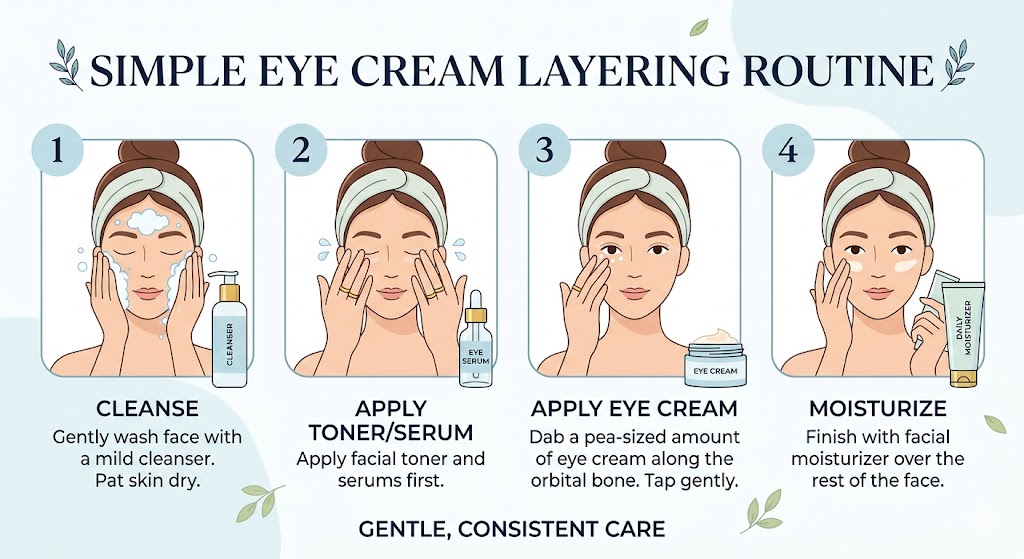
Second, a pea-sized amount is usually enough for both eyes. Overapplying products may increase irritation or cause milia.
What Finger Technique Works Best?
Third, gently tapping with your ring finger minimizes pressure on delicate skin.
For example, dragging or rubbing the under-eye area may worsen inflammation over time.
How Should Eye Cream Be Layered?
Moreover, eye cream is generally applied after serums but before heavier moisturizers.
Can Eye Creams Permanently Remove Dark Circles?
Eye creams cannot permanently remove all dark circles because some causes are genetic or structural. However, many products can visibly improve hydration, puffiness, and pigmentation over time.
First, lifestyle-related dark circles often respond best to skincare and sleep improvements. For example, dehydration-related darkness may improve within days of consistent hydration.
Second, pigmentation-based dark circles usually require several weeks of brightening ingredients like vitamin C or niacinamide.
Third, structural shadows caused by facial anatomy may need cosmetic procedures rather than topical creams alone.
A 2025 dermatology review found that most topical eye products require 6-12 weeks of consistent use for visible improvement — Source: Journal of Cosmetic Dermatology, 2025.
What Mistakes Make Dark Circles Worse?
Several common skincare mistakes can worsen under-eye darkness, irritation, and puffiness. Prevention is often easier than correction.
Overusing Retinol
First, excessive retinol use may weaken the skin barrier and increase dryness.
Ignoring Sunscreen
Second, UV exposure can worsen pigmentation and collagen breakdown.
Consistent sunscreen use helps prevent under-eye pigmentation from becoming darker due to UV exposure.
Rubbing the Eyes
Third, aggressive rubbing increases irritation and may deepen pigmentation over time.
Using Harsh Ingredients
Additionally, strong exfoliating acids and fragrances may irritate delicate under-eye skin.
Inconsistent Skincare
Finally, inconsistent use prevents long-term improvements. Most eye creams require patience and regular application.
Do Natural Remedies Work Better Than Eye Creams?
Natural remedies may temporarily improve puffiness and fatigue, but they usually do not replace targeted skincare ingredients. Combining healthy habits with eye creams often produces better results.
Cold Compresses
First, cold compresses temporarily reduce swelling and refresh tired eyes.
Better Sleep Habits
Second, quality sleep supports circulation and skin repair.
Hydration and Nutrition
Third, proper hydration and antioxidant-rich foods support healthier skin appearance overall.
For example, diets rich in vitamin C and iron may improve skin tone and circulation.
Tools, Examples, and Practical Applications
A complete under-eye care routine combines targeted ingredients, healthy habits, and consistent skincare layering. Small daily improvements often produce the best long-term results.
Morning Under-Eye Routine Example
- Gentle cleanser
- Vitamin C serum
- Caffeine eye cream
- Moisturizer
- SPF 30+ sunscreen
Nighttime Under-Eye Routine Example
- Cleanser
- Hydrating serum
- Retinol eye cream
- Barrier-supporting moisturizer
Eye Cream Pairing Suggestions
- Caffeine + Vitamin C → Puffiness + dullness
- Retinol + Peptides → Wrinkles + thin skin
- Ceramides + Hyaluronic Acid → Dryness + sensitivity
- Niacinamide + Sunscreen → Pigmentation prevention
What’s Next: Building a Complete Under-Eye Care Routine
A complete under-eye care routine includes sunscreen, hydration, sleep support, and consistent skincare habits. Eye creams work best when paired with healthy lifestyle practices.
First, daily sunscreen helps prevent pigmentation from worsening. Even brief sun exposure can darken under-eye skin over time.
Second, hydration and sleep quality directly affect skin appearance. For example, chronic dehydration often makes fine lines more visible.
Third, consistency matters more than expensive products. Most people see gradual improvement after several weeks rather than overnight changes.
Finally, pairing eye creams with serums and moisturizers may improve results further.
Conclusion
Eye creams for dark circles can improve puffiness, dehydration, fine lines, and uneven under-eye tone when used consistently and correctly. The key is matching ingredients to your specific concern instead of expecting one product to solve every type of dark circle.
Moreover, caffeine works best for puffiness, vitamin C supports brightening, and retinol helps thin or aging under-eye skin. At the same time, lifestyle habits like sleep, hydration, and sunscreen use remain essential for long-term improvement.
Most importantly, realistic expectations lead to better skincare decisions. By building a personalized under-eye routine and staying consistent, you can achieve brighter, smoother, healthier-looking skin over time.
FAQ
What are eye creams for dark circles?
Eye creams for dark circles are skincare products designed to hydrate, brighten, and improve the appearance of under-eye discoloration and tired-looking skin.
Do eye creams really help with dark circles?
Yes, certain eye creams may help reduce the appearance of dark circles by improving hydration and supporting skin health.
What ingredients are best for dark circles?
Popular ingredients include caffeine, vitamin C, retinol, peptides, hyaluronic acid, and niacinamide.
Can eye creams reduce puffiness too?
Yes, many eye creams are formulated to help reduce puffiness and under-eye swelling along with dark circles.
How long does it take for eye cream to work?
Some people notice hydration benefits quickly, while visible improvement in dark circles may take several weeks of consistent use.
How do you apply eye cream correctly?
Gently tap a small amount around the under-eye area using your ring finger without rubbing or pulling the skin.
Can lack of sleep cause dark circles?
Yes, poor sleep, stress, and fatigue can make dark circles appear more noticeable.
Are eye creams safe for sensitive skin?
Many eye creams are made for sensitive skin, especially fragrance-free and dermatologist-tested formulas.
At what age should you start using eye cream?
Many people begin using eye cream in their 20s or 30s to support hydration and healthy-looking skin.
Can eye creams permanently remove dark circles?
Eye creams may improve appearance, but results depend on the cause of dark circles such as genetics, aging, or lifestyle factors.