
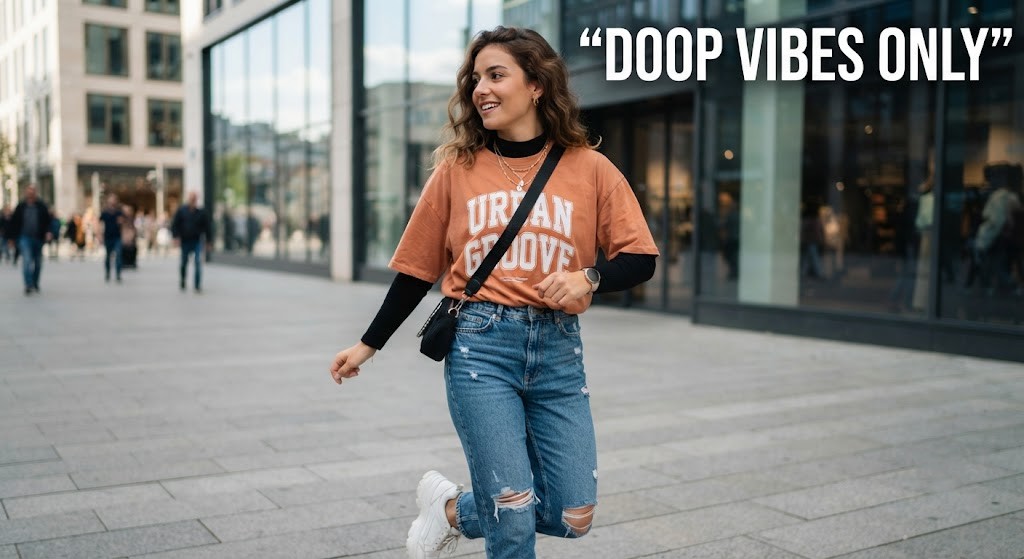
You’ve probably seen people joking about “dupes” or “doops” on TikTok and wondered where the term came from, what it actually means, and why it suddenly appears everywhere online.
The Doop Trend grew out of established “dupe” culture, but social media transformed the idea of affordable alternatives into something more humorous, exaggerated, and highly shareable. Instead of simply recommending an inexpensive product that resembles a more expensive one, creators began turning the comparison itself into entertainment.
In this guide, you’ll learn what the Doop Trend means, how it evolved from dupe culture, why TikTok helped popularize it, what Doop content looks like, how it differs from counterfeits and other aesthetic trends, and how you can participate without completely changing your personal style.
What Is the Doop Trend?
The Doop Trend is a social-media trend based on the word “dupe,” usually referring to affordable alternatives to popular or luxury products, often presented with exaggerated humor. The term “doop” became especially associated with TikTok videos that parody the way creators enthusiastically present inexpensive products as alternatives to expensive ones.
The word “dupe” is short for “duplicate” and traditionally describes a lower-priced product that resembles another product in appearance, function, shade, scent, or overall effect. For instance, a drugstore beauty product might be described as a dupe for a more expensive makeup product.
“Doop,” however, is not necessarily a separate fashion category with its own fixed color palette, silhouette, or dress code. It is better understood as an internet-culture expression and content format that developed from existing dupe culture.
That distinction is important because the Doop Trend can appear in numerous areas, including:
- Fashion and accessories
- Beauty and cosmetics
- Skincare and haircare
- Home décor
- Shopping
- Lifestyle products
- Comedy and parody content
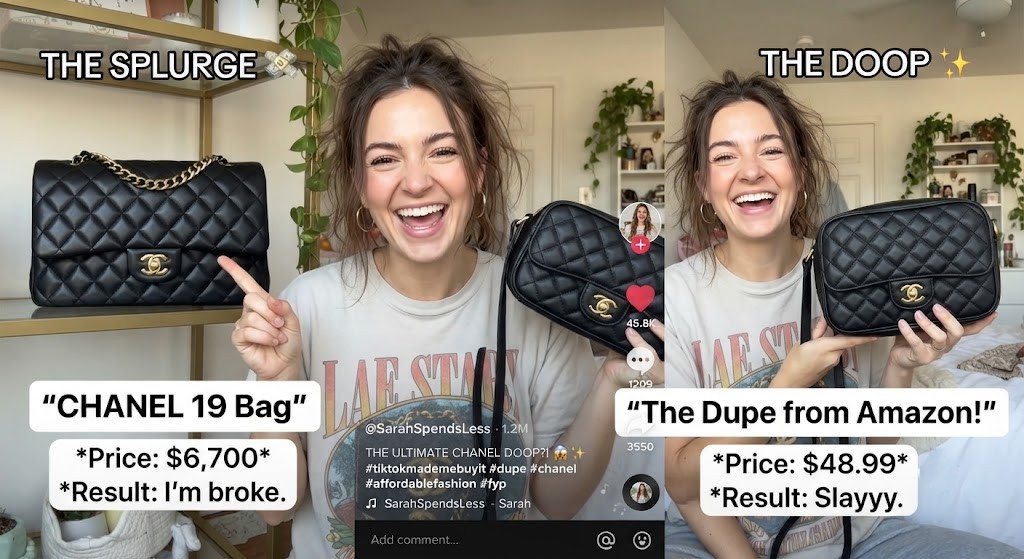
For example, a creator might walk through a discount store, hold up an inexpensive handbag, and dramatically announce that it is a luxury-brand “DOOP.” The humor can come from how loosely the inexpensive product resembles the supposed original.
The Doop Trend is an emerging social-media-driven trend characterized by a recognizable combination of visual, stylistic, and cultural elements that appeal to online trend communities.
Why Is the Doop Trend Becoming Popular?
The Doop Trend is becoming popular because it brings together affordability, humor, creator culture, and highly shareable social-media content. It turns an ordinary shopping discovery into entertainment, which makes the concept easy for viewers to understand and participate in.
Affordability Drives Interest
One of the biggest reasons behind the popularity of dupe culture is the appeal of finding less expensive alternatives to desirable products.
Google-linked consumer research reported that searches for “dupe” increased by 40% year over year globally in June 2022 — Source: Think with Google, 2022.
This demonstrates how interest in affordable alternatives was already growing before the Doop format became widely recognizable.
TikTok Turned Shopping Into Entertainment
TikTok helped transform product comparisons from straightforward shopping recommendations into short-form entertainment. The #dupe hashtag accumulated 6.3 billion views on TikTok in 2023 — Source: NYU Journal of Intellectual Property & Entertainment Law, 2025.
The platform’s short videos make it easy for creators to show an original product, reveal an alternative, add humor, and invite viewers to participate in the conversation.
Social Media Influences Purchasing Decisions
The connection between social media and dupe discovery is also significant. YPulse reported that 66% of young consumers surveyed had bought a dupe, while three-fourths had learned about a dupe through social media — Source: YPulse, 2023.
As a result, the Doop Trend operates at the intersection of entertainment and consumer discovery. A user may not initially be looking for a cheaper handbag, beauty product, or accessory, but a humorous creator video can introduce the product in a memorable way.
For example, instead of simply searching for a cheaper handbag, a user may discover a creator dramatically presenting a budget handbag as a “designer DOOP,” turning a shopping tip into a meme.
What Does the Doop Trend Mean?
The Doop Trend refers to the playful, often exaggerated way social-media users talk about affordable alternatives to desirable products. Its meaning comes from the broader “dupe” conversation rather than from one specific type of clothing, makeup, or lifestyle aesthetic.
The term can therefore have two closely connected meanings:
- A humorous version of “dupe.”
- A parody-style social-media format centered on inexpensive alternatives.
Understanding both meanings makes it easier to recognize Doop content when you encounter it online.
What Does “Doop” Mean on TikTok?
On TikTok, “doop” is essentially a humorous pronunciation or spelling of “dupe,” meaning an alternative or duplicate. Creators began using the exaggerated pronunciation while parodying conventional dupe-shopping videos.
A traditional shopping video might say:
“Here is an affordable alternative to these designer shoes.”
A Doop parody might instead dramatically hold up a completely ordinary shoe and announce:
“Designer DOOP!”
The exaggerated delivery is central to the joke. The Doop Trend is often as much about the presentation as it is about the product itself.
That makes it particularly well suited to TikTok because short-form videos reward recognizable formats, exaggerated reactions, and easy-to-remix concepts.
Is Doop the Same as a Counterfeit?
A dupe and a counterfeit are not automatically the same thing.
A dupe can be an independent product that resembles the style or function of another product without pretending to carry the original brand identity.
For example, an unbranded handbag with a similar silhouette may be marketed as a budget alternative. A fake handbag carrying another company’s protected logo, however, can raise separate trademark and consumer-protection issues.
This distinction matters when discussing the Doop Trend because affordable alternatives and counterfeit goods should not automatically be treated as identical.
How Did the Doop Trend Start?
The Doop Trend evolved from older online dupe culture before becoming a recognizable TikTok parody format around late 2022 and early 2023. The word “dupe” itself had already been widely used in beauty and fashion communities for years.
The Roots of Dupe Culture
Beauty communities played an important role in popularizing product comparisons. Consumers regularly searched for inexpensive alternatives to premium products, particularly when they wanted a similar appearance, shade, finish, scent, or function at a lower price.
Early online beauty communities frequently searched for alternatives to expensive products, including MAC cosmetics.
This established the basic idea behind dupe culture: find something that delivers a similar experience without paying the original price.
TikTok Added the Parody Element
TikTok accelerated the evolution of the concept by turning conventional product comparisons into quick, humorous videos.
In December 2022, creators began parodying conventional “dupe” videos. By early January 2023, viral videos showed people walking through stores and loudly identifying random products as “doops.”
That shift was important. Instead of simply asking, “What is a cheaper alternative?”, creators could make the search itself the joke.
One early viral Doop video posted in January 2023 reportedly received more than 2.9 million plays and 600,000 likes within roughly two weeks — Source: Know Your Meme, 2023.
What Are the Main Characteristics of the Doop Trend?
The main characteristics of the Doop Trend are affordable alternatives, exaggerated comparisons, recognizable brand references, humor, creator participation, and social-media remixing.
Although the trend can look different from one video to another, several elements appear repeatedly.
Affordable Alternatives
At its core, Doop content often features an inexpensive product positioned as an alternative to something more expensive or recognizable.
The product does not necessarily need to be an exact match. In fact, an obvious difference can make the joke more entertaining.
Recognizable References
The original product or aesthetic usually needs to be recognizable enough for viewers to understand the comparison.
For example, a creator could compare:
- A budget handbag with a designer-style handbag
- Drugstore makeup with luxury cosmetics
- Affordable sneakers with premium athletic shoes
- Discount-store décor with high-end home décor
Exaggerated Presentation
The comedic effect often comes from exaggerated language, facial expressions, dramatic reveals, or intentionally enthusiastic reactions.
A creator might hold up an ordinary item and confidently declare it a “luxury DOOP,” even when the resemblance is questionable.
Social Remixing
The format is highly remixable. Users can adapt it to different products, stores, categories, jokes, and personal styles.
This flexibility is one reason the Doop Trend can move quickly across social platforms.
Consumer Discovery
Beyond the humor, Doop content can provide genuine shopping inspiration. Viewers may discover lower-cost alternatives that they would not have encountered otherwise.
| Doop Trend Element | What It Means | Example |
|---|---|---|
| Affordable alternative | Lower-cost option | Budget handbag |
| Luxury reference | Recognizable premium product | Designer-style bag |
| Exaggeration | Humorous presentation | “Luxury DOOP!” |
| Social remixing | Users recreate the format | Store comparison video |
| Consumer discovery | Finding value | Drugstore beauty alternative |
What Are the Best Doop Trend Examples?
The best Doop Trend examples combine a recognizable product comparison with enough exaggeration to make the content entertaining. Successful examples work because viewers understand both the product being referenced and the humorous contrast.
Common Doop categories include:
- Fashion: Affordable handbags, shoes, jackets, leggings, and sunglasses.
- Beauty: Drugstore makeup, skincare, haircare, and fragrances.
- Lifestyle: Budget home décor or kitchen products resembling premium designs.
- Shopping: Discount-store discoveries presented as luxury alternatives.
- Comedy: Completely random products jokingly labeled as “dupes.”
The format can work particularly well when the alternative is surprisingly inexpensive or when the similarity to the original product is intentionally questionable.
Why Imperfect Dupes Can Be More Entertaining
Doop content does not require a perfect match.
In fact, the contrast between the supposed original and the inexpensive alternative can make the joke stronger. A creator who finds something only vaguely similar can lean into the exaggeration and make the comparison intentionally dramatic.
This is where the Doop Trend differs from a straightforward product-review video. The goal is not always to prove that two products are identical. Sometimes, the entertainment comes from pretending that they are.
How Can You Try the Doop Trend?
The easiest way to try the Doop Trend is to choose a recognizable product category, find an affordable alternative, and present the comparison with a playful tone.
You do not need to completely redesign your wardrobe, replace your beauty collection, or purchase a large number of products.
Instead, start with one simple comparison.
How Can Beginners Adopt the Doop Trend?
1. Start With One Element
Choose one affordable item rather than attempting to recreate an entire viral look.
For example, you might experiment with one affordable accessory inspired by a current trend.
2. Compare Useful Features
Look beyond the label and compare characteristics that actually matter.
Consider:
- Shape
- Color
- Finish
- Function
- Material or construction where relevant
- Overall aesthetic
This makes your recommendation more useful than simply calling everything a “dupe.”
3. Keep Your Personal Style
A trend works best when it complements your existing preferences.
For example, if your wardrobe is minimalist, you could add one budget-friendly statement accessory rather than copying an entire viral outfit.
4. Add Humor if You’re Creating Content
If you’re making a social-media post, the exaggerated “DOOP” presentation can make an ordinary product comparison more engaging.
You can use dramatic reveals, playful captions, exaggerated reactions, or intentionally over-the-top comparisons.
5. Be Honest About the Comparison
If a product is similar in appearance but different in quality or function, say so.
A useful Doop recommendation should distinguish between looking similar and actually performing similarly.
By starting small, you can explore the Doop Trend without making your personal style feel forced.
Where Can You Find Doop Trend Inspiration?
The best places to find Doop Trend inspiration are TikTok, Instagram, Pinterest, Google Trends, and visual-search tools. Each platform serves a slightly different purpose when you’re researching the trend.
TikTok
Use TikTok to identify recurring Doop formats, creator language, jokes, and product categories.
Because the platform is closely associated with the trend’s viral development, it can be especially useful for observing how creators currently interpret the concept.
Instagram can help you discover creator interpretations, product styling, reels, and related shopping content.
It can also show how the concept moves from TikTok-style humor into broader lifestyle and fashion content.
Pinterest is particularly useful for visual mood boards and longer-lasting aesthetic references.
Rather than relying exclusively on rapidly changing videos, you can save affordable fashion references, accessories, color combinations, and styling ideas in one place.
Google Trends
Google Trends can help you compare search interest around terms such as “Doop,” “dupe,” specific product categories, and related fashion terms.
This can provide another perspective on how consumer interest develops beyond social-media feeds.
Is the Doop Trend the Same as Other Viral Aesthetic Trends?
The Doop Trend is different from fixed aesthetic trends because it describes a social-media behavior and joke more than a specific visual identity.
It can certainly overlap with fashion aesthetics, but participating in the trend does not require a particular silhouette, color palette, hairstyle, or wardrobe.
For example, Y2K fashion represents a recognizable visual direction inspired by the early 2000s. Doop culture, on the other hand, focuses more on affordable alternatives and playful product comparisons.
| Trend Type | Main Focus | Typical Example |
|---|---|---|
| Doop Trend | Affordable alternatives and parody | “Designer DOOP” |
| Y2K fashion | Early-2000s-inspired style | Low-rise denim |
| Clean-girl aesthetic | Minimal styling | Neutral basics |
| Streetwear | Casual urban fashion | Oversized hoodie |
| Dupe culture | Finding alternatives | Budget beauty product |
This difference explains why the Doop Trend can exist alongside almost any aesthetic. A creator can make a Doop video about Y2K fashion, streetwear, beauty, minimalist fashion, or home décor.
How Is the Doop Trend Evolving on Social Media?
The Doop Trend continues to evolve as creators remix the original dupe concept with new products, jokes, platforms, and consumer behaviors.
Social-media trends rarely remain exactly the same after becoming popular. Creators adapt formats to new products and audiences, while brands may eventually enter the conversation themselves.
From Beauty to Fashion and Lifestyle
The conversation has expanded beyond beauty into fashion, accessories, home products, and lifestyle purchases.
The Guardian reported that #dupe culture had reached nearly 6 billion TikTok views by 2024 — Source: The Guardian, 2024.
This wider adoption demonstrates how the basic idea can be applied to almost any category where consumers compare inexpensive and premium products.
Brands Are Joining the Conversation
Brands are also increasingly participating in dupe conversations instead of simply ignoring them.
Lululemon, for example, used a “dupe swap” activation to engage consumers who were already participating in the conversation.
This illustrates another stage in the evolution of the trend: what starts as a consumer joke can eventually become part of mainstream marketing.
From Meme to Shopping Behavior
A trend that begins as a joke about inexpensive fashion can evolve into:
- Product reviews
- Shopping guides
- Creator partnerships
- Brand campaigns
- Product comparisons
- Budget-friendly styling content
- Consumer recommendations
The Doop Trend therefore exists somewhere between internet humor, consumer culture, and product discovery.
What Tools and Platforms Can Help You Explore the Doop Trend?
The most useful Doop Trend tools combine social discovery, visual research, and search-interest tracking. You do not need expensive software to research or participate in the trend effectively.
TikTok Search
Use TikTok Search to find recurring Doop formats, product comparisons, creator terminology, and popular examples.
Pay attention to how creators structure their videos, because the presentation is often just as important as the product itself.
Use Pinterest to collect visual references and organize ideas into mood boards.
This can be especially helpful when you’re exploring how affordable alternatives fit into a particular fashion aesthetic.
Google Trends
Use Google Trends to observe changes in search interest for “Doop,” “dupe,” and related product categories.
You can also compare broader fashion or beauty terms to understand which topics are attracting search attention.
Instagram’s Explore features can help you find creators, Reels, affordable fashion inspiration, and related product comparisons.
Visual-search tools can also help identify products with similar appearances or styling references.

What Should You Try Next With the Doop Trend?
The next step with the Doop Trend is to experiment with one affordable alternative, document the comparison, and personalize the result.
You can use the following simple process:
- Choose one category: Start with fashion, beauty, accessories, or home décor.
- Find one alternative: Compare price, appearance, function, and quality.
- Create a mood board: Save references from TikTok, Instagram, and Pinterest.
- Test one element: Add a single Doop-inspired item to your existing style.
- Evaluate honestly: Explain what matches and what does not.
- Remix the idea: Add your own humor, styling, or visual perspective.
This approach keeps the trend accessible. Instead of buying everything associated with a viral moment, you can experiment with one product or one styling idea and decide whether it genuinely works for you.
Conclusion: Make the Doop Trend Your Own
The Doop Trend is ultimately about affordable alternatives, playful internet culture, and the freedom to experiment with trends without paying luxury prices. Its roots in dupe culture explain the language, while TikTok helped transform that language into a recognizable parody format.
What makes the trend particularly interesting is its flexibility. It can be funny, useful, budget-conscious, fashion-focused, beauty-focused, or simply a way to participate in an internet joke.
Moreover, you do not need to copy someone else’s look exactly. Trying the Doop Trend involves identifying its defining elements and incorporating one or two of them into an existing personal style rather than copying an entire look.
Finally, treat the trend as inspiration rather than a strict rulebook. Whether you discover a genuinely useful alternative or simply laugh at an outrageous “DOOP,” the most successful interpretation is the one that fits your personality, budget, and style.
FAQs
What is the Doop Trend?
The Doop Trend is a humorous social-media trend based on affordable alternatives or “dupes” for popular products.
What does “doop” mean on TikTok?
“Doop” is a playful pronunciation of “dupe” commonly used in humorous TikTok content.
When did the Doop Trend become popular?
The Doop Trend became popular on TikTok around late 2022 and early 2023.
Why is the Doop Trend popular?
It combines affordable shopping, humor, product discovery, and viral social-media content.
Is the Doop Trend the same as dupe culture?
The Doop Trend developed from dupe culture but adds a stronger humorous and parody-focused style.
Is a dupe the same as a counterfeit?
No. A dupe can be a legal affordable alternative, while a counterfeit falsely uses another brand’s identity.
What are common Doop Trend examples?
Common examples include affordable fashion, beauty products, accessories, home décor, and shopping finds.
How can I try the Doop Trend?
Find an affordable alternative to a popular product and present the comparison in a fun, exaggerated way.
Where can I find Doop Trend inspiration?
TikTok, Instagram, Pinterest, and Google Trends are useful places to find inspiration.
Is the Doop Trend a fashion aesthetic?
No. It is mainly a social-media content format that can overlap with different fashion aesthetics.
You can also read this:
Gen Z Dating Trends: How Modern Dating Is Changing
Sleep Deprivation in Gen Z: Causes, Effects & Practical Solutions
What Is Zombieing in Dating? Meaning, Signs & How to Respond
2 thoughts on “Doop Trend: What It Means & Why This Viral Trend Is Taking Off”