
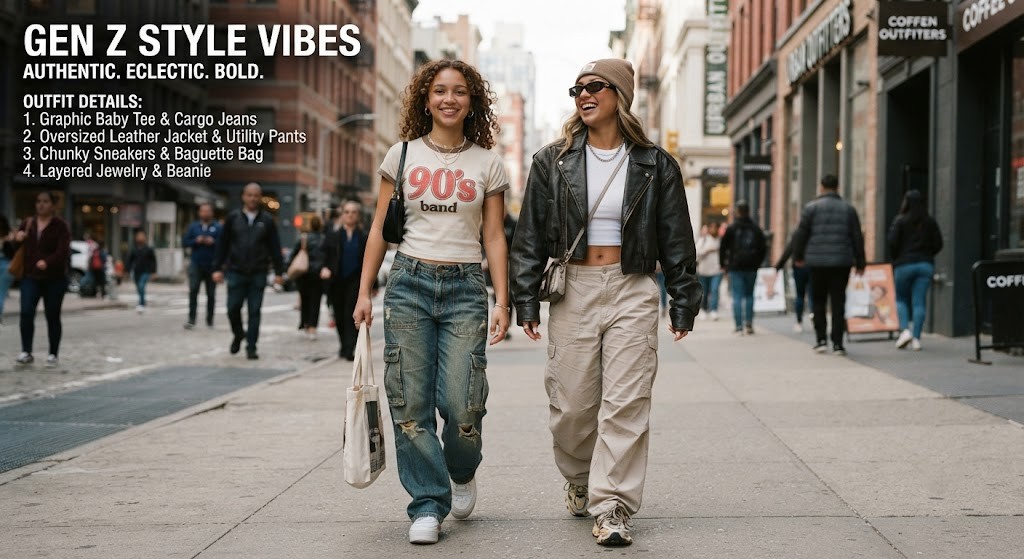
Gen Z has transformed the way fashion trends emerge, spread, and evolve. Oversized silhouettes, baggy denim, vintage revivals, sneakers, statement accessories, and social-media aesthetics have all become part of everyday style—but the biggest Gen Z fashion trends go far beyond individual clothing pieces.
At the heart of Gen Z style is experimentation. Nostalgia meets internet culture, streetwear mixes with feminine aesthetics, practical clothing becomes fashionable, and yesterday’s forgotten trends can suddenly become tomorrow’s viral look.
Social platforms have accelerated this cycle even further. TikTok, Instagram, Pinterest, creators, celebrities, resale platforms, and online communities can turn a niche aesthetic into a recognizable fashion movement remarkably quickly.
In this guide, we’ll explain the most important Gen Z fashion trends, popular aesthetics, key wardrobe pieces, outfit formulas, social-media influences, sustainability considerations, and practical ways to wear current trends without losing your personal style.
What Are Gen Z Fashion Trends?
Gen Z fashion trends are clothing, styling, and aesthetic movements that are especially influential among Generation Z and are shaped by social media, vintage revivals, streetwear, internet culture, and individual self-expression.
For example, a single outfit might combine baggy jeans, a fitted baby tee, vintage sneakers, layered jewelry, and a nostalgic Y2K accessory. Rather than belonging entirely to one style category, the outfit borrows elements from several influences.
More importantly, Gen Z fashion is defined less by one fixed aesthetic than by the ability to mix styles, eras, silhouettes, and cultural influences into personalized outfits. Someone might pair a preppy cardigan with wide-leg denim and chunky sneakers instead of dressing completely within one aesthetic.
Gen Z fashion also moves quickly because social platforms allow trends to spread almost instantly. TikTok, Instagram, Pinterest, creators, celebrities, online communities, resale platforms, and fashion brands can all introduce, revive, or reinterpret a style.
At the same time, Gen Z fashion should not be treated as one universal uniform. A teenager interested in gorpcore may dress very differently from a young professional who prefers minimal tailoring, while both can participate in broader Gen Z style culture.
This flexibility is one of the defining characteristics of the generation’s approach to fashion: trends become tools for experimentation rather than strict rules for dressing.
Why Is Gen Z Fashion So Influential?
Gen Z fashion is influential because social media, creators, celebrities, resale culture, and online communities have changed how young consumers discover and adopt clothing trends.
Previously, fashion trends were often introduced through designers, magazines, celebrities, retailers, and seasonal collections. Social platforms have made fashion discovery much faster and more participatory.
For example, a styling video can introduce a vintage jacket, demonstrate three ways to wear it, and inspire thousands of people to recreate the look within days.
Moreover, 92% of Gen Z respondents in a Vogue-reported survey said they enjoy finding fashion inspiration online, compared with 84% of Millennials. — Source: [Vogue, 2024]
Social discovery increasingly competes with traditional search as well. A 2025 survey reported that 30.4% of 18–27-year-olds most often discovered new products through Instagram, 23.2% through TikTok, and 18.8% through Google. — Source: [Search Engine Land/GRIN, 2025]
This shift means fashion discovery does not necessarily begin with someone searching for a particular product. A person may encounter a new aesthetic through a video, creator, celebrity outfit, mood board, or algorithmically recommended post before deciding to explore it further.
At the same time, Gen Z has helped revive older fashion cycles rather than simply creating completely new ones. Y2K styling, vintage denim, retro sportswear, archival accessories, and earlier silhouettes can return through a new combination of social content and contemporary styling.
For more generational context, compare these trends with our guide to Gen Alpha fashion trends.
What Are the Most Popular Gen Z Fashion Trends Right Now?
Popular Gen Z fashion trends include oversized and relaxed silhouettes, baggy denim, vintage-inspired pieces, Y2K influences, statement accessories, sneakers, layered outfits, and social-media-driven microtrends.
Although individual trends can change rapidly, several broader styling ideas appear repeatedly across Gen Z wardrobes.
These include:
- Oversized and relaxed clothing
- Baggy and wide-leg denim
- Y2K and retro-inspired pieces
- Layered outfits
- Vintage clothing
- Statement accessories
- Sneakers and sporty footwear
- Cargos and functional clothing
- Mixed aesthetics
- Social-media-driven microtrends
The important distinction is that these pieces are rarely worn according to one strict formula. Instead, Gen Z styling often depends on combining contrasting proportions, aesthetics, or eras.
Oversized and Relaxed Silhouettes
Oversized silhouettes are a major Gen Z styling choice because they prioritize relaxed proportions and make casual outfits feel intentional.
Oversized graphic tees, sweatshirts, shirts, jackets, blazers, and relaxed trousers can all create this effect. For example, an oversized graphic tee can be paired with wide-leg jeans, a shoulder bag, and retro sneakers.
However, oversized does not mean every item needs to be loose.
A balanced outfit can combine one oversized piece with something fitted. Think of a boxy jacket over a slim tank top, an oversized sweatshirt with a shorter skirt, or wide-leg trousers paired with a fitted tee.
This contrast can make relaxed silhouettes appear deliberate rather than shapeless.
Baggy Jeans and Wide-Leg Denim
Baggy denim gives Gen Z outfits a relaxed shape while connecting contemporary streetwear with earlier vintage styles.
Wide-leg and loose-fitting jeans are particularly versatile because they can move between casual, streetwear, Y2K, grunge, minimalist, and preppy-inspired outfits.
For an easy everyday look, pair loose blue jeans with a cropped cardigan, sneakers, and a small shoulder bag.
Alternatively, the same jeans can take on a different aesthetic depending on the styling:
- Pair them with a graphic tee for a streetwear-inspired outfit.
- Add a fitted cardigan for a softer look.
- Wear distressed denim with boots for a grunge influence.
- Combine dark-wash denim with a structured top for a more polished outfit.
Because denim works across multiple aesthetics, it is one of the easiest Gen Z trend categories to adapt to an existing wardrobe.
Layered Outfits
Layering allows Gen Z dressers to combine different textures, proportions, and aesthetics in one outfit.
For example, a fitted tee under an open button-up with a lightweight jacket creates visual depth without requiring unusual statement pieces.
Layering also gives basic wardrobe items more styling possibilities. A simple skirt, sweater, shirt, dress, or tank top can become part of several different outfits depending on what is worn underneath or over it.
This approach can be particularly useful when experimenting with trends because you do not necessarily need to purchase an entirely new outfit.
Statement Accessories
Statement accessories add personality to otherwise simple Gen Z outfits.
A basic jeans-and-tee combination can become considerably more expressive with layered necklaces, a distinctive bag, sunglasses, a belt, scarf, or colorful hair accessory.
Accessories can include:
- Layered necklaces
- Rings and bracelets
- Sunglasses
- Belts
- Shoulder bags
- Hair ribbons
- Scarves
- Distinctive socks
- Statement jewelry
Accessories are also useful for experimenting with microtrends without buying an entirely new wardrobe.
Instead of purchasing several trend-specific garments, you can introduce one current accessory and see whether the aesthetic genuinely works with your personal style.
Sneakers and Sporty Styles
Sneakers remain central to Gen Z fashion because they work across streetwear, casual, sporty, vintage, and everyday styling.
Retro-inspired sneakers, for example, can be worn with wide-leg jeans and a fitted top or paired with a skirt and oversized sweatshirt.
Sporty pieces have also moved beyond traditional gym outfits. Track jackets, jerseys, technical fabrics, athletic shorts, and other sports-inspired garments can function as everyday fashion pieces when combined with contrasting items.
A jersey paired with a skirt is a good example. One piece feels athletic while the other creates an intentionally different aesthetic direction.
What Fashion Aesthetics Are Popular With Gen Z?
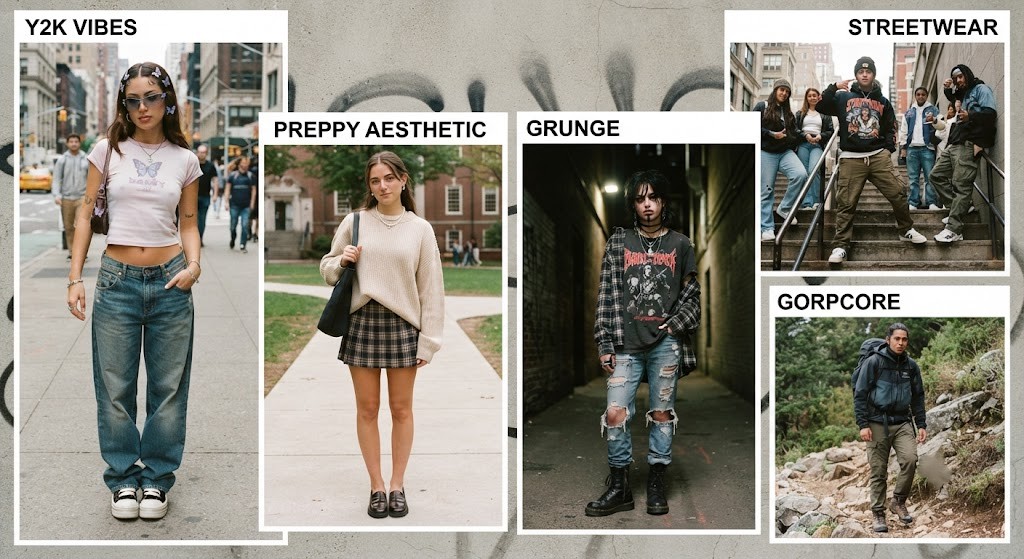
Popular Gen Z fashion aesthetics include Y2K, coquette, clean girl, streetwear, indie, grunge, preppy, blokette, gorpcore, and cottagecore.
However, these aesthetics are not necessarily separate fashion identities. Gen Z styling frequently combines elements from several of them.
For example, one person may wear Y2K sunglasses with a preppy cardigan and baggy denim instead of following a single aesthetic from head to toe.
| Gen Z Aesthetic | Typical Pieces | Overall Style Direction |
|---|---|---|
| Y2K | Baby tees, low-rise denim, metallic details | Early-2000s nostalgia |
| Coquette | Bows, ribbons, soft knits, skirts | Romantic and feminine |
| Clean girl | Simple basics, sleek accessories | Minimal and polished |
| Streetwear | Oversized tees, cargos, sneakers | Relaxed and urban |
| Grunge | Distressed denim, boots, layered tees | Alternative and edgy |
| Preppy | Polos, cardigans, pleated skirts | Collegiate and polished |
| Blokette | Sport jerseys, feminine styling | Sporty with feminine details |
| Gorpcore | Fleeces, technical jackets, trail shoes | Outdoor-inspired |
| Cottagecore | Floral prints, flowing dresses, knitwear | Rustic and romantic |
| Indie | Vintage pieces, unusual layers | Creative and eclectic |
Y2K and Retro Fashion
Y2K Gen Z fashion uses late-1990s and early-2000s references through silhouettes, accessories, colors, and styling details.
A fitted baby tee, low-rise or relaxed denim, tinted sunglasses, and a small shoulder bag can create a recognizable Y2K-inspired outfit.
However, nostalgia extends beyond Y2K.
Older sportswear, vintage jackets, retro sneakers, throwback prints, and accessories inspired by previous decades can all be reinterpreted through modern proportions.
This ability to revive older styles is central to Gen Z fashion culture. Rather than reproducing a historical look exactly, many outfits combine nostalgic pieces with contemporary styling.
Coquette, Preppy, and Soft Aesthetics
Coquette and related soft aesthetics use feminine details such as bows, ribbons, delicate jewelry, skirts, and romantic textures.
For example, a simple cardigan becomes more trend-focused when styled with a ribbon hair accessory, mini skirt, and ballet-inspired footwear.
Preppy styling takes inspiration from collegiate clothing such as cardigans, polos, pleated skirts, and knitwear. Gen Z outfits can update these pieces through oversized proportions or unexpected accessories.
A polo shirt with wide-leg jeans and sneakers, for instance, can feel contemporary rather than traditionally collegiate.
The ability to combine soft, romantic, and preppy details with casual clothing also prevents the aesthetic from feeling overly coordinated.
Grunge, Indie, and Streetwear
Grunge, indie, and streetwear aesthetics emphasize individuality through layering, relaxed proportions, graphic elements, and unconventional combinations.
Distressed denim, a vintage band-style tee, an oversized jacket, and sneakers can create an easy alternative-inspired outfit.
These aesthetics also frequently overlap.
Someone can wear a streetwear silhouette with grunge textures, add a preppy item to an otherwise alternative outfit, or combine vintage pieces with modern sneakers.
This overlap reinforces one of the most recognizable characteristics of Gen Z fashion: aesthetics can function as inspiration rather than rigid categories.
Gorpcore and Functional Fashion
Gorpcore is an outdoor-inspired aesthetic that incorporates functional clothing such as fleeces, technical jackets, cargo pants, and trail-inspired footwear into everyday outfits.
For example, a lightweight shell jacket can be paired with loose trousers and casual sneakers for a practical urban look.
Functional clothing can include:
- Technical jackets
- Fleeces
- Cargo pants
- Practical bags
- Trail-inspired footwear
- Outdoor layers
Gorpcore also reflects a broader interest in clothing that can move between different environments.
Instead of viewing comfort and practicality as separate from fashion, functional pieces become part of the visual identity of an outfit.
What Clothes Are Gen Z Wearing Most Often?
Gen Z wardrobes commonly combine relaxed denim, oversized tops, fitted basics, casual outerwear, sneakers, skirts, dresses, cargos, and expressive accessories.
The exact pieces vary according to aesthetic and personal preference, but versatility is particularly useful when building a Gen Z-inspired wardrobe.
For example, one pair of baggy jeans can create several looks by rotating different tops, jackets, accessories, and shoes.
Tops
Gen Z tops often balance relaxed and fitted proportions.
An oversized graphic tee can work with baggy jeans for an intentionally loose silhouette, while a fitted tank can create contrast with wide-leg trousers.
Common options include:
- Baby tees
- Graphic tees
- Cropped cardigans
- Polos
- Fitted tanks
- Oversized shirts
- Sport jerseys
- Simple knitwear
You do not need every category. Instead, choose tops that can work with several bottoms already in your wardrobe.
Bottoms
Gen Z bottoms frequently emphasize relaxed proportions, denim experimentation, and versatile casual styling.
Wide-leg jeans can be dressed up with a fitted cardigan or made more casual with an oversized sweatshirt.
Other popular styling options include cargos, mini skirts, athletic shorts, long skirts, and relaxed trousers.
Because these bottoms can move across different aesthetics, changing the top, footwear, or accessories can often create an entirely different outfit.
Dresses and Outerwear
Dresses and outerwear become more Gen Z-focused when they are layered with contrasting casual or vintage pieces.
A simple dress, for example, can be paired with an oversized jacket and sneakers rather than formal footwear.
Outerwear is particularly effective because one layer can change the personality of the entire outfit.
Options include:
- Denim jackets
- Bomber jackets
- Leather-inspired jackets
- Varsity styles
- Fleeces
- Oversized blazers
The goal is not necessarily to own every trending jacket. A versatile outer layer that works across several outfits can be more useful than multiple pieces tied to individual microtrends.
Shoes and Bags
Shoes and bags are high-impact Gen Z wardrobe pieces because they can change the direction of an outfit without changing its core clothing.
The same wide-leg jeans can look sporty with sneakers, feminine with ballet-inspired shoes, or edgier with boots.
Likewise, shoulder bags, crossbody bags, backpacks, tote bags, and compact statement bags allow different aesthetics to coexist within one wardrobe.
How Do You Create a Gen Z Outfit?
You can create a Gen Z outfit by combining a relaxed or current silhouette with one distinctive trend element and familiar wardrobe staples.
A straightforward starting formula is baggy jeans, a fitted top, retro sneakers, a small shoulder bag, and layered jewelry.
Rather than copying an entire outfit exactly, think about three components: silhouette, contrast, and personality.
First, choose your main silhouette. Then add a contrasting or trend-focused piece. Finally, use shoes and accessories to define the aesthetic.
7 Easy Gen Z Outfit Formulas
Try these simple combinations:
- Baggy jeans + fitted top + sneakers + statement accessories
- Mini skirt + oversized sweatshirt + sneakers
- Wide-leg trousers + cropped cardigan + shoulder bag
- Graphic tee + relaxed denim + vintage jacket + sneakers
- Sport jersey + skirt + casual footwear + small bag
- Simple dress + oversized jacket + sneakers
- Cargo pants + fitted tank + technical jacket + sneakers
Proportion matters more than copying an exact outfit.
For example, if you choose an oversized bottom, adding a fitted top can create visual balance. Alternatively, an oversized jacket can add volume to a more streamlined base outfit.
Ask These Questions Before Buying a Trend
Before purchasing something simply because it appears in your social feed, ask:
- Does this piece work with at least three items you already own?
- Does the silhouette feel comfortable on your body?
- Would you still wear it if the trend disappeared next month?
If the answer is yes to all three, the item has a better chance of becoming part of your actual wardrobe rather than a short-lived purchase.
The most practical way to adopt Gen Z fashion trends is to combine a few current pieces with wardrobe staples that already fit your personal style.
What Shoes and Accessories Are Popular in Gen Z Fashion?
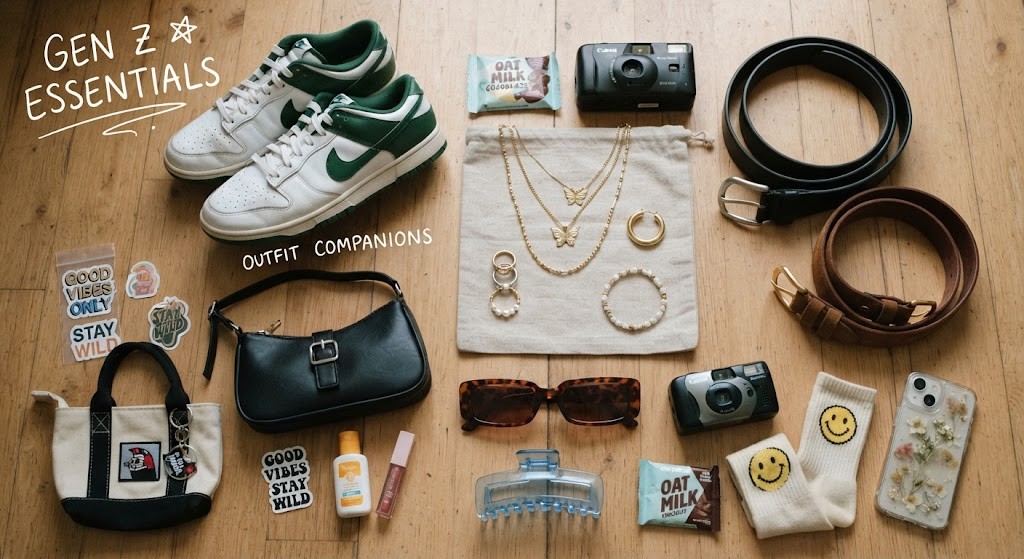
Popular Gen Z shoes and accessories include sneakers, boots, ballet-inspired footwear, shoulder bags, crossbody bags, layered jewelry, sunglasses, belts, and expressive hair accessories.
These finishing pieces often have a surprisingly large impact on an outfit.
For example, a simple neutral outfit can look completely different after adding a statement bag, chunky jewelry, and retro sneakers.
Popular Gen Z Footwear
Footwear often determines the aesthetic direction of an outfit.
Common options include:
- Sneakers
- Retro-inspired sneakers
- Boots
- Ballet-inspired footwear
- Casual sporty footwear
- Trail-inspired shoes
Sneakers can make a skirt feel casual, boots can make denim feel edgier, and delicate footwear can shift relaxed clothing toward a softer aesthetic.
Popular Gen Z Accessories
Accessories provide another opportunity to personalize a look.
These can include:
- Shoulder bags
- Crossbody bags
- Sunglasses
- Belts
- Layered necklaces
- Rings
- Hair ribbons
- Scarves
- Colorful hair accessories
Accessories are especially useful for experimenting with trends at a lower commitment level.
A ribbon, unusual belt, vintage scarf, or distinctive bag can introduce an aesthetic without requiring a full wardrobe transformation.
How Has TikTok Influenced Gen Z Fashion Trends?
TikTok, Instagram, Pinterest, creators, celebrities, and online communities accelerate Gen Z fashion trends by allowing new aesthetics and outfit ideas to spread rapidly.
A creator can post a styling video showing one vintage jacket five different ways, turning an individual item into a broader fashion conversation.
This makes fashion discovery more visual, immediate, and participatory.
Moreover, 58% of Gen Z respondents in Pacsun’s 2025 Youth Report said they rely on TikTok to stay informed about current fashion trends, while 33% cited Pinterest. — Source: [PacSun Youth Report, 2025]
TikTok’s influence also extends from inspiration into shopping behavior. TikTok reported that 44% of Gen Z users on a fashion journey had purchased a product because they saw it on TikTok during the previous year. — Source: [TikTok Creative Playbook, 2024]
Social media therefore influences multiple stages of fashion discovery:
- Someone encounters an outfit, item, or aesthetic.
- Creators demonstrate how to style it.
- Users save, share, or recreate the look.
- Similar content receives more visibility.
- The trend becomes recognizable across platforms.
- New variations or microtrends emerge.
At the same time, social media encourages microtrends to appear, peak, and fade rapidly.
Terms such as aesthetics, cores, styling challenges, celebrity looks, and viral product discoveries can create temporary communities around particular visual ideas.
In addition, trend culture increasingly includes playful reinterpretations of viral fashion ideas. For example, readers can explore the Doop Trend to understand how social-media language can influence fashion conversations.
Are Gen Z Fashion Trends Sustainable?
Gen Z fashion trends can support sustainable choices when they emphasize secondhand shopping, vintage clothing, wardrobe repetition, quality, repair, and thoughtful purchasing, but trend-driven consumption can also encourage overbuying.
The distinction is important because following a particular aesthetic does not automatically make a wardrobe sustainable.
For example, purchasing a secondhand denim jacket and wearing it for years can be more intentional than repeatedly buying low-cost versions of short-lived microtrends.
Moreover, a 2025 Scientific Reports study found that 79% of respondents aged 18–24 had purchased secondhand clothing, compared with 57% of respondents aged 65 and older. — Source: [Scientific Reports, 2025]
In addition, Bank of America Institute data showed Gen Z represented 41% of secondhand sellers in both 2025 and 2026 year-to-date, compared with 37% in 2024. — Source: [Bank of America Institute, 2026]
These figures illustrate the importance of resale and secondhand fashion within younger consumer behavior.
However, secondhand shopping is not automatically sustainable if it simply encourages people to buy more clothing. Research has highlighted the possibility that frequent low-cost secondhand purchases can reproduce some consumption patterns associated with fast fashion. — Source: [Scientific Reports, 2025]
Therefore, consider sustainability as a behavior rather than an aesthetic.
How to Make Gen Z Fashion More Sustainable
A more intentional approach can include:
- Buying fewer pieces
- Repeating outfits regularly
- Shopping secondhand or vintage when appropriate
- Repairing clothing instead of immediately replacing it
- Choosing pieces that work with your existing wardrobe
- Prioritizing durability
- Reselling or responsibly passing on clothing you no longer use
- Avoiding unnecessary purchases tied only to short-lived microtrends
The goal is not to stop experimenting with fashion. Instead, it is to distinguish between trends that genuinely fit your wardrobe and trends that encourage unnecessary consumption.
How Can You Follow Gen Z Fashion Trends Without Losing Your Personal Style?
You can follow Gen Z fashion trends without losing your personal style by treating trends as styling options rather than rules.
Someone with a minimalist wardrobe, for example, can add one oversized jacket or statement accessory instead of adopting an entire Y2K aesthetic.
This selective approach makes it easier to stay current without creating a wardrobe that feels disconnected from your personality.
Try the One-Trend Rule
When experimenting, choose one trend-focused element and build the rest of your outfit around pieces you already trust.
Your trend element might be:
- Baggy denim
- A vintage accessory
- A sporty jacket
- A statement shoe
- A Y2K-inspired bag
- A ribbon or soft accessory
- A technical gorpcore layer
This one-trend rule can make new styles easier to wear while reducing the pressure to recreate an entire viral aesthetic.
Build a Personal Trend Board
Before shopping, create a personal trend board.
Save outfits that repeatedly catch your attention on Pinterest or Instagram, then look for patterns.
Ask yourself:
- Which silhouettes appear repeatedly?
- Which colors do I keep saving?
- Which shoes appear most often?
- Do I prefer oversized or fitted clothing?
- Which aesthetics seem most wearable for my lifestyle?
After collecting enough examples, you may discover that you are attracted to specific styling principles rather than every item within an aesthetic.
Separate Trends by Longevity
Not every trend deserves the same amount of money, wardrobe space, or attention.
Separate them into three categories:
- Core trends: Styles you expect to wear for years.
- Seasonal trends: Styles that feel current but may change within a season.
- Microtrends: Fast-moving styles that may have a short lifespan.
Consider spending more carefully on microtrends.
Testing them through accessories, styling changes, or secondhand purchases can provide the visual effect without requiring a major investment.
For color experimentation, try adding one current shade to an otherwise familiar outfit. For example, the Pistachio Green Trend can inspire a small accessory or top without requiring a complete color overhaul.
What Tools and Methods Can Help You Build Gen Z Fashion Outfits?
The most useful tools for building Gen Z outfits are visual inspiration platforms, resale marketplaces, wardrobe apps, shopping search tools, and simple outfit-planning systems.
You do not necessarily need sophisticated technology. The most effective tool is one that helps you identify patterns in what you actually enjoy wearing.
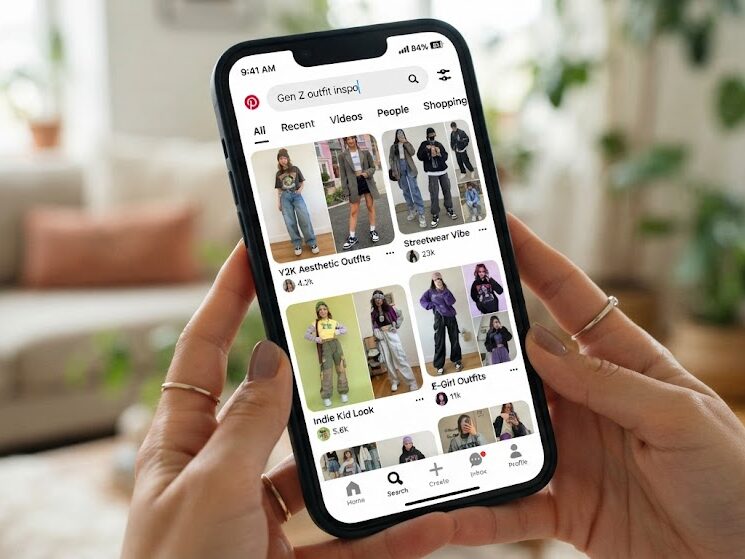
Use Pinterest for Outfit Research
Pinterest can help you collect 20–30 outfits and identify repeated patterns before you buy anything.
Instead of searching only for individual products, search for combinations and outfit concepts.
Examples include:
- baggy jeans outfit
- Y2K casual outfit
- gorpcore outfit
- Gen Z street style
These searches can reveal styling relationships instead of pushing you toward one specific item.
Explore Resale and Vintage Fashion
Resale and vintage platforms can help you find distinctive pieces while reducing dependence on newly produced clothing.
The RealReal reported in its 2026 Resale Report that more than half of its customer base consists of Gen Z and Millennials, who increasingly view pre-owned luxury as a first-choice option. — Source: [The RealReal, 2026]
Secondhand shopping can also make it easier to find pieces connected to previous fashion eras, particularly when experimenting with vintage and retro-inspired aesthetics.
However, the same thoughtful-shopping principles still apply. A secondhand item is most useful when you genuinely intend to wear it.
Create a Digital Wardrobe System
You do not need specialized software to develop good personal style.
A simple system can include:
- A phone album of outfits you enjoyed wearing
- A Pinterest inspiration board
- A wardrobe spreadsheet
- A notes app with outfit formulas
- Photos of frequently worn pieces
Tracking outfits can help reveal what you actually wear rather than what you imagine you will wear.
Over time, this makes it easier to identify which Gen Z fashion trends complement your wardrobe and which ones do not.
A Simple Gen Z Wardrobe Test
A three-question wardrobe test can help determine whether a trend fits your existing style.
Before buying a viral jacket, pair of jeans, shoes, or accessory, ask yourself:
- Does it fit my lifestyle?
- Does it work with my existing wardrobe?
- Would I wear it without the trend label?
For example, before buying a viral jacket, check whether you can create at least three outfits using clothing you already own.
If you cannot imagine wearing it outside the trend that made it popular, waiting before purchasing may be worthwhile.
This approach can reduce impulse purchases while keeping fashion experimentation fun.
How to Build a Gen Z-Inspired Wardrobe Without Replacing Everything
You do not need an entirely new wardrobe to experiment with Gen Z fashion trends.
Instead, begin by identifying versatile pieces you already own. Jeans, plain tees, tanks, cardigans, sneakers, skirts, jackets, and bags can often be restyled using different proportions, layers, and accessories.
A simple approach is:
- Audit your wardrobe. Identify pieces that already fit popular silhouettes or aesthetics.
- Choose one trend. Start with baggy denim, oversized outerwear, vintage accessories, or another style you genuinely like.
- Create three outfits. Style the trend piece differently before adding anything else.
- Identify the gap. Determine whether you actually need another item to complete the outfits.
- Experiment with accessories. Small details can change an outfit significantly.
- Repeat what works. Outfit repetition helps turn a trend into personal style.
This method allows you to participate in current fashion without treating every viral aesthetic as a reason to start over.
How to Mix Gen Z Fashion Aesthetics
One of the easiest ways to make Gen Z fashion trends feel personal is to combine aesthetics rather than copying one completely.
For example:
| Base Aesthetic | Add This Influence | Outfit Idea |
|---|---|---|
| Streetwear | Preppy | Oversized tee + wide-leg jeans + cardigan |
| Y2K | Sporty | Baby tee + relaxed denim + retro sneakers |
| Preppy | Casual | Polo + baggy jeans + sneakers |
| Grunge | Streetwear | Distressed denim + oversized jacket + sneakers |
| Gorpcore | Minimal | Technical jacket + simple trousers + casual shoes |
| Coquette | Sporty | Feminine skirt + jersey + casual footwear |
The most wearable combinations usually share at least one common element, such as color, proportion, texture, or level of formality.
You also do not need to label the result. If a combination looks good, feels comfortable, and suits your lifestyle, it can work regardless of which aesthetic category it belongs to.
Gen Z Fashion Trends vs. Traditional Trend Cycles
The speed of modern fashion discovery is one reason Gen Z style can appear more fragmented than earlier trend cycles.
Traditional trends could develop around seasons or larger fashion movements. Social-media-driven fashion can support multiple aesthetics and microtrends simultaneously.
| Traditional Trend Approach | Gen Z Trend Approach |
|---|---|
| More centralized fashion influences | Creators, celebrities, communities, brands, and users can all influence trends |
| Larger recognizable style movements | Multiple aesthetics can coexist |
| Trends often associated with seasons | Microtrends can emerge rapidly |
| Outfits may follow a defined style | Different aesthetics are frequently mixed |
| Fashion discovery through traditional channels | Social platforms play a major role in discovery |
This does not mean traditional fashion influences have disappeared. Instead, Gen Z fashion discovery adds more channels through which trends can emerge and circulate.
What Gen Z Fashion Trends Are Likely to Stay Popular?
Gen Z fashion trends most likely to remain influential are personalization, vintage revival, relaxed silhouettes, secondhand shopping, mixed aesthetics, gender-fluid styling, and the reinterpretation of older fashion eras.
These broader movements are more adaptable than individual viral products.
For example, wide-leg denim can move through different aesthetics because the silhouette works with streetwear, preppy, vintage, minimalist, and alternative styling.
Vintage Revival and Nostalgia
Nostalgia is likely to keep returning in cycles.
Y2K references may give way to other decades, but the broader practice of reinterpreting past fashion remains useful because social media can introduce older styles to new audiences.
Vintage jackets, older denim shapes, retro sneakers, archival accessories, and throwback sportswear can all return without being styled exactly as they were originally.
Secondhand and Resale Fashion
Secondhand fashion is positioned to remain important as resale becomes increasingly integrated into mainstream shopping.
Current resale data shows strong participation from younger consumers, while research also suggests that sustainable intentions need to be paired with reduced overconsumption.
Therefore, the longer-term influence may be less about secondhand clothing becoming a single aesthetic and more about resale becoming another normal way to build a wardrobe.
Personalization and Mixed Aesthetics
Personalization may be one of the most durable aspects of Gen Z style.
Instead of adopting one fashion identity, people can combine streetwear, Y2K, preppy, grunge, coquette, gorpcore, vintage, minimalist, or other influences.
This makes individual pieces more adaptable and allows people to respond to changing trends without rebuilding their wardrobes every season.
Personalized Fashion Discovery
Fashion discovery is also likely to become increasingly personalized.
Algorithms, creators, AI-assisted discovery, digital communities, and social commerce can make individual feeds more influential in determining which styles people encounter.
As a result, two people in the same age group may encounter very different trend ecosystems based on the content they watch, save, follow, and interact with.
For a broader look at changing youth style, revisit Gen Alpha fashion trends, because emerging younger consumers may influence what comes next.
Conclusion: How Can You Use Gen Z Fashion Trends Without Losing Your Personal Style?
Gen Z fashion trends are best understood as a flexible mix of clothing, aesthetics, nostalgia, social-media culture, and personal experimentation rather than one fixed way of dressing.
Baggy denim, oversized silhouettes, Y2K influences, sneakers, statement accessories, vintage clothing, sporty pieces, gorpcore, coquette details, and rapidly changing microtrends can all become part of Gen Z style—but you do not need all of them.
The strongest Gen Z outfits usually feel personal rather than perfectly copied. Trends provide ideas, but fit, comfort, individuality, and confidence determine whether an outfit actually works for you.
Start small. Choose one trend, style it three different ways, and decide whether it genuinely fits your lifestyle before buying more.
You can also experiment with what you already own, shop secondhand where appropriate, repeat favorite outfits, repair useful pieces, and use accessories to test faster-moving trends.
Most importantly, personal style does not have to fit neatly into one aesthetic. Your wardrobe can borrow from Y2K, streetwear, grunge, preppy, coquette, gorpcore, vintage fashion, or completely different influences—and you do not have to choose only one.
The goal of Gen Z fashion is not to follow every trend; it is to use trends as tools for expressing who you are.
FAQs
What are Gen Z fashion trends?
Gen Z fashion trends include clothing, accessories, and aesthetics influenced by social media, vintage styles, streetwear, and self-expression.
What fashion trends are popular with Gen Z?
Popular Gen Z trends include baggy jeans, oversized clothing, Y2K styles, sneakers, layered outfits, vintage pieces, and statement accessories.
What fashion aesthetics are popular with Gen Z?
Popular Gen Z aesthetics include Y2K, coquette, streetwear, grunge, preppy, gorpcore, cottagecore, and clean girl.
Why does Gen Z wear baggy clothes?
Gen Z often wears baggy clothes for their relaxed fit, comfort, and versatility across different aesthetics.
What jeans are popular with Gen Z?
Baggy, relaxed, and wide-leg jeans are popular choices in Gen Z fashion.
What tops are popular with Gen Z?
Popular tops include baby tees, graphic tees, fitted tanks, oversized shirts, cardigans, polos, and jerseys.
What shoes are popular in Gen Z fashion?
Sneakers, retro sneakers, boots, ballet-inspired shoes, and trail-inspired footwear are popular with Gen Z.
What accessories are popular with Gen Z?
Popular accessories include shoulder bags, sunglasses, belts, layered jewelry, scarves, and hair ribbons.
Is Y2K fashion still popular with Gen Z?
Yes, Y2K fashion remains popular through nostalgic denim, baby tees, small bags, sunglasses, and retro accessories.
What is gorpcore fashion?
Gorpcore is an outdoor-inspired style featuring technical jackets, fleeces, cargo pants, and trail-inspired footwear.
How do I dress like Gen Z?
Try combining baggy or wide-leg bottoms with fitted tops, sneakers, and expressive accessories.
How can I follow Gen Z fashion on a budget?
Use existing wardrobe pieces, shop secondhand, and add affordable accessories to try current trends.
How does TikTok influence Gen Z fashion?
TikTok helps fashion trends, aesthetics, styling ideas, and products spread quickly among Gen Z.
Does Gen Z buy secondhand clothing?
Yes, 79% of respondents aged 18–24 had purchased secondhand clothing according to a 2025 Scientific Reports study. — Source: [Scientific Reports, 2025].
Is Gen Z fashion sustainable?
Gen Z fashion can be more sustainable through secondhand shopping, outfit repetition, repairs, and thoughtful purchasing.
Can you mix different Gen Z aesthetics?
Yes, Gen Z commonly mixes styles such as Y2K, streetwear, grunge, preppy, coquette, and gorpcore.
What Gen Z fashion trends are likely to last?
Personalization, vintage influences, relaxed silhouettes, secondhand fashion, and mixed aesthetics are likely to remain influential.