
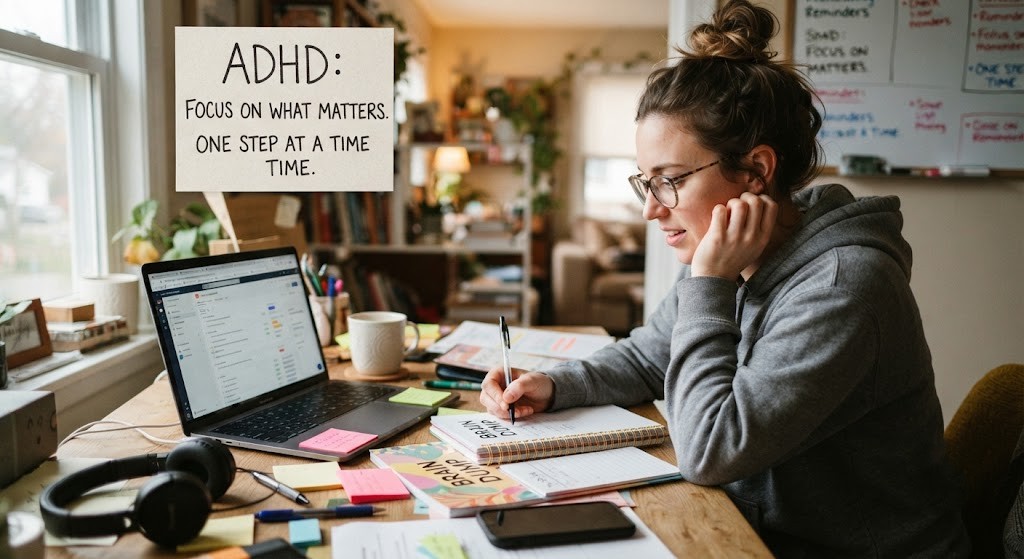
You’ve probably heard ADHD described as difficulty focusing, restlessness, or being easily distracted. However, ADHD involves much more than occasional forgetfulness or trouble concentrating, and its symptoms can look very different from one person to another.
ADHD can affect attention, impulse control, organization, time management, activity level, and executive functioning. It can influence school, work, relationships, and everyday responsibilities in ways that are sometimes subtle and easy to misunderstand.
In this comprehensive guide, you’ll learn what ADHD is, its symptoms and presentations, possible causes and risk factors, how ADHD is diagnosed, available treatment options, and practical strategies for managing ADHD symptoms.
What Is ADHD?
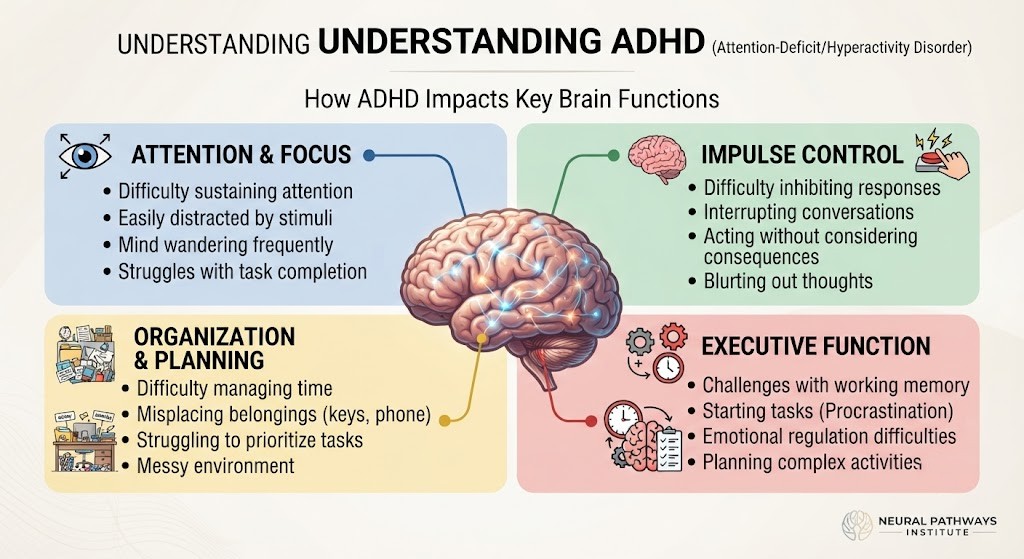
ADHD is a neurodevelopmental disorder characterized by persistent patterns of inattention, hyperactivity, and/or impulsivity that can interfere with daily functioning. ADHD can affect both children and adults and may influence attention, organization, time management, impulse control, activity level.
ADHD is not simply a matter of being lazy, careless, or unable to concentrate. For example, a person with ADHD may understand exactly what they need to do but repeatedly struggle to start, organize, prioritize, or finish the task.
According to CDC data, an estimated 7 million U.S. children aged 3–17 years had a current ADHD diagnosis in 2024, representing 11.7% of children in that age range — Source: CDC, 2026. CDC
ADHD can also continue from childhood into adulthood, although the way symptoms appear may change. Adults may experience difficulties with organization, sustained attention, losing items, time management, and work or relationship responsibilities. NIMH estimates that about 4% of adults live with ADHD — Source: NIMH, 2024. National Institute of Mental Health
Why Does ADHD Matter?
ADHD matters because persistent symptoms can interfere with education, work, relationships, organization, and everyday responsibilities. The impact depends on a person’s symptoms, environment, age, support system, and other conditions.
For example, a student may understand a lesson but repeatedly miss assignments because they struggle to track deadlines and organize several tasks. Similarly, an adult may perform well professionally but frequently miss appointments, lose important items, or underestimate how long tasks will take.
ADHD can affect several areas of daily life:
- School: Missed assignments, distractibility, and difficulty organizing study time
- Work: Procrastination, poor time estimation, and unfinished tasks
- Relationships: Interrupting, forgetfulness, or difficulty listening
- Daily responsibilities: Misplaced items, missed appointments, and inconsistent routines
- Emotional functioning: Frustration or difficulty managing reactions
The American Academy of Pediatrics notes that ADHD can affect academic achievement, well-being, and social interactions — Source: American Academy of Pediatrics, 2019. CDC Stacks
Understanding these effects is important because ADHD is not defined only by whether someone can pay attention. The broader question is whether persistent symptoms create meaningful difficulties in everyday functioning.
What Are the Common Symptoms of ADHD?
ADHD symptoms are persistent patterns of inattention, hyperactivity, or impulsivity that are inappropriate for the person’s developmental level and interfere with functioning. Occasional distraction, forgetfulness, or restlessness alone does not establish ADHD.
The symptoms generally fall into two major groups:
- Inattention
- Hyperactivity and impulsivity
Some people primarily experience inattentive symptoms, while others experience hyperactive-impulsive symptoms or a combination of both.
What Does Inattentive ADHD Look Like?
Inattention involves persistent difficulty maintaining attention, organizing activities, following through on tasks, or managing details. Someone may begin an assignment with good intentions but become distracted and leave it unfinished.
Common signs can include:
- Frequently overlooking details
- Difficulty sustaining attention
- Appearing not to listen
- Struggling to follow instructions
- Difficulty organizing tasks
- Avoiding prolonged mental effort
- Frequently losing necessary items
- Becoming easily distracted
- Forgetting everyday responsibilities
Importantly, inattentive symptoms do not necessarily mean that someone lacks interest or intelligence. A person may be highly knowledgeable or motivated but still struggle to consistently direct and maintain attention.
What Does Hyperactive-Impulsive ADHD Look Like?
Hyperactivity and impulsivity involve excessive activity, restlessness, difficulty waiting, or acting before considering consequences. For example, a person might frequently interrupt conversations or feel uncomfortable remaining seated for extended periods.
Hyperactive-impulsive symptoms may include:
- Fidgeting or frequent movement
- Difficulty remaining seated
- Feeling restless
- Talking excessively
- Interrupting others
- Difficulty waiting for a turn
- Acting without sufficient consideration
Hyperactivity does not always mean visibly running or moving constantly. In adults, hyperactivity can appear as internal restlessness, excessive talking, or difficulty relaxing.
This is one reason ADHD may look different at different ages. A symptom that is obvious in childhood may become less outwardly visible with age while still affecting daily functioning.
Can Occasional Forgetfulness Mean You Have ADHD?
Occasional forgetfulness or difficulty concentrating does not necessarily mean someone has ADHD; diagnosis requires persistent symptoms and meaningful impairment assessed by a qualified professional.
Sleep problems, stress, anxiety, depression, medication effects, and other conditions can also affect concentration.
For example, forgetting an appointment during an unusually stressful week is different from experiencing long-standing difficulties with organization and attention across multiple areas of life.
The pattern, persistence, developmental history, and impact on functioning are therefore important when ADHD is being considered.
What Are the 3 Presentations of ADHD?
The three recognized ADHD presentations are predominantly inattentive, predominantly hyperactive-impulsive, and combined presentation. The presentation depends on which symptom pattern is most prominent during the diagnostic evaluation.
| ADHD presentation | Main pattern | Example |
|---|---|---|
| Predominantly inattentive | Attention and organization difficulties | Frequently losing track of assignments |
| Predominantly hyperactive-impulsive | Hyperactivity and impulsivity | Interrupting or struggling to wait |
| Combined | Both symptom groups | Significant attention and impulsivity difficulties |
Predominantly Inattentive Presentation
A person with predominantly inattentive ADHD may have significant problems with organization, sustained attention, following through, remembering responsibilities, and managing details.
Because there may be less obvious physical hyperactivity, this presentation can sometimes be less noticeable to others.
Predominantly Hyperactive-Impulsive Presentation
This presentation is characterized primarily by symptoms involving hyperactivity and impulsivity.
Examples include difficulty remaining still, excessive talking, interrupting, difficulty waiting, or acting without sufficient consideration of consequences.
What Does Combined ADHD Look Like?
Combined ADHD involves clinically significant symptoms from both the inattentive and hyperactive-impulsive groups.
For example, someone may regularly lose belongings and miss deadlines while also interrupting conversations and struggling to sit still.
ADHD presentations can also change over time as symptoms and environmental demands change. A child who appears highly physically active may experience more subtle restlessness and organizational difficulties as an adult.
What Causes ADHD?
ADHD is believed to result from a combination of genetic, developmental, and environmental factors rather than one single cause. Research strongly supports a genetic contribution, while brain development and other factors can also influence ADHD risk.
For example, ADHD can occur in multiple members of the same family, which supports the role of inherited factors.
At the same time, ADHD is not caused by poor parenting, laziness, lack of discipline, or simply spending too much time on technology. Parenting and environmental structure can influence how symptoms are managed, but they do not explain ADHD as a neurodevelopmental condition.
What Are the Risk Factors for ADHD?
ADHD risk reflects multiple interacting factors rather than one simple trigger. Healthcare professionals consider developmental history and other relevant factors when evaluating symptoms.
Potentially relevant factors include:
- Family history of ADHD
- Genetic influences
- Certain prenatal or developmental factors
- Premature birth or low birth weight in some cases
- Exposure to certain environmental risks
These factors do not mean that a person will definitely develop ADHD. Risk factors are different from direct causes.
Can Adults Have ADHD?
Adults can have ADHD, and symptoms may continue from childhood even when they look different later in life. Adult ADHD commonly involves difficulties with attention, organization, planning, time management, impulse control, and completing responsibilities.
For example, an adult may consistently underestimate how long work tasks will take, forget appointments, misplace keys, or struggle to complete household tasks despite understanding their importance.
According to NIMH, approximately 4% of adults are estimated to live with ADHD — Source: NIMH, 2024. National Institute of Mental Health
Adult ADHD can be especially noticeable when responsibilities increase. Managing employment, finances, household tasks, relationships, schedules, and multiple deadlines can place greater demands on executive functioning.
How Is ADHD Diagnosed?
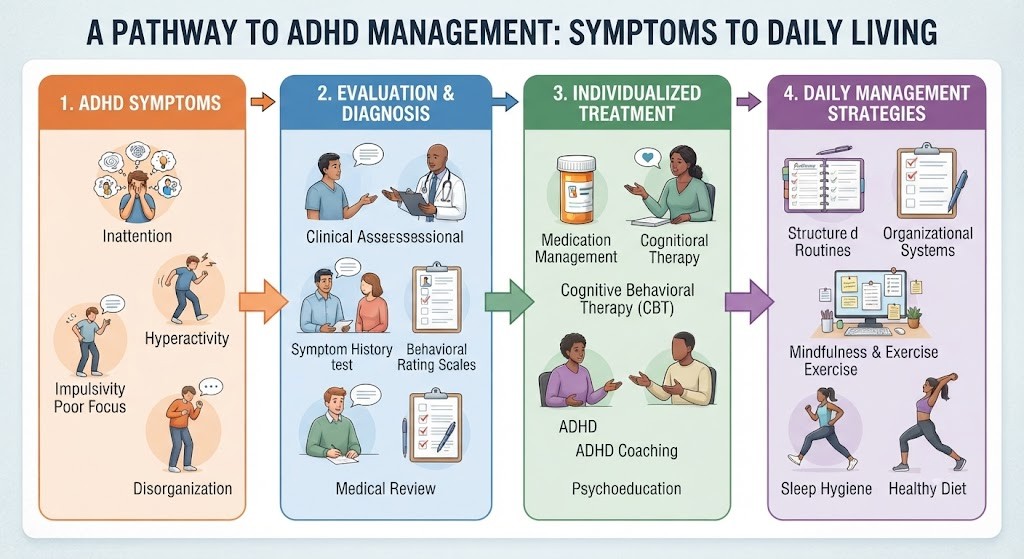
ADHD is diagnosed through a comprehensive clinical evaluation rather than a single blood test, brain scan, or online questionnaire. A qualified healthcare professional considers symptoms, developmental history, functioning, and other possible explanations.
A clinician may ask about attention and behavior at school, work, home, or in relationships. When appropriate, information may also be gathered from parents, teachers, partners, or other relevant people.
An ADHD evaluation may include:
- Symptom assessment — Identifying persistent patterns of inattention, hyperactivity, or impulsivity.
- Developmental history — Considering when symptoms began and how they have changed.
- Functional assessment — Determining whether symptoms interfere with everyday life.
- Information from multiple settings — Considering behavior across relevant environments.
- Differential assessment — Checking whether another condition better explains the symptoms.
- Evaluation of coexisting conditions — Considering anxiety, depression, learning disorders, sleep problems, and other concerns.
CDC guidance emphasizes that there is no single test for ADHD and that other conditions can produce similar symptoms — Source: CDC, 2026. CDC
Why Is a Professional ADHD Evaluation Important?
An evaluation helps distinguish ADHD from other causes of attention or behavioral difficulties.
It can also identify conditions that occur alongside ADHD or produce similar symptoms. This matters because treatment should be based on the underlying problem rather than simply treating difficulty concentrating as ADHD.
Can ADHD Symptoms Look Like Other Conditions?
ADHD-like symptoms can occur with other conditions, which is why professional evaluation is important.
Sleep disorders, anxiety, depression, learning difficulties, and other developmental or behavioral conditions can produce overlapping difficulties.
For example, someone who sleeps poorly may experience significant daytime concentration problems without having ADHD.
CDC guidance recommends considering other possible explanations and screening for co-occurring conditions during an ADHD evaluation — Source: CDC, 2026. CDC
This is also why an online quiz should not be treated as a diagnosis. A questionnaire can help someone recognize patterns worth discussing with a professional, but it cannot independently establish ADHD.
How Is ADHD Treated?
ADHD treatment may include medication, behavioral interventions, psychotherapy or skills-based support, education, and practical strategies tailored to the individual’s needs.
Treatment is individualized because symptoms, age, health conditions, responsibilities, and treatment goals vary.
For example, one person may benefit from medication combined with organizational strategies, while another may focus heavily on behavioral interventions, therapy, environmental modifications, or skills training.
Evidence-based ADHD treatment can involve:
- Medication
- Behavioral interventions
- Psychotherapy or skills-based support
- Parent training
- School accommodations and behavioral classroom interventions
- Workplace or environmental modifications
- Organizational systems and structured routines
CDC guidance states that treatment approaches vary by age and that behavioral and medication approaches may be combined when appropriate — Source: CDC, 2026. CDC
What Medications Are Used to Treat ADHD?
ADHD medications include stimulant and nonstimulant medicines prescribed and monitored by qualified healthcare professionals.
Medication choice depends on individual circumstances, potential benefits, side effects, and other health considerations.
A clinician may adjust the medication or dose when symptom improvement is insufficient or side effects become problematic.
CDC reports that 70–80% of children with ADHD have fewer symptoms when taking stimulant medications, although individual responses vary — Source: CDC, 2026. CDC
Medication should be discussed with a qualified healthcare professional rather than started, stopped, or changed without appropriate medical guidance.
Can ADHD Be Managed Without Medication?
ADHD can be managed with non-medication strategies, although the most appropriate approach depends on the individual’s symptoms and needs.
Behavioral interventions, organizational systems, therapy, education, environmental changes, and structured routines can all support functioning.
For example, a student might use a visual schedule, assignment checklist, phone reminders, and shorter study sessions to reduce organizational demands.
That being said, non-medication strategies should not be presented as a universal replacement for medical treatment. A healthcare professional can help determine which combination of approaches is appropriate.
What Are the Best Strategies for Managing ADHD Symptoms?
ADHD management strategies work by reducing unnecessary demands on attention, memory, organization, and impulse control.
External systems can make important information easier to see, remember, and act on. The goal is not to rely entirely on memory or willpower but to create an environment that supports consistent action.
Use External Reminders
External reminders transfer important information from memory into a visible system.
For example, calendar alerts can remind you about an appointment before you need to leave.
Useful systems include:
- Digital calendars
- Phone reminders
- Written checklists
- Visual schedules
- Timers
- Habit trackers
- Task-management apps
The key is consistency. A simple reminder system that you actually use can be more practical than a complicated system that becomes difficult to maintain.
Break Large Tasks Into Smaller Steps
Breaking a large task into smaller actions can make it easier to begin and complete.
For example, instead of writing “finish project,” create smaller steps such as:
- Open the document.
- Write the outline.
- Complete the introduction.
- Add supporting information.
- Review the finished work.
By reducing the size of the first action, task initiation can feel more manageable.
Reduce Distractions
Reducing environmental distractions can make sustained attention easier for some people with ADHD.
For example, studying in a quieter room and keeping unnecessary phone notifications off can reduce interruptions.
You can also experiment with:
- Noise reduction
- Website blockers
- A dedicated workspace
- Single-tasking
- Short focused work periods
- Keeping frequently used items in consistent locations
Build Consistent Routines
Consistent routines reduce the number of decisions required for repetitive daily activities.
For example, keeping keys, wallets, and bags in the same location can make leaving home easier.
Similarly, healthy sleep habits and Stress management techniques can support overall well-being, although they do not replace ADHD-specific treatment.
What Tools Can Help With ADHD?
Practical ADHD tools are systems that make tasks, deadlines, reminders, and priorities easier to see and manage. You do not need an expensive application to create an effective system.
A simple setup can include:
- Calendar: Record appointments and deadlines.
- Task list: Identify the next actions rather than vague goals.
- Timer: Create a defined work period.
- Reminder: Schedule prompts before important events.
- Visual system: Keep frequently needed information visible.
Free tools such as a phone calendar, basic notes application, paper planner, or timer can be enough. The best system is usually the one you can use consistently rather than the one with the most features.
When Should You Seek an ADHD Evaluation?
You should consider an ADHD evaluation when persistent attention, hyperactivity, or impulsivity symptoms interfere with important areas of daily life.
Significant difficulties at school, work, home, or in relationships can justify discussing concerns with a qualified professional.
For example, repeated missed deadlines, chronic disorganization, persistent forgetfulness, or longstanding difficulty controlling impulses may warrant an evaluation when these problems are persistent and disruptive.
Before an appointment, consider documenting:
- Symptoms you experience
- When the difficulties began
- Where they occur
- How they affect school, work, relationships, or daily responsibilities
- Relevant childhood history
- Sleep patterns and other health concerns
- Current medications and other treatments
Avoid relying solely on online ADHD quizzes. Screening questionnaires can provide useful information in some settings, but they do not independently establish an ADHD diagnosis.
What Should You Do Next If You Suspect ADHD?
The next step is to discuss persistent ADHD-like symptoms with an appropriate healthcare professional rather than attempting to self-diagnose.
A professional assessment can help determine whether ADHD or another condition better explains the difficulties.
Start by writing down specific examples instead of simply recording “I cannot focus.” For example, “I regularly miss assignment deadlines despite setting reminders” gives a clinician more useful information.
Then consider these practical steps:
- Document your symptoms and examples.
- Record how symptoms affect daily functioning.
- Gather relevant childhood or school information when available.
- Schedule an evaluation with a qualified healthcare professional.
- Discuss treatment and support options based on the evaluation.
The CDC recommends starting with a healthcare provider when there are concerns about possible ADHD — Source: CDC, 2026. CDC
Conclusion
ADHD is a real neurodevelopmental condition that can be managed through individualized treatment, practical strategies, education, and appropriate support.
Its symptoms can create genuine challenges, but they do not define a person’s intelligence, motivation, character, or potential.
Understanding the difference between occasional distraction and persistent impairment is an important first step. If ADHD-like symptoms consistently affect your education, work, relationships, or everyday responsibilities, professional evaluation can provide a clearer path forward.
ADHD management also does not require one perfect strategy. By combining appropriate professional guidance with practical systems that fit your daily life, you can build better ways to manage symptoms and accomplish your goals.
FAQs
What is ADHD?
ADHD is a neurodevelopmental disorder affecting attention, activity, and impulse control.
What are the main symptoms of ADHD?
The main symptoms are inattention, hyperactivity, and impulsivity.
What are the 3 types of ADHD?
The three presentations are inattentive, hyperactive-impulsive, and combined.
Can adults have ADHD?
Yes, ADHD can continue from childhood into adulthood.
What causes ADHD?
ADHD is linked to genetic, developmental, and environmental factors.
Can ADHD be treated?
Yes, ADHD can be managed with medication, therapy, and behavioral strategies.
Can ADHD be managed without medication?
Yes, routines, behavioral strategies, and professional support can help.
How is ADHD diagnosed?
ADHD is diagnosed through a professional clinical evaluation.
Is there a test for ADHD?
There is no single medical test that can diagnose ADHD.
Can ADHD affect memory?
Yes, ADHD can contribute to forgetfulness and working-memory difficulties.
Can ADHD affect relationships?
Yes, ADHD symptoms can sometimes create challenges in relationships.
Can ADHD affect work?
Yes, ADHD can affect focus, organization, time management, and task completion.
What helps improve ADHD focus?
Timers, reminders, routines, smaller tasks, and fewer distractions may help.
When should you get an ADHD evaluation?
Consider an evaluation when ADHD-like symptoms consistently affect daily life.
Our Daily content:
Coconut Fragrance Trend: The Creamy, Tropical Scent Taking Over 2026
Modern Boho Fashion: Chic Bohemian Styles & Outfit Ideas for 2026