
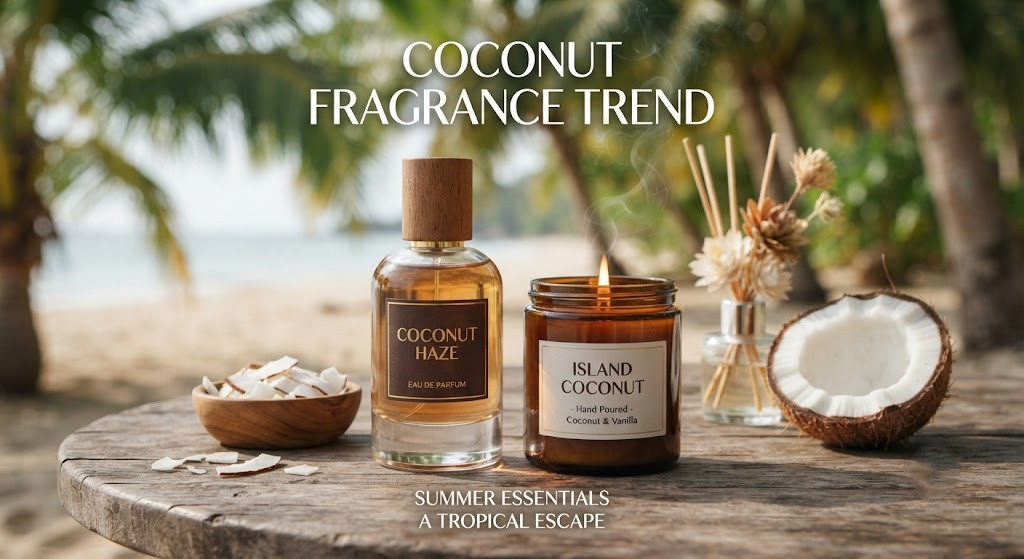
Coconut scents have long been associated with perfumes, body mists, lotions, and summer beauty products. But the Coconut Fragrance Trend is evolving beyond the familiar beachy, sunscreen-like aroma.
Today, coconut can smell creamy and milky, fresh and green, salty and aquatic, floral and radiant, or warm and woody. In this guide, you’ll discover why coconut fragrance is trending, what modern coconut perfumes smell like, which fragrance notes pair best with coconut, the different coconut scent styles, how to layer them, and how to choose a coconut fragrance that suits your personality and lifestyle.
What Is the Coconut Fragrance Trend?
The Coconut Fragrance Trend describes the growing popularity of coconut-inspired scent profiles across perfumes, body care, haircare, and home fragrance. Rather than having one specific smell, coconut can contribute creamy, tropical, nutty, fresh, aquatic, or woody facets to a fragrance.
For example, one coconut perfume may recreate the richness of coconut milk, while another may evoke green coconut water, salty ocean air, warm skin, or soft woods. The final impression depends heavily on the other notes used in the composition.
Moreover, the coconut fragrance trend reflects coconut’s expanding role across different fragrance categories. Coconut continues to appear in summer scent collections and modern perfume recommendations, while newer interpretations move beyond straightforward sunscreen-like aromas.
For more context on the wider category, see our Modern Boho Fashion and Y2K Fashion Trend.
Why Is Coconut Fragrance Trending Right Now?
Coconut fragrance is trending because it combines familiar tropical associations with versatile modern fragrance accords. The scent immediately brings to mind sunshine, beaches, vacations, warmth, and relaxation, giving coconut a strong emotional connection.
However, modern coconut fragrances do not have to smell like sunscreen. Pairing coconut with musk, woods, florals, citrus, vanilla, or marine notes can create an entirely different fragrance experience.
Recent fragrance coverage shows strong interest in coconut alongside other sunny, tropical, creamy, and marine-inspired directions. In 2025, Allure identified coconut-like sunscreen and tropical scents among recognizable summer fragrance themes, while Elle reported that searches around coconut perfumes on TikTok were approaching 15 million at the time of its 2025 article. — Source: [Allure, 2025; Elle, 2025]
At the same time, the trend is expanding beyond seasonal perfume. Pinterest’s 2026 trend report recorded +125% growth in searches for “perfume layering combinations” and +75% for “scent layering,” highlighting a broader interest in personalized fragrance wardrobes. — Source: Pinterest Predicts, 2026
This combination of nostalgia, versatility, and personalization helps explain why coconut continues to attract attention.
What Does Coconut Fragrance Smell Like?
Coconut fragrance can smell creamy, milky, sweet, nutty, tropical, fresh, aquatic, or subtly woody depending on how the accord is constructed. There is no single coconut smell in perfumery because supporting notes can emphasize different characteristics of the ingredient-inspired accord.
For example:
- Vanilla can make coconut richer, sweeter, and more comforting.
- Citrus can make coconut brighter and fresher.
- Musk can give coconut a softer, cleaner skin-scent effect.
- Sandalwood can add warmth and sophistication.
- Marine notes can create a salty, breezy beach atmosphere.
- Florals can make coconut feel more radiant and elegant.
Recent expert testing described coconut fragrances as capable of smelling creamy and beachy, nutty and sweet, or green and fresh rather than simply resembling sunscreen. — Source: ELLE, 2026
Creamy Coconut vs. Fresh Coconut
Creamy coconut emphasizes milky, soft, sweet, and comforting facets. It commonly works with vanilla, sandalwood, musk, amber, or caramel. A coconut-vanilla perfume, for instance, can feel warm and gourmand rather than sharply tropical.
Fresh coconut emphasizes watery, green, citrusy, or airy facets. This interpretation can feel lighter and particularly comfortable during the daytime or in warm weather.
A coconut-and-citrus fragrance, for example, may suggest fresh coconut water rather than rich coconut cream.
Tropical Coconut vs. Sophisticated Coconut
Tropical coconut creates an immediately recognizable vacation-inspired fragrance experience. It may combine coconut with solar notes, fruits, white florals, or marine accords. Coconut paired with pineapple, for example, can produce a distinctly tropical character.
Sophisticated coconut uses woods, musk, florals, or transparent accords to soften the tropical effect. Here, coconut can function as one component of the composition instead of becoming the entire identity of the perfume.
This distinction is important if you like coconut but do not want your fragrance to smell overtly like a beach vacation.
What Fragrance Notes Pair Well With Coconut?
Coconut can create dramatically different fragrance profiles depending on the notes paired with it. Coconut and vanilla tend to create a creamy and cozy effect, while coconut and citrus feel fresher and airier.
| Coconut pairing | Overall character | Best for |
|---|---|---|
| Coconut + vanilla | Creamy, sweet, cozy | Evenings, casual wear |
| Coconut + musk | Soft, clean, sensual | Everyday wear |
| Coconut + sandalwood | Creamy, woody, polished | Evening or year-round wear |
| Coconut + jasmine | Floral, tropical, radiant | Summer occasions |
| Coconut + citrus | Fresh, bright, airy | Hot weather and daytime |
| Coconut + marine notes | Salty, aquatic, beachy | Vacations and summer |
| Coconut + caramel | Rich, gourmand, sweet | Cooler weather and nights |
Coconut and Vanilla
Coconut and vanilla create one of the richest and most comforting coconut combinations. Vanilla amplifies the creamy and sweet side of coconut, making the result feel soft, warm, and gourmand.
This combination works particularly well for anyone who enjoys cozy or dessert-like fragrances.
Coconut and Musk
Coconut and musk create a softer, cleaner interpretation of coconut. Musk can reduce the impression of sugary sweetness while giving the fragrance a smooth, skin-like quality.
This makes coconut-musk combinations useful for everyday wear.
Coconut and Woods
Coconut paired with sandalwood or other woody notes can make the fragrance feel polished and sophisticated. Rather than emphasizing a tropical beach, this combination can create a warm, creamy, understated scent.
For a deeper look at sweet scent combinations, explore our Cherry Red Fashion Trend.
Coconut and Florals
Floral notes can give coconut a more radiant and elegant character. Jasmine, orange blossom, and other luminous florals can provide contrast without completely hiding the coconut accord.
What Are the Different Types of Coconut Fragrances?
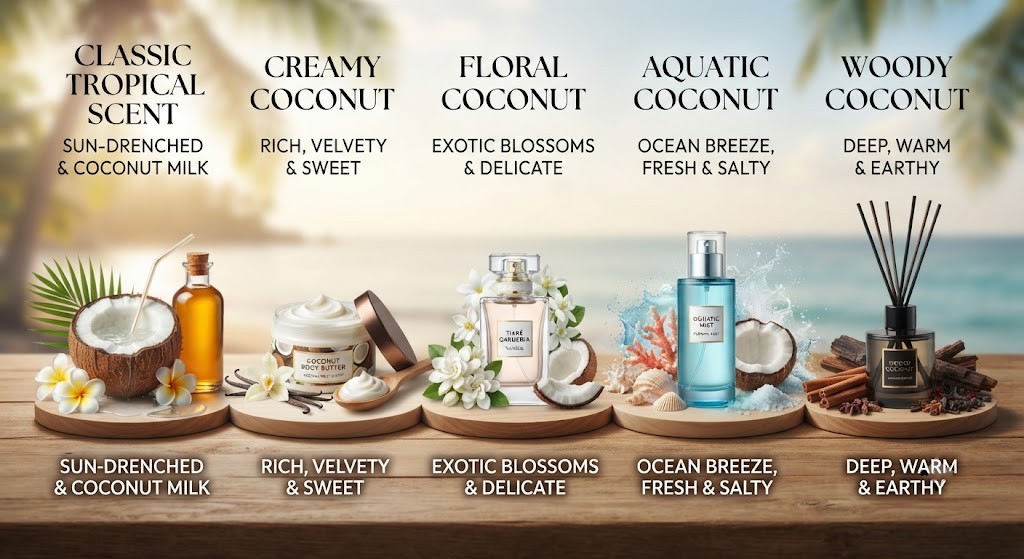
Coconut fragrances can be grouped into creamy, tropical, fresh, floral, aquatic, coconut-vanilla, and woody styles. Categorizing them by scent character makes fragrance shopping easier because the word “coconut” alone does not tell you how a perfume will smell.
Creamy Coconut
Creamy coconut fragrances emphasize coconut milk, soft sweetness, and smooth textures. They are a natural choice if you enjoy vanilla, lactonic, gourmand, or comforting perfumes.
Tropical Coconut
Tropical coconut fragrances emphasize vacation-inspired fruits, solar accords, and beach sensations. Coconut combined with pineapple, mango, or solar florals can create an unmistakably sunny profile.
Fresh Coconut
Fresh coconut fragrances emphasize watery, green, citrus, or airy qualities. These compositions can be particularly comfortable in hot weather because they avoid excessive sweetness.
Coconut-Floral
Coconut-floral fragrances combine creamy coconut with flowers such as jasmine or other white florals. The result can feel softer, brighter, and more polished than a straightforward tropical fragrance.
Coconut-Aquatic
Coconut-aquatic fragrances combine coconut with marine or salty accords. This creates a breezy profile that can evoke sea air, warm skin, and a tropical shoreline.
Coconut-Vanilla
Coconut-vanilla fragrances emphasize sweetness, creaminess, and warmth. They are especially appealing to people who enjoy gourmand or cozy scent profiles.
Woody Coconut
Woody coconut fragrances combine coconut with sandalwood, cedar, amber, or musk. This approach can make coconut feel more refined and less overtly sweet.
Why Is Coconut Popular in Summer Fragrances?
Coconut is popular in summer fragrances because its creamy and tropical associations naturally complement warm-weather scent themes. Coconut frequently appears alongside citrus, marine notes, solar accords, and white florals, reinforcing a bright and summery atmosphere.
For example, a coconut-and-bergamot fragrance can feel considerably fresher than a heavy coconut gourmand.
Moreover, summer fragrance coverage continues to associate coconut with vacation-inspired scents while also showing a move toward more nuanced compositions. Recent 2026 coverage describes coconut perfumes as soft, radiant, and creamy rather than exclusively heavy or sunscreen-like. — Source: Woman & Home, 2026
That does not mean coconut has to disappear when temperatures fall. A fragrance built around coconut, sandalwood, amber, musk, vanilla, or caramel can feel warmer and more appropriate for cooler conditions.
How Can You Layer Coconut Fragrance With Other Scents?
Fragrance layering involves combining complementary scented products or fragrances to create a more personalized and multidimensional scent profile. Coconut is particularly useful for layering because its creamy and tropical facets can work with both sweet and fresh fragrance families.
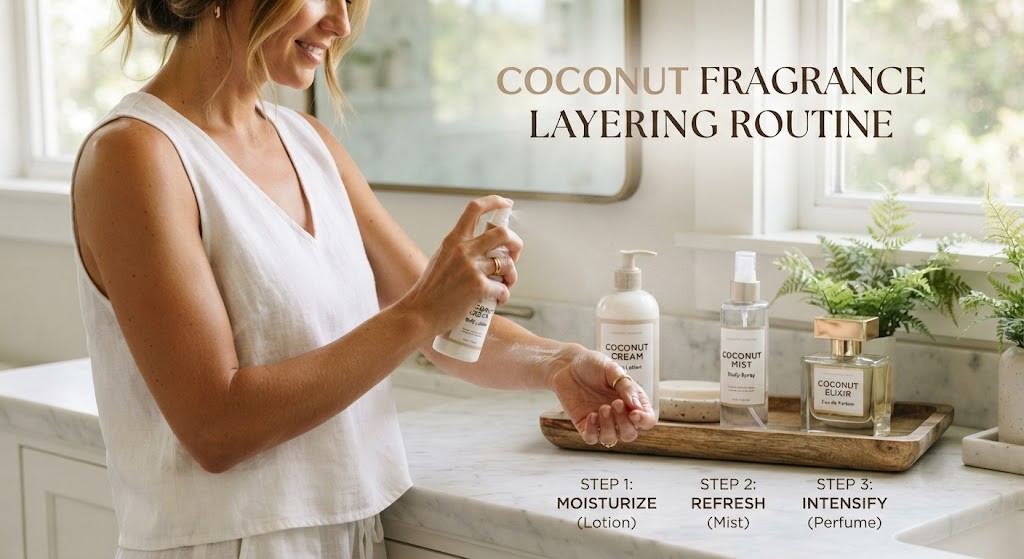
You might begin with a coconut body wash, follow it with coconut lotion, and finish with a lighter coconut mist. Using multiple products from the same scent family can strengthen the overall coconut impression without requiring an extremely concentrated perfume.
Moreover, Pinterest reported substantial growth in searches related to fragrance layering in its 2026 trend report, including +80% for “perfume notes” and +45% for “signature scent.” — Source: Pinterest Predicts, 2026
Coconut Fragrance Layering Combinations
Try these combinations:
- Coconut + vanilla: Build a creamy, sweet profile.
- Coconut + citrus: Create a brighter daytime scent.
- Coconut + musk: Keep the result soft and clean.
- Coconut + sandalwood: Add warmth and sophistication.
- Coconut + floral: Create a radiant, feminine-leaning profile.
Coconut Fragrance Trend: Perfume and Beauty Applications
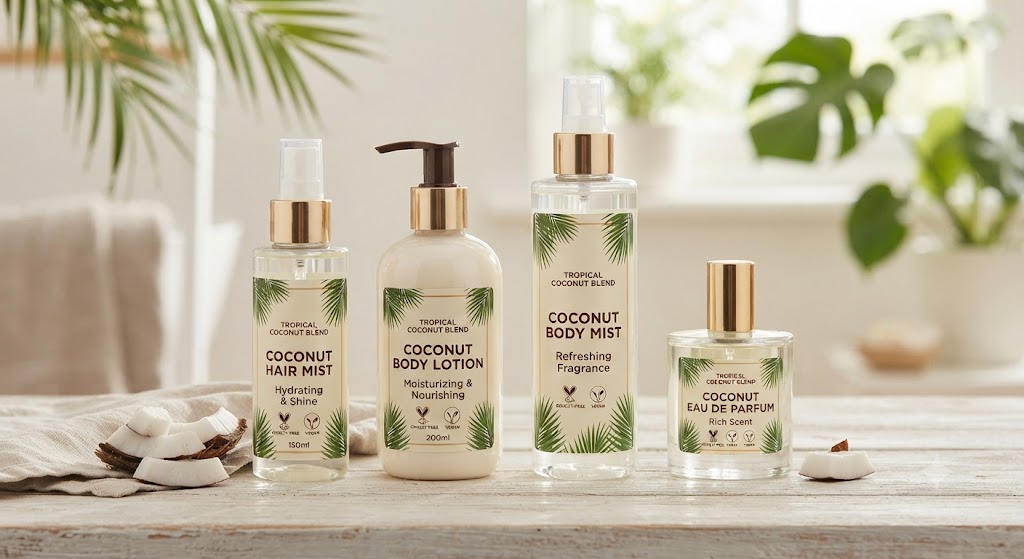
The Coconut Fragrance Trend extends beyond traditional perfume into body care, haircare, candles, and home fragrance. This broader presence means you can incorporate coconut into your routine even if you do not want to wear a conventional perfume.
For example, a coconut body lotion can provide a subtle fragrance while also becoming part of a daily body-care routine.
Portable fragrance formats are also becoming more prominent across the broader fragrance landscape, including hair mists and other convenient formats. — Source: Good Housekeeping, 2026
Where Is Coconut Fragrance Used?
Coconut-inspired fragrance profiles can appear in:
- Eau de parfum and eau de toilette
- Body mists
- Body lotions and creams
- Hair mists
- Shower and bath products
- Candles
- Diffusers and home fragrance
- Fragrance oils
This variety also makes it easier to create a coordinated coconut scent routine.
How Do You Choose the Right Coconut Fragrance?
The best coconut fragrance depends on your preferred sweetness, freshness, fragrance intensity, occasion, and complementary scent notes. Instead of choosing a perfume simply because its name contains “coconut,” think about the role you want coconut to play in the overall composition.
For example, coconut-vanilla is a natural option if you want a sweeter fragrance, while coconut-musk may be better if you prefer a softer skin scent.
Coconut Fragrance Selection Checklist
- Choose creamy coconut if you enjoy milk, vanilla, and soft gourmand scents.
- Choose fresh coconut if you prefer citrus, watery, or clean fragrances.
- Choose tropical coconut if you want an obvious vacation atmosphere.
- Choose floral coconut if you enjoy jasmine and white-floral perfumes.
- Choose woody coconut if you prefer sophisticated, warm, or unisex fragrances.
- Choose aquatic coconut if salty and breezy scents appeal to you.
Moreover, test a fragrance on your skin when possible. The same coconut accord can develop differently depending on the formula and your skin.
Can Coconut Fragrance Be Worn Year-Round?
Yes, coconut fragrance can be worn year-round when its supporting notes match the season and occasion. The key is to choose a coconut composition whose overall character fits the environment.
For warmer weather, fresh coconut combined with citrus or marine notes can feel light and refreshing. During cooler months, coconut paired with vanilla, amber, sandalwood, or musk can create a warmer fragrance experience.
For example, a woody coconut perfume can work in autumn even though coconut is traditionally associated with summer.
Furthermore, fragrance trends are increasingly moving toward personal “fragrance wardrobes” rather than one scent for every occasion. Recent 2026 fragrance reporting describes a shift toward varied scent collections and more personalized fragrance choices. — Source: Good Housekeeping, 2026
What Is the Future of the Coconut Fragrance Trend?
The future of the Coconut Fragrance Trend is likely to favor more nuanced coconut accords rather than relying exclusively on classic beachy sweetness. Current fragrance coverage already points toward creamy coconut being combined with woods, musks, florals, fresh notes, and other sophisticated accords.
Recent 2026 coconut perfume coverage highlights musky, floral, and citrusy interpretations alongside traditional tropical styles. — Source: ELLE, 2026
Moreover, broader 2026 fragrance reporting identifies milky and lactonic notes, including coconut, as part of the evolving fragrance landscape. — Source: Good Housekeeping, 2026
These developments suggest that coconut is becoming less of a single-note seasonal idea and more of a flexible fragrance building block.
That being said, future directions are still trends rather than guarantees. The clearest observable movement is toward personalization, layering, sophisticated creamy accords, and fragrances that work beyond one season.
How to Make the Most of the Coconut Fragrance Trend
The best way to explore the Coconut Fragrance Trend is to identify the coconut profile that matches your existing fragrance preferences. Start by deciding whether you prefer creamy, fresh, tropical, floral, aquatic, or woody coconut.
Then consider the supporting notes. If you dislike very sweet fragrances, coconut with citrus, musk, or woods may be a better fit than coconut with caramel or heavy vanilla. If you enjoy gourmand scents, however, creamy coconut and vanilla may be exactly what you are looking for.
Test Before You Commit
Whenever possible, test a coconut fragrance on skin rather than relying solely on the bottle description. Pay attention to how it smells immediately after application and how it changes during the dry-down.
A coconut fragrance that initially seems intensely tropical may become softer and more musky later, while a creamy fragrance may develop additional sweetness over time.
Build a Coconut Fragrance Wardrobe
You do not necessarily need one coconut fragrance for every situation. Different formats and combinations can serve different purposes:
- A fresh coconut body mist for casual daytime use
- A coconut-and-citrus fragrance for hot weather
- A coconut-floral perfume for occasions
- A coconut-vanilla fragrance for cozy evenings
- A woody coconut perfume for cooler weather or year-round wear
This approach also fits the broader movement toward fragrance layering and personalized scent wardrobes.
What Should You Try Next With the Coconut Fragrance Trend?
The best next step is to identify your preferred coconut profile before buying a fragrance. First, choose between creamy, fresh, tropical, floral, aquatic, and woody coconut. Then select supporting notes that complement your taste.
For example, someone who dislikes sugary perfumes may prefer coconut with citrus, musk, or woods rather than coconut with caramel.
Next, test the fragrance on skin and observe its opening, middle, and dry-down before deciding. Comparing several coconut profiles can help you discover whether you prefer a recognizable tropical coconut or a subtler interpretation where coconut simply contributes creaminess and warmth.
Conclusion
The Coconut Fragrance Trend continues to evolve because coconut can move between tropical, creamy, fresh, floral, aquatic, and woody scent profiles. Its familiar vacation association makes it immediately appealing, while modern combinations allow the accord to become more sophisticated and versatile.
You do not need to choose the strongest coconut perfume to participate in the trend. A coconut body mist, coconut-and-vanilla perfume, coconut-musk combination, or woody coconut fragrance can each offer a completely different interpretation.
Ultimately, the best coconut fragrance is the one that matches how you want to smell and feel—whether that means fresh and clean, warm and creamy, tropical and playful, or polished and understated.
FAQs
What is the Coconut Fragrance Trend?
The Coconut Fragrance Trend is the growing popularity of coconut-inspired scents in perfumes, body care, haircare, and home fragrance.
What does coconut fragrance smell like?
Coconut fragrance can smell creamy, sweet, tropical, fresh, aquatic, or woody, depending on the other notes used.
Is coconut fragrance only for summer?
No, coconut fragrance can be worn year-round when paired with notes like vanilla, musk, amber, or sandalwood.
What fragrance notes pair well with coconut?
Coconut pairs well with vanilla, musk, sandalwood, jasmine, citrus, marine notes, caramel, and amber.
Is coconut perfume sweet?
Coconut perfume can be sweet, especially when combined with vanilla or caramel, but it can also smell fresh or woody.
Can you layer coconut perfume?
Yes, coconut perfume can be layered with vanilla, citrus, musk, sandalwood, or floral fragrances.
Is coconut fragrance good for everyday wear?
Yes, fresh coconut, coconut-musk, and coconut-citrus fragrances can be suitable for everyday wear.
How do you choose the right coconut fragrance?
Choose based on whether you prefer a creamy, fresh, tropical, floral, aquatic, or woody coconut scent.
Why is coconut fragrance becoming popular?
Coconut fragrance is popular because it offers a tropical feel while blending easily with many different fragrance notes.