
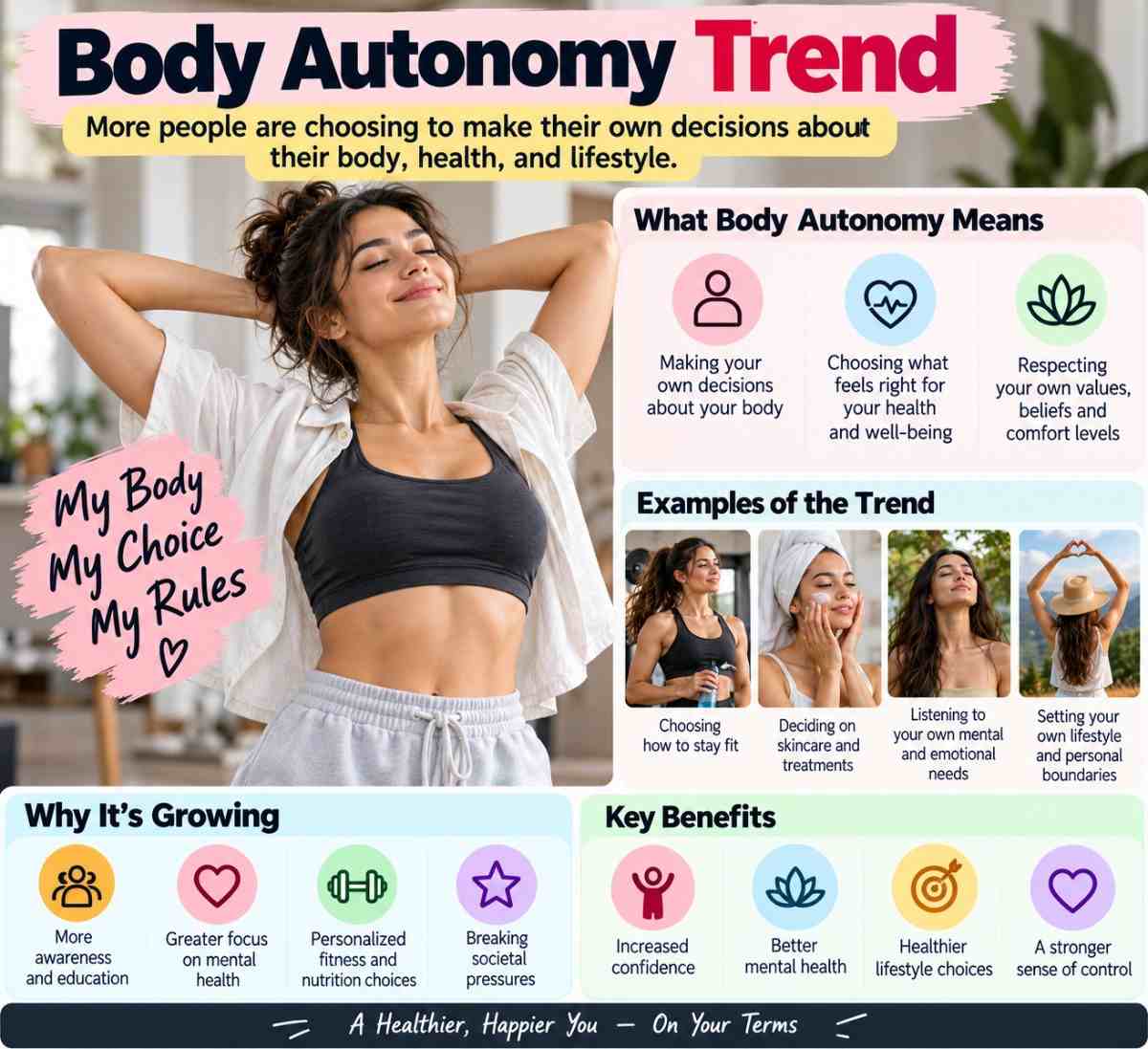
Social media is full of conversations about body image, beauty standards, self-expression, and personal freedom. However, the body autonomy trend goes beyond appearance. It encourages people to question social expectations, understand their personal boundaries, and make informed decisions about their bodies.
From choosing what to wear to setting boundaries around physical contact, body autonomy influences many everyday experiences. It also connects to broader discussions about consent, wellness, beauty, and individual rights.
In this guide, you’ll discover what the body autonomy trend means, why it is gaining attention online, how it influences beauty and fitness culture, and how you can practice body autonomy in daily life.
What Is the Body Autonomy Trend and What Does It Mean?
The body autonomy trend describes growing cultural and social media conversations about bodily freedom, consent, self-expression, and personal choice. Body autonomy is the principle that individuals should have agency over their bodies, physical boundaries, appearance, and personal health decisions.
For example, choosing whether to wear makeup, changing your hairstyle, or declining unwanted physical contact are everyday expressions of body autonomy. These choices reflect an individual’s ability to decide what feels appropriate for them.
The body autonomy trend is not limited to one viral challenge or hashtag. Instead, it represents a broader discussion about personal freedom, bodily integrity, and respect for individual preferences.
Why Is Body Autonomy Becoming an Important Cultural Conversation?
Body autonomy is an important cultural conversation because people increasingly discuss consent, beauty expectations, personal boundaries, and the freedom to make individual choices.
For instance, someone might challenge the expectation to lose weight before wearing certain clothes or explain why unsolicited comments about appearance can feel intrusive. These conversations encourage people to recognize how social pressure influences personal decisions.
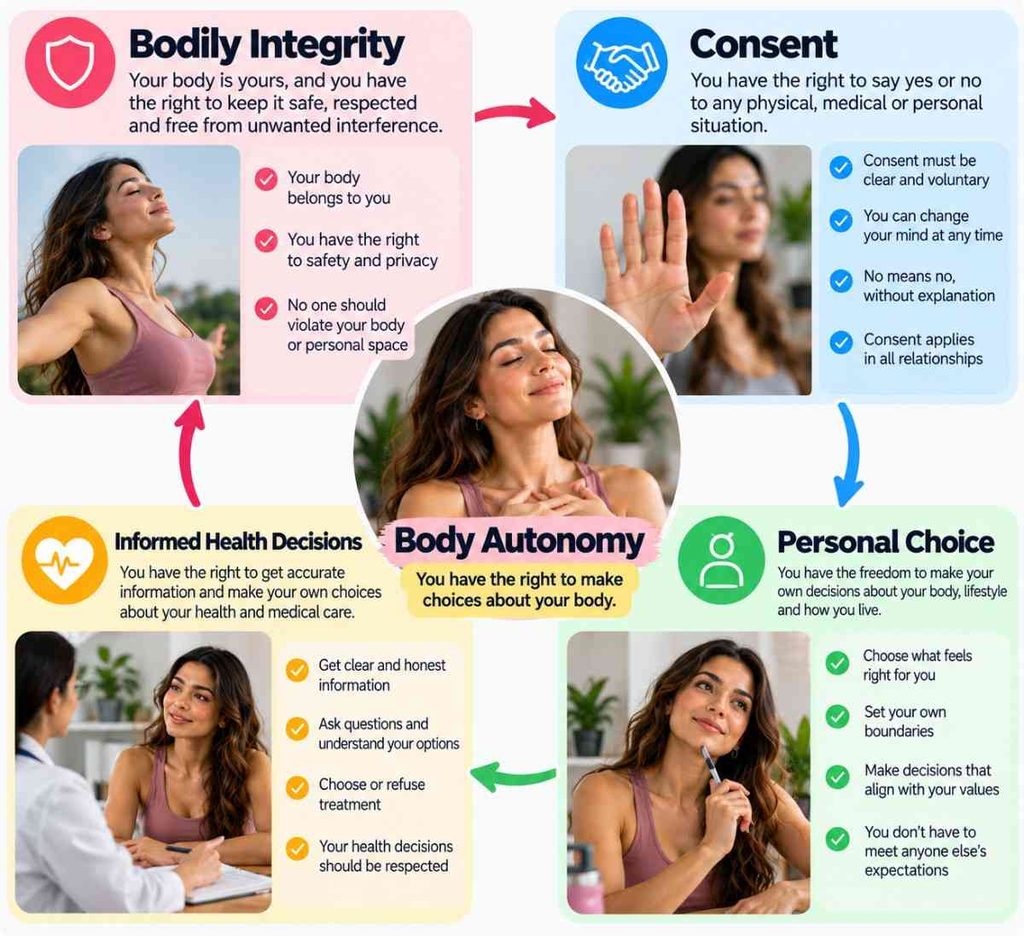
Body autonomy also connects to personal identity, bodily integrity, and informed health decisions. Its visibility online reflects changing cultural conversations, although its popularity varies across platforms and communities.
Why Is the Body Autonomy Trend Popular on Social Media?
The body autonomy trend attracts attention on social media because platforms allow people to share personal experiences, challenge appearance-related expectations, and discuss boundaries with wider audiences.
For example, a creator might explain why they stopped following restrictive beauty standards or why they no longer accept unwanted comments about their weight. Such discussions can encourage viewers to reconsider their own experiences.
How Is Body Autonomy Appearing on TikTok and Instagram?
Body autonomy appears on TikTok and Instagram through personal stories, educational videos, fashion content, and discussions about consent and body image.
Common themes include:
- Personal style: Wearing clothes that reflect individual preferences and comfort.
- Beauty choices: Wearing makeup, following skincare routines, or choosing not to use cosmetic products.
- Body image: Challenging unrealistic expectations about appearance.
- Personal boundaries: Explaining why unwanted touching or appearance-based comments are inappropriate.
- Self-expression: Sharing tattoos, hairstyles, piercings, and other individual choices.
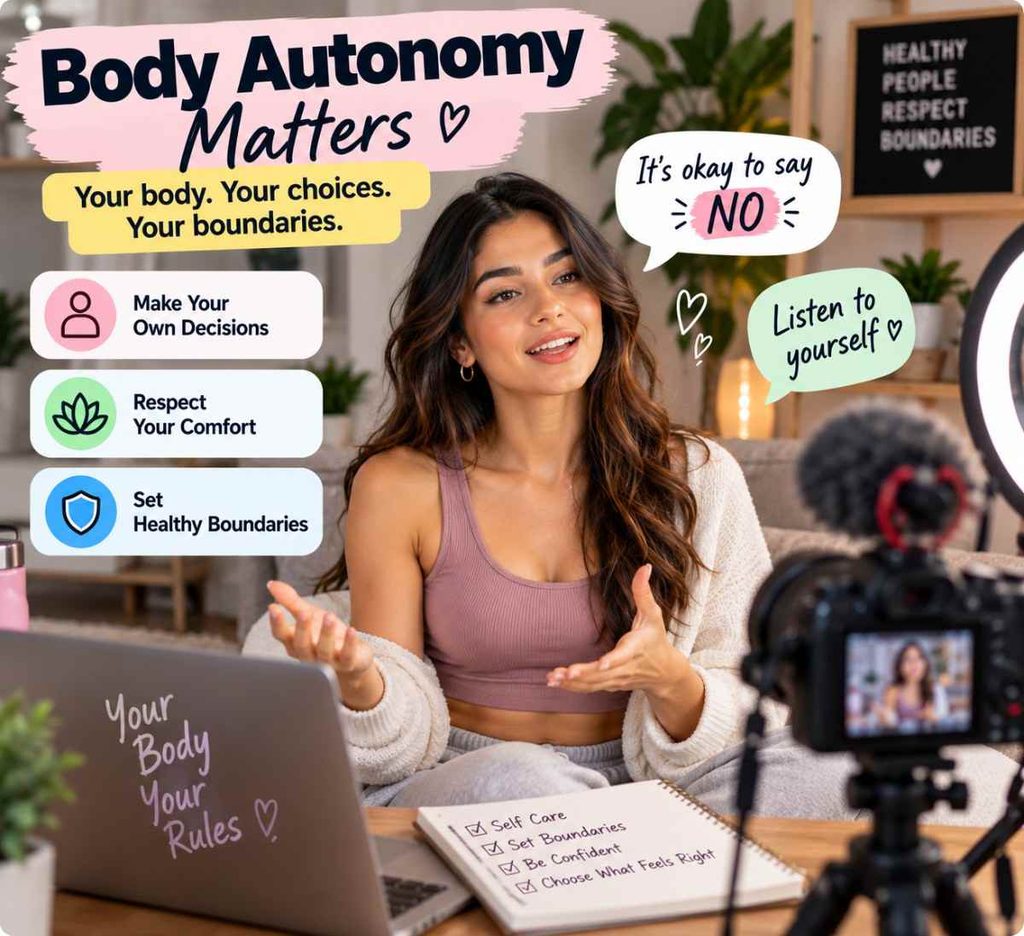
However, viral content does not necessarily represent wider public opinion. A popular post or hashtag alone cannot establish how widespread a cultural trend is. It is important to distinguish personal experiences from verified information about broader social changes.
How Does Social Media Influence Body Image?
Social media influences body image by exposing users to beauty ideals, personal stories, beauty advice, and alternative perspectives on self-acceptance.
Repeated exposure to heavily edited photographs may encourage unrealistic comparisons. In contrast, following diverse creators can introduce more varied representations of bodies, appearances, and lifestyles.
Social platforms can also help people find supportive communities and discuss experiences they might otherwise keep private. Understanding how social media affects body image can help readers evaluate whether their online habits encourage confidence or increase appearance-related pressure.
How Is the Body Autonomy Trend Influencing Beauty and Fashion?
The body autonomy trend influences beauty and fashion by encouraging people to make appearance-related choices according to their preferences rather than external expectations.
For example, someone might embrace natural skin texture, wear unconventional clothing, choose whether to shave, or experiment with a new hairstyle. The defining factor is whether the decision reflects personal preference rather than unwanted pressure.
Body Autonomy and Changing Beauty Standards
Body autonomy challenges the idea that everyone must follow the same standards of attractiveness. It recognizes that beauty preferences differ and that people can decide how they want to present themselves.
One person may prefer minimal skincare and makeup, while another enjoys elaborate beauty routines. Both approaches can reflect body autonomy when they are voluntary choices.
Conversations about unrealistic beauty standards on social media can help people distinguish their genuine preferences from expectations shaped by advertising, filters, and online comparisons.
The goal is not to reject beauty products or fashion trends. Instead, it is to recognize that personal appearance should not be dictated entirely by external approval.
Body Autonomy in Fitness and Wellness
Body autonomy also applies to fitness and wellness because people have different goals, physical abilities, comfort levels, and relationships with exercise.
For example, one person may exercise to build muscle, another may focus on cardiovascular health, and someone else may prioritize mobility or enjoyable movement. These different goals can all reflect personal choice.
However, body autonomy does not mean every health decision is equally beneficial. It means people should have agency over relevant decisions while considering reliable information, professional guidance, and their individual circumstances.
Making informed choices helps people balance personal preferences with health, safety, and long-term well-being.
What Are the Main Examples of Body Autonomy in Everyday Life?
Body autonomy in everyday life means making personal decisions about appearance, physical contact, grooming, and health while respecting other people’s boundaries.
Choosing an outfit without seeking approval or declining a hug demonstrates how personal agency operates in ordinary situations.
Common examples include:
- Clothing: Choosing outfits based on personal comfort, identity, and style.
- Grooming: Deciding whether to shave, wear makeup, or change hairstyles.
- Physical contact: Accepting or declining hugs, kisses, and other forms of touch.
- Body modification: Considering tattoos, piercings, or cosmetic procedures based on informed personal preferences.
- Health decisions: Seeking reliable medical information and participating in decisions about treatment and personal care.
- Appearance-related boundaries: Declining unsolicited advice about weight, skin, or body shape.
These decisions do not need to be dramatic or publicly announced. Small, everyday choices can also demonstrate personal agency.
Furthermore, practicing practical ways to improve body confidence can help people communicate their preferences without feeling obligated to satisfy everyone else’s expectations.
What Is the Difference Between Body Autonomy, Body Positivity, and Body Neutrality?
Body autonomy focuses on personal agency and choice, body positivity emphasizes acceptance of diverse bodies, and body neutrality encourages respect for the body without requiring constant positive feelings about appearance.
Although these concepts overlap, they address different aspects of how people understand and experience their bodies.
| Concept | Main Focus | Everyday Example |
|---|---|---|
| Body autonomy | Personal choice and control | Choosing whether to wear makeup |
| Body positivity | Acceptance of diverse bodies | Challenging narrow beauty standards |
| Body neutrality | Respecting the body without requiring positive appearance feelings | Appreciating what your body allows you to do |
How Do These Three Concepts Work Together?
Body autonomy, body positivity, and body neutrality can complement one another by supporting personal freedom, reducing appearance-based judgment, and encouraging a healthier relationship with the body.
For example, a person can choose clothing according to personal preferences, accept their natural body shape, and appreciate their body’s abilities without needing to feel attractive every day.
For additional context, explore body positivity and self-acceptance] and body neutrality and its benefits. Both approaches can support well-being, but neither requires everyone to feel the same way about their appearance.
Together, these concepts encourage a more flexible approach to body image, personal identity, and self-respect.
How Does Body Autonomy Relate to Consent and Personal Boundaries?
Body autonomy and consent are closely connected because personal freedom includes the ability to communicate preferences and establish boundaries around physical contact.
For example, agreeing to a hug once does not mean agreeing to every future hug. Consent should be voluntary, specific to the situation, and respected when someone changes their mind.
Respecting consent means recognizing that every person has the right to communicate what they are comfortable with.
Why Are Personal Boundaries Important?
Personal boundaries help people communicate what feels acceptable, comfortable, or inappropriate in their interactions with others.
For instance, someone might say, “I’d prefer not to discuss my weight,” when a conversation becomes uncomfortable. Clear communication helps others understand that appearance-related topics can be personal.
Additionally, setting healthy personal boundaries can support more respectful relationships. These boundaries also extend beyond physical contact to digital interactions.
For example, consent and privacy matter when sharing photographs, posting someone else’s personal information, or discussing another person’s body publicly. Respecting these boundaries helps create safer and more considerate social environments.
What Are the Biggest Misconceptions About Body Autonomy?
The biggest misconceptions about body autonomy involve confusing personal freedom with freedom from consequences, rejecting all advice, or expecting everyone to make identical choices.
Respecting someone’s decision to change their appearance, for example, does not mean you must make the same choice yourself.
Here are some common misconceptions and what they actually mean.
Misconception 1: Body Autonomy Is Only About Appearance
Body autonomy extends beyond appearance to include consent, physical boundaries, bodily integrity, and personal health decisions.
Misconception 2: Body Autonomy Means Ignoring Medical Advice
Body autonomy supports informed decision-making. Consulting qualified healthcare professionals and understanding potential risks can help people make choices that align with their needs and circumstances.
Misconception 3: Everyone Must Support Every Personal Decision
People can disagree about personal choices while still treating one another with dignity and respect. Respecting autonomy does not require sharing another person’s preferences.
Misconception 4: Social Media Represents Everyone
Online discussions reflect the people and communities participating in them, not necessarily the entire population. Viral posts should not automatically be treated as evidence of widespread public opinion.
Misconception 5: Body Autonomy Means Never Changing Your Body
Choosing a cosmetic treatment, fitness goal, or personal care routine can also reflect autonomy. The principle is about making informed, voluntary decisions rather than following a single rule about how the body should look.
Ultimately, ways to manage social media pressure can help people make thoughtful decisions without treating online approval as a requirement.
How Can You Practice Body Autonomy in Your Daily Life?
Practicing body autonomy involves respecting consent, setting personal boundaries, making informed decisions about your body, and avoiding pressure on others to follow particular appearance standards.
You can start by choosing clothing that feels comfortable, declining unwanted physical contact, and avoiding unsolicited comments about someone else’s weight or appearance.
Five Practical Ways to Support Body Autonomy
1. Respect consent. Ask before initiating physical contact and accept another person’s answer. Remember that consent can change at any time.
2. Avoid unsolicited appearance comments. Do not assume someone wants advice about weight, skin, clothing, or grooming. Ask whether feedback is welcome before offering it.
3. Make informed decisions. Use trustworthy resources and consult qualified professionals when making important health choices. Consider the potential benefits, risks, and alternatives.
4. Recognize individual preferences. Understand that other people may have different beauty standards, fitness goals, and personal boundaries. Their preferences do not need to match yours.
5. Build a healthier relationship with your body. Explore mindful self-care practices and healthy ways to develop self-esteem without turning self-improvement into another source of pressure.
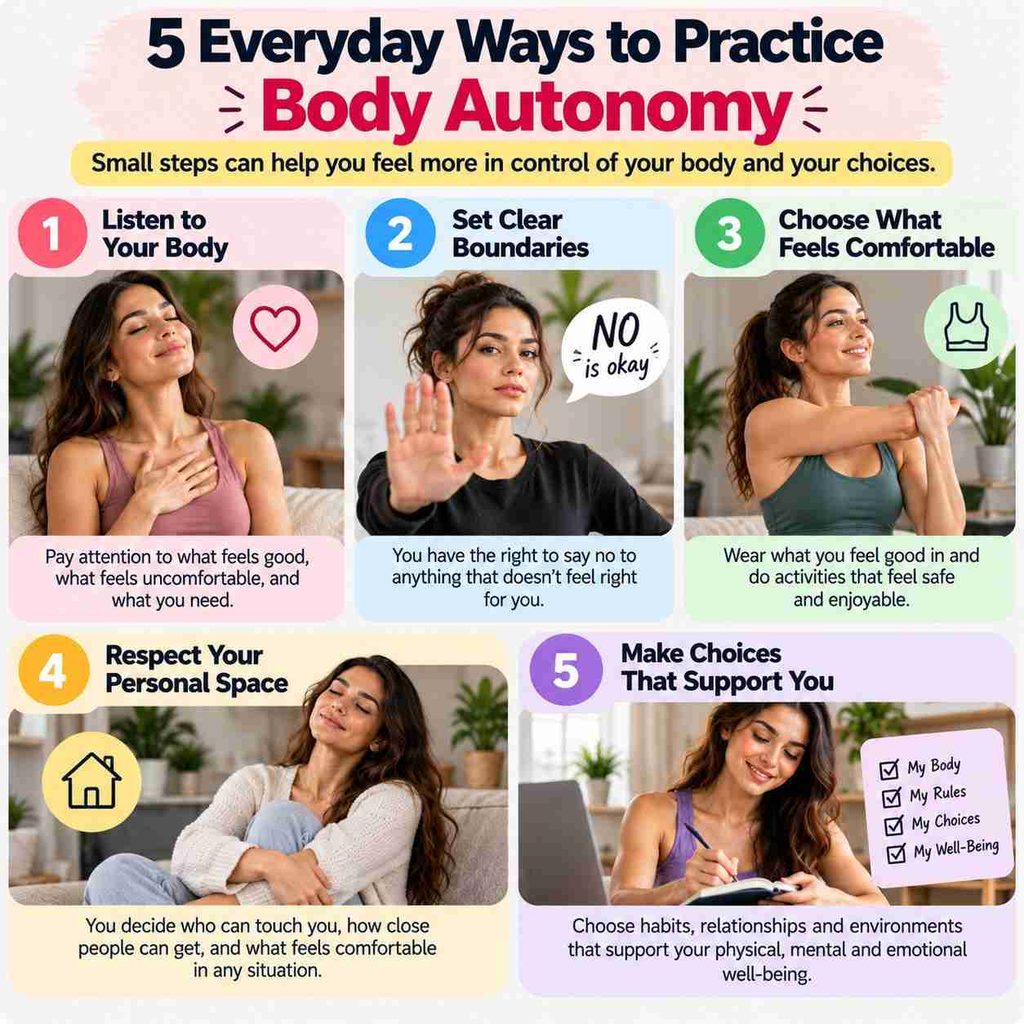
Practicing body autonomy also means extending the same respect to others that you expect for yourself. Personal freedom and mutual respect work best together.
What Tools and Resources Can Help You Understand Body Autonomy?
Reliable educational resources can help readers understand body autonomy, consent, bodily rights, and health decisions without relying entirely on social media opinions.
The World Health Organization provides public health information, while the United Nations Population Fund discusses bodily autonomy and reproductive rights.
Useful starting points include:
- World Health Organization (WHO): for public health information.
- United Nations Population Fund (UNFPA):for information about bodily autonomy and reproductive rights.
- Personal reflection: Write down your boundaries and identify situations where you feel pressured to change your appearance.
- Social media review: Evaluate whether the accounts you follow encourage informed choices or make you feel inadequate.
When evaluating online claims, check the original source, publication date, and supporting evidence. Avoid relying on unverified statistics or viral posts to determine whether a cultural trend is widespread.
Using credible resources alongside personal reflection can help you understand the difference between individual opinions, cultural expectations, and evidence-based information.
What Does the Future of the Body Autonomy Trend Look Like?
The future of the body autonomy trend may involve continued conversations about consent, digital identity, beauty standards, personal boundaries, and access to reliable health information.
For example, creators may continue discussing how edited images influence expectations, how people establish boundaries online, and how personal choices relate to cultural norms.
At the same time, disagreements about beauty, health, and individual freedom are likely to remain part of these conversations. The most useful discussions will distinguish personal experiences from verified evidence and respect different perspectives.
As digital culture evolves, body autonomy may remain relevant because the underlying principle is broader than any single social media trend. Its importance lies in personal agency, informed choices, and respect for bodily integrity.
Rather than focusing exclusively on viral hashtags, readers can pay attention to how these principles influence everyday relationships, digital behavior, and decisions about health and personal appearance.
Conclusion
The body autonomy trend highlights the importance of personal freedom, consent, self-expression, and informed decisions about the body. Although social media helps make these conversations more visible, body autonomy is a broader principle that applies to everyday relationships, appearance choices, physical boundaries, and health decisions.
Understanding body autonomy can help people question unrealistic beauty standards, communicate their preferences, and make choices based on their individual needs rather than external pressure.
Ultimately, supporting body autonomy does not mean telling everyone how to live. It means respecting individual choices, communicating boundaries, and recognizing that people deserve dignity without unnecessary judgment.
FAQs
What is the body autonomy trend?
The body autonomy trend promotes personal freedom, consent, and control over one’s body.
What are some examples of body autonomy?
Choosing clothes, changing hairstyles, declining hugs, and making informed health decisions.
What is the difference between body autonomy and body positivity?
Body autonomy focuses on personal choice, while body positivity promotes body acceptance.
How does body autonomy relate to consent?
It means having the right to accept or refuse physical contact.
Does body autonomy mean ignoring health advice?
No. It encourages informed decisions based on reliable information and professional guidance.
How can I practice body autonomy daily?
Respect consent, set boundaries, and make personal choices without unnecessary pressure.
Can social media negatively affect body autonomy?
Yes. Unrealistic beauty standards and misinformation can increase pressure and insecurity.
Why is body autonomy important?
It promotes personal freedom, informed choices, consent, and mutual respect.
More trendy topic:
Coconut Fragrance Trend: The Creamy, Tropical Scent Taking Over 2026
Hotel Lobby AI Trend: What It Is & Why It’s Going Viral in 2026