

You’ve probably heard of ghosting, when someone suddenly stops replying and disappears without explanation. But what happens when that person unexpectedly comes back weeks or months later and starts talking to you again as though nothing happened?
That behavior is known as zombieing in dating. It can leave you wondering whether the person genuinely wants to reconnect, simply feels lonely, or is looking for attention.
In this guide, you’ll learn what zombieing in dating means, the common signs of zombieing, why people come back after ghosting, how zombieing differs from ghosting and breadcrumbing, and how to respond when someone returns. You’ll also learn how to judge whether a renewed connection is worth pursuing.
What Is Zombieing in Dating?
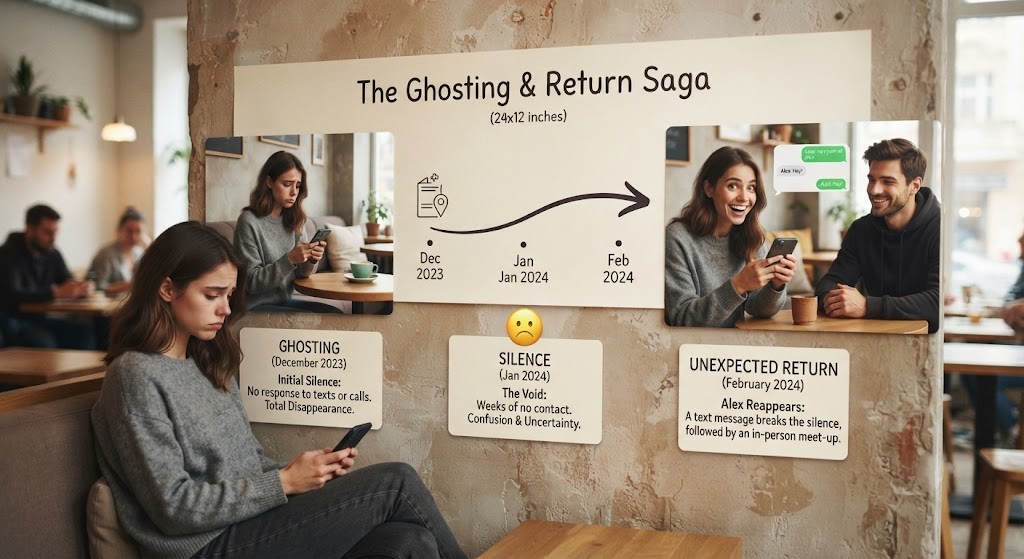
Zombieing in dating is when someone who previously disappeared or stopped communicating suddenly returns and resumes contact, often without addressing the earlier disappearance. The term describes a “coming back from the dead” pattern in modern dating communication.
Zombieing can happen after only a few days of silence or after several months without contact. For example, someone you matched with might stop replying after several promising conversations and then suddenly send, “Hey stranger, how have you been?”
Importantly, zombieing does not automatically reveal why someone has returned. Their motivation could involve genuine romantic interest, curiosity, loneliness, boredom, attention, convenience, or changed personal circumstances.
Online dating provides plenty of opportunities for this pattern because people can reconnect through dating apps, text messages, and social media. About 53% of U.S. adults ages 18 to 29 have used a dating site or app — Source: Pew Research Center, 2023.
Why Does Zombieing Matter in Dating?
Zombieing matters because someone disappearing and then returning can create uncertainty about their intentions, reliability, and romantic interest. Recognizing the pattern allows you to evaluate the person’s current behavior instead of automatically assuming that their return means something has changed.
An unexpected message can also bring back emotions you had already started processing. For example, receiving “I miss talking to you” after two months of silence may make you question whether the person genuinely wants another chance.
More importantly, recognizing zombieing can help you distinguish meaningful reconnection from inconsistent communication. A single message does not demonstrate that someone is suddenly ready for a healthier or more consistent relationship.
Online dating has become a common way for people to meet romantic partners, making these communication patterns increasingly relevant. Pew Research Center found that 30% of U.S. adults had ever used a dating site or app in its 2022 survey — Source: Pew Research Center, 2023.
What Are the Signs Someone Is Zombieing You?
Common signs of zombieing include an unexpected return after prolonged silence, casual messages that ignore the disappearance, renewed romantic attention, and inconsistent communication. One sign alone may not tell you much, but several of these behaviors together can reveal a pattern.
1. They Suddenly Return After Silence
The most obvious sign of zombieing is an unexpected message after communication has completely stopped.
For example, someone who disappeared after your last date might suddenly text you six weeks later. The longer the unexplained silence followed by an unexpected return, the more noticeable the pattern becomes.
2. They Act Like Nothing Happened
Someone who zombies you may restart the conversation without acknowledging their previous disappearance.
For example, instead of explaining why they stopped responding, they might simply ask, “What are you doing this weekend?” This can make the interaction confusing because the earlier silence remains unaddressed.
3. They Restart the Flirting
Renewed flirting can make the person’s return feel especially meaningful. They might suddenly send compliments, express attraction, suggest meeting up, or behave as though the previous connection simply paused.
However, renewed flirting is not necessarily evidence of changed intentions. It is more useful to observe what happens after the initial conversation.
4. Their Communication Becomes Inconsistent
Another common sign is inconsistent communication after the person returns.
For example, someone might message you frequently for two days, discuss meeting up, and then disappear again. If the same cycle happens repeatedly, the pattern becomes more significant than any individual message.
Why Do People Zombie Someone in Dating?
People may zombie someone because of loneliness, curiosity, boredom, renewed interest, attention-seeking, convenience, or changed personal circumstances. However, the behavior itself cannot tell you exactly which motivation applies.
Loneliness or Curiosity
Someone may return because they feel lonely or become curious about a previous connection.
For example, they might remember an enjoyable conversation or date and wonder whether the relationship could still develop.
Boredom or Attention
Boredom or a desire for attention can also lead someone to send a low-effort message.
For instance, someone scrolling through old conversations might message a previous match simply because they want interaction at that moment.
Renewed Romantic Interest
Sometimes, a person genuinely changes their mind or realizes that they were interested in the connection.
In that situation, their return may be sincere. However, genuine interest is better demonstrated through consistent communication and effort than through a single message.
Changed Circumstances
A person may also have experienced circumstances that affected their ability or willingness to communicate.
For example, someone who was overwhelmed by work or personal responsibilities may reconnect after their situation becomes more manageable.
Therefore, it is better not to assume that zombieing always means manipulation. Instead, look at whether the person now demonstrates clear, consistent, respectful, and accountable behavior.
What Are Common Examples of Zombieing in Dating?
Zombieing examples typically involve someone disappearing and later restarting romantic or casual communication without clearly addressing the gap. The behavior can happen across dating apps, text messages, social media, and casual relationships.
Dating-App Zombieing
You match with someone, exchange messages for a week, and discuss meeting for coffee. They suddenly stop responding.
Two months later, they send, “Hey, still interested in that coffee?”
The unexpected return after the unexplained silence is what makes this an example of zombieing.
Texting Zombieing
Someone you dated twice disappears after your second date. Three months later, they send, “Been thinking about you lately.”
The person is restarting contact after previously disappearing without explanation.
Social-Media Zombieing
Someone may disappear from direct communication but later interact with your social media.
For example, they might suddenly react to your posts, reply to a story, or send a private message after months of silence.
Casual-Dating Zombieing
Zombieing can also occur in casual connections.
For example, someone may disappear without explanation and later send a late-night message asking whether you want to meet. If this pattern repeatedly happens whenever they want companionship, it may indicate inconsistent communication.
What Is the Difference Between Zombieing and Ghosting?
Ghosting is the sudden end of communication without explanation, while zombieing describes a person returning after that period of silence. The behaviors are closely related, but they describe different stages of communication.
For example, if someone suddenly stops replying and never contacts you again, that is generally described as ghosting. If the same person disappears and later comes back, the return can be described as zombieing.
| Behavior | What happens? | Typical timing | Defining feature |
|---|---|---|---|
| Ghosting | Communication suddenly stops | During the connection | Disappearance |
| Zombieing | Communication resumes after disappearing | After silence | Unexpected return |
| Breadcrumbing | Small amounts of attention continue | Repeatedly over time | Inconsistent attention |
The simplest way to remember the difference is:
- Ghosting = they disappear.
- Zombieing = they disappear and come back.
- Breadcrumbing = they keep giving small amounts of attention without consistently developing the relationship.
In addition, what is ghosting in dating can help clarify the first stage of the pattern.
How Is Zombieing Different From Breadcrumbing?
Breadcrumbing is the pattern of giving someone occasional attention without consistently developing the relationship, while zombieing involves returning after a period of disappearance. The biggest difference is whether communication continues sporadically or stops and later restarts.
For example, a breadcrumbing pattern might involve someone sending “I miss you” every few weeks but never making concrete plans.
By contrast, zombieing might involve complete silence followed by an unexpected message several months later.
However, these behaviors can overlap. Someone could disappear, return, send occasional messages, and then disappear again.
Why Do People Come Back After Ghosting?
People can come back after ghosting for many reasons, and their return does not automatically prove that their intentions have changed. A renewed message should be evaluated alongside their explanation and subsequent behavior.
They May Have Reconsidered the Connection
Someone may return because they genuinely reconsidered the relationship.
For example, they might realize that they handled the earlier situation poorly and want to explain what happened.
They May Feel Lonely or Curious
A person may also reconnect because they feel lonely or become curious about what you are doing.
A simple “Hey, what’s up?” can reopen communication, but it provides very little information about whether they want a meaningful relationship.
They May Want Attention
In some situations, returning may simply provide the person with attention or companionship.
This is why it is important to look beyond the message itself. The quality and consistency of their behavior afterward provide more useful information.
Online dating also creates a large pool of potential connections; 22% of U.S. adults ages 18 to 29 reported having used three or more dating sites or apps in Pew Research Center’s 2022 survey — Source: Pew Research Center, 2023.
Therefore, judge a person’s return by effort, consistency, accountability, and clarity, rather than by the emotional impact of receiving their message.
How Should You Respond When Someone Zombies You?
Responding to zombieing involves deciding whether you want renewed contact, asking for clarity when appropriate, and setting boundaries based on the other person’s current behavior. You do not have to respond simply because someone has returned.
1. Decide Whether You Actually Want Contact
Before replying, consider what you want.
If you are genuinely interested in reconnecting, you can respond. If you have already moved on or do not trust the person’s communication pattern, you are also allowed to leave the conversation closed.
2. Ask Why They Returned
If you are curious about the situation, ask a direct but calm question.
For example:
“What made you reach out again?”
This gives the person an opportunity to explain their intentions without requiring you to assume what they are thinking.
3. Address the Previous Disappearance
If the earlier silence matters to you, bring it up rather than pretending it never happened.
You could say:
“I’m open to talking, but I noticed you stopped responding before. What changed?”
Their response can provide useful information about accountability and communication.
4. Restart Slowly
If you decide to reconnect, avoid assuming that the relationship is immediately back where it was.
Allow consistent communication over time to show whether the person’s behavior has actually changed.
5. Set a Boundary or Walk Away
Declining contact is also a completely valid choice.
You can say:
“I appreciate you reaching out, but I don’t want to restart the connection.”
You do not need to provide an extensive explanation for protecting your boundaries.
Should You Give Someone Another Chance After Zombieing?
Giving someone another chance after zombieing depends on whether their current behavior matches what you want from a relationship. There is no universal rule requiring you to accept or reject someone who returns.
Look for Accountability
First, consider whether the person acknowledges what happened.
An honest explanation and genuine apology may provide more context than simply pretending that the disappearance never occurred.
Watch Their Behavior
Next, pay attention to what happens after the conversation.
Consistent actions are stronger evidence of genuine interest than a sudden return message.
If they communicate reliably, follow through on plans, and respect your boundaries, that gives you more information than an enthusiastic opening text.
Remember That Forgiveness Is Not the Same as Reconnection
You can understand why someone disappeared without deciding to continue dating them.
Forgiving someone and giving them renewed access to your time and attention are separate choices.
How Can You Tell If Someone Genuinely Wants to Reconnect?
Someone who genuinely wants to reconnect usually demonstrates consistent communication, clear intentions, accountability, and effort over time. A sincere return is better judged by repeated actions than by a single emotional message.
Signs of a potentially genuine reconnection can include:
- Acknowledging the previous disappearance
- Providing a reasonable explanation
- Taking responsibility instead of avoiding the issue
- Communicating consistently
- Making realistic plans
- Following through on those plans
- Respecting your boundaries
- Showing interest beyond late-night or low-effort messages
For example, genuine interest might look like someone acknowledging that they disappeared, explaining what happened without making excuses, communicating consistently, and making realistic plans to see you.
Healthy reconnection should also become clearer over time. If the person repeatedly disappears, returns, flirts, and disappears again, the repeated pattern matters more than any individual message.
What Should You Do Next If Someone Is Zombieing You?
Your next step after zombieing is to decide whether renewed contact fits your needs and then communicate your choice clearly. You can continue the conversation, slow things down, ask questions, establish boundaries, or walk away.
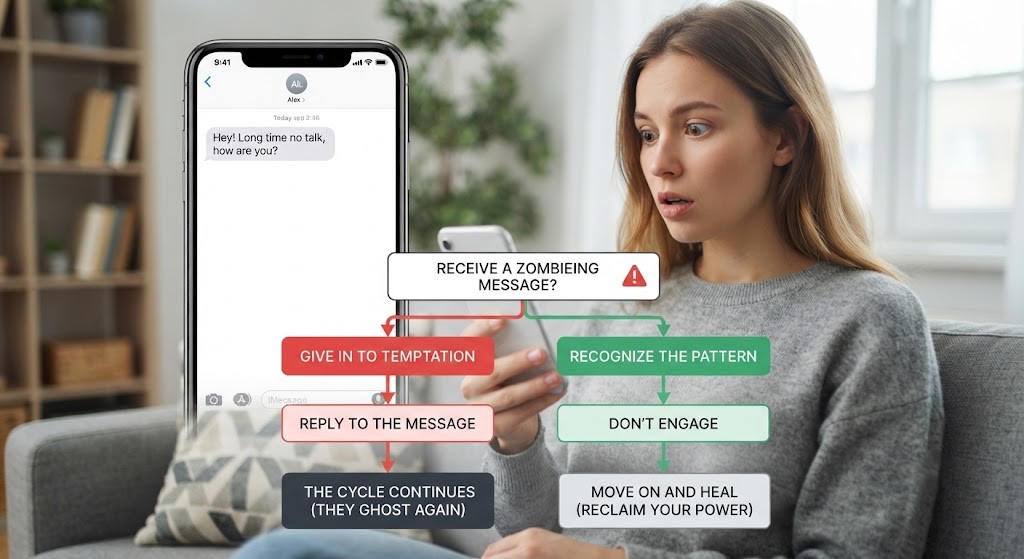
Use these questions to evaluate the situation:
- Do I actually want to reconnect?
- Has this person acknowledged what happened?
- Do their actions match their words?
- Do I feel respected and comfortable?
- Would reconnecting support what I want from dating?
These questions shift the focus away from “Why did they come back?” and toward the more useful question: “Is reconnecting good for me?”
In addition, remember that online dating experiences are not always positive. Pew Research Center found that 48% of online dating users reported experiencing at least one unwanted behavior, including unwanted continued contact, offensive name-calling, or threats — Source: Pew Research Center, 2023.
Conclusion: Recognize the Pattern and Choose What Works for You
Zombieing in dating describes someone returning after previously disappearing, and recognizing the pattern can help you make a more informed decision about renewed contact. Ghosting describes the disappearance, while zombieing describes the return after that silence.
A returning message can feel exciting, confusing, or even frustrating, especially when you had already started moving forward. However, the fact that someone comes back does not automatically mean their intentions have changed.
Ultimately, you do not owe someone renewed access simply because they returned. Whether you respond, ask for clarity, restart slowly, establish boundaries, or move on, choose the option that best matches your needs, comfort level, and relationship goals.
FAQs
What is zombieing in dating?
Zombieing is when someone who disappeared suddenly comes back and starts communicating again.
What is an example of zombieing?
Someone stops replying for months and suddenly texts, “Hey, how have you been?”
What is the difference between zombieing and ghosting?
Ghosting is disappearing, while zombieing is coming back after disappearing.
What is the difference between zombieing and breadcrumbing?
Zombieing involves returning after silence, while breadcrumbing involves occasional attention without commitment.
Why do people zombie you?
They may return because of loneliness, boredom, curiosity, attention, or renewed interest.
Should you respond to someone who zombies you?
Only if you genuinely want to reconnect and feel comfortable doing so.
Is zombieing a red flag?
It can be a red flag when the person repeatedly disappears and returns without explanation.
How do you respond to zombieing?
Ask what changed, set boundaries, and watch for consistent behavior.
Should you give someone another chance after zombieing?
You can, but only if their current actions match what you want.
How can you tell if someone genuinely wants to reconnect?
Look for consistent communication, clear intentions, effort, and follow-through.
More Related topic:
What Is Ghosting? Meaning, Signs, Reasons & How to Respond
Gen Z Sign Language: Popular Gestures, Meanings & Digital Trends