
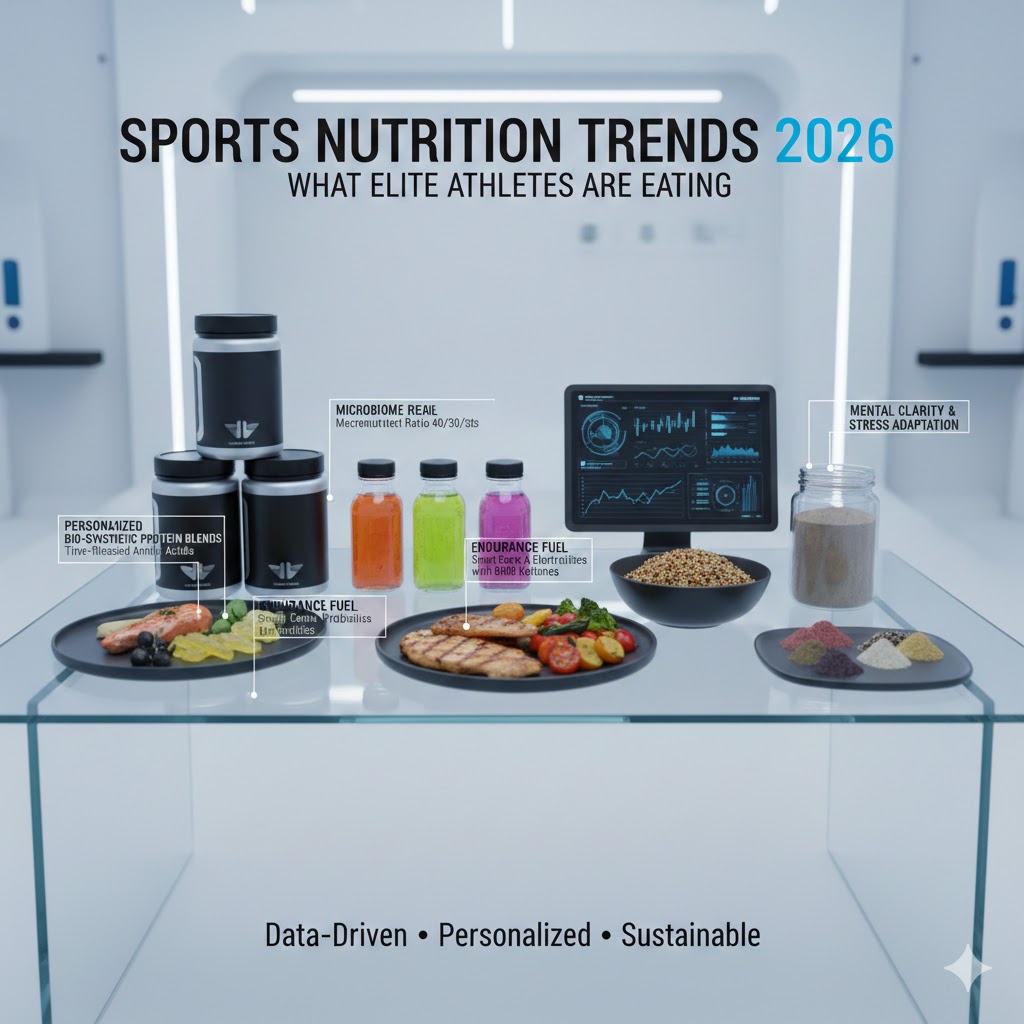
Sports nutrition is no longer just about protein shakes and calorie counting. In elite sports, food has become a precision tool—used to enhance recovery, longevity, mental focus, and injury prevention. As we move forward, Sports Nutrition Trends 2026 reveal a clear shift: athletes are eating smarter, not just more.
From personalized fueling strategies to cleaner supplements and gut-focused diets, what elite athletes eat in 2026 looks very different from even a few years ago.
This blog breaks down the most important sports nutrition trends of 2026, why they matter, and how elite athletes are using food as a competitive advantage.
1. Why Sports Nutrition Is Changing in 2026
Elite performance now depends on marginal gains. Nutrition is one of the few areas where those gains can still be unlocked consistently.
1.1 From Calories to Precision
In Sports Nutrition Trends 2026, the focus has shifted from:
- “Eat more protein”
to - “Eat the right nutrients at the right time”
Every meal now serves a specific purpose—training, recovery, sleep, or competition.
2. Personalized Nutrition Is the New Standard
One-size-fits-all diets are outdated.
2.1 What Personalization Means in 2026
Elite athletes base nutrition on:
- Training load
- Recovery speed
- Digestive response
- Hormonal balance
This makes nutrition adaptive, not static—a core theme in Sports Nutrition Trends 2026.
3. Protein Quality Over Protein Quantity
Protein remains essential—but how it’s consumed has evolved.
3.1 What Elite Athletes Focus On Now
- Leucine-rich protein sources
- Easily digestible proteins
- Balanced amino acid profiles
3.2 Popular Protein Choices in 2026
- Whey isolate (clean, low-lactose)
- Plant protein blends (pea + rice)
- Collagen for joint and connective tissue support
Protein is now targeted, not excessive.
4. Gut Health as a Performance Weapon
Athletes can’t absorb nutrients if their gut isn’t functioning optimally.
4.1 Why Gut Health Is Central in Sports Nutrition Trends 2026
- Better nutrient absorption
- Reduced inflammation
- Improved immunity
- More stable energy levels
4.2 What Athletes Are Eating for Gut Health
- Fermented foods
- Prebiotic fibers
- Probiotic-supporting meals
A healthy gut equals consistent performance.
5. Clean Supplements Are Replacing Heavy Stacks
Supplement use hasn’t disappeared—but it’s become more selective.
5.1 What “Clean” Means in 2026
Elite athletes prioritize:
- Fewer ingredients
- Clinically supported dosages
- Third-party tested products
5.2 Supplements Still Common in Sports Nutrition Trends 2026
- Creatine (for power and recovery)
- Electrolytes (custom sodium ratios)
- Omega-3s (inflammation control)
More supplements doesn’t mean better performance—precision does.
6. Carbohydrates Are Back (But Smarter)
Carbs were once misunderstood. That’s changing.
6.1 Why Carbs Matter Again
Elite athletes rely on carbohydrates for:
- High-intensity output
- Endurance
- Faster recovery
6.2 Modern Carb Choices
- Low-GI carbs for daily meals
- Fast-digesting carbs around training
- Reduced reliance on processed sugars
This balanced approach defines Sports Nutrition Trends 2026.
7. Recovery Nutrition Is Getting Equal Attention
Training breaks the body—nutrition rebuilds it.
7.1 Recovery-Focused Eating
Athletes now prioritize:
- Post-training nutrient timing
- Anti-inflammatory foods
- Sleep-supportive nutrients
7.2 Common Recovery Foods
- Tart cherry products
- Fatty fish
- Magnesium-rich foods
Recovery nutrition is no longer optional—it’s strategic.
8. Plant-Forward Diets Without Performance Loss
More elite athletes are reducing—but not eliminating—animal products.
8.1 Why Plant-Forward Is Growing
- Reduced inflammation
- Improved digestion
- Sustainability concerns
8.2 How Athletes Avoid Deficiencies
- Strategic protein combinations
- Iron and B12 monitoring
- Smart supplementation
This balanced approach is a key part of Sports Nutrition Trends 2026.
9. Hydration Is Becoming Data-Driven
Water intake is no longer guesswork.
9.1 What’s Changing in Hydration Strategies
Athletes track:
- Sweat rate
- Electrolyte loss
- Climate conditions
9.2 Why It Matters
Proper hydration improves:
- Endurance
- Reaction time
- Injury prevention
Hydration is now performance science, not habit.
10. Mental Performance Nutrition
Elite athletes fuel the brain as much as the body.
10.1 Nutrition for Focus and Stress
Foods and nutrients used include:
- Omega-3 fatty acids
- Magnesium
- Stable blood sugar meals
Mental clarity is now a performance metric in Sports Nutrition Trends 2026.
11. What Elite Athletes Are Avoiding in 2026
Just as important as what they eat is what they limit.
11.1 Foods Being Reduced
- Ultra-processed snacks
- Artificial sweeteners (overuse)
- Excess alcohol
- High-sugar recovery products
Less inflammation equals more consistency.
Frequently Asked Questions (FAQ)
What defines Sports Nutrition Trends 2026?
Precision, personalization, gut health focus, clean supplementation, and recovery-driven eating.
Are elite athletes still eating high-protein diets?
Yes, but with better protein quality, timing, and digestibility.
Is creatine still relevant in 2026?
Yes. Creatine remains one of the most supported supplements for strength, recovery, and cognitive benefits.
Are carbs good or bad for athletes?
Carbs are essential for performance. The focus is on timing and quality, not restriction.
Do elite athletes follow plant-based diets?
Many follow plant-forward diets, but most still include some animal products for balance.
Can non-athletes follow Sports Nutrition Trends 2026?
Yes. Many principles—like gut health, clean foods, and recovery nutrition—benefit everyone.
Final Thoughts
Elite performance is no longer built on extreme diets or rigid rules. Sports Nutrition Trends 2026 show a clear evolution toward intelligent fueling—where food supports not just strength and speed, but recovery, longevity, and mental resilience.
The athletes winning in 2026 aren’t eating more than everyone else.
They’re eating with intention.
And that mindset—not just the meal plan—is the real competitive edge.
More Related Topics:
Health SaaS Is Reducing Healthcare Costs Globally: How Software Is Reshaping Modern Healthcare