
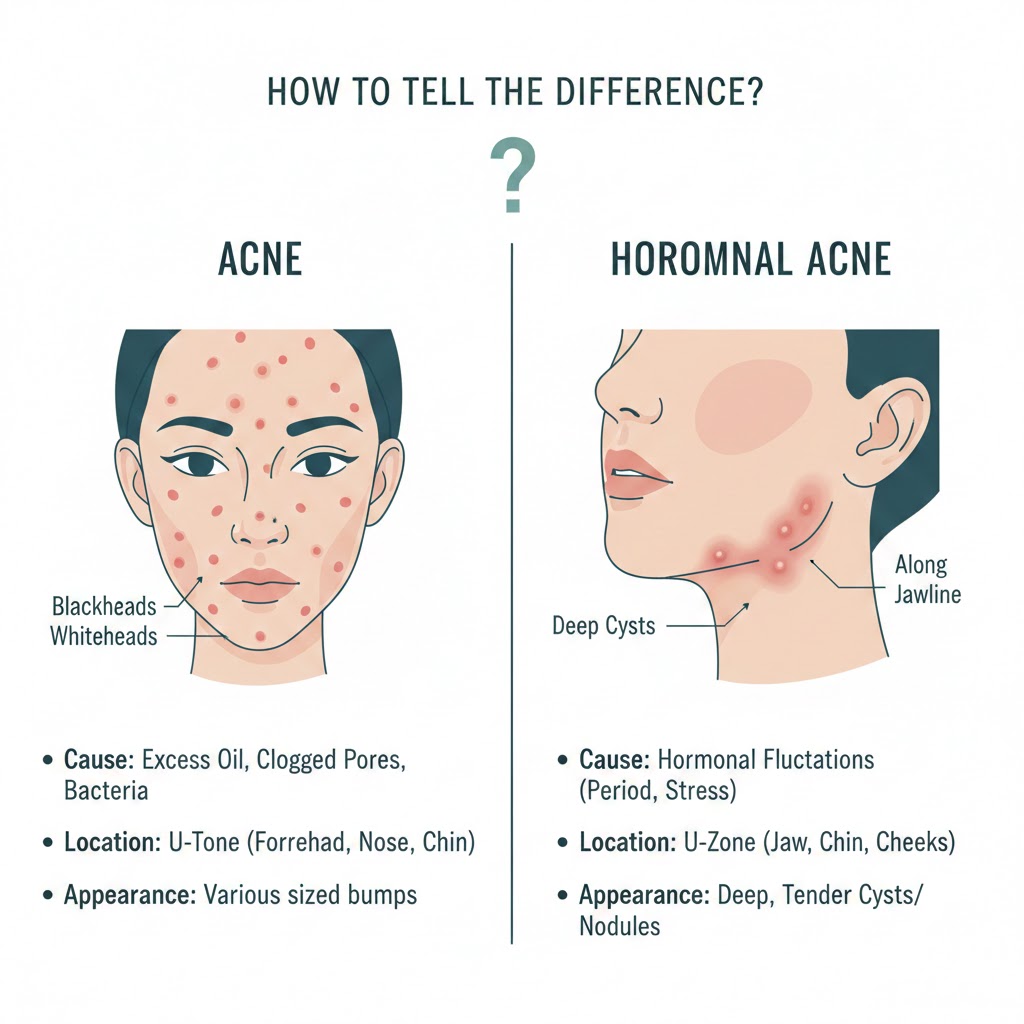
Not all acne is the same—and treating it like it is often leads to frustration. Many people follow standard acne routines for months with little improvement, only to realize later that they were dealing with something different altogether. Understanding Acne vs Hormonal Acne is the key to choosing the right treatment and stopping breakouts at the root cause.
This guide breaks down how to tell the difference between acne and hormonal acne, why they behave differently, and what each type actually needs to improve.
1. Why Understanding Acne vs Hormonal Acne Matters
Acne treatments fail most often because the cause is misunderstood.
1.1 One Problem, Two Very Different Triggers
- Regular acne is usually driven by clogged pores, bacteria, and excess oil
- Hormonal acne is driven by internal hormone fluctuations
Using the same routine for both often makes things worse instead of better.
1.2 Misdiagnosis Leads to Over-Treatment
When hormonal acne is treated like regular acne:
- Skin becomes irritated
- Breakouts become deeper
- Healing slows
Knowing the difference between Acne vs Hormonal Acne saves time, money, and skin damage.
2. What Is Regular Acne?
Regular acne (also called common or acne vulgaris) is the most widespread type.
2.1 Common Causes of Regular Acne
- Excess oil (sebum)
- Clogged pores
- Bacteria buildup
- Dead skin cell accumulation
2.2 Who Typically Gets Regular Acne
- Teenagers and young adults
- People with oily skin
- Those using pore-clogging products
This type of acne responds well to topical treatments.
3. What Is Hormonal Acne?
Hormonal acne is driven by fluctuations in hormones, especially androgens.
3.1 What Triggers Hormonal Acne
- Menstrual cycle changes
- Polycystic ovary syndrome (PCOS)
- Stress and cortisol spikes
- Hormonal birth control changes
3.2 Why Hormonal Acne Is Harder to Treat
Because the trigger is internal, surface treatments alone often aren’t enough.
This internal cause is the biggest distinction in Acne vs Hormonal Acne.
4. Acne vs Hormonal Acne: Location on the Face
Breakout location offers one of the clearest clues.
4.1 Typical Locations of Regular Acne
- Forehead
- Nose
- Upper cheeks
- T-zone
These areas have higher oil production.
4.2 Typical Locations of Hormonal Acne
- Chin
- Jawline
- Lower cheeks
- Neck
If breakouts consistently appear here, hormonal acne is likely.
5. Acne vs Hormonal Acne: Appearance and Feel
The way acne looks and feels is another major indicator.
5.1 How Regular Acne Looks
- Whiteheads
- Blackheads
- Small pimples
- Surface-level inflammation
5.2 How Hormonal Acne Looks
- Deep cysts
- Painful bumps under the skin
- No visible head
- Long healing time
Hormonal acne often feels tender or sore before it even appears.
6. Acne vs Hormonal Acne: Timing and Patterns
Patterns tell a story that skincare products can’t.
6.1 Regular Acne Patterns
- Can appear anytime
- Often linked to skincare habits
- Improves with consistent routines
6.2 Hormonal Acne Patterns
- Flares before periods
- Appears monthly or cyclically
- Improves mid-cycle
This predictable timing is a defining feature in Acne vs Hormonal Acne.
7. Why Traditional Acne Treatments Often Fail for Hormonal Acne
Many people over-exfoliate or overdry their skin trying to “fight” hormonal acne.
7.1 What Doesn’t Work Well
- Strong benzoyl peroxide alone
- Excessive exfoliation
- Harsh drying cleansers
7.2 Why Hormonal Acne Needs a Different Approach
Because hormones stimulate oil production from within, external treatments must be supportive, not aggressive.
8. How Regular Acne Is Best Treated
Regular acne responds well to targeted topical care.
8.1 Effective Treatments
- Salicylic acid
- Benzoyl peroxide
- Retinoids
- Consistent cleansing
8.2 Key Strategy
Focus on:
- Keeping pores clear
- Reducing bacteria
- Managing oil
9. How Hormonal Acne Is Best Treated
Hormonal acne requires a more balanced strategy.
9.1 Supportive Skincare
- Gentle cleansers
- Retinoids (low irritation)
- Niacinamide for inflammation
- Barrier-repair moisturizers
9.2 Internal & Lifestyle Support
- Stress management
- Balanced diet
- Adequate sleep
- Medical guidance if severe
Understanding Acne vs Hormonal Acne helps set realistic expectations—hormonal acne usually improves gradually, not overnight.
10. Can You Have Both Acne and Hormonal Acne?
Yes—and many adults do.
10.1 Mixed Acne Is Common
Someone may experience:
- Regular acne on the forehead
- Hormonal acne on the jawline
This requires zone-based treatment, not one-size-fits-all routines.
11. When to See a Dermatologist
Professional help is important if:
- Acne is painful or cystic
- Scarring is developing
- Breakouts don’t respond to treatment
A dermatologist can confirm whether you’re dealing with acne vs hormonal acne and guide treatment safely.
Frequently Asked Questions (FAQ)
What is the main difference between acne vs hormonal acne?
Regular acne is caused by clogged pores and bacteria, while hormonal acne is driven by hormone fluctuations inside the body.
How can I tell if my acne is hormonal?
If breakouts appear mainly on the chin or jawline and follow a monthly cycle, they are likely hormonal.
Can hormonal acne happen at any age?
Yes. Hormonal acne is very common in adults, especially women in their 20s–40s.
Does hormonal acne go away on its own?
It can improve over time, but many people need targeted skincare and lifestyle adjustments.
Should I use harsh acne products for hormonal acne?
No. Over-drying and irritation often worsen hormonal acne.
Is diet related to hormonal acne?
Diet may influence hormones in some people, but it’s not the sole cause.
Final Thoughts
The difference between Acne vs Hormonal Acne isn’t just cosmetic—it’s biological.
When you understand why your skin is breaking out, treatment becomes clearer, gentler, and more effective. Instead of fighting your skin, you start working with it.
Clear skin doesn’t come from stronger products—it comes from smarter understanding.
More Related Topics:
Anti-Aging Skincare in 2026: Ingredients That Really Matter