
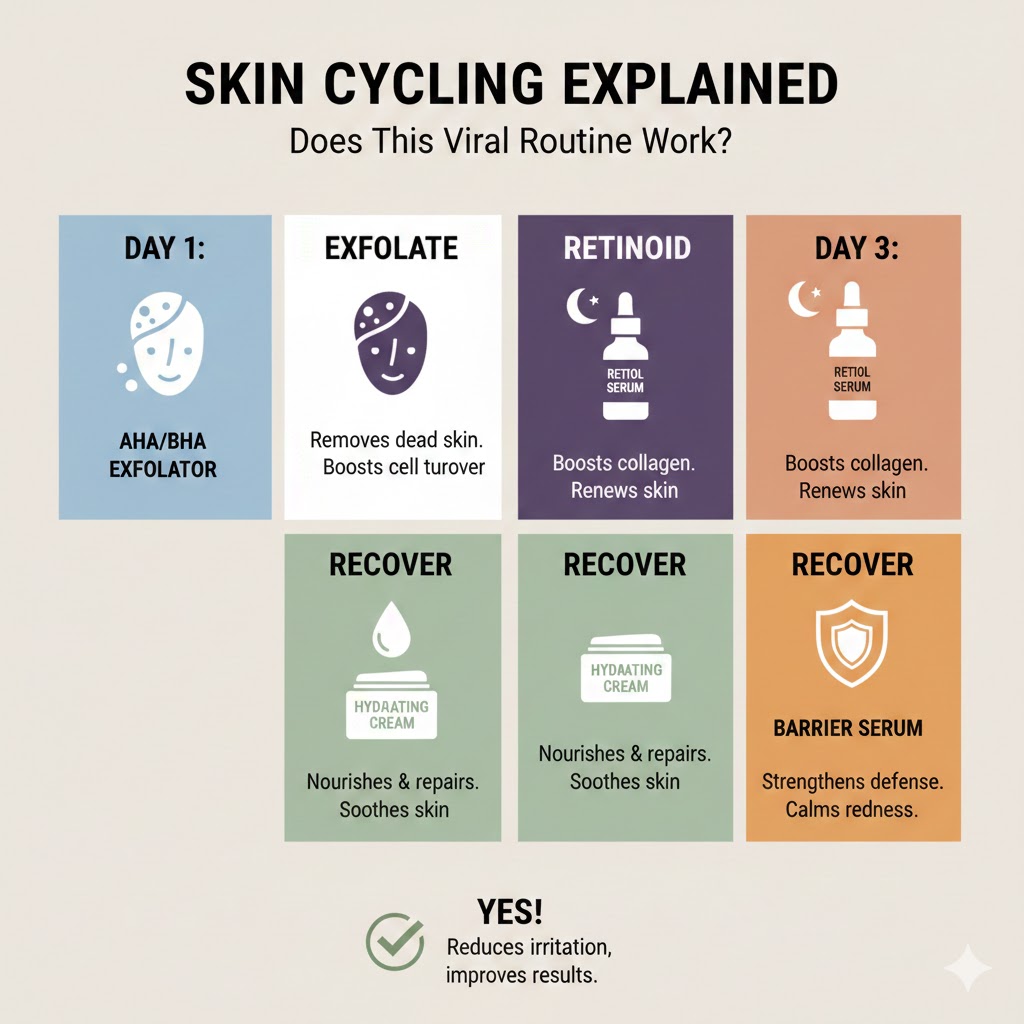
Skin Cycling Explained is a viral skincare concept that has taken social media by storm, promising better skin with fewer products and less irritation. The routine is built around rotating active skincare ingredients across different nights instead of using everything at once. Supporters claim it improves results while protecting the skin barrier, but does the science support the hype?
This article breaks down what skin cycling actually is, how it works, who it’s best for, and whether it truly delivers results.
What Is Skin Cycling?
Skin cycling is a structured nighttime skincare routine that spreads active ingredients over multiple days rather than layering them all in one night. The goal is to maximize benefits while minimizing irritation, dryness, and sensitivity.
In simple terms, Skin Cycling Explained means:
- Using exfoliating acids on one night
- Retinoids on another night
- Allowing recovery nights in between
This cycle repeats continuously, usually over four nights.
Why Skin Cycling Became So Popular
The rise of skin cycling reflects a broader shift in skincare toward barrier health and simplicity. Many people experienced irritation from using too many actives too frequently.
Reasons the routine went viral:
- Overuse of retinol and acids caused skin damage
- Social media promoted aggressive routines
- Dermatologists began emphasizing skin barrier repair
- People wanted results with fewer products
Skin Cycling Explained resonated because it offered structure without complexity.
How the Skin Cycling Routine Works
Although variations exist, the classic skin cycling routine follows a four-night pattern.
Night 1: Exfoliation
- Chemical exfoliants such as AHAs or BHAs
- Helps remove dead skin cells
- Improves skin texture and brightness
Night 2: Retinoid
- Retinol or prescription retinoids
- Supports cell turnover and collagen production
- Targets acne, fine lines, and uneven tone
Nights 3 & 4: Recovery
- Gentle cleansing
- Moisturizer and barrier-repair products
- No strong actives
This structure is central to Skin Cycling Explained and helps prevent over-exfoliation.
Does Skin Cycling Actually Work?
For many people, yes—but results depend on skin type and consistency.
Skin cycling can be effective because it:
- Reduces irritation from overuse of actives
- Improves tolerance to retinoids
- Supports long-term skin barrier health
- Encourages consistency instead of overcorrection
Dermatologists generally agree that spacing out actives improves results for most users, which supports the logic behind Skin Cycling Explained.
Who Benefits Most from Skin Cycling
Skin cycling is especially helpful for:
- Beginners using retinol or acids
- People with sensitive or reactive skin
- Those experiencing dryness or redness
- Anyone overwhelmed by complex routines
For these groups, Skin Cycling Explained offers a safer entry into active skincare.
Who May Not Need Skin Cycling
Not everyone requires a strict cycling routine.
It may be less necessary for:
- Experienced users with high tolerance
- People using prescription routines under supervision
- Very minimal skincare users
Some advanced users can safely use actives more frequently, but only if their skin barrier is healthy.
Common Mistakes People Make
Skin cycling still fails if done incorrectly.
Common issues include:
- Using exfoliants that are too strong
- Skipping recovery nights
- Combining actives accidentally
- Expecting instant results
Skin Cycling Explained works best when patience and simplicity are maintained.
How Long Before You See Results
Skin improvements are gradual.
Typical timelines:
- Reduced irritation within 1–2 weeks
- Texture improvements in 3–4 weeks
- Visible tone and acne changes in 6–8 weeks
Skin cycling focuses on sustainable progress, not overnight transformation.
Is Skin Cycling Safe for Long-Term Use?
Yes, for most people. In fact, it is often safer long-term than daily active use.
Benefits of long-term cycling:
- Stronger skin barrier
- Fewer flare-ups
- Better tolerance to actives
- More consistent results
This makes Skin Cycling Explained a practical routine rather than a short-term trend.
Frequently Asked Questions (FAQ)
Is skin cycling dermatologist-approved?
Yes. Many dermatologists support skin cycling because it reduces irritation and protects the skin barrier while still allowing active ingredients to work.
Can skin cycling help with acne?
Yes. By spacing out exfoliation and retinoids, skin cycling can reduce breakouts caused by irritation while still targeting acne at its root.
Can I skin cycle if I have sensitive skin?
Skin cycling is especially suitable for sensitive skin, as long as gentle products are used and recovery nights are respected.
Do I need expensive products for skin cycling?
No. Skin Cycling Explained is about timing, not price. Simple, well-formulated products work just as well.
Can I change the number of recovery days?
Yes. Some people use one recovery night instead of two, while others need three. Adjust based on how your skin reacts.
Should I skin cycle in the morning too?
Skin cycling is typically a nighttime routine. Mornings should focus on gentle cleansing, moisturizing, and sunscreen.
Can I stop skin cycling once my skin improves?
You can adjust the routine, but many people continue cycling because it maintains results and prevents irritation.
Is skin cycling just another skincare trend?
While it became popular on social media, Skin Cycling Explained is rooted in dermatological principles and barrier science, making it more than a passing trend.
Conclusion
Skin Cycling Explained is not a miracle routine, but it is a smart, science-backed approach to skincare. By rotating active ingredients and prioritizing recovery, skin cycling helps many people achieve better results with fewer side effects. It encourages consistency, patience, and skin barrier health—three factors often missing from viral skincare trends.
For beginners and sensitive-skin users especially, skin cycling is less about doing more and more about doing things right.
More Related Topics:
HGH for Fat Loss, Recovery, and Lean Muscle Growth
Arimidex vs Nolvadex: Key Differences Bodybuilders Should Know
Clenbuterol for Fat Loss: How It Boosts Metabolism and Burns Calories