
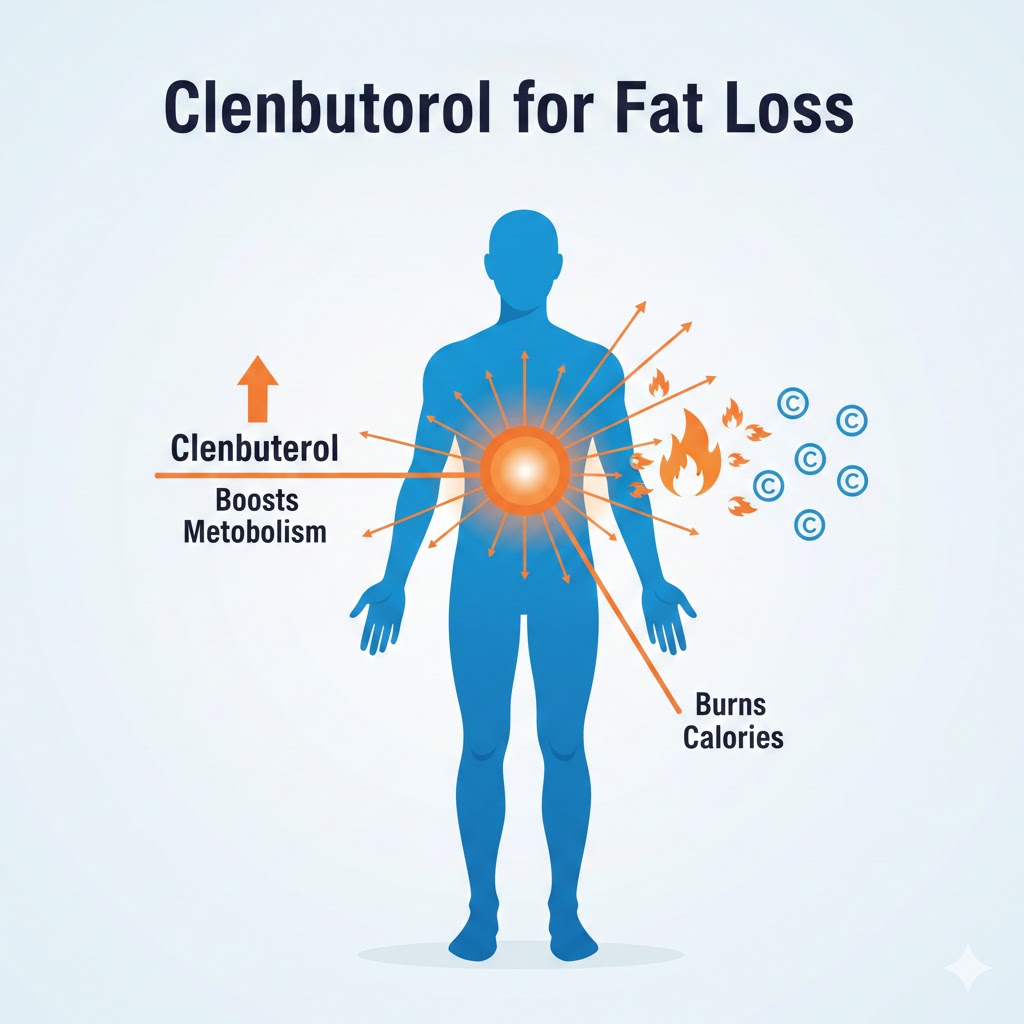
Clenbuterol for Fat Loss is a topic that frequently appears in fitness and weight-loss discussions because of its reputation for increasing metabolism and promoting rapid fat reduction. Clenbuterol is a beta-2 adrenergic agonist originally developed for medical use in respiratory conditions in some countries. Outside approved medical contexts, it is often misused for physique and weight-loss goals.
Understanding what clenbuterol actually does—and what it does not do—requires separating physiological effects from online claims, while also acknowledging the significant health risks involved.
How Clenbuterol Affects Metabolism
Clenbuterol stimulates beta-2 receptors in the body, which play a role in energy expenditure and thermogenesis.
From a biological standpoint, clenbuterol can:
- Increase basal metabolic rate
- Elevate body temperature slightly (thermogenic effect)
- Stimulate the central nervous system
- Increase energy expenditure at rest
These effects explain why Clenbuterol for Fat Loss is often associated with increased calorie burning. However, the metabolic boost is not unlimited and does not replace the fundamentals of fat loss.
Fat Loss vs Weight Loss: An Important Distinction
One reason Clenbuterol for Fat Loss is often misunderstood is the difference between fat loss and overall weight change.
Short-term changes may include:
- Reduced body fat percentage
- Temporary water weight shifts
- Appetite changes
Not all weight changes reflect true fat loss. Increased dehydration, muscle tension, or appetite suppression can create the appearance of rapid results without sustainable fat reduction.
Does Clenbuterol Burn Calories Without Exercise?
Clenbuterol can increase calorie expenditure at rest, but the effect is modest compared to claims often made online.
What science suggests:
- Metabolic rate may increase, but not dramatically
- Fat loss still depends on overall energy balance
- Diet and activity remain primary drivers of results
This is why Clenbuterol for Fat Loss does not produce lasting results without changes in nutrition and lifestyle.
Why Results Often Plateau
The body adapts quickly to stimulatory substances. Over time, receptor sensitivity can decrease, reducing the initial metabolic effect.
Common outcomes include:
- Diminishing fat-loss response
- Increased side effects with continued exposure
- Reduced perceived effectiveness
This adaptation is a key reason long-term results often fail to match early expectations in the Clenbuterol for Fat Loss discussion.
Commonly Reported Short-Term Effects
Some individuals report noticeable short-term changes, especially early on.
These may include:
- Increased heart rate
- Elevated body temperature
- Reduced appetite
- Increased alertness or restlessness
These effects reflect nervous system stimulation rather than direct fat-burning activity.
Health Risks and Side Effects Doctors Emphasize
Medical professionals consistently warn that clenbuterol carries serious risks, especially when used outside approved medical supervision.
Potential concerns include:
- Heart rhythm disturbances
- Increased blood pressure
- Cardiac muscle strain
- Anxiety, tremors, and insomnia
- Electrolyte imbalance
In severe cases, cardiovascular complications have been reported. These risks exist regardless of fitness level, making Clenbuterol for Fat Loss a high-risk approach.
Why Fat Loss From Clenbuterol Is Often Not Maintained
One of the most overlooked aspects is sustainability. Fat loss achieved through stimulant-driven metabolic increases often reverses once the stimulant effect stops.
Common post-use experiences include:
- Rebound appetite
- Energy crashes
- Rapid weight regain
- Reduced metabolic stability
Without long-term lifestyle changes, results are difficult to maintain.
Medical Perspective on Clenbuterol for Fat Loss
From a clinical standpoint, clenbuterol is not approved for weight loss in humans in many countries. Physicians emphasize that the potential harm outweighs the cosmetic benefit.
Doctors generally agree:
- Fat loss should prioritize metabolic health
- Cardiovascular strain is not a reasonable trade-off
- Sustainable approaches outperform rapid methods
This perspective contrasts sharply with how Clenbuterol for Fat Loss is often portrayed online.
Safer, Sustainable Alternatives to Fat Loss
Health professionals recommend evidence-based strategies that support fat loss without severe risk.
These include:
- Calorie-controlled nutrition
- Resistance and aerobic training
- Adequate sleep and stress management
- Gradual, consistent progress
While slower, these methods protect long-term health and body composition.
Conclusion
Clenbuterol for Fat Loss is often described as a powerful metabolic booster, but the reality is far more complex. While it can increase energy expenditure and create short-term changes, these effects are limited, adaptive, and accompanied by significant health risks—particularly to the heart and nervous system.
True fat loss depends on sustainable habits, not stimulatory shortcuts. Understanding how clenbuterol works beneath the surface helps clarify why medical professionals strongly discourage its use for weight loss and emphasize safer, long-term approaches instead.
More Related Topics:
Testosterone Cypionate vs Enanthate: Which One Builds Better Muscle?
Dianabol Results Timeline: What Really Happens After 4–6 Weeks