
You’ve probably seen sound baths trending across wellness studios, yoga retreats, and social media feeds as a new way to relax and recharge. But most people still do not understand what actually happens during a sound bath or why these immersive sound experiences feel so calming. In this guide, you’ll learn what a sound bath is, how it works, its proven and potential benefits, and how to experience one yourself at home or in a studio.
Key Takeaways
- Sound baths are immersive meditation experiences that use sound frequencies and vibrations to promote relaxation and mindfulness.
- Crystal singing bowls, gongs, tuning forks, and chimes are the most common instruments used during sound healing sessions.
- Sound bath meditation may help reduce stress, improve relaxation, and support better sleep by encouraging a calmer nervous system response.
- Most sound bath sessions involve participants lying down comfortably while focusing on layered sounds and vibrations.
- At-home sound bath experiences can be created using meditation apps, online recordings, or singing bowls.
- Scientific research on sound therapy is still developing, but many participants report reduced stress and improved calmness.
- Consistent mindfulness habits and realistic expectations help maximize the benefits of sound bath practices.
What Is a Sound Bath and How Does It Work?
A sound bath is a guided meditation experience that uses sound frequencies, vibrations, and calming tones to promote relaxation and mindfulness. Unlike traditional meditation, a sound bath focuses less on silence and more on immersive sound healing techniques.
First, sound bath meditation traces its roots to ancient healing traditions in cultures such as Tibet, India, and Greece. Ancient practitioners believed that vibrations and resonant frequencies could support emotional balance and inner calm. Today, modern wellness studios combine these traditional ideas with mindfulness practices and relaxation therapy.
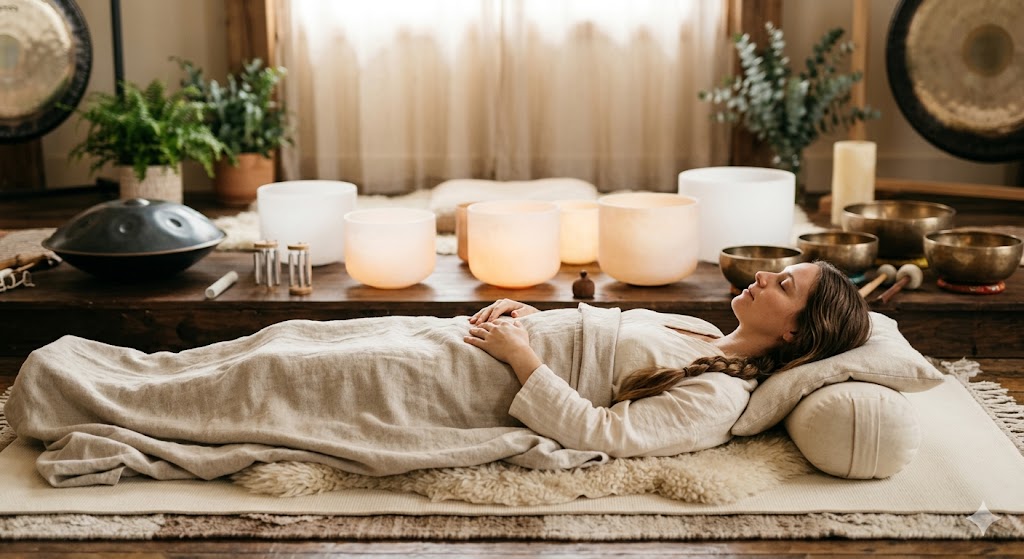
Moreover, sound healing involves listening to instruments such as crystal singing bowls, gongs, chimes, and tuning forks in a calm environment. Most sound bath sessions involve participants lying down comfortably while focusing on layered sounds and vibrations.
For example, during a gong bath session, deep resonant tones gradually fill the room while participants relax with closed eyes. This immersive meditation experience can help quiet mental chatter and encourage a slower breathing rhythm.
How Sound Frequencies Influence Relaxation
Sound frequencies influence relaxation by encouraging the brain and nervous system to shift into calmer states. Many sound bath facilitators use repetitive tones to support meditation and emotional grounding.
At the same time, slow rhythmic sounds may help activate the parasympathetic nervous system, which is associated with rest and recovery. According to the American Psychological Association, chronic stress affects a large percentage of adults globally — Source: APA, 2024.
In addition, meditative sound experiences often encourage slower breathing and deeper body awareness. For example, participants frequently report feeling lighter, calmer, or mentally refreshed after a 45-minute session.
“Sound baths are immersive meditation experiences that use sound frequencies and vibrations to promote relaxation and mindfulness.”
Why Are Sound Baths Becoming So Popular in Wellness Culture?
Sound baths are becoming popular because modern lifestyles have increased stress, burnout, and demand for accessible mindfulness practices. Many people want relaxation methods that feel easier than silent meditation.
First, digital overload has dramatically increased mental fatigue. A Deloitte workplace survey found that over 70% of professionals report experiencing burnout symptoms — Source: Deloitte, 2024.
Moreover, wellness culture has expanded beyond fitness into emotional and mental recovery practices. Sound bath meditation now appears in yoga studios, luxury spas, retreat centers, and mindfulness apps.
For example, wellness retreats frequently combine yoga flows with crystal singing bowl sessions to create immersive relaxation experiences. This combination can help beginners feel more engaged than traditional meditation alone.
Why Beginners Often Prefer Sound Baths
Sound baths feel beginner-friendly because participants can relax passively without trying to “clear the mind.” Many people struggle with silent meditation during their first attempts.
Plus, guided sound meditation provides sensory focus through layered vibrations and tones. Instead of forcing concentration, participants simply listen and breathe naturally.
For example, someone with anxiety may find repetitive crystal bowl sounds easier to follow than silent breathing exercises. This passive structure can make mindfulness practices feel less intimidating.
What Happens During a Typical Sound Bath Session?
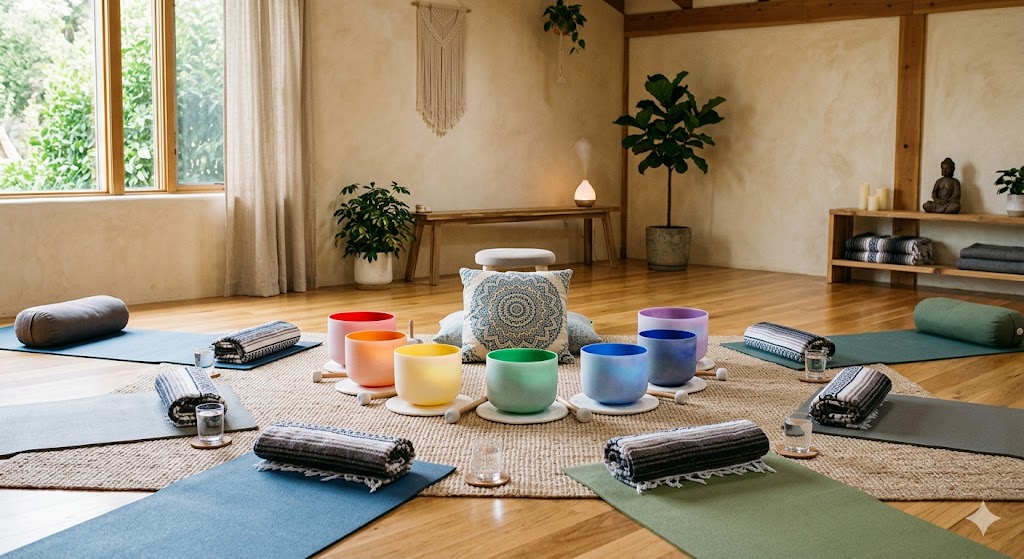
A typical sound bath session involves lying down comfortably while listening to layered healing frequencies and meditative sounds. Most sessions last between 45 and 90 minutes.
First, facilitators usually begin with grounding instructions and slow breathing exercises. Some sessions also include aromatherapy, dim lighting, or guided visualization.
Next, instruments gradually build layers of sound throughout the session. Participants may hear:
- Crystal singing bowls
- Tibetan singing bowls
- Gongs
- Chimes
- Tuning forks
- Ocean drums
- Soft vocal tones
For example, crystal bowls often produce long, smooth vibrations while gongs create deeper resonant waves. This combination creates an immersive meditation atmosphere.
How Long Does a Sound Bath Session Usually Last?
Most sound bath sessions last between 45 and 90 minutes depending on the setting and facilitator. Shorter sessions are common in yoga studios, while retreat experiences may last longer.
In addition, private sound healing sessions sometimes include customized meditation guidance. This personalized format may focus on stress relief, emotional grounding, or sleep support.
| Sound Bath Type | Average Duration | Best For |
|---|---|---|
| Group studio session | 45–60 minutes | Beginners |
| Gong bath experience | 60–90 minutes | Deep relaxation |
| Private sound healing | 60 minutes | Personalized wellness |
| Online guided session | 20–45 minutes | Home practice |
| Yoga + sound bath combo | 75–120 minutes | Full-body mindfulness |
What Instruments Are Used in Sound Healing Sessions?
Sound healing sessions use resonant instruments designed to create calming vibrations and layered tones. Different instruments produce different sensory experiences.
Crystal Singing Bowls
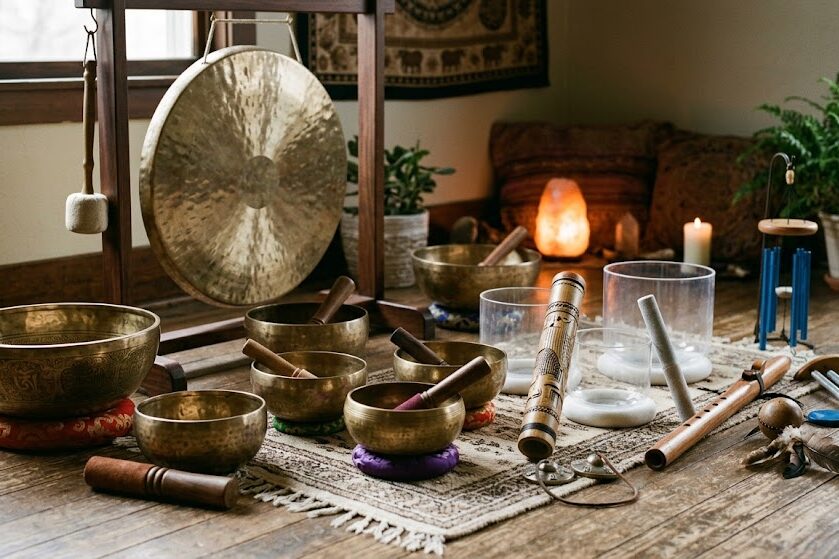
Crystal singing bowls are quartz-based bowls that produce smooth, resonant frequencies used in meditation and relaxation practices. These bowls are among the most recognizable sound healing tools today.
For example, practitioners often use larger bowls for deeper grounding tones and smaller bowls for lighter frequencies. Many wellness creators also use crystal bowls in meditation videos and sleep routines.
Tibetan Singing Bowls
Tibetan singing bowls are metal bowls traditionally used for meditation, chanting, and mindfulness rituals. Their tones are typically richer and more earthy than crystal bowls.
Moreover, Tibetan bowls are commonly paired with breathing exercises and mindfulness sound therapy. This combination can help deepen body awareness during meditation sessions.
Gongs and Chimes
Gongs create powerful waves of vibration that can produce immersive sensory experiences during sound bath meditation. Gong baths are especially popular for deep relaxation sessions.
Meanwhile, chimes provide softer transitions between sound layers. Facilitators often use them at the beginning or end of guided meditation experiences.
What Are the Benefits of Sound Bath Meditation?
Sound bath meditation may support relaxation, emotional balance, sleep quality, and beginner-friendly mindfulness practices. Many people use sound baths as part of broader wellness routines.
First, sound bath for anxiety searches continue rising because people want natural relaxation techniques. According to the Global Wellness Institute, the wellness economy surpassed $6 trillion globally — Source: Global Wellness Institute, 2024.
Moreover, meditative sound experiences may encourage slower breathing and reduced physical tension. This calming effect can support stress recovery after mentally demanding days.
“Sound bath meditation may help reduce stress, improve relaxation, and support better sleep by encouraging a calmer nervous system response.”
Can Sound Baths Help Reduce Stress and Anxiety?
Sound baths may help reduce stress and anxiety by encouraging a calmer nervous system response and focused mindfulness. Many participants report feeling emotionally lighter after sessions.
For example, a study published in the Journal of Evidence-Based Integrative Medicine found participants experienced reduced tension and improved mood after meditative sound sessions — Source: JEBIM, 2023.
At the same time, sound baths are not replacements for professional mental health care. They work best as supportive wellness tools alongside healthy routines and medical guidance when needed.
Can Sound Baths Improve Sleep and Mental Clarity?
Sound baths may improve sleep quality and mental clarity by helping the body transition into deeper relaxation states. Calming vibrations can support bedtime mindfulness routines.
For example, many people listen to healing frequencies or meditation music therapy before sleep to reduce racing thoughts. This simple habit can help create a more restful nighttime environment.
Are Sound Baths Scientifically Proven to Work?
Scientific research on sound therapy is still emerging, but early studies suggest meditative sound experiences may lower stress and improve mood. Evidence remains promising but limited.
First, researchers continue studying how repetitive frequencies influence brainwave activity and nervous system responses. Some findings suggest calming sound environments may reduce cortisol and physical tension.
Moreover, Harvard Health notes that mindfulness-based practices can support stress management and emotional regulation — Source: Harvard Health, 2024.
“Scientific research on sound therapy is still emerging, but many studies suggest that meditative sound experiences can lower tension and improve mood.”
Common Myths About Sound Healing
Sound healing myths often exaggerate wellness claims beyond current scientific evidence. Sound baths should not be marketed as miracle cures.
For example, there is no strong scientific proof that specific frequencies can cure diseases or replace medical treatments. Instead, sound baths are best viewed as relaxation-focused mindfulness practices.
Who Should Avoid Sound Bath Therapy or Use Caution?
People with certain medical conditions should approach sound bath therapy cautiously and consult healthcare professionals if needed. Loud vibrations may feel overwhelming for some individuals.
This includes people with:
- Sound sensitivity conditions
- Severe anxiety triggers
- Epilepsy related to sensory stimulation
- Hearing-related disorders
- Trauma-related sensory sensitivity
That being said, many studios offer lower-volume or beginner-friendly sessions to accommodate different comfort levels.
How Can Beginners Try a Sound Bath at Home?
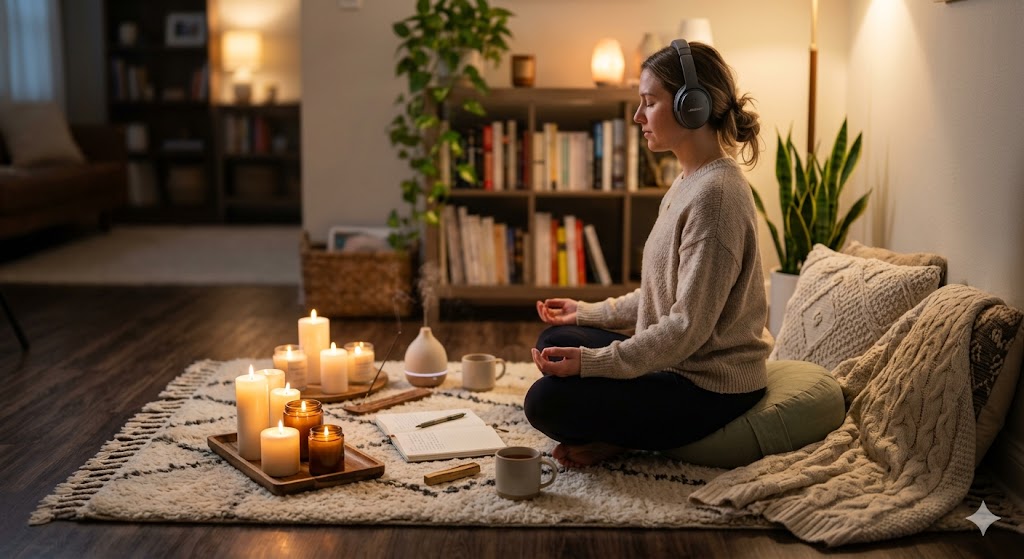
Beginners can try a sound bath at home using guided meditation recordings, calming speakers, and a quiet environment. Home sessions are often more accessible and affordable than studio visits.
First, choose a calm space with minimal distractions. Soft lighting, blankets, cushions, and comfortable headphones can improve the experience.
Next, select beginner-friendly sound healing content from platforms such as:
- YouTube sound bath sessions
- Meditation apps
- Spotify healing frequency playlists
- Wellness podcasts
- Guided meditation platforms
For example, many beginners start with 20-minute crystal bowl recordings before trying longer gong bath sessions.
What to Expect During Your First Session
Your first sound bath experience may feel deeply relaxing, emotional, sleepy, or mentally calming depending on your comfort level. Every participant reacts differently.
In addition, some people notice physical sensations such as warmth, tingling, or heaviness during immersive meditation experiences. Others simply feel relaxed and rested afterward.
What Is the Difference Between a Sound Bath and Traditional Meditation?
A sound bath uses immersive audio frequencies as the primary focus, while traditional meditation often emphasizes silence, breathing, or mental observation. Both approaches support mindfulness in different ways.
First, traditional meditation usually requires active mental focus. Sound bath meditation provides external sensory guidance through layered vibrations and tones.
Moreover, beginners who struggle with quiet meditation may find guided meditation with sound easier to sustain. This accessibility has helped sound baths grow within modern wellness culture.
| Feature | Sound Bath Meditation | Traditional Meditation |
|---|---|---|
| Main Focus | Sound and vibration | Breath or awareness |
| Sensory Experience | Immersive audio | Mostly internal focus |
| Beginner Accessibility | High | Moderate |
| Typical Setting | Studio or wellness space | Anywhere |
| Common Tools | Bowls, gongs, chimes | Cushion, timer |
What Are the Best Tools and Practical Applications for Sound Baths?
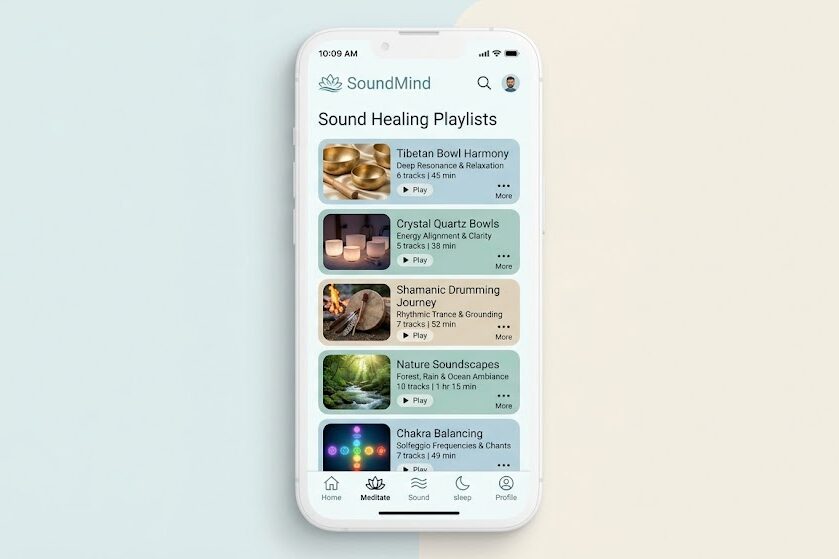
The best sound bath tools include singing bowls, meditation apps, quality speakers, and guided wellness programs. These tools help create immersive mindfulness experiences at home or in studios.
First, beginners often benefit from free meditation apps before investing in physical instruments. Apps like Calm and Insight Timer offer guided sound meditation sessions and sleep-focused audio tracks.
Moreover, crystal singing bowls remain one of the most popular sound therapy tools for home wellness routines. Prices vary widely depending on bowl size and material quality.
Practical Ways to Use Sound Baths Daily
Daily sound bath practices work best when integrated into consistent wellness routines. Small habits usually create more sustainable results than occasional intense sessions.
For example, you can use sound healing for:
- Morning mindfulness routines
- Post-work stress recovery
- Yoga and meditation routines
- Sleep preparation
- Journaling sessions
- Breathwork practice
What Should You Do After a Sound Bath Session?
After a sound bath session, you should focus on hydration, rest, reflection, and gentle mindfulness practices. Post-session recovery helps extend the calming effects.
First, many facilitators encourage journaling immediately after meditation experiences. Writing down emotions, sensations, or insights can deepen self-awareness.
Moreover, drinking water and avoiding overstimulation may help the body maintain a relaxed state. For example, some people prefer quiet walks or light stretching after sound healing sessions.
How Often Should You Do Sound Bath Meditation?
Most beginners benefit from sound bath meditation once or twice per week. Consistency matters more than session length.
In addition, shorter daily sound healing practices can also support mindfulness routines. Even 10 minutes of calming frequencies before bed may help improve relaxation habits.
Conclusion
Sound baths are immersive wellness experiences that combine meditation, sound frequencies, and mindful relaxation techniques. While scientific research on sound healing continues evolving, many people find these practices helpful for stress reduction, emotional grounding, and better sleep routines.
Ultimately, the best way to understand a sound bath is to experience one yourself. Whether you attend a studio session, explore online guided meditation with sound, or create a calming home practice, small consistent habits can support long-term mindfulness and emotional balance.
FAQ
What is a sound bath?
A sound bath is a relaxation and meditation experience where soothing sounds and vibrations from instruments are used to promote calmness and mindfulness.
What instruments are used in a sound bath?
Common instruments include singing bowls, gongs, chimes, tuning forks, and crystal bowls.
What are the benefits of a sound bath?
It may help reduce stress, encourage relaxation, improve focus, and support emotional well-being.
Can sound baths help with anxiety and stress?
Yes, many people use sound baths to calm the mind and reduce feelings of stress and anxiety.
Do you sleep during a sound bath?
Some people fall asleep because the sounds and vibrations can create a deeply relaxing state.
What should you do during a sound bath?
Most participants lie down comfortably, close their eyes, breathe deeply, and focus on the sounds.
How long does a sound bath session last?
Sessions usually last between 30 and 90 minutes depending on the experience.
Is a sound bath suitable for beginners?
Yes, sound baths are beginner-friendly and require no prior meditation experience.
Can sound baths improve mindfulness?
Yes, they may help improve present-moment awareness and mental relaxation.
Are sound baths safe for everyone?
Sound baths are generally safe, but people sensitive to loud sounds or vibrations should consult a professional before attending.
Author Section
Written by: Suraj — 5+ years blogging experience specializing in wellness, mindfulness, holistic health, and SEO-focused educational content.
Reviewed by: Editorial Wellness Review Team — Experts in meditation practices, wellness education, and evidence-based lifestyle content.
Disclaimer: This article was initially drafted using AI assistance. However, the content has undergone thorough revisions, editing, and fact-checking by human editors and subject matter experts to ensure accuracy.