
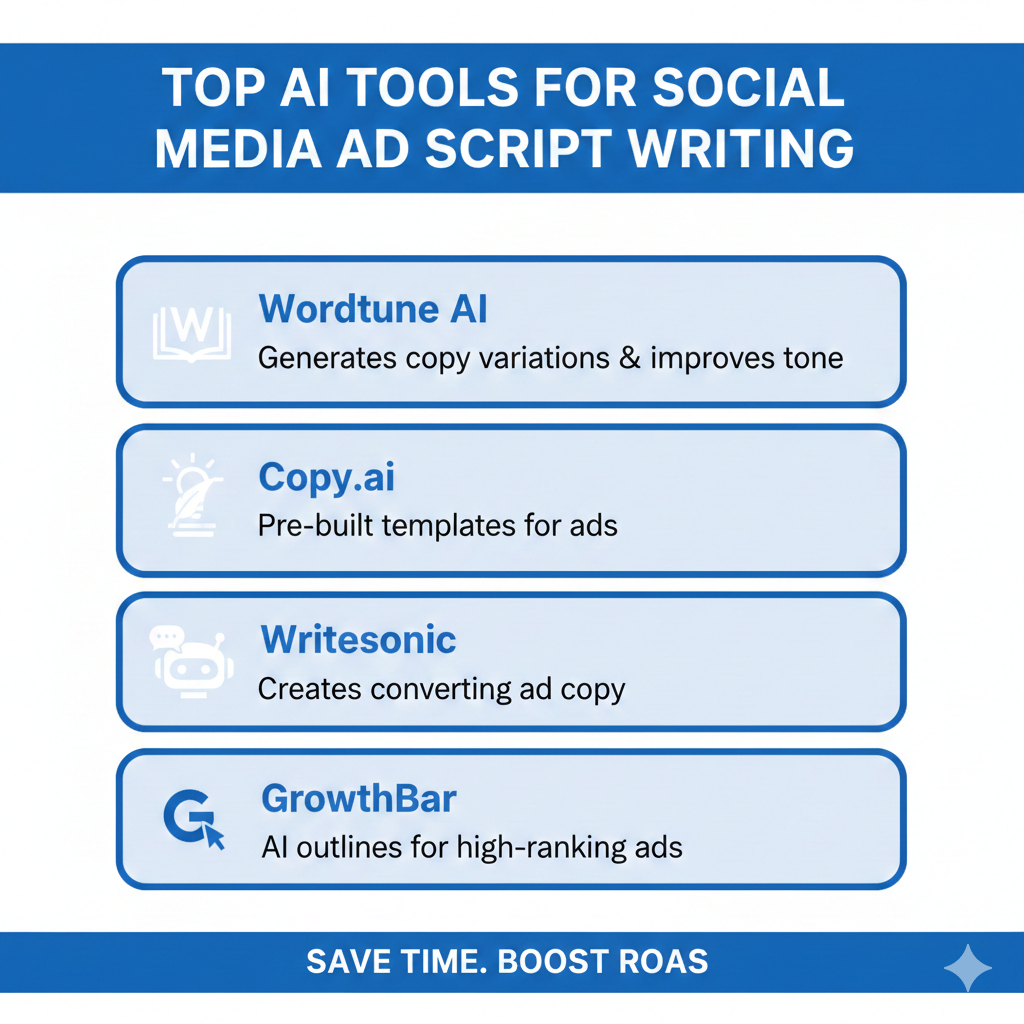
The digital advertising landscape has undergone a seismic shift with the emergence of artificial intelligence. Social Media Ad Script Writing has evolved from a time-consuming creative process into a streamlined, data-driven operation that combines human creativity with machine efficiency. In an era where brands need to produce dozens or even hundreds of ad variations to test and optimize campaigns, AI tools have become indispensable allies for marketers, copywriters, and social media managers.
Creating compelling ad scripts that capture attention, communicate value, and drive action within seconds is one of the most challenging aspects of digital marketing. Social media users scroll rapidly through their feeds, giving each piece of content only a fleeting moment to make an impact. This reality demands ad scripts that are sharp, engaging, and precisely targeted—qualities that AI tools are increasingly capable of delivering.
The integration of AI into Social Media Ad Script Writing doesn’t diminish the role of creative professionals; instead, it empowers them to work smarter and faster. These tools handle the heavy lifting of generating multiple variations, conducting competitive analysis, and optimizing language for specific platforms and audiences, while human marketers provide strategic direction, brand authenticity, and emotional intelligence that machines cannot replicate.
1. Understanding AI’s Role in Ad Script Creation
Before exploring specific tools, it’s essential to grasp how artificial intelligence transforms the ad writing process. AI excels at pattern recognition, analyzing thousands of successful ads to identify language structures, emotional triggers, and formatting patterns that consistently drive engagement and conversions.
Machine learning algorithms can process vast amounts of performance data, learning which word choices, sentence structures, and call-to-action phrases work best for different demographics, industries, and campaign objectives. Natural language processing enables AI to understand context, tone, and sentiment, ensuring that generated scripts align with brand voice while maximizing persuasive impact.
The power of AI in Social Media Ad Script Writing lies in its ability to generate numerous variations quickly, enabling extensive A/B testing that would be impossible with manual copywriting alone. A campaign that might take days to prepare can now be developed in hours, with multiple headline options, body copy variations, and CTA alternatives ready for testing.
AI tools also bring objectivity to the creative process. While human writers may fall in love with particular phrases or approaches, AI evaluates language purely based on performance potential. This data-driven perspective helps eliminate personal bias and focus exclusively on what drives results. The combination of human creativity for strategy and positioning with AI efficiency for execution and variation creates a powerful synergy.
2. ChatGPT and GPT-4 for Versatile Ad Script Creation
ChatGPT and its underlying GPT-4 architecture have revolutionized content creation across industries, and Social Media Ad Script Writing is no exception. This tool’s conversational interface and sophisticated language understanding make it accessible to marketers of all skill levels while offering depth that satisfies experienced professionals.
The platform excels at generating ad scripts across multiple formats and platforms. Whether you need a 15-second TikTok script, a carousel ad for Instagram, or a LinkedIn sponsored content piece, ChatGPT can adapt its output to match platform-specific requirements and best practices. Its ability to understand context means you can have an ongoing conversation, refining scripts iteratively until they perfectly match your vision.
One of ChatGPT’s greatest strengths for ad writing is its versatility in tone and style. You can instruct it to write scripts that are humorous, urgent, informative, emotional, or authoritative—and it will adjust its language accordingly. This tonal flexibility is crucial for brands that need to maintain consistent messaging while adapting presentation style for different audience segments or campaign objectives.
The tool’s training on massive text datasets means it understands persuasion principles, storytelling structures, and psychological triggers that drive action. When properly prompted with information about your target audience, unique value proposition, and desired outcome, ChatGPT can generate scripts that incorporate proven copywriting frameworks like AIDA (Attention, Interest, Desire, Action), PAS (Problem, Agitate, Solution), or the Four Ps (Promise, Picture, Proof, Push).
For maximum effectiveness with ChatGPT in Social Media Ad Script Writing, provide detailed prompts that include your product or service description, target audience characteristics, key benefits to emphasize, tone preferences, and any specific requirements like character limits or hashtag inclusions. The more context you provide, the more relevant and usable the generated scripts become.
3. Jasper AI: Purpose-Built for Marketing Copy
Jasper AI (formerly Jarvis) was specifically designed with marketers in mind, making it exceptionally well-suited for Social Media Ad Script Writing. The platform offers templates and workflows tailored to various advertising needs, from Facebook ad primary text to YouTube video scripts, streamlining the creation process significantly.
Jasper’s AIDA Framework template is particularly valuable for ad script creation. It guides you through providing product details, audience information, and tone preferences, then generates complete ad scripts that follow the attention-grabbing, interest-building, desire-creating, action-driving structure that has proven effective for decades. This structured approach ensures that even novice copywriters can produce professional-quality ad scripts.
The platform’s Boss Mode provides long-form content generation capabilities, ideal for longer ad scripts, video advertisements, or comprehensive campaign narratives. You can write opening sentences and let Jasper continue the narrative, or use commands to direct the AI toward specific outcomes. This collaborative writing approach combines human strategic thinking with AI efficiency and variation capability.
Jasper’s brand voice feature allows you to train the AI on your specific brand language, tone, and messaging style. By inputting examples of your existing content, you teach Jasper to replicate your unique voice across all generated scripts. This consistency is crucial for maintaining brand identity across campaigns while still enabling the rapid script generation that modern advertising demands.
The platform integrates with Surfer SEO for content optimization and includes Jasper Art for generating images to accompany your ad scripts. This comprehensive approach to ad creation—combining copy and visuals—makes it possible to develop complete ad concepts within a single platform, accelerating campaign development timelines significantly.
4. Copy.ai: Fast, Focused Ad Copy Generation
Copy.ai specializes in short-form marketing copy, making it ideal for Social Media Ad Script Writing where brevity and impact are paramount. The platform’s interface is remarkably intuitive, allowing users to generate multiple ad script variations within minutes, not hours.
The tool offers specific templates for various social media platforms and ad formats. Whether you need Facebook ad headlines, Instagram captions, LinkedIn ad copy, or Twitter promotional posts, Copy.ai provides specialized templates that incorporate platform-specific best practices and character limitations automatically.
Copy.ai’s “Freestyle” mode gives users maximum flexibility, allowing you to describe what you need in natural language and receive tailored outputs. This approach is particularly useful when you need ad scripts that don’t fit standard templates or when you’re experimenting with unconventional advertising approaches that require custom guidance.
The platform’s variation generation is exceptional. With a single click, Copy.ai can produce dozens of alternative versions of your ad script, each with different angles, hooks, or call-to-action phrases. This abundance of options makes A/B testing straightforward—you can quickly select the most promising candidates for testing rather than agonizing over crafting multiple variations manually.
Copy.ai also includes a tone detector and rewriter, enabling you to analyze existing ad scripts and generate versions with different emotional tones. If you have an ad script that works well but needs to be adapted for different audience segments or campaign phases, this functionality makes adaptation quick and consistent.
5. Rytr: Budget-Friendly AI Writing Assistant
Rytr democratizes access to AI-powered Social Media Ad Script Writing by offering powerful capabilities at accessible price points. For small businesses, startups, or individual marketers working with limited budgets, Rytr provides an entry point to AI-assisted ad creation without sacrificing quality.
The platform includes over 40 use cases and templates, with several specifically designed for social media advertising. From Facebook and Instagram ads to Google Ads descriptions, Rytr understands the nuances of different platforms and optimizes scripts accordingly. The tool supports content generation in over 30 languages, making it valuable for brands running international campaigns.
Rytr’s AIDA framework implementation helps structure persuasive ad scripts systematically. You input your product or service name, description, and audience details, and Rytr generates scripts that naturally progress from capturing attention to driving action. This framework-based approach ensures that generated scripts follow proven persuasion principles rather than producing random creative output.
The platform’s tone options are extensive, ranging from casual and conversational to formal and authoritative. This variety enables brands to maintain voice consistency across campaigns while adapting presentation style for different products, services, or audience segments. The ability to preview how the same message sounds in different tones helps identify the most effective approach for specific campaigns.
Rytr includes a built-in plagiarism checker, ensuring that generated ad scripts are original and won’t create copyright issues. This feature provides peace of mind, particularly important when creating large volumes of ad copy quickly. The platform also offers SEO analysis tools, helping ensure that scripts incorporate relevant keywords naturally.
6. Writesonic: AI with Built-In Optimization
Writesonic combines ad script generation with performance optimization features, making it particularly valuable for Social Media Ad Script Writing focused on measurable results. The platform doesn’t just create copy—it helps ensure that copy is optimized for maximum engagement and conversion potential.
The tool’s advertisement copy templates are comprehensive, covering Facebook ads, Google ads, LinkedIn ads, and more. Each template is designed with platform-specific characteristics in mind, automatically adjusting for optimal length, formatting, and language patterns that perform well on each network.
Writesonic’s Sonic Editor provides an AI-powered writing environment where you can create and refine ad scripts collaboratively with the AI. As you write, the platform offers suggestions, improvements, and alternatives, creating a real-time feedback loop that elevates copy quality. This interactive approach helps maintain creative flow while benefiting from AI insights.
The platform includes an AI article writer that can generate longer-form content for sponsored posts or native advertising campaigns. When your social media advertising strategy includes content marketing elements, Writesonic can produce complete articles that blend seamlessly into social feeds while subtly promoting your offerings.
Writesonic’s landing page generator complements its ad script capabilities perfectly. Since effective social media advertising requires alignment between ad messaging and landing page content, the ability to create both within the same platform ensures consistency and reduces the messaging disconnect that often hampers conversion rates.
7. Anyword: Data-Driven Copy Optimization
Anyword distinguishes itself in the Social Media Ad Script Writing space through its emphasis on predictive analytics and performance scoring. Rather than simply generating ad scripts, Anyword evaluates them, providing insights into their likely effectiveness before you invest budget in testing them.
The platform’s Predictive Performance Score analyzes generated ad scripts against a database of high-performing content, estimating how each variation is likely to perform with your target audience. This predictive capability helps prioritize which scripts to test first, potentially saving significant time and advertising budget by avoiding underperforming variations.
Anyword’s audience targeting features allow you to specify demographic characteristics, and the AI adjusts language, tone, and messaging emphasis accordingly. An ad script targeting millennials will use different language patterns and cultural references than one targeting baby boomers. This demographic customization happens automatically based on the audience parameters you set.
The platform provides detailed explanations for its recommendations, helping users understand why certain word choices, structures, or approaches score higher than alternatives. This educational component gradually improves users’ copywriting intuition, making them better marketers even when working without AI assistance.
Anyword integrates with major advertising platforms, allowing you to push generated scripts directly to Facebook Ads Manager, Google Ads, or other networks. This seamless workflow reduces the friction between creation and deployment, accelerating campaign launch timelines and reducing the risk of errors during manual transfers.
8. Headlime: Specialized in Headlines and Hooks
Great Social Media Ad Script Writing begins with hooks that stop scrolling thumbs in their tracks. Headlime specializes in creating compelling headlines and opening hooks that capture attention in crowded social feeds, making it an invaluable tool for the crucial first element of any ad script.
The platform uses advanced algorithms trained specifically on high-performing headlines across various industries and ad formats. It understands what makes headlines click-worthy, shareable, and memorable—whether that’s curiosity gaps, specific numbers, bold claims, or emotional triggers.
Headlime offers templates for different advertising objectives. Whether you’re running awareness campaigns, consideration ads, or conversion-focused promotions, the platform generates headlines optimized for each goal. An awareness headline focuses on broad appeal and intrigue, while a conversion headline emphasizes specific benefits and urgency.
The tool’s variation generation is particularly strong for headlines. Within seconds, you can generate dozens of headline alternatives, each taking a different angle or approach to the same core message. This variety enables extensive testing to identify which hooks resonate most powerfully with your specific audience.
Headlime also provides a headline analyzer that scores your existing or generated headlines based on multiple factors including emotional impact, clarity, word balance, and length. This analysis helps you understand not just whether a headline is good, but why it works and how it might be improved further.
9. AdCreative.ai: Visual and Copy Integration
While technically focused on creative design, AdCreative.ai deserves mention for its integrated approach to Social Media Ad Script Writing. The platform generates both visual elements and accompanying copy simultaneously, ensuring that text and imagery work together harmoniously for maximum impact.
The tool’s AI analyzes your product or service and target audience, then generates complete ad concepts including images, headlines, body copy, and call-to-action buttons. This holistic approach prevents the common problem of separately developed copy and creative that don’t quite mesh, creating disjointed ad experiences.
AdCreative.ai’s copy generation takes visual elements into account. If the generated image emphasizes a particular product feature or emotional appeal, the accompanying script reinforces that same element, creating cohesive messaging that feels intentional and professional rather than cobbled together from disparate sources.
The platform includes A/B testing features that let you compare different combinations of visuals and copy. Since ad performance depends on the interplay between image and text, this integrated testing approach provides more actionable insights than testing copy or creative separately.
AdCreative.ai learns from your campaign performance data when integrated with advertising platforms. As it receives feedback about which ad combinations drive the best results, its future generations become increasingly tailored to what works for your specific brand, audience, and objectives.
10. Phrasee: AI Language Optimization for Brand Safety
Phrasee approaches Social Media Ad Script Writing with a focus on brand safety and language optimization. The platform is particularly valuable for large brands that need to maintain strict voice consistency while generating high volumes of ad variations for testing.
The tool uses sophisticated natural language generation algorithms specifically trained on marketing language. Unlike general-purpose AI writing tools, Phrasee understands the unique requirements of advertising copy—it knows that ad scripts need to be persuasive, compliant with platform policies, and aligned with brand guidelines simultaneously.
Phrasee’s brand language model learns your specific vocabulary, tone, and messaging parameters, then generates ad scripts that feel authentically yours. The system understands which words and phrases are on-brand and which aren’t, automatically avoiding language that conflicts with your brand identity or values.
The platform excels at generating subject lines and short-form copy for email marketing and social media ads. Its algorithms optimize for engagement metrics like click-through rates and conversions, learning from campaign performance to continuously improve output quality.
Phrasee includes comprehensive testing and analysis features. The platform doesn’t just generate ad scripts—it helps you run controlled experiments, measures performance differences, and provides insights into why certain language choices outperform others. This closed feedback loop creates continuous improvement in both the AI’s performance and your understanding of what resonates with your audience.
11. Pencil: Creative Automation at Scale
Pencil represents the next evolution in Social Media Ad Script Writing—complete creative automation that combines AI-generated copy with dynamic creative optimization. The platform is designed for brands that need to produce and test hundreds or thousands of ad variations.
The tool generates not just scripts but complete ad concepts, including multiple copy variations, creative elements, and call-to-action options. This comprehensive approach enables truly scalable ad creation, where a single product or campaign brief can spawn dozens of fully realized ad concepts ready for testing.
Pencil’s AI learns from your brand’s existing ad creatives and performance data. By analyzing which combinations of messaging, tone, and creative elements have historically driven results, the platform generates new variations that build on proven successes while introducing novel approaches for testing.
The platform includes prediction algorithms that estimate how each generated ad will perform before you spend budget testing it. While no predictive model is perfect, these estimates help prioritize which variations to test first, potentially reducing the time and cost required to identify winning ads.
Pencil integrates with major advertising platforms, allowing seamless campaign deployment. You can generate ads within Pencil, select your preferred variations, and push them directly to Facebook, Instagram, TikTok, or other networks without manual recreation or formatting adjustments.
12. Implementing AI Tools Effectively
Successfully leveraging AI for Social Media Ad Script Writing requires more than just selecting the right tools—it demands strategic implementation that combines technological capabilities with human expertise and oversight.
Start by clearly defining your brand voice, messaging pillars, and creative guidelines. These foundational elements should guide how you prompt and configure AI tools. Most platforms allow customization through training data, example inputs, or parameter settings. The time invested in proper setup pays dividends through more relevant, on-brand outputs.
Develop a workflow that integrates AI generation with human review and refinement. Use AI to generate initial drafts and variations quickly, then have experienced copywriters review, edit, and enhance the output. The goal is to leverage AI’s speed and variation capability while preserving the authentic human touch that creates emotional connection.
Create a testing framework that treats AI-generated scripts as hypotheses to be validated, not finished products to be deployed blindly. Generate multiple variations, prioritize the most promising candidates, and run controlled tests to identify what actually drives results with your specific audience.
Build a feedback loop where performance data informs future AI usage. Track which types of AI-generated scripts perform best, which prompting approaches yield the highest-quality outputs, and which tools excel for specific use cases. This continuous learning process maximizes the value of your AI tool investments over time.
Train your team to work effectively with AI tools. The marketers who thrive in the AI era are those who understand how to guide, refine, and optimize AI outputs rather than those who view the technology as either magical or threatening. Investing in team capabilities ensures you extract maximum value from these powerful tools.
Best Practices for AI-Powered Ad Scripts
Creating effective ad scripts with AI requires understanding both the technology’s capabilities and the timeless principles of persuasive communication. Here are essential practices for maximizing results from Social Media Ad Script Writing with AI assistance.
Always provide context-rich prompts. The more information you give the AI about your product, audience, objectives, and brand voice, the more relevant and effective its outputs will be. Include details about pain points you address, unique value propositions, competitive differentiators, and the specific action you want audiences to take.
Generate multiple variations, not just one “perfect” script. AI excels at creating diversity—take advantage of this by producing numerous options that explore different angles, hooks, and approaches. This variety enables robust testing and increases the likelihood of discovering unexpected winners.
Customize outputs for each platform. Social media networks have distinct user behaviors, content formats, and engagement patterns. Scripts that work on LinkedIn often fail on TikTok, and vice versa. Use AI tools’ platform-specific features or manually adjust outputs to align with each network’s unique characteristics.
Balance emotion and information. The best ad scripts connect emotionally while providing substantive information about value and benefits. Ensure AI-generated scripts don’t sacrifice one for the other—they should feel human and authentic while clearly communicating why someone should care about your offering.
Test systematically and learn continuously. Every campaign provides data about what resonates with your audience. Analyze performance patterns, identify successful elements, and use these insights to refine your AI prompting and selection processes for future campaigns.
The Future of AI in Ad Script Writing
The trajectory of AI development suggests that Social Media Ad Script Writing will become increasingly sophisticated, personalized, and effective. Emerging capabilities point toward a future where AI handles not just creation but comprehensive campaign management.
Hyper-personalization at scale is becoming reality. Advanced AI systems will generate unique ad scripts for individual users based on their behavioral data, preferences, and position in the customer journey. Instead of a few variations tested across broad audiences, brands will deploy thousands of micro-targeted scripts, each optimized for specific user segments or even individuals.
Multimodal AI that seamlessly integrates text, image, video, and audio will enable comprehensive creative development within single platforms. Rather than generating scripts separately from creative elements, future tools will produce complete, cohesive ad experiences where every element reinforces the others.
Real-time optimization will become standard. AI systems will monitor campaign performance continuously, automatically generating and testing new script variations as they identify opportunities for improvement. This dynamic optimization will happen faster than humanly possible, maximizing performance throughout campaign lifecycles.
Voice and conversational commerce will drive new ad formats requiring different types of scripts. AI tools will need to generate conversational ad experiences for voice assistants, AR/VR environments, and other emerging channels where traditional ad formats don’t translate directly.
Conclusion
The revolution in Social Media Ad Script Writing powered by AI tools has fundamentally transformed how brands create advertising content. These technologies offer unprecedented capabilities for generating diverse, targeted, and effective ad scripts at scale, enabling testing and optimization that would be impossible through manual efforts alone.
However, the most successful approach doesn’t treat AI as a replacement for human creativity but as a powerful collaborator. The best ad scripts emerge from partnerships where AI handles speed, variation, and data processing while humans provide strategic direction, emotional intelligence, and brand authenticity.
The tools discussed in this guide—from versatile platforms like ChatGPT to specialized solutions like Phrasee—each offer unique strengths. The right choice depends on your specific needs, budget, existing workflows, and team capabilities. Many successful marketers use multiple tools, selecting the best option for each particular use case or campaign requirement.
As you integrate AI into your Social Media Ad Script Writing process, remember that technology serves strategy, not the other way around. Start with clear objectives, understand your audience deeply, articulate your unique value clearly, and then leverage AI to execute efficiently and test comprehensively.
The brands that will dominate social media advertising in the coming years won’t necessarily be those with the biggest budgets or the most sophisticated tools—they’ll be those that most effectively combine AI capabilities with human insight to create ad scripts that genuinely resonate with audiences. The technology is powerful, but its value ultimately depends on the wisdom, creativity, and strategic thinking of the people using it.
Also read this:
Best AI Tools for Brand Storytelling & Messaging
Top AI Tools for Research Paper Summaries: Accelerate Your Academic Research in 2025
Best AI Tools for Lip-Syncing Multilingual Videos: Break Language Barriers in 2025