
In our increasingly connected global marketplace, video content has become the dominant form of communication. However, language barriers continue to limit the reach and impact of video content. Enter lip-syncing multilingual videos technology – a revolutionary AI-powered solution that not only translates spoken content but also adjusts lip movements to match the translated audio, creating a seamless viewing experience in any language.
Lip-syncing multilingual videos represents one of the most impressive achievements in artificial intelligence, combining speech recognition, natural language processing, computer vision, and generative AI to create videos that appear as though they were originally filmed in the target language. This technology is transforming how businesses, content creators, educators, and entertainers reach global audiences.
Whether you’re a content creator looking to expand your international reach, a business seeking to localize marketing materials, or an educator wanting to make learning accessible across language barriers, this comprehensive guide will introduce you to the best AI tools for creating lip-syncing multilingual videos and help you choose the right solution for your needs.
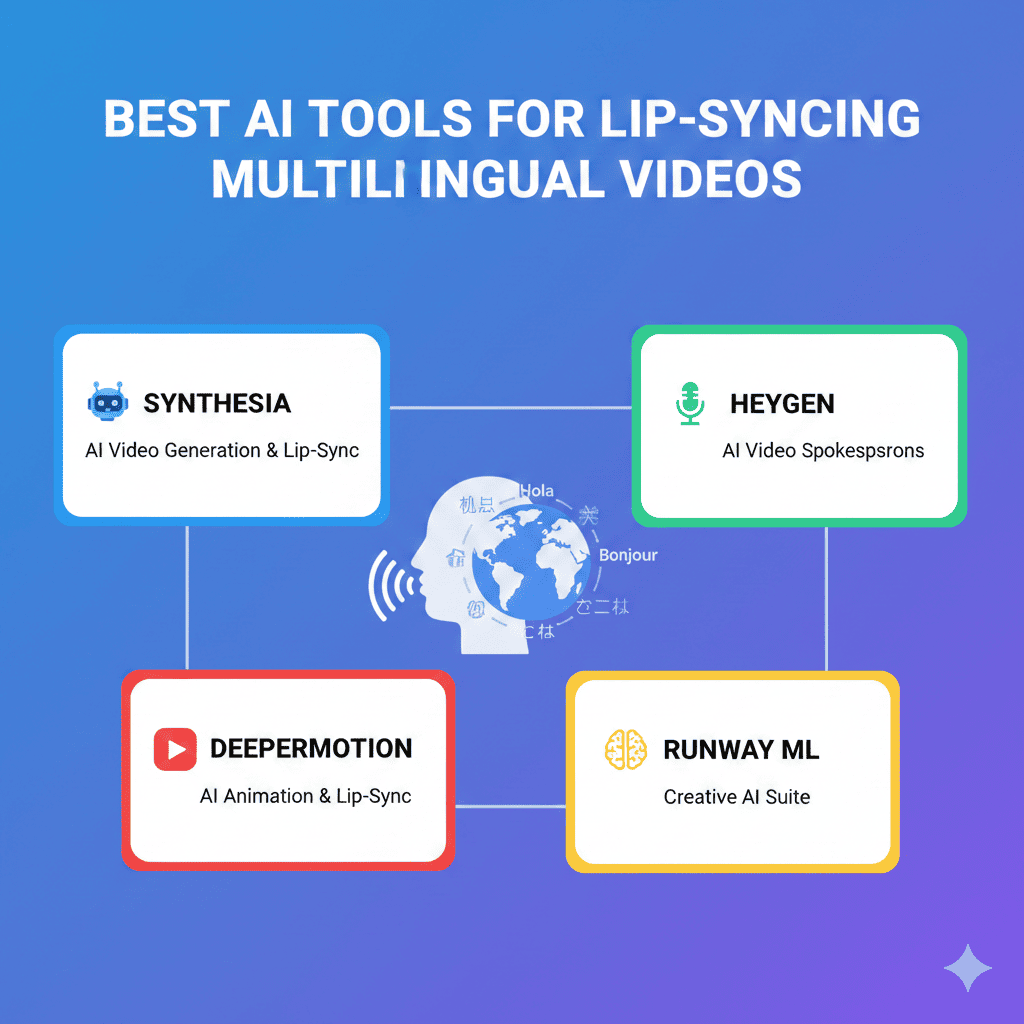
1. Synthesia: The Industry Leader in AI Video Localization
Synthesia has established itself as one of the premier platforms for creating lip-syncing multilingual videos with remarkable ease and professional quality. The platform combines AI avatars with advanced lip-sync technology to produce videos in over 120 languages.
Core Features and Capabilities:
Synthesia offers an intuitive interface where users can create videos by simply typing text. The platform’s AI avatars deliver your message with synchronized lip movements, natural gestures, and appropriate facial expressions. The technology supports dozens of pre-designed avatars with diverse appearances, ages, and ethnicities, ensuring representation across global audiences.
What sets Synthesia apart is its ability to maintain consistent voice characteristics across languages while perfectly syncing lip movements. The platform’s neural networks have been trained on millions of hours of video data, enabling it to predict accurate mouth shapes for different phonemes across various languages.
Business Applications:
Major corporations use Synthesia for creating training materials, product demonstrations, and internal communications in multiple languages. The platform has proven particularly valuable for companies with global workforces, eliminating the need for multiple recording sessions with different presenters or voice actors.
The cost savings compared to traditional video production are substantial. Instead of hiring translators, voice actors, and video production teams for each language, businesses can generate lip-syncing multilingual videos in minutes at a fraction of the cost. This efficiency allows for more frequent content updates and faster response to market demands.
Quality and Customization:
Synthesia continuously improves its AI models, resulting in increasingly natural-looking avatars and more accurate lip synchronization. The platform also offers custom avatar creation, allowing businesses to create digital twins of their actual employees or brand ambassadors, adding authenticity to localized content.
2. HeyGen: Advanced Lip-Sync Translation Technology
HeyGen has emerged as a powerful competitor in the lip-syncing multilingual videos space, offering sophisticated video translation capabilities that preserve the original speaker’s appearance while adapting lip movements to match translated audio.
Revolutionary Video Translation:
Unlike avatar-based systems, HeyGen works with existing video footage of real people. The platform analyzes the original video, extracts the speech, translates it to the target language, and then regenerates the video with lip movements perfectly synchronized to the new audio. This approach maintains the authenticity and personality of the original speaker while making content accessible across languages.
The technology is remarkably sophisticated, accounting for facial expressions, head movements, and even subtle micro-expressions that occur during speech. This attention to detail creates lip-syncing multilingual videos that appear genuinely natural rather than artificially generated.
Voice Cloning Technology:
One of HeyGen’s standout features is its voice cloning capability. The system can replicate the original speaker’s voice characteristics in different languages, maintaining tonal qualities, speaking pace, and emotional inflection. This creates a more authentic experience for viewers, as the translated content retains the speaker’s unique vocal identity.
The platform supports over 40 languages and can handle various accents and dialects within those languages. This linguistic flexibility makes it ideal for global content distribution across diverse markets.
Use Cases and Success Stories:
Content creators, educational institutions, and marketing agencies have adopted HeyGen for producing lip-syncing multilingual videos at scale. YouTube creators use it to expand their audience reach without creating separate videos for each language. Educational platforms leverage it to make lectures accessible to students worldwide, and marketing teams use it to localize advertising campaigns efficiently.
3. Rask AI: Comprehensive Video Localization Platform
Rask AI offers an end-to-end solution for creating lip-syncing multilingual videos, combining translation, voice-over generation, and lip-sync technology in a unified platform designed for professional content creators and businesses.
Multi-Feature Platform:
Rask AI goes beyond simple lip-syncing by offering subtitle generation, voice cloning, speaker detection, and automated video editing capabilities. This comprehensive approach streamlines the entire video localization workflow, allowing users to upload a video and receive a fully localized version with synchronized lips, translated audio, and matching subtitles.
The platform’s AI can distinguish between multiple speakers in a video and apply appropriate voice characteristics to each, maintaining conversation dynamics in translated versions. This feature is particularly valuable for interview content, podcasts, and multi-speaker educational videos.
Quality and Accuracy:
Rask AI emphasizes translation accuracy, using context-aware AI models that understand idiomatic expressions and cultural nuances. The system doesn’t just translate words literally but adapts messages to resonate with target audiences while maintaining the original meaning and intent.
The lip-sync technology accounts for the natural variations in speaking pace between languages. Some languages require more syllables to express the same concept, and Rask AI adjusts timing intelligently to create natural-looking results without awkward pauses or rushed speech.
Industry Applications:
Media companies use Rask AI for localizing news content, documentary films, and entertainment programming. The platform has proven particularly effective for corporate communications, enabling multinational companies to deliver consistent messaging across global teams while respecting linguistic and cultural differences.
4. Papercup: AI-Powered Video Translation for Media
Papercup specializes in high-quality lip-syncing multilingual videos for media companies, content creators, and enterprises requiring broadcast-quality localization. The platform combines AI technology with human oversight to ensure exceptional results.
Hybrid AI-Human Approach:
What distinguishes Papercup is its unique workflow that blends automated AI translation with human quality assurance. After the AI generates the initial translation and voice-over, professional linguists review and refine the content, ensuring cultural appropriateness and linguistic accuracy. This hybrid approach delivers the efficiency of AI with the quality assurance of human expertise.
The platform’s voice synthesis technology produces remarkably natural-sounding voices with appropriate emotional inflection and tonal variation. The voices avoid the robotic quality often associated with AI-generated speech, making lip-syncing multilingual videos sound authentic and engaging.
Enterprise-Grade Features:
Papercup offers dedicated account management, custom voice creation, and integration capabilities with existing content management systems. The platform can handle large-scale video libraries, making it suitable for media companies with extensive content catalogs requiring localization.
Security and confidentiality are paramount, with enterprise-grade data protection ensuring sensitive content remains secure throughout the translation and production process. This makes Papercup suitable for organizations handling proprietary or confidential video materials.
Success Metrics:
Clients using Papercup report significant increases in international viewership and engagement. Content that might have received limited attention when available only in one language sees viewership multiply when made available in multiple languages with proper lip-syncing multilingual videos technology.
5. Deepdub: Hollywood-Quality Dubbing Technology
Deepdub brings entertainment industry expertise to lip-syncing multilingual videos, offering technology designed to meet the exacting standards of film and television production.
Entertainment-Grade Quality:
Deepdub’s technology was developed specifically for entertainment content, where lip-sync accuracy and emotional authenticity are crucial. The platform uses advanced neural networks trained on professional dubbing performances, enabling it to capture subtle emotional nuances and deliver performances that match the original actors’ intentions.
The system accounts for visual cues beyond just lip movements, including eyebrow raises, head nods, and other non-verbal communication elements that contribute to authentic performances. This holistic approach creates lip-syncing multilingual videos that maintain the storytelling impact of original content.
Collaborative Workflow:
Deepdub offers tools for directors, translators, and voice actors to collaborate on localized productions. The platform includes review and approval workflows, annotation capabilities, and version control, facilitating professional-grade localization projects that meet broadcast standards.
The technology integrates with standard video production pipelines, making it accessible to production companies already using professional editing and finishing tools. This seamless integration reduces friction in adopting AI-powered localization technology.
Market Impact:
Streaming platforms and production studios use Deepdub to localize content for global distribution. The technology has proven particularly effective for serialized content, where maintaining character voice consistency across episodes and seasons is essential for audience engagement.
6. Fliki: Accessible AI Video Creation and Localization
Fliki makes lip-syncing multilingual videos accessible to individual creators, small businesses, and organizations with limited budgets. The platform offers an intuitive interface with powerful AI capabilities at competitive pricing.
User-Friendly Design:
Fliki emphasizes simplicity without sacrificing functionality. Users can create videos from text scripts, blog posts, or presentations, with the AI automatically generating visuals, voice-overs, and lip-synced avatars. The platform includes a library of stock media, music, and customizable templates that accelerate video production.
The multilingual capabilities support over 75 languages, with natural-sounding text-to-speech voices and accurate lip synchronization. The platform continuously expands its language offerings and improves voice quality based on user feedback and technological advances.
Content Repurposing:
Fliki excels at repurposing existing content into video format. Bloggers can transform written articles into engaging videos, educators can convert lesson plans into visual presentations, and marketers can quickly create social media video content in multiple languages. This versatility makes it a valuable tool for content marketing strategies.
The platform’s AI can automatically identify key points in text content and suggest appropriate visuals, significantly reducing the time required to create professional-looking videos. This automation is particularly beneficial for creating lip-syncing multilingual videos at scale for social media campaigns.
Affordability and Scale:
Fliki’s pricing structure makes professional video localization accessible to creators who previously couldn’t afford traditional dubbing services. The subscription model allows unlimited video creation within plan limits, enabling creators to test different languages and markets without prohibitive costs.
7. Colossyan: Enterprise Learning and Development Focus
Colossyan specializes in creating lip-syncing multilingual videos for corporate training, education, and internal communications. The platform is designed specifically for learning and development professionals seeking to create engaging, accessible training materials.
Learning-Optimized Features:
Colossyan includes features specifically designed for educational content, such as interactive elements, quizzes, and branching scenarios. The platform’s AI avatars can be customized to represent instructors, subject matter experts, or company representatives, adding a human element to e-learning courses.
The multilingual capabilities ensure training materials can be deployed globally without language barriers. Companies with diverse workforces can create a single source training module and automatically generate versions in all required languages, ensuring consistent messaging across locations while respecting linguistic differences.
Compliance and Accessibility:
Colossyan emphasizes compliance with accessibility standards, automatically generating captions and transcripts alongside lip-syncing multilingual videos. This ensures content is accessible to learners with hearing impairments and supports various learning preferences.
The platform includes analytics tracking learner engagement and completion rates across different language versions, providing insights into content effectiveness and identifying areas for improvement.
Rapid Content Updates:
Training materials often require frequent updates to reflect policy changes, new procedures, or updated information. Colossyan’s text-based video creation enables quick edits without requiring complete re-recording, making it easy to keep training content current across all languages.
8. D-ID: Creative Studio for AI Video Generation
D-ID offers a creative studio platform for producing lip-syncing multilingual videos with emphasis on customization, creative control, and integration capabilities. The platform serves creative professionals, agencies, and developers building video applications.
Creative Flexibility:
D-ID provides extensive customization options for avatars, backgrounds, and video styles. Users can upload custom images to create talking head videos from photographs, enabling personalized video messages, historical figure recreations, or brand-specific characters.
The platform’s API allows developers to integrate lip-syncing multilingual videos capabilities into existing applications, websites, or services. This programmatic access enables automated video generation at scale for applications like personalized marketing, customer service, or educational platforms.
Multi-Modal AI Integration:
D-ID’s technology integrates with various AI services, including large language models for script generation and image generation tools for creating custom avatars and backgrounds. This ecosystem approach enables sophisticated automated workflows where AI generates both content and its video presentation.
The platform supports real-time video generation, opening possibilities for interactive applications where AI characters respond to user input with synchronized lip movements and appropriate expressions.
Privacy and Ethical Considerations:
D-ID maintains strong ethical guidelines regarding the use of its technology, implementing safeguards against misuse while enabling legitimate creative and business applications. The platform includes features to detect and prevent deepfake abuse, balancing innovation with responsibility.
9. Elai.io: Streamlined Video Production Platform
Elai.io focuses on simplifying lip-syncing multilingual videos production for marketing teams, content creators, and businesses seeking efficient video content creation without technical complexity.
Template-Based Production:
Elai.io offers an extensive library of video templates optimized for different use cases including product demonstrations, explainer videos, social media content, and corporate presentations. Users select a template, customize text and branding elements, and generate videos in multiple languages with synchronized lip movements.
The platform’s AI automatically adapts layouts and timing for different languages, accounting for text length variations and ensuring visual elements remain properly balanced regardless of language. This automation eliminates the need for manual adjustment when localizing content.
Voice and Avatar Options:
Elai.io provides diverse avatar options representing different ages, ethnicities, and professional contexts. The voice library includes options with various accents and speaking styles, allowing creators to match voices to target audiences and brand personalities.
Custom avatar creation enables businesses to maintain brand consistency by using digital representatives that align with company image and values. These custom avatars can be reused across videos, creating a recognizable presence in localized content.
Integration and Workflow:
The platform integrates with popular marketing and communication tools, enabling automated video creation workflows triggered by content updates, calendar events, or user actions. This automation capability makes it practical to maintain fresh video content across multiple languages without manual intervention.
10. Translate.Video: Specialized Video Translation Service
Translate.Video focuses exclusively on video translation and localization, offering sophisticated lip-syncing multilingual videos capabilities combined with professional subtitle generation and voice-over services.
Comprehensive Translation Features:
The platform handles video translation end-to-end, including transcription, translation, voice-over generation, lip-syncing, and subtitle creation. Users upload videos and receive fully localized versions ready for distribution, with minimal configuration required.
Translate.Video supports over 75 languages and employs context-aware translation that understands domain-specific terminology. The system can be trained on custom glossaries and style guides, ensuring translations align with brand voice and industry-specific language requirements.
Quality Control Tools:
The platform includes built-in tools for reviewing and refining translations before final video generation. Users can edit transcripts, adjust translations, and fine-tune timing to ensure perfect synchronization between audio, visuals, and subtitles in lip-syncing multilingual videos.
Collaboration features enable teams to work together on localization projects, with role-based access controls and approval workflows that maintain quality standards while accelerating production timelines.
Distribution Support:
Translate.Video generates videos in formats optimized for different platforms including YouTube, social media, websites, and learning management systems. The platform can automatically create multiple versions simultaneously, streamlining multi-platform content distribution.
11. The Technology Behind Lip-Syncing Multilingual Videos
Understanding the technical foundations of lip-syncing multilingual videos helps appreciate both the capabilities and limitations of current technology.
Speech Recognition and Translation:
The process begins with automatic speech recognition (ASR) that transcribes the original audio into text. Advanced ASR systems can handle multiple speakers, accents, and background noise, extracting accurate transcripts from challenging audio conditions.
Neural machine translation then converts the transcript into target languages. Modern translation AI uses transformer models trained on billions of text examples, enabling accurate translations that preserve meaning and context rather than performing word-for-word substitutions.
Voice Synthesis:
Text-to-speech (TTS) technology generates audio in the target language. Modern neural TTS systems produce remarkably natural-sounding voices with appropriate prosody, emotion, and speaking pace. Some systems can clone voice characteristics from the original speaker, maintaining vocal identity across languages.
Visual Synthesis:
The most challenging aspect of lip-syncing multilingual videos is modifying facial movements to match translated audio. Computer vision AI analyzes facial features and movements, while generative models create new mouth shapes and positions corresponding to the new phonemes in the translated speech.
Advanced systems consider factors like facial anatomy, lighting, camera angles, and natural head movements to create convincing results. The AI must maintain visual consistency across frames while adapting lip movements, requiring sophisticated temporal modeling.
12. Benefits and Applications of Lip-Syncing Multilingual Videos
Lip-syncing multilingual videos technology offers transformative benefits across numerous industries and use cases.
Global Content Distribution:
Content creators can reach international audiences without geographical or linguistic limitations. A YouTube creator can produce content once and distribute it globally in dozens of languages, multiplying potential viewership and monetization opportunities.
Entertainment companies can localize films, series, and documentaries more efficiently than traditional dubbing, reducing costs and accelerating time-to-market for international releases. This efficiency enables smaller productions to compete globally alongside major studio releases.
Corporate Communications:
Multinational corporations use lip-syncing multilingual videos for internal communications, training programs, and corporate announcements. CEO messages, policy updates, and training modules can be quickly localized, ensuring all employees receive consistent information regardless of location or language.
The technology eliminates delays in information distribution that occurred when content required sequential translation and production for each language. Global teams can now receive simultaneous communications, improving organizational cohesion and efficiency.
Education and E-Learning:
Educational institutions leverage this technology to make courses accessible to international students. Lectures, tutorials, and educational videos can be automatically localized, democratizing access to quality education regardless of language barriers.
Online learning platforms use lip-syncing multilingual videos to expand their market reach without proportionally increasing content production costs. This scalability makes specialized knowledge accessible to learners worldwide.
13. Best Practices for Creating Lip-Syncing Multilingual Videos
To achieve optimal results when creating lip-syncing multilingual videos, consider these professional recommendations.
Start with Quality Source Material:
The quality of localized videos depends heavily on source material. Record original videos with clear audio, good lighting, and minimal background noise. Well-produced source content provides AI systems with better data for generating accurate translations and lip movements.
Speak clearly and at a moderate pace in original recordings. Extremely fast speech or heavy accents can challenge both transcription and translation systems, potentially affecting final quality.
Consider Cultural Context:
Effective localization goes beyond literal translation. Consider cultural references, humor, and examples that may not translate well across cultures. Some platforms offer tools for adapting content culturally, not just linguistically, ensuring messages resonate with target audiences.
Visual elements including graphics, text overlays, and demonstrations should also be reviewed for cultural appropriateness and relevance to local audiences.
Test and Iterate:
Review localized videos before distribution, ideally with native speakers of target languages. While AI technology has advanced significantly, human review ensures cultural appropriateness, linguistic accuracy, and natural delivery.
Gather feedback from international audiences and use insights to refine future lip-syncing multilingual videos. Different markets may respond differently to various styles, pacing, or presentation approaches.
Maintain Consistency:
When creating series or ongoing content, maintain consistency in voices, terminology, and style across videos and languages. Many platforms offer features to save preferences and settings, ensuring uniformity across productions.
Develop style guides for translated content specifying preferred terminology, tone, and formatting. This documentation ensures consistency even when different team members work on localization projects.
Conclusion: Embracing the Future of Global Video Communication
Lip-syncing multilingual videos technology represents a quantum leap forward in global communication. What once required significant budgets, time, and coordination can now be accomplished quickly and affordably using AI-powered tools. The technology continues advancing rapidly, with improvements in naturalness, accuracy, and ease of use appearing regularly.
For content creators, this technology opens unprecedented opportunities for global audience development. Businesses can communicate more effectively with international customers and employees. Educators can share knowledge across language barriers, and entertainers can build worldwide fan bases.
The tools highlighted in this guide represent the current state of the art in lip-syncing multilingual videos, each offering unique strengths suited to different needs and budgets. Whether you’re a solo creator experimenting with international content or an enterprise requiring professional-grade localization at scale, suitable solutions exist to support your goals.
Also read this:
Best AI Tools for Cinematic AI Slow-Motion Effects: Master Professional Slow-Mo in 2025
Top AI Tools for Voice Acting & Dubbing: Transform Audio Production in 2025
Best AI Tools for Trend-Based Clothing Recommendations: Transform Fashion Retail in 2025