
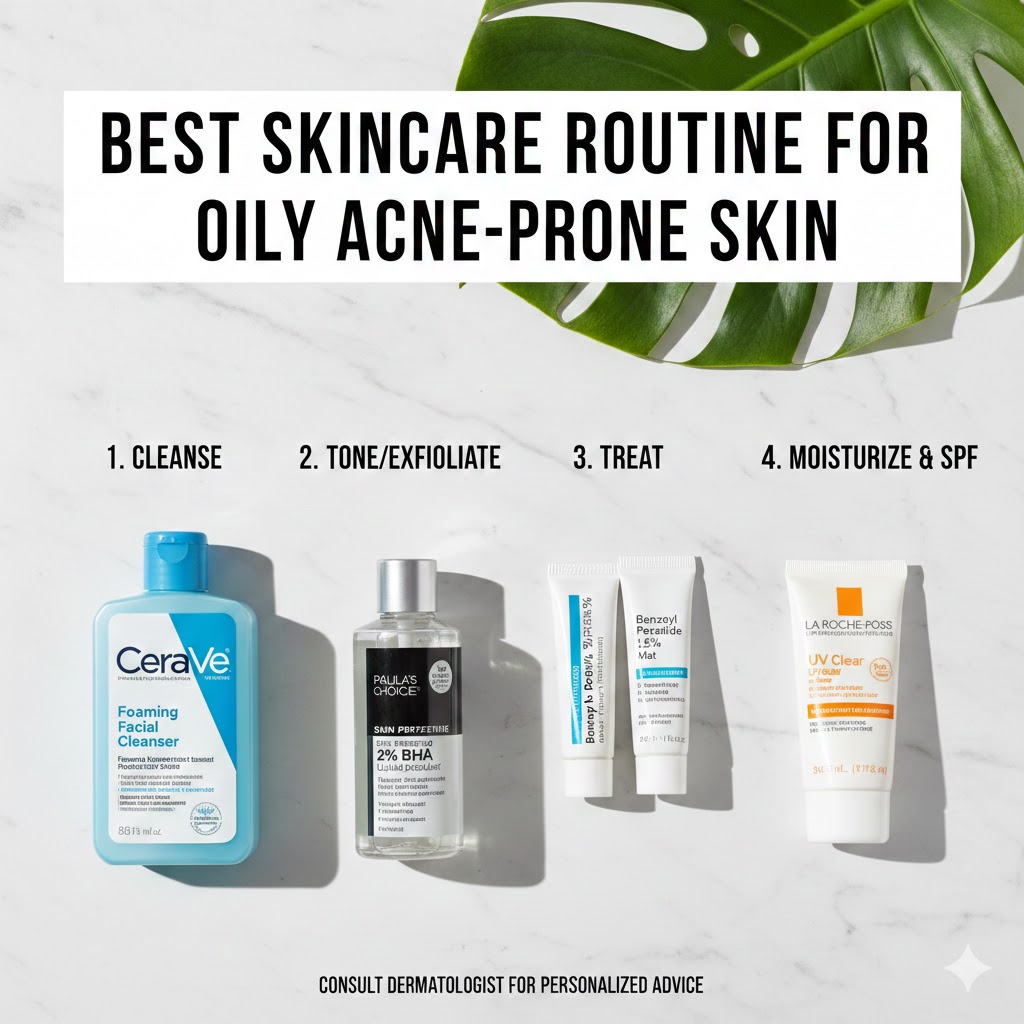
Oily, acne-prone skin can feel like a constant balancing act. Use products that are too harsh, and your skin overproduces oil. Use products that are too heavy, and breakouts appear overnight. The solution isn’t doing more—it’s doing the right things consistently.
A well-designed Skincare Routine for Oily Acne-Prone Skin focuses on oil control without stripping, acne treatment without irritation, and barrier support without clogging pores.
This guide breaks down a complete, dermatologist-aligned skincare routine for oily acne-prone skin, explains why each step matters, and helps you avoid the most common mistakes.
1. Understanding Oily Acne-Prone Skin
Before choosing products, it’s important to understand what’s happening under the surface.
1.1 Why Oily Skin Gets Acne
Oily acne-prone skin is usually caused by:
- Overactive sebaceous glands
- Clogged pores
- Acne-causing bacteria
- Inflammation
The goal of a Skincare Routine for Oily Acne-Prone Skin is not to eliminate oil—but to regulate it.
2. Morning Skincare Routine for Oily Acne-Prone Skin
Morning skincare should control oil, prevent breakouts, and protect the skin throughout the day.
2.1 Gentle Gel Cleanser
Use a gel-based or foaming cleanser that:
- Removes excess oil
- Clears dirt and sweat
- Doesn’t leave skin tight
Avoid harsh cleansers—they trigger more oil production.
2.2 Oil-Control Serum (Niacinamide or BHA)
A lightweight serum helps:
- Regulate oil production
- Minimize pores
- Calm inflammation
Niacinamide (2–5%) is ideal for daily use in a Skincare Routine for Oily Acne-Prone Skin.
2.3 Lightweight, Oil-Free Moisturizer
Skipping moisturizer makes acne worse.
Choose one that is:
- Gel-based or water-based
- Non-comedogenic
- Fast-absorbing
Healthy hydration keeps oil glands balanced.
2.4 Sunscreen (Non-Negotiable)
Daily sunscreen prevents:
- Post-acne dark spots
- Inflammation
- Skin barrier damage
Use:
- Oil-free
- Matte or gel sunscreen
- SPF 30 or higher
Sunscreen is essential—even for oily skin.
3. Night Skincare Routine for Oily Acne-Prone Skin
Nighttime is when skin repairs itself.
3.1 Cleanse Thoroughly
If you wear sunscreen or makeup:
- Use a gentle first cleanse (micellar water or light cleansing gel)
- Follow with your regular cleanser
This prevents pore congestion.
3.2 Treatment Step (Retinoid or Salicylic Acid)
This is the most important step.
Use one, not both at the same time:
- Retinoids for long-term acne control and texture
- Salicylic acid for clogged pores and active breakouts
Start 2–3 times per week to avoid irritation.
3.3 Barrier-Friendly Moisturizer
At night, hydration supports healing.
Look for:
- Ceramides
- Panthenol
- Lightweight textures
A strong barrier improves acne tolerance.
4. Weekly Add-Ons (Use Sparingly)
More products don’t mean better skin.
4.1 Clay Mask (1x per week)
Helps absorb excess oil and clean pores.
4.2 Gentle Chemical Exfoliation (1x per week)
If not already using actives daily, mild exfoliation helps prevent buildup.
Avoid physical scrubs—they worsen inflammation.
5. What to Avoid If You Have Oily Acne-Prone Skin
Many routines fail because of overcorrection.
5.1 Common Mistakes
- Over-cleansing
- Using alcohol-heavy toners
- Skipping moisturizer
- Layering too many actives
A successful Skincare Routine for Oily Acne-Prone Skin is calm, consistent, and minimal.
6. How Long Before You See Results?
Acne care takes patience.
6.1 Realistic Timeline
- 2–4 weeks: Reduced oil and fewer new breakouts
- 6–8 weeks: Clearer texture
- 3 months: Visible improvement in acne and marks
Consistency beats intensity.
7. Diet and Lifestyle Support Your Skincare Routine
Topical care works best with internal balance.
7.1 Supportive Habits
- Stay hydrated
- Manage stress
- Avoid touching your face
- Change pillowcases regularly
Skincare is part of a system—not a single product.
8. Simple AM & PM Routine Summary
Morning
- Gel cleanser
- Oil-control serum
- Lightweight moisturizer
- Sunscreen
Night
- Cleanser
- Acne treatment (retinoid or BHA)
- Moisturizer
This structure forms the backbone of an effective Skincare Routine for Oily Acne-Prone Skin.
Frequently Asked Questions (FAQ)
What is the best skincare routine for oily acne-prone skin?
A routine that includes gentle cleansing, oil-control serums, non-comedogenic moisturizers, acne treatments, and daily sunscreen.
Should oily acne-prone skin use moisturizer?
Yes. Skipping moisturizer increases oil production and worsens breakouts.
Can oily skin use sunscreen daily?
Absolutely. Use lightweight, oil-free or gel sunscreens designed for acne-prone skin.
How often should I exfoliate oily acne-prone skin?
Once a week is enough unless prescribed otherwise by a dermatologist.
Is retinol safe for oily acne-prone skin?
Yes, when introduced slowly and paired with proper hydration.
Why is my skin still oily even after cleansing?
Over-cleansing or harsh products can cause rebound oil production.
Final Thoughts
Oily, acne-prone skin doesn’t need punishment—it needs balance.
The best Skincare Routine for Oily Acne-Prone Skin works with your skin’s biology, not against it. Gentle cleansing, smart actives, proper hydration, and daily sun protection create an environment where acne struggles to survive.
More Related Topics:
Telemedicine for Mental Health: Is Online Therapy Effective?
Postpartum Cardio: Safe Fat-Burning Exercises After Pregnancy
Sports Nutrition Trends 2026: What Elite Athletes Are Eating