
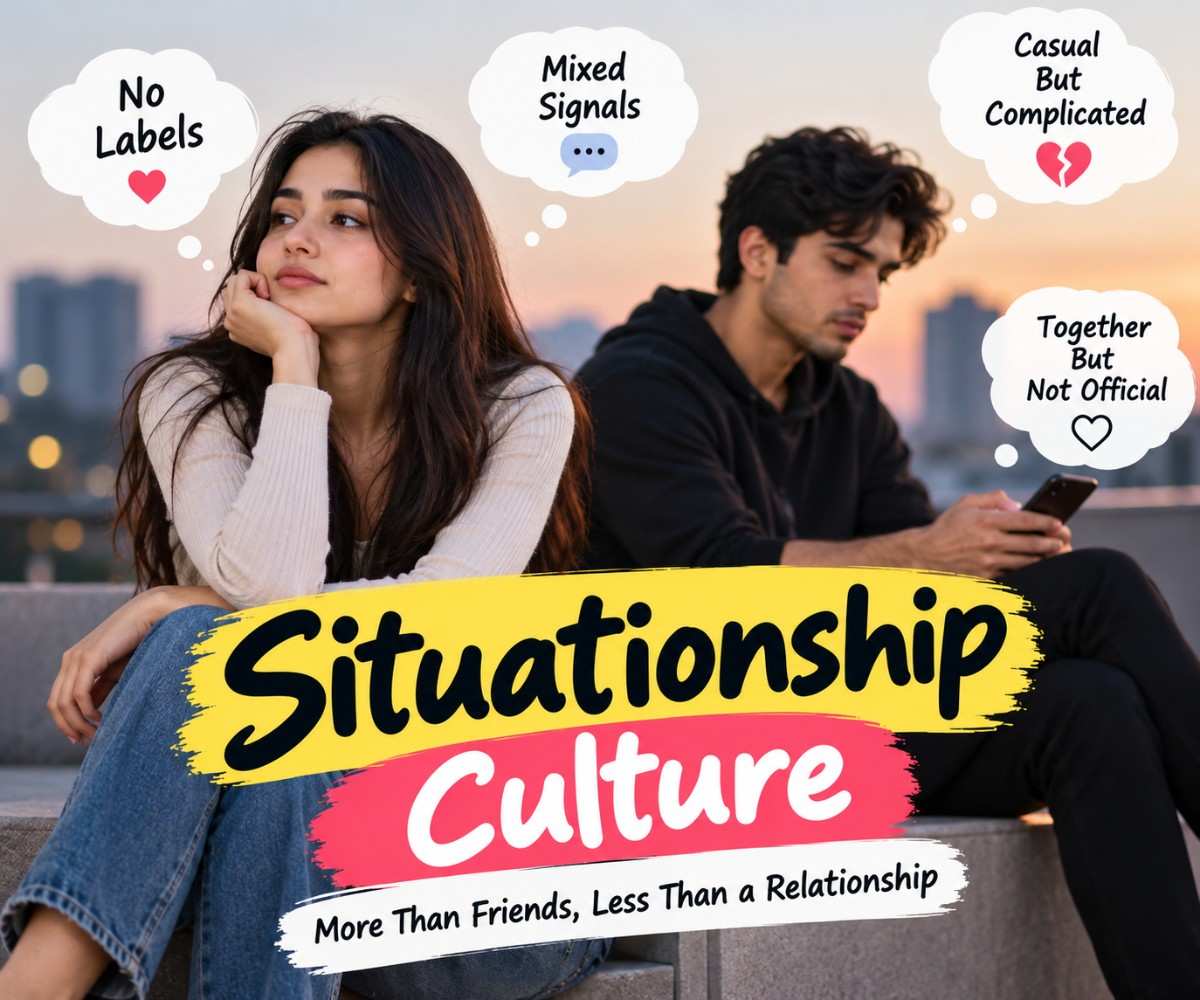
Situationship culture has changed how many people approach modern dating, blurring the line between casual connections and committed relationships. While an undefined relationship can offer flexibility and companionship, it can also create confusion when two people want different things.
What Is Situationship Culture?
Situationship culture refers to a dating trend in which two people share romantic or sexual intimacy without clearly defining their relationship or agreeing on a commitment. Unlike an established relationship, a situationship often lacks clear expectations about exclusivity, emotional responsibilities, and the future.
A situationship might involve regular texting, dates, physical intimacy, emotional support, and spending weekends together. However, neither person may know whether they are building toward a committed relationship or simply enjoying the present.
Research published in Sexuality & Culture in 2025 examined why people enter situationships, describing them as relationships that resemble established romantic partnerships without a clear label or commitment. The research highlights that people can have different motivations for participating in these arrangements. (Source: Langlais et al., 2025)

Situationships are not automatically unhealthy or dishonest. The main issue is whether both people understand the arrangement and feel comfortable with it.
Why Does Situationship Culture Matter?
Situationship culture matters because relationship expectations influence emotional well-being, communication, and how people make decisions about dating. When two people have different ideas about their connection, uncertainty can become a source of frustration.
Modern dating includes many ways to meet people, communicate, and build romantic connections. Pew Research Center reported in 2023 that 53% of American adults aged 18–29 had used a dating site or app, illustrating how common online dating is among younger adults. However, this statistic measures dating-app use, not situationship participation. (Source: Pew Research Center, 2023)
Several factors make situationships an important relationship topic:
- Unclear expectations: One person may expect commitment while the other prefers casual dating.
- Emotional uncertainty: People may struggle to understand where they stand.
- Different timelines: Partners may develop feelings at different speeds.
- Changing relationship norms: Some people prefer to explore compatibility before defining a relationship.
- Communication challenges: Avoiding difficult conversations can allow misunderstandings to continue.
Understanding these dynamics helps people make informed decisions rather than assuming that frequent communication, intimacy, or affection automatically means commitment.
Why Is Situationship Culture Becoming Popular?
Situationship culture has become more visible as dating norms evolve, online dating expands opportunities to meet people, and some individuals prioritize flexibility over immediate commitment. These factors can influence dating choices, although no single explanation applies to everyone.
1. Fear of commitment
Some people enjoy romantic companionship but feel uncertain about making long-term promises. They may want to explore compatibility without taking on the expectations associated with a committed relationship.
Others may simply not be ready for commitment because of personal circumstances, previous experiences, or competing priorities.
2. Dating apps and endless options
Dating apps make it easier to meet potential partners, but they can also create the feeling that other options are always available. This may encourage some people to delay making a decision about a particular connection.
Pew Research Center’s research on online dating found that Americans have mixed views about its effects, with some finding it helpful for meeting partners and others reporting challenges. These findings provide context for modern dating but do not establish that dating apps directly cause situationships. (Source: Pew Research Center, 2023)
3. Prioritizing independence
Some people want companionship without immediately combining their schedules, finances, social lives, or future plans. An undefined relationship may appear to provide that freedom.
This arrangement can work when expectations are mutually understood. Problems are more likely to arise when independence becomes an excuse to avoid honest conversations.
4. Avoiding emotional vulnerability
Defining a relationship requires people to express what they want and risk hearing an answer they may not like. Some individuals avoid this conversation because they fear rejection, conflict, or disappointment.
However, avoiding a label does not necessarily protect anyone from developing feelings.
What Are the Common Signs of a Situationship?
A situationship often involves romantic or sexual closeness without a mutually agreed understanding of the relationship’s status. One sign alone does not prove that you are in one; the overall pattern and both people’s expectations matter.
Common signs include:
- You spend time together regularly but have never discussed what you are.
- You behave like a couple privately but avoid acknowledging the connection publicly.
- Communication is inconsistent or depends heavily on convenience.
- Conversations about commitment or the future remain unresolved.
- You are unsure whether the relationship is exclusive.
- You receive affection and attention without a clear understanding of where things are heading.
- You hesitate to ask for clarity because you fear the other person will leave.
Remember that not every casual relationship has these characteristics. Some people intentionally choose non-exclusive or casual dating and communicate their boundaries clearly. The key distinction is not the absence of a label alone, but whether both people share the same understanding.
Situationship vs. Relationship vs. Friends With Benefits
A situationship, a committed relationship, and a friends-with-benefits arrangement differ mainly in their expectations, communication, and level of agreed commitment.
| Feature | Situationship | Committed relationship | Friends with benefits |
|---|---|---|---|
| Relationship status | Often undefined | Clearly agreed | Usually understood as friendship with sexual intimacy |
| Commitment | Uncertain or limited | Mutually agreed | Usually limited romantic commitment |
| Emotional intimacy | Can be high or low | Varies, often intentionally developed | Varies |
| Exclusivity | May be unclear | Discussed and agreed | Depends on the agreement |
| Future plans | Often uncertain | May be discussed together | Usually not a central expectation |
| Boundaries | May be unclear | Ideally communicated | Ideally communicated |
These categories can overlap in practice. A casual relationship can be respectful and well-defined, while a committed relationship can still have communication problems.
The healthiest arrangement is one in which everyone understands the expectations and can freely agree to them.
What Are the Emotional Effects of Situationship Culture?
The emotional effects of situationship culture depend on individual expectations, communication, and whether the arrangement meets each person’s needs. Some people feel comfortable with uncertainty, while others experience stress when they cannot determine the future of a connection.
Potential benefits
Situationships may offer certain advantages when both people genuinely prefer an undefined or casual arrangement.
- Flexibility: Partners may have more freedom to focus on work, studies, hobbies, or personal goals.
- Exploration: People can learn about compatibility without immediately making long-term commitments.
- Companionship: The connection may provide affection, intimacy, and enjoyable shared experiences.
- Personal discovery: Dating can help people understand their preferences and boundaries.
These potential benefits are not guaranteed, and they depend on honest communication rather than assumptions.
Potential drawbacks
Situationships can become emotionally difficult when one person wants more than the other.
- Anxiety: Unpredictable communication can leave someone wondering where they stand.
- Unbalanced attachment: One person may become emotionally invested while the other remains casual.
- Delayed decisions: Someone may stay in an unsatisfying arrangement hoping it will eventually change.
- Difficulty moving forward: Uncertainty can make it harder to decide whether to continue dating or pursue other connections.
Research on situationships is still developing, so it is important not to assume that every undefined relationship has the same emotional effects.
How to Handle a Situationship Without Losing Yourself
You can navigate a situationship more confidently by identifying your needs, communicating clearly, and evaluating whether the other person’s actions match what you want.
1. Identify what you actually want
Before asking the other person to define the relationship, decide what you want for yourself.
Ask yourself:
- Am I happy with a casual connection, or do I want commitment?
- Do I expect exclusivity?
- Am I comfortable if this relationship never develops further?
- Does this arrangement support my emotional well-being?
Your answers help you distinguish between a relationship that genuinely suits you and one you are accepting because you hope it will change.
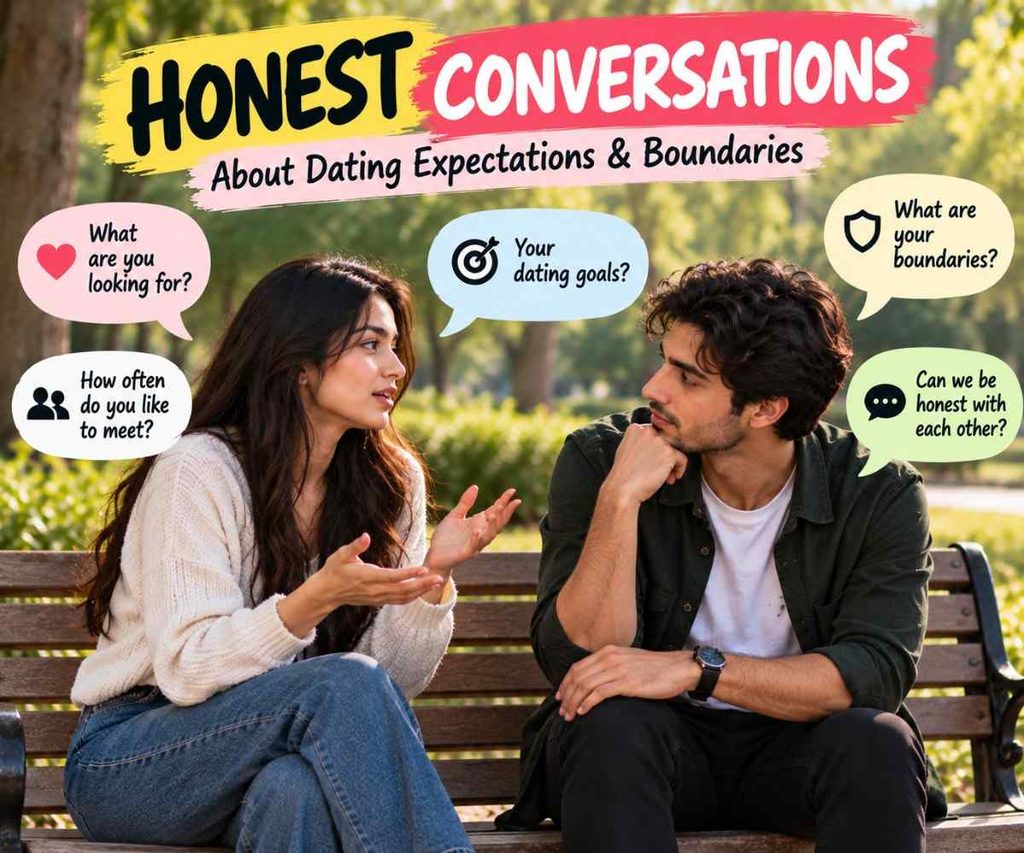
2. Have a direct conversation
Choose a calm moment to discuss your expectations. You do not need to demand a particular outcome, but you deserve an honest conversation about what both people want.
For example, you could say:
“I enjoy spending time with you, and I’d like to understand how you see this connection. Are you interested in building a committed relationship, or would you prefer to keep things casual?”
This question gives the other person an opportunity to explain their intentions without requiring either person to promise something they do not want.
3. Establish boundaries
Boundaries clarify what you are comfortable with and what you are not willing to continue.
You might discuss:
- How frequently you prefer to communicate.
- Whether you expect exclusivity.
- What emotional support you can reasonably offer each other.
- How you feel about public acknowledgment of the connection.
- Whether you have similar expectations about the future.
Boundaries are not tools for controlling another person. They help you decide what you will participate in.
4. Pay attention to actions, not only words
Someone may express affection without wanting a committed relationship. Instead of interpreting every message or romantic gesture as evidence of commitment, look at the overall pattern.
Consider whether the person communicates honestly, respects your boundaries, follows through on plans, and responds openly when you discuss your expectations.
Consistency does not guarantee compatibility, but it can help you understand whether your connection is meeting your needs.
5. Decide how long you are willing to remain uncertain
There is no universal deadline for defining a relationship. However, if you have communicated your needs and nothing changes, consider whether continuing the arrangement is right for you.
You can care about someone and still recognize that you want different things. Ending a connection that does not meet your needs is a valid choice, even when neither person has behaved badly.
How to Know Whether a Situationship Is Right for You
A situationship may suit you if you genuinely prefer a casual connection, feel comfortable with its boundaries, and can communicate openly about expectations. It may not be a good fit if you want commitment but consistently feel anxious, undervalued, or afraid to ask for clarity.
Use this simple comparison to reflect on your experience.
| Question | Signs the arrangement may suit you | Signs to reconsider |
|---|---|---|
| Am I emotionally comfortable? | You feel relaxed and respected | You frequently feel anxious |
| Do we communicate openly? | Expectations can be discussed | Important conversations are avoided |
| Do we want similar things? | Both prefer the current arrangement | One person wants commitment and the other does not |
| Are my boundaries respected? | Both people honor agreed limits | Your needs are repeatedly dismissed |
| Am I staying by choice? | You enjoy the connection as it is | You stay mainly hoping the other person changes |
If you decide that you want a committed relationship, communicate that preference honestly. The other person may share your goal, or they may not. Either outcome gives you information you can use to make a decision.
Is Situationship Culture Changing Modern Love?
Situationship culture reflects the variety of ways people approach intimacy, independence, and commitment in modern dating. It is not proof that people no longer want love or that traditional relationships are disappearing.
Some people want to explore a connection before making a commitment. Others prefer casual dating, while many continue to seek long-term partnerships. These preferences can coexist.
The important question is whether the arrangement is mutually understood. An undefined relationship becomes especially difficult when one person assumes that intimacy means commitment while the other assumes that no commitment has been promised.
Instead of judging a relationship by its label alone, evaluate its honesty, compatibility, communication, and respect for individual needs.
Conclusion
Situationship culture highlights the changing expectations surrounding modern dating. Undefined relationships can offer flexibility, but they can also create emotional uncertainty when two people want different things.
The most practical approach is to understand your own needs, communicate openly, set boundaries, and pay attention to whether the arrangement works for both people. You do not need to rush into commitment, but you also do not need to remain in uncertainty to keep someone in your life.
FAQs
What does situationship culture mean?
Situationship culture describes a dating trend in which people share romantic or sexual intimacy without clearly defining their relationship or agreeing on commitment.
Why are situationships so common in modern dating?
Factors such as changing social expectations, personal priorities, fear of rejection, and online dating may influence situationship choices, although no single cause explains every case.
Can a situationship turn into a relationship?
Yes, a situationship can develop into a committed relationship when both people want that change and openly agree on their expectations.
Are situationships unhealthy?
Not necessarily. They can work for people who genuinely prefer casual connections, but unresolved expectations and unequal emotional investment can create difficulties.
How long should a situationship last?
There is no fixed timeline. The important consideration is whether the arrangement meets your needs and whether both people understand its direction.
Should I ask the person I am dating to define the relationship?
Yes, if clarity matters to you. An honest conversation can help you understand whether your expectations and intentions are compatible.
What is the difference between a situationship and friends with benefits?
A situationship often has unclear romantic expectations, while friends with benefits usually describes a friendship that includes sexual intimacy. Neither label automatically determines exclusivity or emotional involvement.
How do I leave a situationship that is hurting me?
Communicate your decision clearly, establish distance if needed, seek support from trusted people, and give yourself time to process the experience.
Sources
- M. R. Langlais et al. (2025). Are Situationships situational?: A Mixed-Methods Study on the Motivations for Being in a Situationship. Sexuality & Culture.
- Pew Research Center. (2023). The Who, Where and Why of Online Dating in the U.S.
- Pew Research Center. (2023). Americans’ Views on Online Dating.
Disclaimer: This article is for informational and educational purposes only. It is not a substitute for professional mental health advice. If relationship difficulties are significantly affecting your well-being, consider speaking with a qualified mental health professional.
More trendy topics:
Tradwife Trend: Meaning, Lifestyle & Why It’s Going Viral in 2026
Pale Girl Trend: What It Means & Why This Beauty Aesthetic Is Trending
1 thought on “Situationship Culture: Why Undefined Relationships Are Trending”