
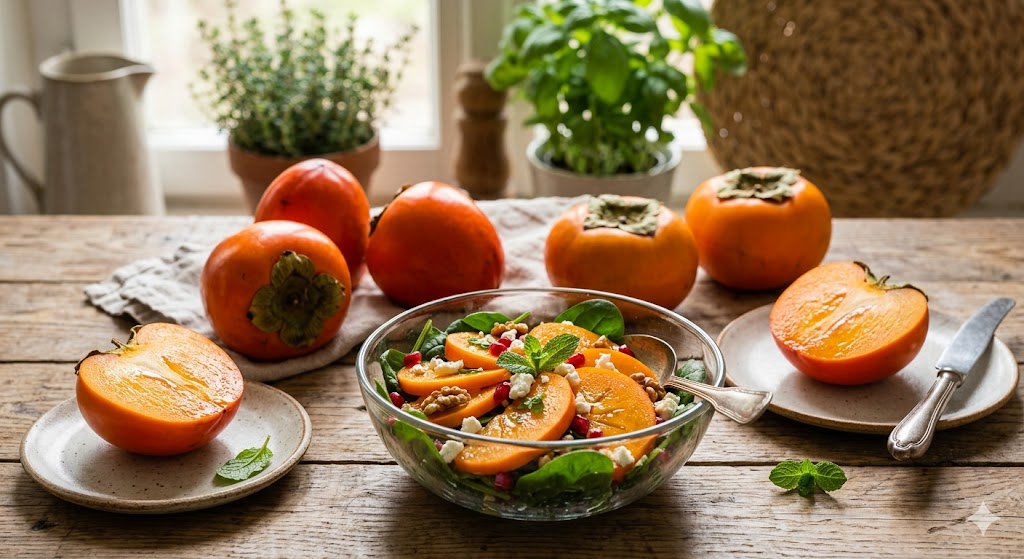
You’ve probably seen persimmons in grocery stores or trending healthy recipes, but many people still don’t know how to eat them properly or why they’re considered so nutritious. The difference between ripe and unripe persimmons alone can completely change the experience. In this guide, you’ll learn what persimmons are, their health benefits, how to choose the right variety, and the best ways to enjoy them.
Key Takeaways
- Persimmon fruit is a sweet orange fruit rich in fiber, antioxidants, and vitamins A and C.
- Fuyu persimmons can be eaten while firm, while Hachiya persimmons must become fully soft before eating.
- Persimmon ripeness determines flavor because unripe astringent varieties contain tannins that create a bitter taste.
- Persimmons provide antioxidants such as beta-carotene and flavonoids that may help support heart and immune health.
- Ripe persimmons have a smooth, sweet flavor that works well in salads, desserts, smoothies, and baked recipes.
- Proper persimmon storage involves keeping unripe fruit at room temperature and refrigerating ripe fruit to extend freshness.
- Beginner-friendly persimmon recipes make it easy to add this seasonal fruit to a healthy diet.
What Is a Persimmon and What Does It Taste Like?
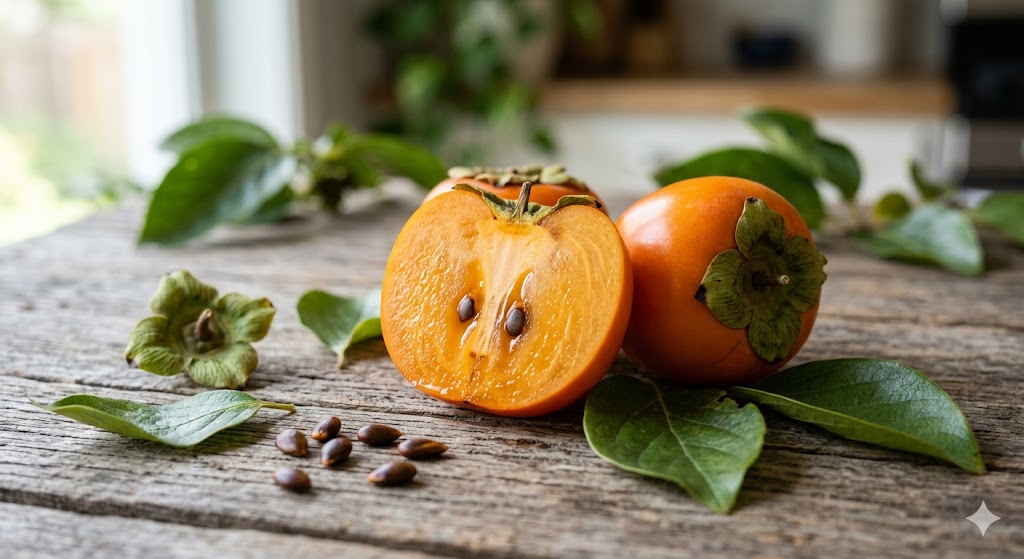
Persimmon is a sweet orange fruit rich in fiber, antioxidants, and vitamins A and C. Persimmons grow on trees and are especially popular during the fall and early winter seasons. The fruit is known for its bright orange skin, honey-like sweetness, and smooth texture when fully ripe.
First, persimmons originated in Asia, particularly China and Japan, where they have been cultivated for centuries. Today, persimmons are also grown in the United States, Korea, Spain, and several Mediterranean countries. According to the Food and Agriculture Organization, global persimmon production exceeds 4 million tons annually — Source: FAO, 2024.
Moreover, persimmons have a unique flavor that many people describe as a blend of honey, apricot, mango, and pumpkin. Some varieties taste crisp like apples, while others become soft and custard-like.
For example, a ripe Fuyu persimmon tastes mildly sweet and crunchy, making it ideal for salads. Meanwhile, a fully ripe Hachiya persimmon becomes jelly-soft with a rich, dessert-like sweetness.
Persimmon fruit benefits extend beyond flavor because the fruit contains antioxidants, dietary fiber, and plant compounds that support overall wellness.
What Are the Different Types of Persimmons?
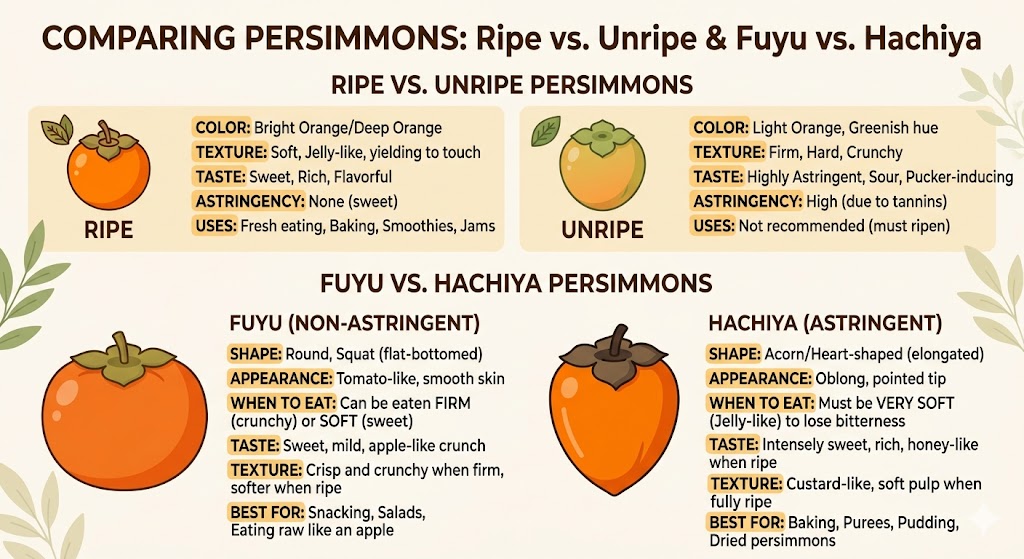
Persimmon varieties are divided into astringent and non-astringent categories. The most popular types are Fuyu and Hachiya persimmons.
Here is a quick comparison table:
| Variety | Texture | Taste | Ripeness Requirement | Best Uses |
|---|---|---|---|---|
| Fuyu Persimmon | Firm and crisp | Mildly sweet | Can eat while firm | Salads, snacks |
| Hachiya Persimmon | Soft and jelly-like | Rich and honey-sweet | Must be fully ripe | Baking, desserts |
| Chocolate Persimmon | Semi-soft | Cocoa-like sweetness | Slightly soft | Desserts |
| Sharon Fruit | Firm | Sweet and mild | Ready-to-eat | Fresh eating |
What Is the Difference Between Fuyu and Hachiya Persimmons?
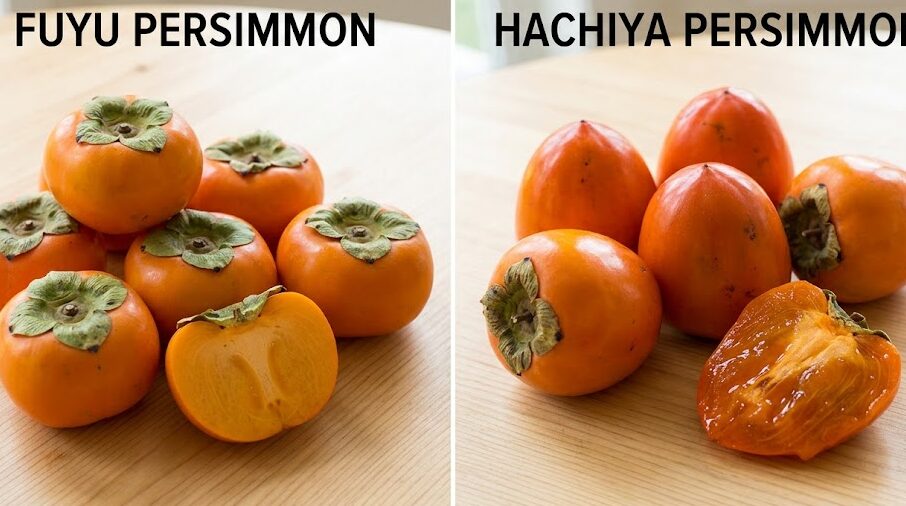
Fuyu persimmons can be eaten while firm, whereas Hachiya persimmons must be fully ripe and soft before consumption.
First, Fuyu persimmons are squat and tomato-shaped. They are non-astringent, meaning they do not develop the intense bitter taste associated with tannins.
Second, Hachiya persimmons are acorn-shaped and highly astringent when unripe. If eaten too early, they can leave a chalky, dry sensation in your mouth.
For example, many beginners mistakenly bite into an unripe Hachiya persimmon and assume they dislike the fruit. In reality, the fruit simply was not ripe enough.
Why Are Persimmons Considered Healthy?
Persimmons are considered healthy because they provide fiber, vitamins, antioxidants, and low-calorie nutrition in a naturally sweet fruit.
First, one medium persimmon contains roughly 118 calories, 6 grams of fiber, and significant amounts of vitamin A and vitamin C — Source: USDA FoodData Central, 2025.
Moreover, persimmons contain plant compounds such as flavonoids, tannins, and beta-carotene. These antioxidants may help reduce oxidative stress in the body.
For example, beta-carotene supports eye health and immune function. Vitamin C helps support collagen production and immune defense.
In addition, persimmons are naturally fat-free and cholesterol-free. This makes them a smart option for people seeking low-calorie snack ideas or healthier desserts.
What Are the Nutritional Benefits of Persimmons?
Persimmon nutrition includes fiber, vitamin A, vitamin C, potassium, manganese, and antioxidants.
Here is the approximate nutrition for one medium persimmon:
| Nutrient | Amount |
|---|---|
| Calories | 118 |
| Fiber | 6 g |
| Vitamin A | 55% DV |
| Vitamin C | 14% DV |
| Potassium | 270 mg |
| Manganese | 30% DV |
Furthermore, dietary fiber supports digestion and helps promote fullness. According to Harvard T.H. Chan School of Public Health, higher fiber intake is linked to improved digestive and metabolic health — Source: Harvard Nutrition Source, 2024.
Persimmons contain antioxidants such as beta-carotene and flavonoids that may help support heart and immune health.
Are Persimmons Good for Weight Loss?
Persimmons can support weight management because they are high in fiber and relatively low in calories.
First, fiber slows digestion and helps you stay full longer. This can reduce unnecessary snacking between meals.
Second, persimmons naturally satisfy sweet cravings without heavily processed sugar. For example, a sliced Fuyu persimmon can replace sugary packaged snacks or desserts.
According to the CDC, increasing fruit intake is associated with healthier long-term weight management habits — Source: CDC Nutrition Report, 2024.
How Do You Know When a Persimmon Is Ripe?
Persimmon ripeness depends on the variety because different types develop sweetness and texture differently.
First, Fuyu persimmons are ready to eat when they appear bright orange and feel slightly firm. They should resemble the firmness of a ripe tomato.
Second, Hachiya persimmons must become extremely soft before eating. A ripe Hachiya should feel almost jelly-like when gently squeezed.
Persimmon ripeness determines flavor because unripe astringent varieties contain tannins that create a bitter taste.
For example, tannins in unripe Hachiya persimmons cause the dry, puckering sensation many people dislike.
How Do You Eat a Persimmon for the First Time?
You can eat persimmons fresh, sliced, blended, baked, or added to salads and breakfast bowls.
First, wash the fruit thoroughly under cool water. Next, remove the leafy top with a knife.
For Fuyu persimmons:
- Slice into wedges
- Eat like an apple
- Leave the skin on if desired
For Hachiya persimmons:
- Wait until fully soft
- Slice open the top
- Scoop the flesh with a spoon
Moreover, beginners often prefer Fuyu persimmons because they are easier to handle and less sensitive to ripeness timing.
Can You Eat Persimmon Skin?
Persimmon skin is edible and contains fiber and antioxidants.
First, Fuyu persimmon skin is commonly eaten because it remains thin and pleasant even when firm.
However, some people remove the skin from Hachiya persimmons because the texture can become very soft when ripe.
For example, leaving the skin on can increase fiber intake and reduce food waste.

What Are the Health Benefits of Persimmons?
Persimmon health benefits include support for heart health, digestion, immunity, eye health, and healthy aging.
First, persimmons contain soluble fiber that may help support healthy cholesterol levels. According to the American Heart Association, diets rich in fruits and fiber support cardiovascular health — Source: AHA, 2024.
Second, antioxidants in persimmons may help reduce cellular damage caused by free radicals.
Heart Health Support
Persimmons may support heart health because they contain fiber, potassium, and antioxidant compounds.
For example, potassium helps maintain healthy blood pressure levels, while flavonoids may support healthy circulation.
Digestive Benefits
Persimmons support digestion because they provide dietary fiber that helps promote regular bowel movements.
Additionally, fiber feeds beneficial gut bacteria that support digestive wellness.
Eye Health and Vitamin A
Persimmons contain beta-carotene, which the body converts into vitamin A for eye health support.
For example, vitamin A contributes to healthy vision and immune function.
Antioxidant Protection
Persimmons contain plant antioxidants that help protect cells from oxidative stress.
Research suggests diets rich in colorful fruits may support long-term wellness and healthy aging — Source: National Institutes of Health, 2024.
What Are the Best Ways to Use Persimmons in Recipes?
Persimmons work well in smoothies, salads, baked goods, desserts, jams, and breakfast bowls.
First, their natural sweetness pairs beautifully with cinnamon, nuts, yogurt, citrus, and warm spices.
Second, both Fuyu and Hachiya varieties can be used differently depending on texture.
Persimmon Smoothie Ideas
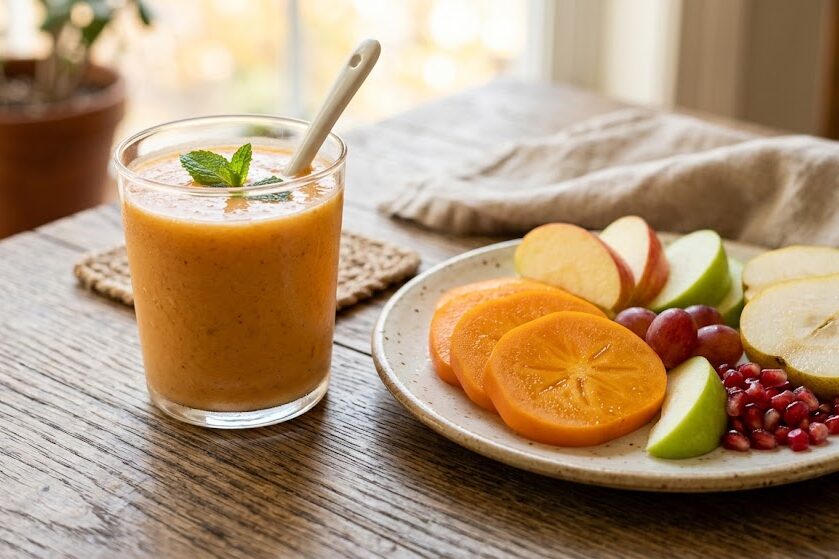
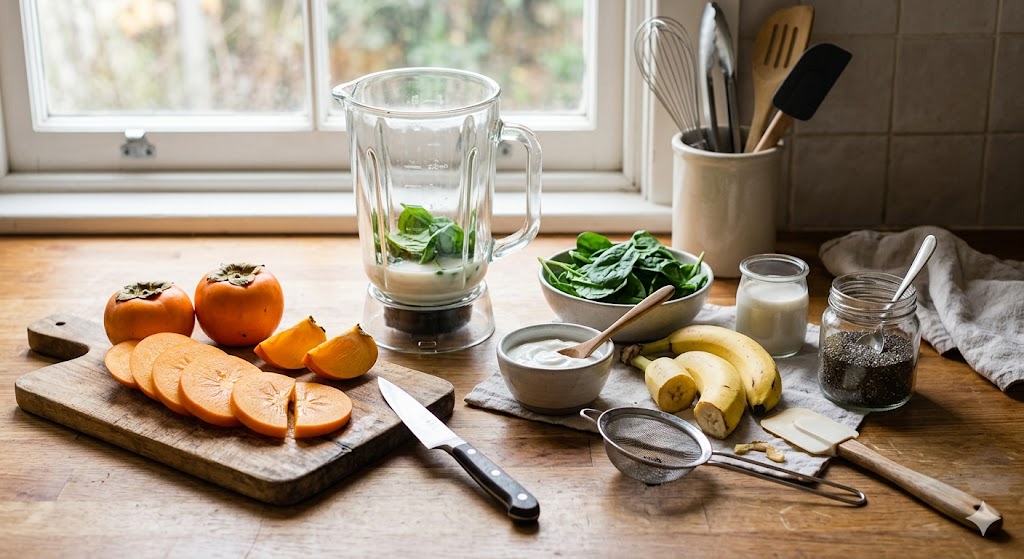
Persimmon smoothies combine ripe fruit with creamy ingredients for a naturally sweet drink.
Try blending:
- 1 ripe persimmon
- Banana
- Greek yogurt
- Almond milk
- Cinnamon
- Ice
This combination creates a thick smoothie rich in fiber and vitamins.
Persimmon Salad Ideas
Fuyu persimmons add crunch and sweetness to salads.
For example, sliced persimmons pair well with:
- Arugula
- Goat cheese
- Walnuts
- Pomegranate
- Balsamic dressing
Persimmon Desserts and Baking
Hachiya persimmons work especially well in desserts because their soft texture resembles puree.
Popular recipes include:
- Persimmon bread
- Persimmon pudding
- Persimmon jam
- Muffins
- Cakes
Healthy Breakfast Bowl Ideas
Persimmons can upgrade breakfast bowls with natural sweetness and color.
For example, add sliced persimmons to oatmeal, chia pudding, granola bowls, or yogurt parfaits.
How Should You Store Persimmons to Keep Them Fresh?
Proper persimmon storage involves keeping unripe fruit at room temperature and refrigerating ripe fruit to extend freshness.
First, unripe persimmons should sit on the counter until they soften or develop deeper orange color.
Second, ripe persimmons can last about 5–7 days in the refrigerator.
For long-term storage:
- Slice and freeze ripe persimmons
- Store puree in airtight containers
- Use frozen fruit in smoothies or baking
When Are Persimmons in Season?
Persimmons are typically in season from September through December in many regions.
Fall is the peak season for fresh persimmons in grocery stores and farmers markets.
For example, many healthy seasonal recipes featuring persimmons appear during Thanksgiving and winter holidays.

Can Persimmons Cause Side Effects or Digestive Issues?
Persimmons are generally safe, but excessive intake may cause digestive discomfort in some people.
First, persimmons contain tannins and fiber that can occasionally contribute to constipation if eaten excessively without enough water.
Second, people with sensitive digestion may prefer moderate portions initially.
Sugar Content Considerations
Persimmons contain natural fruit sugars but remain nutrient-dense compared to many processed desserts.
For example, one medium fruit provides natural sweetness alongside fiber and vitamins.
Allergy Considerations
Persimmon allergies are uncommon but possible.
Symptoms may include itching, swelling, or digestive discomfort after consumption.
If symptoms appear, consult a healthcare professional promptly.
What Fruits Pair Well With Persimmons?
Persimmons pair well with citrus fruits, apples, pears, pomegranates, bananas, and berries.
First, citrus fruits balance persimmon sweetness with acidity.
Second, nuts and spices complement the fruit’s warm flavor profile.
Popular pairings include:
- Persimmon + orange
- Persimmon + apple
- Persimmon + cinnamon
- Persimmon + walnuts
- Persimmon + yogurt
These combinations work especially well in smoothies, salads, and desserts.
What to Do Next With Persimmons
The best next step with persimmons is experimenting with beginner-friendly recipes and seasonal meal ideas.
First, start with a firm Fuyu persimmon if you are new to the fruit. It is easier to prepare and less dependent on precise ripeness.
Second, try adding persimmons to one meal this week. For example, use sliced persimmons in salads or blend them into smoothies.
You can also:
- Try homemade persimmon bread
- Freeze ripe persimmons for smoothies
- Pair persimmons with yogurt bowls
- Use them in healthy desserts
- Explore multiple persimmon varieties
Practical Tools for Persimmon Preparation
Simple kitchen tools make persimmon preparation easier and faster.
Helpful tools include:
- Sharp paring knife
- Cutting board
- Blender for smoothies
- Airtight containers for storage
- Citrus juicer for salad dressings
Free recipe platforms such as YouTube cooking tutorials and Pinterest can also provide beginner inspiration.
Custom Diagram Suggestion
Conclusion
Persimmon is a nutritious seasonal fruit that offers sweetness, fiber, antioxidants, and versatile culinary uses. Whether you enjoy crisp Fuyu persimmons or creamy ripe Hachiya varieties, learning proper ripeness and preparation can completely transform the experience.
Moreover, persimmons fit naturally into smoothies, salads, desserts, and healthy snacks. By experimenting with recipes and seasonal pairings, you can easily add more nutrient-rich foods to your diet.
Most importantly, trying new fruits like persimmons can make healthy eating more enjoyable and sustainable. Start with one simple recipe, explore different varieties, and discover how this vibrant fruit can become part of your wellness routine.
FAQ
What is a Persimmon?
Persimmon is a sweet orange-colored fruit known for its smooth texture, honey-like flavor, and rich nutritional value.
What does persimmon taste like?
Persimmon tastes sweet and mildly tangy, with flavors often compared to honey, apricot, and pumpkin.
Is persimmon healthy?
Yes, persimmon is rich in fiber, vitamins, antioxidants, and nutrients that support overall health.
Can persimmon help with weight loss?
Yes, persimmon is high in fiber and relatively low in calories, which may help keep you full longer.
How do you eat persimmon?
You can eat persimmon fresh, sliced, dried, or added to salads, smoothies, and desserts.
What are the nutritional benefits of persimmon?
Persimmon provides vitamin A, vitamin C, fiber, and antioxidants that support eye health, immunity, and digestion.
Can you eat persimmon every day?
Yes, persimmon can be enjoyed daily in moderation as part of a balanced diet.
What recipes can you make with persimmon?
Persimmon can be used in salads, smoothies, baked goods, jams, desserts, and fruit bowls.
What is the difference between Fuyu and Hachiya persimmons?
Fuyu persimmon is firm and sweet when crisp, while Hachiya persimmon should be eaten only when fully soft and ripe.
Does persimmon boost immunity?
Yes, its vitamin C and antioxidant content may help support a healthy immune system.
Written by: Suraj | 5+ years blogging experience specializing in nutrition, healthy lifestyle content, and SEO-focused educational guides.
Reviewed by: Editorial Nutrition Review Team | Expertise in wellness, food research, and evidence-based health content.
Disclaimer: This article was initially drafted using AI assistance. However, the content has undergone thorough revisions, editing, and fact-checking by human editors and subject matter experts to ensure accuracy.