
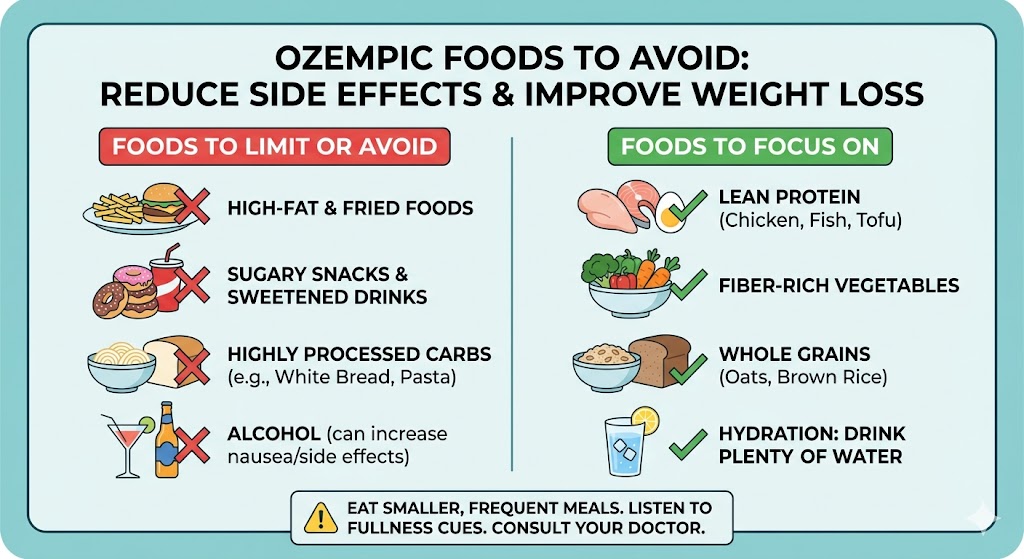
If you’re taking Ozempic, you probably already know it can reduce appetite and support weight loss. What many people don’t realize is that certain foods can dramatically worsen nausea, bloating, fatigue, and digestive side effects. In this guide, you’ll learn exactly which foods to avoid on Ozempic, why they cause problems, and what to eat instead for better results and fewer side effects.
Key Takeaways
- Ozempic slows digestion, which makes certain foods more likely to trigger nausea, bloating, and stomach discomfort.
- Fried foods, sugary snacks, alcohol, and large meals commonly worsen Ozempic side effects and may reduce weight-loss progress.
- Lean proteins, high-fiber vegetables, and smaller portion sizes are generally easier to digest for people using semaglutide medications.
- Hydration and balanced nutrition help reduce constipation, fatigue, and digestive symptoms associated with GLP-1 medications.
- Processed foods and refined carbohydrates can increase blood sugar fluctuations and digestive discomfort during Ozempic treatment.
- Symptom tracking and meal planning help users identify personal food triggers and improve long-term consistency.
- Sustainable eating habits are more effective for Ozempic success than extreme dieting or complete food restriction.
What Is Ozempic and How Does It Work?
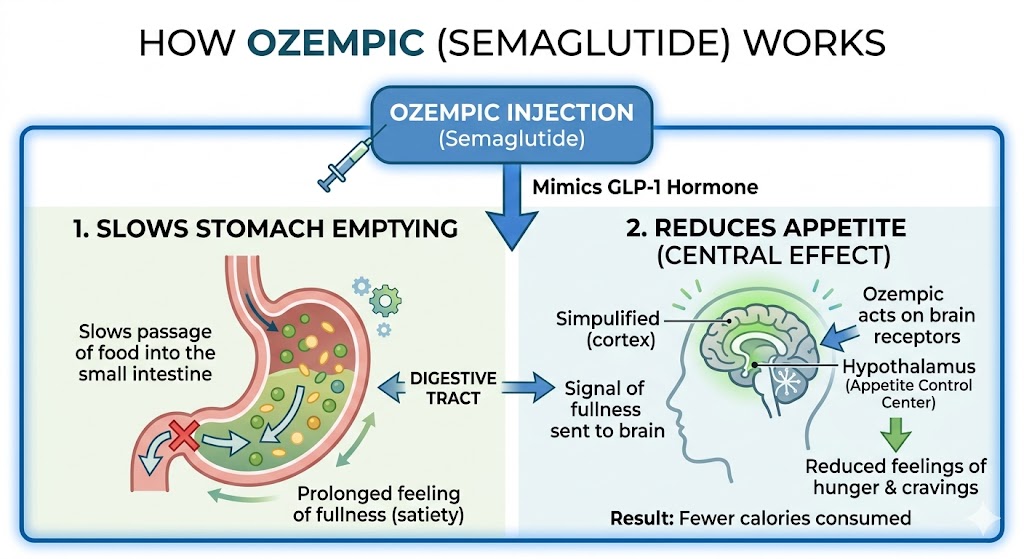
Ozempic is a GLP-1 receptor agonist medication that slows digestion and reduces appetite to help manage type 2 diabetes and weight loss. The medication contains semaglutide, which mimics a natural hormone involved in blood sugar regulation and hunger control.
First, Ozempic helps your body release insulin more effectively after meals. Second, it reduces how quickly food leaves your stomach. This process is called delayed gastric emptying, and it plays a major role in both weight loss and side effects.
For example, many users feel full much faster while taking Ozempic. However, eating large or greasy meals can cause nausea because food remains in the stomach longer than usual.
According to the American Diabetes Association, GLP-1 medications are now widely used for both diabetes management and obesity treatment — Source: American Diabetes Association, 2025.
Moreover, semaglutide medications have shown significant weight-loss benefits in clinical research. In a major study, adults using semaglutide lost an average of nearly 15% of body weight over 68 weeks — Source: New England Journal of Medicine, 2021.
Why Do Food Choices Matter While Taking Ozempic?
Food choices matter on Ozempic because certain foods can intensify digestive side effects and slow weight-loss progress. Your stomach processes food differently while using GLP-1 medications.
First, high-fat and sugary foods take longer to digest. Because Ozempic already slows stomach emptying, these foods may remain in your stomach for extended periods and increase discomfort.
For example, eating fast food after an Ozempic injection may trigger bloating, nausea, or acid reflux within hours. Many users notice symptoms become worse after oversized restaurant meals.
At the same time, balanced meals can improve tolerance and energy levels. Smaller portions with protein and fiber are often easier to digest and help stabilize blood sugar.
According to the CDC, more than 38 million Americans live with diabetes, making dietary management increasingly important — Source: CDC, 2024.
Additionally, obesity affects over 40% of U.S. adults — Source: National Institute of Diabetes and Digestive and Kidney Diseases, 2024.
What Foods Should You Avoid While Taking Ozempic?
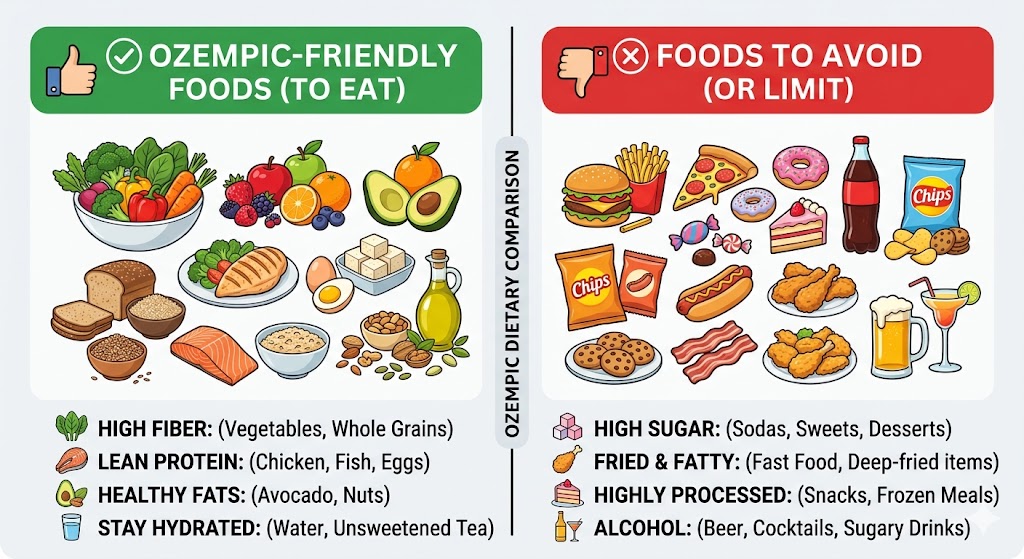
Foods to avoid while taking Ozempic include fried foods, sugary desserts, greasy meals, processed snacks, refined carbohydrates, alcohol, and oversized portions. These foods commonly worsen nausea and digestive discomfort.
Fried Foods and Greasy Meals
Fried foods are difficult to digest and commonly worsen Ozempic side effects. High-fat meals slow digestion even further, which may increase bloating and stomach pain.
For example, fried chicken, french fries, and onion rings often contain heavy oils that sit in the stomach for long periods. This can lead to nausea shortly after eating.
In addition, greasy foods may trigger acid reflux. Many Ozempic users report increased burping and heartburn after eating fast food.
Sugary Foods and Desserts
Sugary foods can increase blood sugar fluctuations and digestive discomfort while taking Ozempic. Desserts may also reduce satiety and trigger cravings later in the day.
For example, donuts, cakes, candy, and sugary coffee drinks can cause rapid blood sugar spikes followed by crashes. This pattern may worsen fatigue and hunger.
Plus, excess sugar can contribute to diarrhea in sensitive individuals using semaglutide medications.
Processed Snacks and Refined Carbohydrates
Processed snacks and refined carbs digest quickly and provide little nutritional value. They may also interfere with sustainable weight-loss habits.
Examples include:
- Potato chips
- Crackers
- White bread
- Sugary cereals
- Instant noodles
- Packaged pastries
At the same time, these foods often contain excess sodium and additives that may contribute to bloating.
Carbonated Beverages
Carbonated drinks may worsen bloating and stomach pressure while taking Ozempic. Because digestion slows down, trapped gas can become more uncomfortable.
For example, soda and sparkling beverages may increase burping and abdominal fullness.
Alcohol
Alcohol may increase nausea, dehydration, and blood sugar instability during Ozempic treatment. Some users also experience reduced alcohol tolerance.
For example, drinking alcohol on an empty stomach while using semaglutide can worsen dizziness or stomach irritation.
According to the National Institute on Alcohol Abuse and Alcoholism, alcohol can affect blood sugar regulation and appetite signals — Source: NIAAA, 2024.
Extremely Spicy Foods
Spicy foods may irritate the digestive tract and worsen acid reflux symptoms on Ozempic. This is especially true for users already experiencing nausea.
For example, heavily spiced curries or hot sauces may trigger stomach burning and discomfort.
Large Portion Sizes
Large meals can overwhelm the stomach because Ozempic slows gastric emptying. Eating too much at once commonly leads to nausea and bloating.
For example, restaurant-sized meals may feel uncomfortable even several hours after eating.
| Food Category | Why It Causes Problems | Better Alternative |
|---|---|---|
| Fried foods | Slow digestion and nausea | Grilled protein |
| Sugary desserts | Blood sugar spikes | Greek yogurt with berries |
| Soda | Gas and bloating | Water or herbal tea |
| Alcohol | Dehydration and nausea | Sparkling water with lemon |
| Processed snacks | Low nutrition and overeating | Nuts or fruit |
| Large meals | Stomach discomfort | Small balanced meals |
Why Do Certain Foods Cause Side Effects on Ozempic?
Certain foods cause side effects on Ozempic because the medication slows stomach emptying and changes digestion speed. Heavy meals become harder for the body to process efficiently.
First, delayed gastric emptying increases sensitivity to greasy, fried, and oversized meals. Food remains in the stomach longer, which may trigger fullness and nausea.
Delayed stomach emptying caused by Ozempic increases sensitivity to greasy, fried, and oversized meals.
Second, high-sugar foods can create rapid blood sugar swings. This may increase fatigue, cravings, and digestive discomfort.
Third, fatty meals require more digestive effort. Because Ozempic slows digestion, excess fat may worsen indigestion and bloating.
For example, many people tolerate grilled chicken and vegetables much better than burgers and fries while taking semaglutide.
Can Fried Foods Make Ozempic Side Effects Worse?
Fried foods can make Ozempic side effects worse because they digest slowly and increase stomach discomfort. Deep-fried meals are one of the most common triggers for nausea.
For example, fried fast food often combines excess oil, sodium, and refined carbohydrates. This combination may lead to bloating and fatigue.
Moreover, fried meals are calorie-dense but not very filling long term. This can interfere with healthy weight-loss habits.
A practical strategy is replacing fried foods with:
- Air-fried meals
- Grilled protein
- Baked potatoes
- Roasted vegetables
- Olive oil in moderation
By reducing greasy meals, you can improve digestion and reduce post-meal discomfort.
Why Does Sugar Cause Problems on Ozempic?
Sugar can cause problems on Ozempic because highly processed sweets may increase blood sugar spikes and digestive symptoms. Excess sugar may also worsen cravings and energy crashes.
For example, sugary breakfast cereals or milkshakes can cause rapid glucose changes shortly after eating. Some users experience shakiness or fatigue later in the day.
At the same time, many desserts are also high in fat. This combination may intensify nausea and stomach heaviness.
According to Harvard School of Public Health, diets high in added sugar are associated with weight gain and metabolic health issues — Source: Harvard T.H. Chan School of Public Health, 2024.
Is Alcohol Safe to Drink While Taking Ozempic?
Alcohol is not always safe while taking Ozempic because it may worsen nausea, dehydration, and blood sugar instability. Some users tolerate small amounts, while others experience strong digestive symptoms.
For example, drinking cocktails or beer on an empty stomach may increase dizziness or stomach irritation.
Additionally, alcohol may reduce judgment around food choices. This can lead to overeating or poor meal timing.
If you choose to drink alcohol while using Ozempic:
- Eat protein beforehand
- Stay hydrated
- Avoid sugary mixers
- Limit portion sizes
- Monitor symptoms carefully
ow to stay hydrated for weight loss
What Are the Best Foods to Eat on Ozempic for Weight Loss?
The best foods to eat on Ozempic for weight loss are lean proteins, fiber-rich vegetables, whole grains, hydrating foods, and healthy fats in moderation. These foods are generally easier to digest and support fullness.
Lean Protein Sources
Lean protein helps preserve muscle mass and improves satiety during weight loss. Protein is also less likely to trigger blood sugar spikes.
Good options include:
- Chicken breast
- Turkey
- Fish
- Eggs
- Greek yogurt
- Cottage cheese
- Tofu
For example, a protein-rich breakfast may reduce cravings later in the day.
healthy high-protein breakfast ideas
Fiber-Rich Vegetables
Fiber-rich vegetables support digestion and help reduce constipation associated with Ozempic.
Hydration and fiber intake help reduce constipation, one of the most common side effects associated with GLP-1 medications.
Examples include:
- Broccoli
- Spinach
- Carrots
- Zucchini
- Bell peppers
- Cucumbers
According to the Mayo Clinic, adults should prioritize fiber intake for digestive health and blood sugar management — Source: Mayo Clinic, 2025.
high-fiber foods for digestion
Whole Grains and Low-Glycemic Fruits
Whole grains and low-glycemic fruits provide steady energy without major blood sugar spikes.
Better carbohydrate options include:
- Oatmeal
- Brown rice
- Quinoa
- Apples
- Berries
- Pears
For example, berries with Greek yogurt provide protein, fiber, and antioxidants in one meal.
Healthy Fats in Moderation
Healthy fats support satiety when eaten in moderate portions. However, excessive fat intake may still worsen digestion.
Good options include:
- Avocados
- Nuts
- Seeds
- Olive oil
- Nut butter
best foods for weight loss
What Is the Best Meal Plan for Ozempic Users?
The best meal plan for Ozempic users includes small balanced meals with protein, fiber, hydration, and moderate healthy fats. Smaller meals are generally easier to tolerate than oversized portions.
Sample Ozempic Meal Plan
Breakfast
- Greek yogurt with berries and chia seeds
- Oatmeal with cinnamon and almonds
- Eggs with spinach
Lunch
- Grilled chicken salad with olive oil dressing
- Turkey lettuce wraps
- Quinoa bowl with vegetables
Dinner
- Salmon with roasted vegetables
- Stir-fried tofu and broccoli
- Lean turkey chili
Snacks
- Cottage cheese
- Apple slices
- Mixed nuts
- Protein shake
Portion Guidance
Portion size directly affects Ozempic side effects because the medication slows digestion. Smaller meals often reduce nausea and bloating.
A simple strategy is eating until you feel comfortably satisfied rather than completely full.
Hydration Tips
Hydration supports digestion and may reduce fatigue and constipation during Ozempic treatment.
Practical hydration tips include:
- Drink water consistently throughout the day
- Limit sugary drinks
- Include hydrating foods like cucumber and watermelon
- Sip fluids slowly if nausea occurs
How Can You Reduce Nausea While Taking Semaglutide?
You can reduce nausea while taking semaglutide by eating smaller meals, avoiding greasy foods, staying hydrated, and eating slowly. Most digestive symptoms improve when users adjust eating habits.
For example, eating five smaller meals instead of two large meals may improve stomach comfort significantly.
Additional nausea-reduction strategies include:
- Avoid lying down immediately after meals
- Limit fried and spicy foods
- Eat bland foods during flare-ups
- Stay hydrated consistently
- Reduce portion sizes temporarily
According to Cleveland Clinic, nausea is one of the most commonly reported side effects of GLP-1 medications — Source: Cleveland Clinic, 2025.
common Ozempic side effects explained
What Tools and Apps Help Manage an Ozempic Diet?
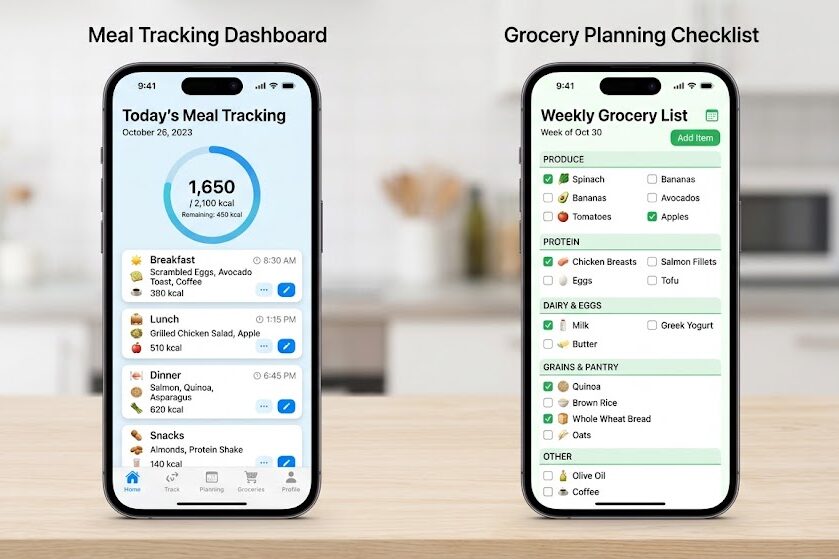
Meal-tracking apps and symptom journals help Ozempic users identify triggers and improve consistency. Tracking patterns can make dietary adjustments easier over time.
Useful tools include:
- MyFitnessPal
- Cronometer
- Lose It!
- WaterMinder
- Google Sheets food journals
For example, tracking meals and symptoms together may help identify whether fried foods or dairy worsen nausea.
Practical Strategies for Long-Term Success
Sustainable systems are more effective than restrictive dieting while using Ozempic.
Helpful strategies include:
- Weekly grocery planning
- Protein-focused meal prep
- Portion-control containers
- Restaurant meal splitting
- Keeping healthy snacks nearby
When Should You Contact a Doctor About Ozempic Side Effects?
You should contact a doctor if Ozempic side effects become severe, persistent, or interfere with hydration and daily life. Mild nausea is common, but serious symptoms require medical attention.
Red-flag symptoms include:
- Severe vomiting
- Signs of dehydration
- Intense abdominal pain
- Persistent diarrhea
- Blood sugar emergencies
- Difficulty eating for extended periods
For example, severe stomach pain that does not improve could indicate a more serious issue requiring evaluation.
At the same time, never stop prescription medication without medical guidance.
What’s Next: Building Sustainable Eating Habits While on Ozempic?
Sustainable eating habits are essential for long-term Ozempic success and weight maintenance. Short-term restriction often leads to rebound weight gain.
First, focus on consistency instead of perfection. Building repeatable healthy routines is more effective than crash dieting.
Second, combine nutrition with movement. Regular walking and resistance training help preserve muscle mass during weight loss.
For example, 20-30 minutes of daily walking may improve digestion and energy levels.
Third, continue learning healthy food habits even if appetite decreases significantly. Long-term nutrition quality still matters.
safe exercise routines while losing weight
Conclusion
Ozempic foods to avoid are primarily greasy, fried, sugary, ultra-processed, and oversized meals that worsen digestion and side effects. By focusing on smaller balanced meals with lean protein, fiber, and hydration, many users experience better results and improved comfort.
At the same time, there is no perfect Ozempic diet for everyone. Your body may respond differently to certain foods, which is why symptom tracking and gradual adjustments matter.
Most importantly, sustainable habits outperform extreme dieting. By building realistic nutrition routines and working closely with healthcare professionals, you can improve both weight-loss results and long-term health.
FAQ
What foods should you avoid while taking Ozempic?
High-fat, fried, sugary, and heavily processed foods are commonly avoided because they may worsen digestive side effects.
Why do certain foods cause side effects with Ozempic?
Ozempic slows digestion, so heavy or greasy foods may increase nausea, bloating, and stomach discomfort.
Can sugary foods affect Ozempic results?
Yes, excessive sugary foods may reduce weight-loss progress and negatively affect blood sugar control.
Are fried foods bad while using Ozempic?
Yes, fried and greasy foods may increase nausea, indigestion, and digestive discomfort.
What foods are best to eat on Ozempic?
Lean proteins, vegetables, fruits, whole grains, and high-fiber foods are commonly recommended.
Can spicy foods cause problems with Ozempic?
For some people, spicy foods may worsen heartburn, nausea, or stomach irritation.
Should you avoid alcohol while taking Ozempic?
Alcohol should be limited because it may increase stomach issues and affect blood sugar levels.
Can carbonated drinks worsen Ozempic side effects?
Yes, fizzy drinks may contribute to bloating and digestive discomfort in some users.
How can you reduce nausea while on Ozempic?
Eating smaller meals, staying hydrated, and avoiding greasy or heavy foods may help reduce nausea.
Is hydration important while taking Ozempic?
Yes, drinking enough water is important to support digestion, reduce side effects, and maintain overall health.
Written by: Suraj 5+ Blogger — Health and wellness content writer specializing in beginner-friendly nutrition, weight-loss education, and SEO-focused health guides.
Reviewed by: Editorial Health Review Team — Experienced reviewers focused on nutrition education, diabetes management, and evidence-based wellness content.
Disclaimer: This article was initially drafted using AI assistance. However, the content has undergone thorough revisions, editing, and fact-checking by human editors and subject matter experts to ensure accuracy.