
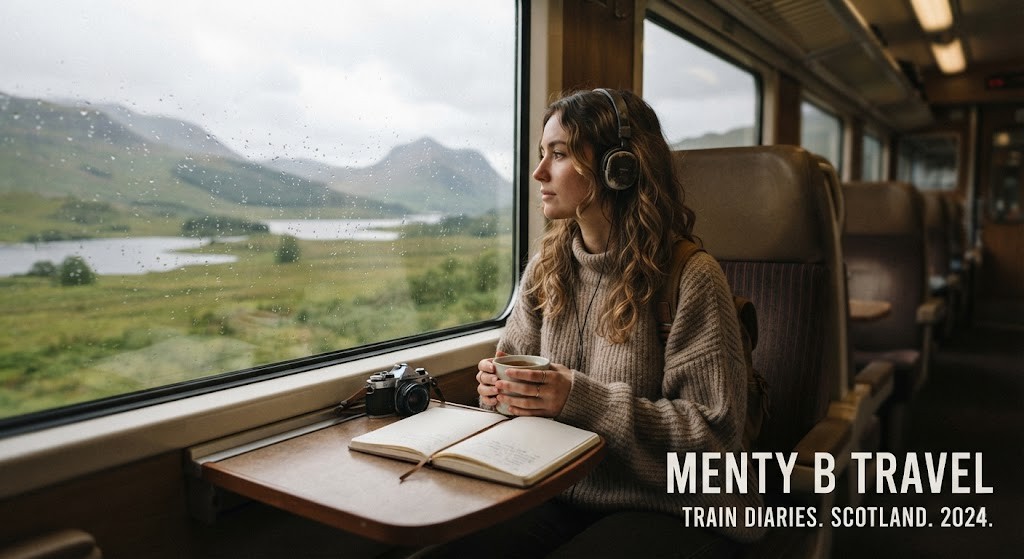
Travel has always offered a way to escape routine, explore somewhere new, and recharge. But for Gen Z, travel is increasingly being shaped by a different motivation: sometimes you do not need another packed vacation—you simply need to get away because everyday life feels overwhelming.
That is where Menty B Travel comes in. This emerging travel trend focuses less on maximizing sightseeing and more on creating space to rest, disconnect, slow down, and reset.
In this guide, you’ll discover what Menty B Travel means, why it is gaining attention among Gen Z travelers, how it differs from other travel trends, where to go, what to do, and how to plan a restorative getaway without turning it into another stressful project.
What Is Menty B Travel and What Does It Mean?
Menty B Travel is a Gen Z travel trend in which someone takes a trip because they feel overwhelmed and need a break from everyday stress. The phrase “Menty B” is internet slang associated with “mental breakdown,” but Menty B Travel is not a medical term or diagnosis.
The basic idea is simple: instead of asking “Where should I go?”, you first ask “What do I need right now?”
For example, someone exhausted by work might choose a quiet two-night stay near nature rather than planning a packed sightseeing vacation. The goal is not to collect as many experiences as possible but to create an environment that feels easier and less demanding.
A Menty B trip therefore prioritizes rest, flexibility, and a change of scenery over highly optimized itineraries. The destination still matters, but the feeling you want from the trip often matters more.
You might choose a beach town because you want slow mornings, swimming, reading, and fewer notifications—not because the destination has ten famous attractions to check off your list.
The concept also fits into a wider Gen Z travel vocabulary that includes micro-cations, room rotting, why-cations, dry tripping, side-questing, and anti-itinerary travel. Airbnb’s 2026 research describes this broader shift toward spontaneous, personal, and experience-led travel.
Why Is Menty B Travel Trending Among Gen Z?
Menty B Travel is gaining attention because younger travelers increasingly see travel as an opportunity to create space for rest, freedom, and personal experiences rather than simply visiting as many attractions as possible.
Airbnb and YouGov surveyed 2,012 respondents aged 18–29 across 11 Indian cities for the 2026 Never the Same report.
One of the strongest findings was that 43% reported taking a break from stress or burnout as the top trigger for planning a trip, making emotional relief a notable travel motivator in the research.
Source: Airbnb, 2026.
The research also found that 7 in 10 Gen Z travelers preferred three short trips over one long annual holiday. This suggests that travel is increasingly becoming a recurring part of everyday life rather than something reserved for one major annual vacation.
Source: Airbnb, 2026.
Flexibility is another important part of the trend. 64% intentionally leave parts of their itinerary unplanned, demonstrating how valuable open time can be for younger travelers.
Source: Airbnb, 2026.
Even more strikingly, 2 in 3 Gen Z travelers reported traveling simply to do nothing, such as resting, slowing down, or staying in their accommodation.
Source: Airbnb, 2026.
That could mean spending an entire morning drinking coffee, reading, walking nearby, and returning to your accommodation instead of rushing between attractions.
How Does a Menty B Trip Work?
A Menty B trip begins with the need for rest, rather than with a destination or sightseeing checklist. The trip can be spontaneous or carefully arranged, but its structure should support a lower-pressure experience.
Instead of asking how much you can fit into your vacation, consider what you can remove.
A simple Menty B trip might involve:
- Comfortable accommodation
- Easy transportation
- One or two meaningful activities
- Plenty of unscheduled time
- Fewer digital distractions
- Flexible meal plans
- A slower daily rhythm
The objective is to remove friction wherever possible.
How Long Should a Menty B Trip Last?
A Menty B trip can last anywhere from a single overnight stay to several days, depending on your schedule, budget, and reason for traveling. There is no official duration because the defining feature is the motivation, not the number of nights.
For example, a student might take a 24-hour nearby getaway after exams, while a remote worker might spend three nights in a quiet mountain destination.
Shorter trips also fit naturally into the broader micro-cation trend. Airbnb defines a micro-cation as a 24-to-72-hour getaway, while its 2026 research found that 87% of Gen Z respondents preferred trips lasting under a week.
Source: Airbnb, 2026.
What Does a Menty B Trip Actually Look Like?
A Menty B trip generally has fewer obligations and more intentional empty space.
You might book comfortable accommodation, choose one or two activities, and leave the remainder of the day open. That could mean having a relaxed breakfast, taking a nature walk, napping during the afternoon, eating dinner locally, and spending the evening without social media.
Importantly, the trip does not need to look impressive online.
A peaceful balcony, a good book, a swim, a scenic walk, or uninterrupted sleep can be more aligned with the purpose of Menty B Travel than a packed list of photo opportunities.
In other words, Menty B Travel prioritizes how the journey feels over how much you accomplish.
How Do You Plan a Menty B Trip Without Overplanning?
A successful Menty B trip should reduce stress rather than create another project to manage.
The easiest approach is to choose a low-friction destination, arrange only essential logistics, leave intentional gaps in your schedule, and prioritize experiences that genuinely help you slow down.
1. Choose a Low-Friction Destination
Start by selecting somewhere that does not require complicated transportation or excessive coordination.
A destination two or three hours away may be more restorative than a dream location that requires multiple connections, long transfers, and extensive planning.
For example, you could choose a quiet hill town reachable by direct train or car instead of a destination requiring three flights and several transfers.
The goal is not necessarily to travel farther. It is to make getting there easier.
2. Book Only the Essentials
Once you have chosen your destination, focus on the basics: transportation, accommodation, and genuinely necessary reservations.
Avoid filling every hour before you arrive.
Instead of booking five tours for a three-day trip, reserve one experience you genuinely want and keep the remaining time open.
This gives you room to change your plans depending on how you feel once you arrive.
For additional ideas, browse our spontaneous travel ideas.
3. Leave Empty Space in Your Schedule
Intentionally leaving gaps is one of the simplest ways to prevent a getaway from becoming stressful.
Airbnb found that 64% of Gen Z respondents intentionally leave parts of their itinerary unplanned.
Source: Airbnb, 2026.
For example, if you have breakfast at 9 a.m., you do not necessarily need to schedule something at 10:30. You could simply walk, sit outside, read, explore nearby streets, or decide what you want to do later.
Unplanned time is not wasted time on a Menty B trip. It is part of the experience.
4. Set Work and Notification Boundaries
Finally, decide when you will stop checking work messages and notifications.
Without boundaries, it is easy to physically leave home while mentally continuing the same routine. A digital break can make it easier to notice your surroundings and separate the trip from everyday responsibilities.
What Are the Best Destinations for a Menty B Trip?
The best Menty B destinations are places that make it easy to rest, move slowly, access nature, and avoid unnecessary logistical pressure.
There is no universally perfect Menty B destination. The right choice depends on what is currently exhausting you and what kind of environment helps you step away from that pressure.
Quiet Beach Towns
Beach destinations can work well when your ideal reset involves water, sunlight, swimming, and slow mornings.
A smaller coastal town may provide a calmer experience than a heavily scheduled resort itinerary. You could spend the morning near the water, enjoy a relaxed meal, read during the afternoon, and watch the sunset without needing a long activity list.
Mountain and Nature Escapes
Mountains, forests, and countryside destinations can suit travelers who want walking, fresh air, scenery, and fewer urban distractions.
A cabin or quiet stay near a hiking trail can create natural opportunities to spend time outdoors without requiring a complicated itinerary.
Nature can also give your trip a simple rhythm: wake up, walk, eat, rest, explore, and repeat.
Small Towns and Walkable Destinations
Smaller towns can reduce the pressure to “see everything.”
A walkable neighborhood, local café, market, and nearby park may provide enough structure for an entire relaxing day. You can explore without constantly checking a list of major attractions.
For destination inspiration, explore our hidden travel destinations guide.
Wellness-Oriented Stays
Wellness-oriented accommodation can also work for travelers who want yoga, meditation, spa experiences, healthy food, or quiet surroundings.
However, wellness travel and Menty B Travel are not identical concepts.
Wellness travel may involve structured programs and specific services, while Menty B Travel is defined primarily by the need to step away from overwhelm.
What Should You Do on a Menty B Travel Break?
The best Menty B activities are those that reduce pressure and help you reconnect with your surroundings, body, interests, or travel companions.
The activity itself matters less than whether it supports the type of break you need.
Some low-pressure options include:
- Walking without a strict route
- Reading
- Swimming
- Hiking
- Journaling
- Meditation
- Yoga
- Scenic drives
- Local food experiences
- Sleeping without an alarm
- Sitting outside
- Visiting a quiet café
- Exploring a local market
- Spending time without your phone
For example, someone experiencing mental overload might spend a morning walking through nature and an afternoon reading instead of visiting four attractions.
Is Doing Nothing a Valid Travel Activity?
Absolutely. Doing nothing can be a legitimate travel activity, particularly when the entire purpose of the getaway is to slow down.
Airbnb reported that two-thirds of Gen Z travelers in its India research travel simply to do nothing.
Source: Airbnb, 2026.
That might mean staying in your accommodation, taking a nap, ordering a relaxed meal, watching the scenery, reading, or simply sitting somewhere peaceful.
A Menty B trip does not need to be productive. The absence of productivity can actually be part of the appeal.
How Is Menty B Travel Different From a Wellness Vacation?
Menty B Travel is primarily motivated by the need to escape overwhelm, while wellness travel is generally organized around activities, services, or environments intended to support well-being.
The two approaches can overlap, but their starting points are different.
For example, someone taking a Menty B trip might book a simple cabin because they need quiet. Someone taking a wellness vacation might specifically book a yoga retreat with scheduled classes and wellness programs.
Menty B Travel also does not require a spa, retreat center, meditation program, or structured wellness itinerary. A quiet hotel room, comfortable bed, peaceful surroundings, and an empty afternoon can be enough.
This distinction matters because travel should not be presented as a treatment or cure for mental-health conditions.
A vacation can create temporary distance from routine and responsibilities, but persistent or serious mental-health difficulties may require appropriate professional support.
How Is Menty B Travel Different From Other Gen Z Travel Trends?
Menty B Travel differs from related Gen Z travel trends because its defining feature is the emotional need for a break.
Other travel terms may describe the duration of a trip, the planning style, or the type of experience involved.
| Travel trend | Main idea | Typical focus |
|---|---|---|
| Menty B Travel | Taking a trip because you feel overwhelmed | Rest and reset |
| Micro-cation | Taking a short 24–72-hour trip | Quick escape |
| Why-cation | Choosing travel based on how you want to feel | Emotion or purpose |
| Anti-itinerary | Intentionally leaving plans open | Flexibility |
| Dry tripping | Choosing calm over party-focused travel | Slow experiences |
| Side-questing | Embracing small adventures | Spontaneity |
| Room rotting | Staying in and doing very little | Accommodation-based relaxation |
Menty B Travel vs. Micro-Cations
A micro-cation is primarily defined by duration, while Menty B Travel is defined by motivation.
Airbnb describes micro-cations as 24-to-72-hour getaways.
A Menty B trip could be a micro-cation, but it does not have to be. Someone could take a longer trip because they feel overwhelmed, while another person could take a 24-hour trip for completely different reasons.
Menty B Travel vs. Anti-Itinerary Travel
An anti-itinerary trip is defined by intentionally leaving parts of the schedule open.
Airbnb reported that 64% of surveyed Gen Z travelers deliberately leave itinerary gaps.
Source: Airbnb, 2026.
Menty B Travel can use an anti-itinerary approach, but the two concepts are not identical. The anti-itinerary describes how you plan, while Menty B Travel describes why you are taking the trip.
Menty B Travel vs. Why-Cations
A why-cation starts with the feeling or experience you want and lets the destination follow.
Menty B Travel can therefore overlap with a why-cation. However, the specific “why” behind a Menty B trip is usually the need to get away from overwhelm.
Menty B Travel vs. Room Rotting
Room rotting centers on staying inside and doing very little, while Menty B Travel is broader.
A Menty B trip could involve spending an afternoon in your room, but it could also include hiking, swimming, walking through nature, exploring a local market, or taking a scenic drive.
What Tools Can Help You Plan a Menty B Trip?
Travel planning tools can reduce logistical friction when you use them selectively.
The objective is not to optimize every minute. Instead, use technology to handle essential details so that you can spend less time solving logistical problems during the trip.
Google Maps for Low-Stress Navigation
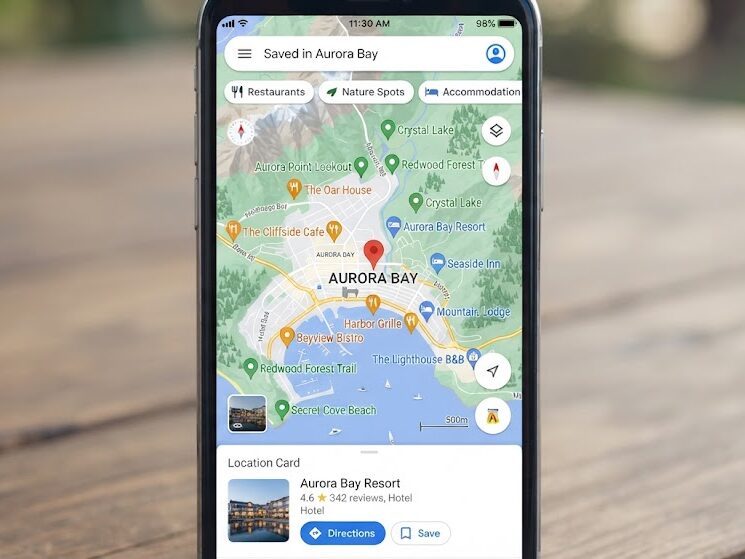
Use Google Maps to check travel times, nearby restaurants, walking routes, parks, and essential services before you leave.
Saving a few useful locations can prevent unnecessary searching after arrival. At the same time, there is no need to create an enormous collection of saved attractions.
A handful of practical locations is usually enough for a flexible getaway.
Accommodation Platforms for Comfortable Stays
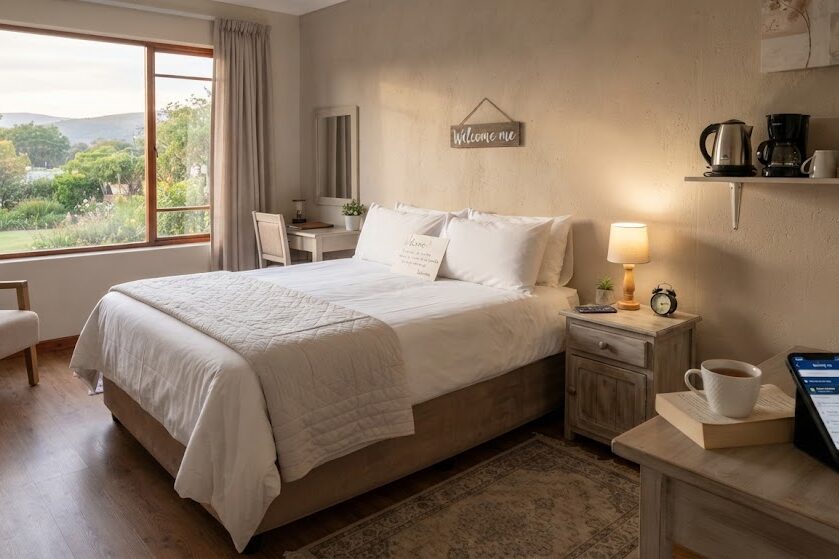
Accommodation platforms can help you compare location, amenities, reviews, and flexible options.
For a Menty B getaway, prioritize comfort, accessibility, quiet surroundings, and convenience rather than choosing a property simply because it looks impressive online.
A beautiful property that is difficult to reach or far from everything you need may create more stress than a simple, comfortable place in a convenient location.
Notes and Digital Well-Being Tools
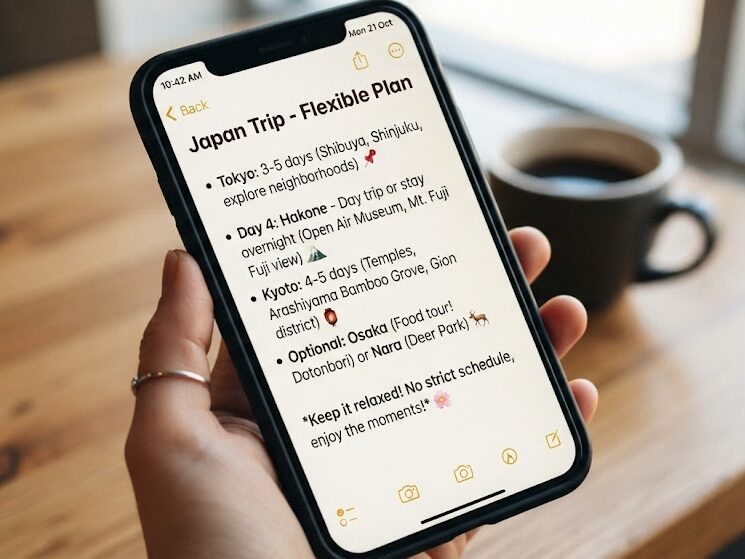
Your phone’s Notes app can also serve as a simple backup travel plan.
Keep your booking details, transportation information, important contact numbers, and one or two backup options in one easy-to-access place.
The goal is not to plan every possibility. It is simply to reduce avoidable stress if something changes.
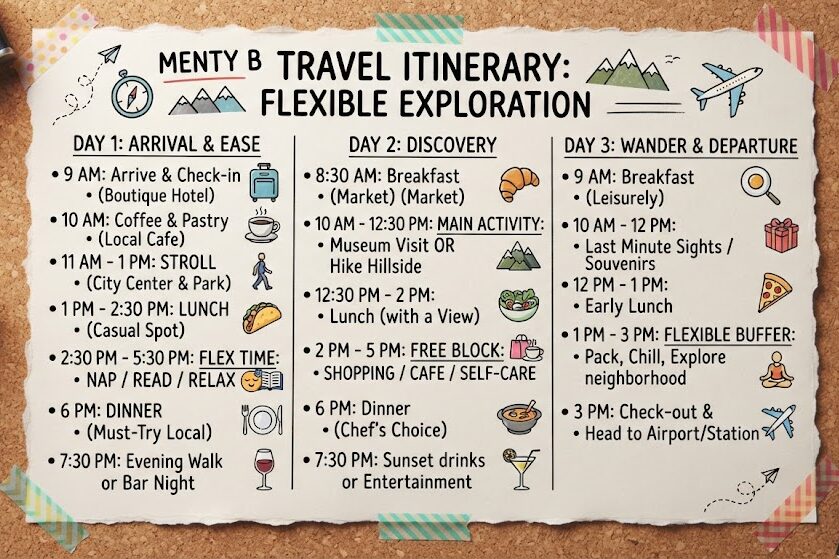
What Does a 2-Day Menty B Trip Look Like?
A two-day Menty B trip can combine essential logistics with long periods of unscheduled rest.
The ideal structure is intentionally simple rather than tightly optimized.
Day 1: Travel to the destination, check in, eat something comfortable, take a short walk, and spend the evening without a demanding schedule.
Day 2: Sleep naturally, have a slow breakfast, choose one activity such as hiking or swimming, enjoy a local meal, and leave several hours completely open.
For example, a traveler leaving Friday evening could arrive, sleep well, spend Saturday outdoors, and return Sunday without trying to visit every nearby attraction.
The important part is not following this exact schedule. It is maintaining enough flexibility to let the trip adapt to your energy and mood.
What Does a 3-Day Menty B Trip Look Like?
A three-day Menty B trip provides more room for recovery-style rest, exploration, and spontaneity without requiring a packed itinerary.
Three days can be especially useful when the destination is close enough to avoid exhausting travel.
Day 1: Arrive, settle in, eat locally, and do very little.
Day 2: Choose one meaningful activity such as hiking, yoga, swimming, a scenic drive, or exploring a local market.
Day 3: Have a slow morning, journal or read, enjoy lunch, and travel home with enough time to transition back into normal life.
For couples, you can also adapt the idea using couple road trip ideas and make the journey itself part of the reset.
Can Travel Really Help You Recover From Stress or Burnout?
Travel can provide temporary distance from routines and responsibilities, but it should not be treated as a guaranteed cure for burnout or serious mental-health problems.
Changing your environment may create space for rest, but the underlying causes of prolonged stress can remain after you return home.
Think of Travel as a Pause
A useful way to view Menty B Travel is as a pause rather than a permanent solution.
For example, sleeping well, stepping away from notifications, spending time outdoors, and reducing obligations may help you feel more rested for a period. However, unresolved work, study, relationship, or personal pressures may still need attention afterward.
Do Not Turn Rest Into Another Task
A restorative getaway should not become another performance challenge.
You do not need to meditate for an hour, hike ten miles, journal every morning, or follow a strict self-care schedule simply because you are on a wellness-oriented trip.
If lying in bed and reading is what you genuinely need, that can be enough.
Consider Professional Support When Needed
The healthiest approach is to treat travel as one part of a broader approach to well-being.
If stress or emotional difficulties are persistent, severe, or interfering with everyday life, consider speaking with an appropriate qualified professional rather than relying on travel alone.
What Are the Next Steps for Creating Your Own Menty B Getaway?
Creating a Menty B getaway starts by identifying what is exhausting you and what kind of break would actually reduce that pressure.
Rather than copying another person’s vacation, design the trip around your current needs.
Use this simple framework:
- Identify the pressure. Ask whether work, studies, screens, social commitments, routine, or general exhaustion is making you want to escape.
- Choose the reset. Decide whether you need nature, sleep, solitude, connection, movement, creativity, or simply fewer responsibilities.
- Pick a low-friction destination. Choose somewhere realistically accessible within your time and budget.
- Book the essentials. Arrange transportation and comfortable accommodation first.
- Leave intentional gaps. Keep at least part of each day free.
- Set boundaries. Decide when work messages and social notifications will be ignored.
- Return gently. Avoid filling your first day home with unnecessary commitments.
For example, if your biggest problem is digital overload, a quiet nature stay with limited connectivity may make more sense than a busy city break.
Likewise, if transportation itself is stressful, a nearby destination may be more restorative than a faraway dream vacation.
Conclusion
Menty B Travel is a Gen Z travel trend built around taking a break because life feels overwhelming, rather than traveling simply to maximize sightseeing. It reflects a broader movement toward flexible, emotion-driven travel where rest, nature, spontaneity, and personal experiences can matter more than a packed itinerary.
A successful Menty B trip does not need to be expensive, exotic, or perfectly photographed. Sometimes the most useful getaway is a nearby place where you can sleep, walk, eat well, disconnect, and leave your calendar empty.
The most important part is choosing a trip that responds to what you actually need. If you need quiet, create quiet. If you need nature, find nature. If you need connection, travel with someone you trust. And if you simply need to do nothing for a while, allow yourself that space.
Ultimately, modern travel does not always need to be about seeing more. Sometimes the best reason to go is simply to slow down and make space for yourself.
FAQs
What is Menty B Travel?
Menty B Travel means taking a trip to escape stress, overwhelm, and everyday routine.
Why is Menty B Travel trending?
Menty B Travel is trending because Gen Z increasingly values rest, flexibility, and meaningful getaways.
How long should a Menty B trip be?
A Menty B trip can last one night, a weekend, or several days.
What are the best destinations for Menty B Travel?
Quiet beaches, mountains, nature escapes, and small towns are great options.
What can you do on a Menty B trip?
You can read, walk, swim, hike, meditate, sleep, or simply relax.
Is Menty B Travel the same as a wellness vacation?
No. Menty B Travel focuses on escaping overwhelm, while wellness trips focus on well-being activities.
Is Menty B Travel the same as a micro-cation?
No. A micro-cation is defined by its short duration, while Menty B Travel is defined by its purpose.
Can Menty B Travel help with stress?
A getaway may provide temporary rest and distance from everyday stress.
How do you plan a Menty B trip?
Choose an easy destination, book the essentials, and leave plenty of free time.