
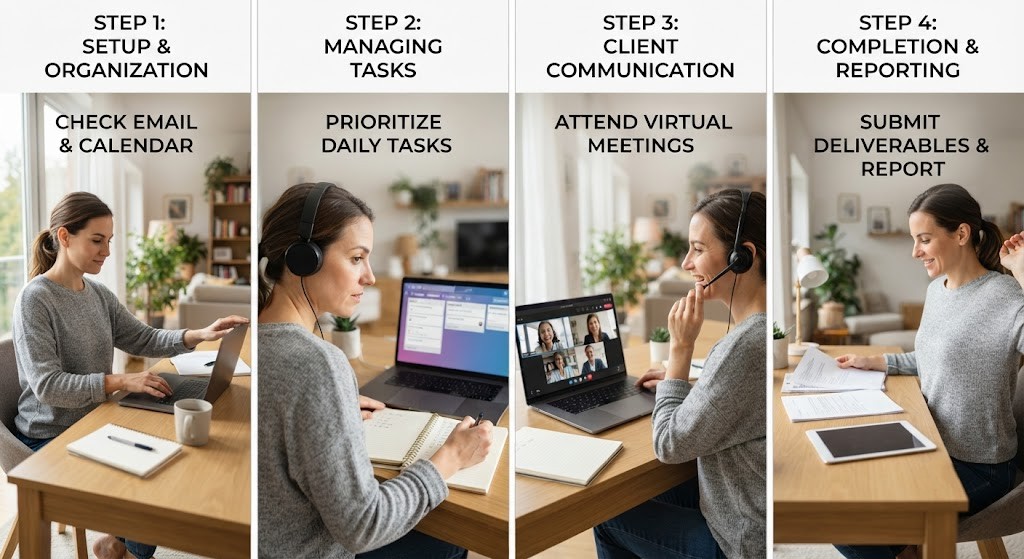
Working from home has transformed the way people build careers, and becoming a virtual assistant from home is one of the fastest-growing opportunities in today’s remote job market. Whether you’re looking for a side income, a flexible full-time career, or a way to work with clients worldwide, virtual assistance offers a low-cost path to earning online.
The best part? You don’t need years of experience or expensive certifications to get started. Many successful virtual assistants began with basic administrative and communication skills they already had.
In this comprehensive guide, you’ll learn:
- What a virtual assistant from home does
- Essential skills and tools you need
- How to choose a profitable niche
- How to create a professional portfolio
- Where to find legitimate clients
- Common mistakes to avoid
- How to grow into a high-income remote career
What Is a Virtual Assistant From Home?
A virtual assistant from home is a remote professional who provides administrative, technical, creative, or customer support services to businesses and entrepreneurs over the internet.
Instead of working in a traditional office, virtual assistants complete tasks online using email, video conferencing, messaging platforms, and cloud-based software. They may work as freelancers, independent contractors, or full-time remote employees.
For example, a small business owner might hire a virtual assistant to:
- Manage emails
- Schedule appointments
- Organize digital files
- Respond to customer inquiries
- Update spreadsheets
- Prepare reports
Everything is completed remotely without needing to meet clients in person.
According to Grand View Research (2024), the global virtual assistant market continues to grow as businesses increasingly adopt remote work and digital operations.
Statistic: Over 35% of the global workforce performs remote work at least part of the time. — Source: Statista, 2024.
What Does a Virtual Assistant Do?
The responsibilities of a virtual assistant from home vary depending on the client’s industry and business needs. Some assistants focus on general administrative support, while others specialize in technical or creative services.
Common responsibilities include:
- Managing emails
- Scheduling meetings
- Calendar management
- Data entry
- Internet research
- Customer support
- Social media scheduling
- Travel booking
- File organization
- Document formatting
- CRM management
- Invoice preparation
Many virtual assistants also specialize in industries such as:
- Healthcare
- E-commerce
- Real estate
- Marketing
- Finance
Specializing in a niche often leads to better-paying clients and long-term contracts.
Virtual Assistant vs Traditional Office Assistant
| Feature | Virtual Assistant | Office Assistant |
|---|---|---|
| Work Location | Remote | Physical office |
| Working Hours | Flexible | Fixed schedule |
| Clients | Multiple businesses | Usually one employer |
| Equipment | Personal computer | Company equipment |
| Income Model | Hourly, project, retainer | Salary |
A virtual assistant enjoys greater flexibility, location independence, and the opportunity to work with multiple clients, whereas office assistants typically work fixed schedules from a physical workplace.
How Does a Virtual Assistant Work Remotely?
A virtual assistant from home works by communicating with clients through online platforms while completing assigned tasks using cloud-based software.
Most businesses manage projects through collaboration tools, while daily communication happens through:
- Video meetings
- Messaging apps
- Project management platforms
A typical workday may include:
- Checking emails
- Reviewing assigned tasks
- Attending virtual meetings
- Updating spreadsheets
- Scheduling appointments
- Responding to customer inquiries
- Submitting completed work
For example, an e-commerce business may ask its VA to answer customer emails in the morning, upload new products during the afternoon, and prepare weekly sales reports before the end of the day.
Most virtual assistant businesses can be started with:
- Computer or laptop
- Reliable internet connection
- Smartphone
- Basic productivity software
Why Becoming a Virtual Assistant Matters
A virtual assistant from home career offers flexibility, low startup costs, and access to a global marketplace.
As companies continue embracing remote work, skilled virtual assistants remain in high demand across industries.
Statistic: Nearly 74% of companies plan to permanently increase remote work opportunities. — Source: Gartner, 2024.
Flexible Lifestyle
One of the biggest advantages is complete flexibility.
You can:
- Choose your own schedule
- Work from almost anywhere
- Decide how many clients to serve
- Balance work with studies or family responsibilities
Students often work evenings, while parents frequently complete client work during school hours.
Interested in more remote opportunities?
Low Startup Costs
Unlike many businesses, becoming a virtual assistant requires very little investment.
Most beginners already have:
- Laptop or desktop
- Internet connection
- Smartphone
- Headphones
- Google account
There’s no need for inventory, office rent, or expensive software subscriptions when starting.
Global Job Opportunities
Remote work removes geographic limitations.
You can work with businesses located in:
- United States
- Canada
- Australia
- United Kingdom
- Singapore
- Europe
Serving international clients often provides higher earning potential than local office jobs.
Excellent Career Growth
Virtual assistant work is far more than a temporary side hustle.
Many professionals eventually become:
- Executive Virtual Assistants
- Social Media Managers
- Operations Managers
- Online Business Managers
- Project Managers
- Agency Owners
Specialized virtual assistants generally earn higher hourly rates because they provide expertise in specific industries or business functions.
How Can Beginners Become a Virtual Assistant From Home?
Starting a virtual assistant from home career involves identifying your skills, selecting a niche, building credibility, and finding your first clients.
Even without professional experience, consistent learning and professionalism can help you succeed.
Step 1: Identify Your Existing Skills
Many beginners already possess valuable transferable skills.
Think about experience from:
- School projects
- College organizations
- Previous jobs
- Volunteer work
- Personal projects
Useful skills include:
- Email writing
- Microsoft Excel
- Google Docs
- Customer service
- Scheduling
- Internet research
- Data entry
- Communication
- Organization
For instance, managing a college event or organizing a student club already demonstrates planning and administrative abilities.
Step 2: Choose a Niche
Choosing one specialty helps you stand out.
Popular niches include:
- Administrative Virtual Assistant
- Social Media Virtual Assistant
- Amazon Virtual Assistant
- Real Estate Virtual Assistant
- Bookkeeping Virtual Assistant
- Customer Support VA
- Email Management VA
- Marketing Virtual Assistant
Clients are often willing to pay more for specialists than generalists.
Step 3: Build a Simple Portfolio
A professional portfolio builds trust with potential clients.
Even without paid experience, create sample projects like:
- Email management workflow
- Calendar organization examples
- Spreadsheet dashboards
- Social media content calendar
- Customer support templates
A Google Drive folder containing organized samples works well for beginners.
Need help creating one?
Step 4: Set Your Rates
Pricing should reflect both your experience and the value you provide.
| Experience | Hourly Rate |
|---|---|
| Beginner | $8–15 |
| Intermediate | $15–30 |
| Specialized VA | $30–60+ |
As your portfolio, testimonials, and experience grow, gradually increase your rates.
For detailed pricing strategies:
how to price freelance services
Step 5: Create Professional Profiles
Your online profile is often your first impression.
Include:
- Professional photo
- Clear headline
- Skills
- Services offered
- Portfolio
- Testimonials
- Contact information
Instead of listing skills, explain how you solve client problems.
Example:
“I help busy entrepreneurs manage emails, schedules, and administrative tasks so they can focus on growing their business.”
How Do You Get Your First Virtual Assistant Client?
Landing your first virtual assistant from home client takes consistency, professionalism, and patience.
According to Upwork (2024), clients are more likely to hire freelancers who have complete profiles, relevant work samples, and personalized proposals.
Statistic: More than 60% of freelancers find new clients through online marketplaces and referrals. — Source: Upwork Research, 2024.
Apply on Trusted Platforms
Legitimate websites include:
- Upwork
- Fiverr
- Freelancer
- PeoplePerHour
- OnlineJobs.ph
- LinkedIn Jobs
- FlexJobs
- Indeed
- Remote.co
- We Work Remotely
Compare different hiring platforms in our guide:
Write Personalized Proposals
Instead of sending generic applications, tailor every proposal.
Include:
- Short introduction
- Relevant experience
- Portfolio samples
- Solution to the client’s problem
- Professional closing
Clients appreciate proposals that clearly demonstrate understanding of their business.
Deliver Excellent Client Communication
Long-term success depends heavily on communication.
Always:
- Respond promptly
- Meet deadlines
- Ask questions when necessary
- Keep clients informed
Reliable communication frequently results in repeat business and referrals.
What Types of Virtual Assistant Jobs Are Available?
Virtual assistant jobs range from general administrative work to highly specialized services.
| Virtual Assistant Type | Primary Responsibilities | Typical Clients |
|---|---|---|
| Administrative VA | Scheduling, email, data entry | Small businesses |
| Executive VA | Executive support, meetings | CEOs, founders |
| Social Media VA | Content scheduling, engagement | Brands, creators |
| E-commerce VA | Product listings, order management | Online stores |
| Amazon VA | Product research, inventory | Amazon sellers |
| Real Estate VA | CRM updates, lead generation | Realtors |
| Customer Support VA | Chat, email, phone support | SaaS, e-commerce |
| Email Management VA | Inbox organization | Entrepreneurs |
| Bookkeeping VA | Invoices, expenses | Small businesses |
| Marketing VA | Campaign support, research | Marketing agencies |
Specialized virtual assistants generally earn higher hourly rates because they provide expertise in specific industries or business functions.
What Skills Do You Need to Become a Virtual Assistant?
Virtual assistants require both soft skills and technical knowledge.
Essential Soft Skills
Successful virtual assistants develop:
- Communication
- Time management
- Organization
- Adaptability
- Critical thinking
- Professionalism
Strong communication builds trust and long-term client relationships.
Essential Technical Skills
Learn tools such as:
- Microsoft Office
- Google Workspace
- Excel
- Google Sheets
- Presentation software
- Calendar management
- Email platforms
- Cloud storage
Learn AI Productivity Tools
AI has become an important advantage for modern virtual assistants.
Popular tools include:
- ChatGPT
- Claude
- Grammarly
- Notion AI
- Canva Magic Studio
These tools can help:
- Draft emails
- Summarize meetings
- Generate content ideas
- Organize information
- Improve writing quality
Discover even more best AI productivity tools.
Improve Your Productivity
Managing multiple clients requires structured planning.
Helpful habits include:
- Time blocking
- Daily task lists
- Calendar planning
- Weekly reviews
- Priority management
Which Tools Do Virtual Assistants Use Every Day?
Virtual assistants depend on cloud-based software for communication, organization, and collaboration.
| Category | Popular Tools |
|---|---|
| Communication | Zoom, Slack, Microsoft Teams |
| Project Management | Trello, Asana, ClickUp |
| File Sharing | Google Drive, Dropbox |
| Scheduling | Calendly, Google Calendar |
| Time Tracking | Toggl Track, Clockify |
| Password Management | Bitwarden, 1Password |
| AI Assistance | ChatGPT, Claude, Gemini |
Most virtual assistant businesses can be started with a computer, reliable internet connection, and commonly used productivity software.


How Much Do Virtual Assistants Earn Working From Home?
Income depends on experience, specialization, location, and client type.
| Experience | Hourly Rate |
|---|---|
| Beginner | $8–15 |
| Intermediate | $15–30 |
| Experienced Specialist | $30–60+ |
| Executive VA | $50–100+ |
Many experienced virtual assistants transition to monthly retainers, creating more predictable recurring income.
Statistic: Experienced freelancers often earn significantly more than entry-level workers by specializing and building long-term client relationships. — Source: Upwork Freelancer Report, 2024.
Where Can You Find Legitimate Virtual Assistant Jobs Online?
Reliable platforms include:
- LinkedIn Jobs
- Upwork
- Fiverr
- Freelancer
- FlexJobs
- Remote.co
- We Work Remotely
- Indeed
- PeoplePerHour
Always avoid opportunities that:
- Require upfront payments
- Promise unrealistic earnings
- Request sensitive personal information immediately
- Have no company website or online presence
What Mistakes Should New Virtual Assistants Avoid?
Many beginners struggle because of avoidable mistakes.
Common ones include:
- Charging extremely low rates
- Missing deadlines
- Sending generic proposals
- Offering too many unrelated services
- Ignoring contracts
- Failing to continue learning
Building a professional reputation takes consistency, reliability, and continuous improvement.
Can Virtual Assistant Work Become a Full-Time Career?
Absolutely.
Many successful virtual assistants eventually:
- Hire subcontractors
- Build remote agencies
- Sell digital products
- Offer consulting
- Launch online courses
- Become Online Business Managers (OBMs)
Strong personal branding helps attract premium clients and higher-paying projects.
What’s Next After Becoming a Virtual Assistant?
Once you’ve gained experience, focus on scaling your career.
Your next steps should include:
- Selecting one profitable niche.
- Increasing your hourly rates as your experience grows.
- Building long-term client relationships.
- Learning advanced software and AI tools.
- Creating a professional website and portfolio.
- Developing a recognizable personal brand.
- Scaling into an agency if desired.
By improving one skill at a time, you can steadily increase both your income and your career opportunities.
Ready to expand further? Read our guide on how to scale a freelance business.
Conclusion
A virtual assistant from home career is one of the most accessible and rewarding ways to earn income online. With minimal startup costs, flexible working hours, and opportunities to serve clients around the world, it’s an excellent option for students, professionals, parents, and anyone seeking a remote career.
Success begins with the skills you already have. By identifying your strengths, choosing a niche, creating a professional portfolio, and consistently applying for legitimate opportunities, you can build a sustainable business that grows over time. Remember that reliable communication, strong organization, continuous learning, and the smart use of AI productivity tools are what separate successful virtual assistants from the rest.
FAQS
What is a virtual assistant from home?
A remote professional who helps businesses with tasks like email, scheduling, customer support, and administration online.
Do I need experience to become a virtual assistant?
No. Many beginners start with basic skills and gain experience while working with clients.
How much can a beginner virtual assistant earn?
Beginners typically earn $8–15 per hour, depending on their skills and clients.
What equipment do I need?
A computer, reliable internet connection, a smartphone, and basic productivity software.
Which virtual assistant niche pays the most?
Executive, bookkeeping, marketing, and real estate virtual assistant roles usually offer higher pay.
Where can I find legitimate virtual assistant jobs?
Trusted platforms include Upwork, Fiverr, LinkedIn Jobs, FlexJobs, Remote.co, and Indeed.
Which AI tools help virtual assistants?
ChatGPT, Claude, Grammarly, Notion AI, and Canva Magic Studio are popular productivity tools.
Can virtual assistant work become a full-time career?
Yes. Many virtual assistants grow into full-time freelancers, agency owners, or Online Business Managers.