
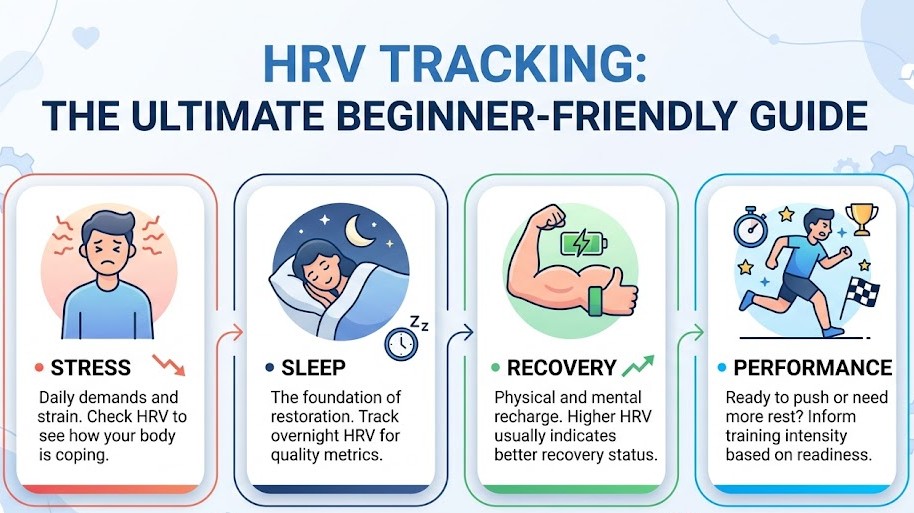
You’ve probably seen your smartwatch mention HRV or recovery scores, but most people don’t actually understand what those numbers mean or how to use them effectively. Simply tracking HRV without context can lead to confusion and poor recovery decisions. In this guide, you’ll learn what HRV tracking really measures, how to interpret your scores correctly, and how to use HRV data to improve sleep, recovery, stress management, and performance.
Key Takeaways
- Heart Rate Variability (HRV) measures the variation in time between heartbeats and reflects nervous system balance and recovery status.
- HRV tracking helps monitor stress, sleep quality, exercise recovery, and readiness for physical or mental performance.
- Personal HRV trends matter more than comparing scores with other people because HRV varies significantly by age, fitness, and genetics.
- Consistent HRV measurements taken under similar conditions produce more accurate and useful recovery insights.
- Lifestyle factors such as sleep quality, hydration, alcohol intake, illness, and training intensity can significantly affect HRV readings.
- Wearables like Apple Watch, Garmin, WHOOP, and Oura Ring make HRV tracking accessible for beginners and athletes alike.
- Long-term HRV tracking works best when paired with healthy recovery habits, balanced training, and stress management strategies.
What Is HRV Tracking and How Does It Work?
HRV tracking is the process of measuring the variation in time between consecutive heartbeats to evaluate recovery, stress, and nervous system balance.
“Heart Rate Variability (HRV) is the variation in time between consecutive heartbeats and reflects the balance of the autonomic nervous system.”
First, it’s important to understand that HRV is not the same thing as heart rate. Your heart rate measures how many times your heart beats per minute, while HRV measures the tiny differences in timing between each heartbeat.
For example, if your heart beats exactly once every second, your HRV would actually be low. Healthy hearts naturally vary their timing slightly between beats. This variability shows that your nervous system can adapt efficiently to stress, exercise, sleep, and recovery demands.
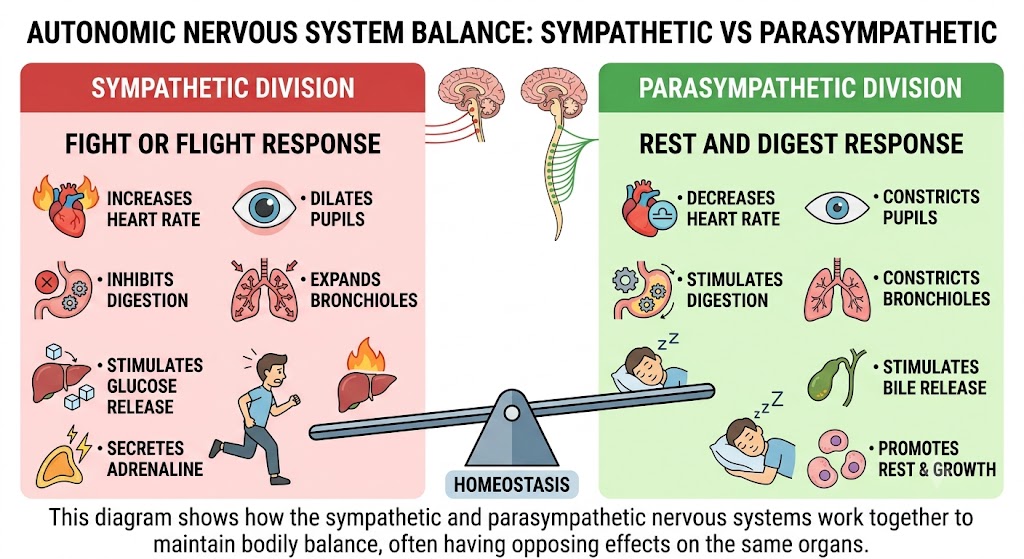
Moreover, HRV primarily reflects the balance between the two branches of your autonomic nervous system:
- Sympathetic nervous system = “fight or flight”
- Parasympathetic nervous system = “rest and recovery”
A higher HRV generally suggests better recovery and adaptability. A lower HRV may indicate stress, fatigue, illness, poor sleep, or overtraining.
According to research published in the European Heart Journal, lower HRV is associated with higher cardiovascular stress and reduced resilience — Source: European Heart Journal, 2023.
What Is the Difference Between Heart Rate and HRV?
Heart rate measures beats per minute, while HRV measures the variation between those beats.
At the same time, many beginners mistakenly think a high HRV and low heart rate are identical metrics. They are related but different.
| Metric | What It Measures | Higher Is Better? | Main Use |
|---|---|---|---|
| Heart Rate | Beats per minute | Usually lower at rest | Cardiovascular efficiency |
| HRV | Variation between beats | Usually higher | Recovery and stress readiness |
For example, an athlete may have:
- Resting heart rate: 50 BPM
- HRV: 85 ms
Meanwhile, a stressed or sleep-deprived person might have:
- Resting heart rate: 78 BPM
- HRV: 28 ms
Why Variability Is Considered Healthy
Heart rate variability is considered healthy because it reflects a flexible and responsive nervous system.
Additionally, your body constantly adapts to physical and mental demands throughout the day. A healthy nervous system can quickly switch between stress activation and recovery mode.
For example, during exercise your heart rate increases rapidly. After exercise, your parasympathetic nervous system should help your body calm down efficiently. Strong HRV often reflects this adaptability.
“A higher HRV generally indicates better recovery and nervous system adaptability, while a lower HRV may signal stress, fatigue, or insufficient recovery.”
Why Is Heart Rate Variability Important for Health and Recovery?
Heart rate variability is important because it provides insight into stress levels, recovery quality, sleep health, and overall physiological readiness.
“HRV tracking helps measure recovery, stress levels, sleep quality, and readiness for physical or mental performance.”
First, HRV gives you a deeper understanding of how your body responds to daily stressors. Unlike basic fitness metrics, HRV reflects nervous system function rather than just physical activity.
For example, two people may sleep eight hours, but the person with better sleep quality often wakes up with higher HRV scores.
Research from the Journal of Strength and Conditioning Research found that athletes using HRV-guided training improved performance while reducing overtraining risk — Source: JSCR, 2024.
HRV and Stress Management
HRV and stress are closely connected because chronic stress suppresses nervous system recovery.
Moreover, work pressure, anxiety, poor sleep, dehydration, and emotional stress can all reduce HRV levels.
For example, many wearable users notice their HRV drops after:
- Intense workdays
- Alcohol consumption
- Late-night screen time
- Poor sleep
- Illness
“Sleep quality, alcohol intake, hydration, illness, and training intensity can all significantly influence HRV scores.”
stress management techniques
Can HRV Tracking Help Prevent Overtraining?
HRV tracking can help prevent overtraining by identifying when your body is not fully recovered from physical stress.
Additionally, low HRV trends over multiple days often signal excessive fatigue or insufficient recovery.
For example, endurance athletes commonly use HRV to decide whether to:
- Push harder
- Reduce workout intensity
- Add recovery days
- Prioritize sleep
A 2025 sports recovery survey found that 68% of endurance athletes now use wearable recovery metrics regularly — Source: TrainingPeaks Athlete Survey, 2025.
overtraining recovery signs
How Do Smartwatches and Wearables Measure HRV?
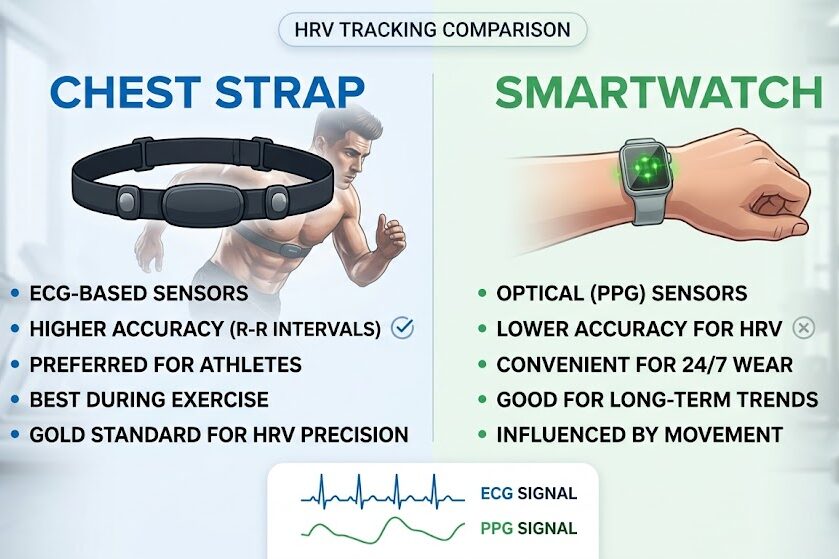
Smartwatches and wearables measure HRV by analyzing the time intervals between heartbeats using optical sensors or chest straps.
Most modern devices use one of two methods:
- Optical heart rate sensors (PPG)
- Electrical heart monitoring (ECG/chest straps)
Chest Straps vs Optical Sensors
Chest straps usually provide more accurate HRV data than wrist-based optical sensors.
However, modern optical sensors have improved significantly in recent years.
| Device Type | Accuracy | Best For | Drawback |
|---|---|---|---|
| Chest Strap | Very high | Athletes & researchers | Less convenient |
| Smartwatch | Moderate to high | Daily users | Motion interference |
| Smart Ring | High during sleep | Recovery tracking | Limited workouts |
For example, chest straps like Polar H10 remain popular for serious HRV training because they directly measure electrical heart activity.
Meanwhile, devices like Apple Watch and Oura Ring focus on convenience and long-term trend tracking.
Morning Measurements vs All-Day Tracking
Morning HRV measurements are generally more reliable than all-day readings because they reduce lifestyle variability.
“Consistent morning measurements under similar conditions produce the most reliable HRV tracking data.”
Additionally, many experts recommend measuring HRV:
- Immediately after waking
- Before caffeine
- Before checking your phone
- In the same body position daily
For example, WHOOP and Oura Ring primarily emphasize overnight recovery metrics because sleep produces more stable readings.
Common HRV Metrics Explained
RMSSD and SDNN are the most common HRV metrics used by wearable devices and recovery apps.
The two most important beginner metrics are:
| Metric | Meaning | Common Use |
|---|---|---|
| RMSSD | Short-term variability | Fitness and recovery |
| SDNN | Overall variability | General health analysis |
Most fitness wearables prioritize RMSSD because it better reflects parasympathetic recovery status.
What Is a Good HRV Score for Your Age and Fitness Level?
A good HRV score depends heavily on your age, genetics, fitness level, and lifestyle habits.
One of the biggest mistakes beginners make is comparing their HRV score with friends or influencers online.
For example:
- A healthy 25-year-old endurance athlete may average 95 ms
- A healthy 45-year-old professional may average 42 ms
- Another healthy person may naturally average 30 ms
All three could still be healthy.
Why Comparing HRV Scores Is Misleading
Comparing HRV scores between individuals is misleading because HRV varies dramatically across populations.
Additionally, genetics play a major role in baseline HRV.
For example, some elite athletes naturally maintain lower HRV despite excellent recovery markers.
“HRV trends over time are more meaningful than single daily readings because HRV naturally fluctuates from day to day.”
How to Establish Your HRV Baseline
An HRV baseline is your average recovery range measured consistently over several weeks.
Most experts recommend:
- Track HRV daily for 2–4 weeks
- Measure under consistent conditions
- Focus on trends rather than spikes
- Monitor major lifestyle changes
For example, if your normal HRV averages between 55–65 ms, a sudden drop to 40 ms for several days may signal accumulated stress or fatigue.
fitness recovery metrics
Which Factors Can Lower or Improve Your HRV?
Sleep quality, hydration, stress, exercise balance, illness, and lifestyle habits are the biggest factors influencing HRV.
First, recovery-focused behaviors typically improve HRV over time. Meanwhile, chronic stressors usually lower HRV.
Sleep Quality and HRV
Sleep quality strongly affects HRV because deep sleep activates parasympathetic recovery processes.
According to the Sleep Foundation, adults with consistent sleep schedules show significantly better recovery metrics — Source: Sleep Foundation, 2025.
For example, many wearable users notice improved HRV after:
- Sleeping 7.5–9 hours
- Reducing blue light exposure
- Improving bedroom temperature
- Maintaining sleep consistency
Exercise, Recovery, and Training Load
Balanced exercise improves HRV, while excessive training without recovery can reduce it.
Additionally, moderate aerobic exercise often improves long-term HRV adaptation.
For example:
- Walking
- Zone 2 cardio
- Strength training with recovery days
- Yoga and mobility work
These activities often support better recovery metrics over time.
Alcohol, Hydration, and Nutrition Effects
Alcohol commonly lowers HRV by increasing physiological stress and disrupting sleep quality.
Moreover, dehydration and nutrient deficiencies can negatively affect recovery status.
For example, many users experience dramatic HRV drops after:
- Heavy drinking
- Poor hydration
- High processed-food intake
- Extreme calorie restriction
Research from WHOOP showed alcohol consumption reduced overnight recovery metrics significantly in wearable users — Source: WHOOP Recovery Study, 2024.
Breathing Exercises and Mindfulness
Slow breathing and mindfulness practices can improve HRV by stimulating parasympathetic nervous system activity.
For example, box breathing and meditation often increase short-term HRV scores.
Simple breathing routine:
- Inhale for 4 seconds
- Hold for 4 seconds
- Exhale for 4 seconds
- Repeat for 5 minutes
breathing exercises for recovery
How Often Should You Track HRV for Accurate Results?
Daily HRV tracking produces the most reliable long-term recovery insights.
Consistency matters more than measurement frequency alone.
For example, measuring HRV every morning under similar conditions creates cleaner trend data than random measurements throughout the week.
Best Time to Measure HRV
Morning HRV measurements immediately after waking are considered the gold standard for consistency.
Additionally, overnight wearable tracking can also provide useful recovery insights.
Avoid measuring HRV:
- After caffeine
- After intense exercise
- During emotional stress
- Immediately after eating
What Are the Most Common HRV Tracking Mistakes?
The most common HRV tracking mistakes include obsessing over daily changes, comparing scores, and ignoring lifestyle context.
Beginners often:
- Panic over one low score
- Ignore sleep quality
- Train hard despite poor recovery
- Measure inconsistently
- Use multiple devices interchangeably
For example, switching between different HRV apps can create confusing baseline differences.
Which Wearables Are Best for HRV Tracking in 2026?
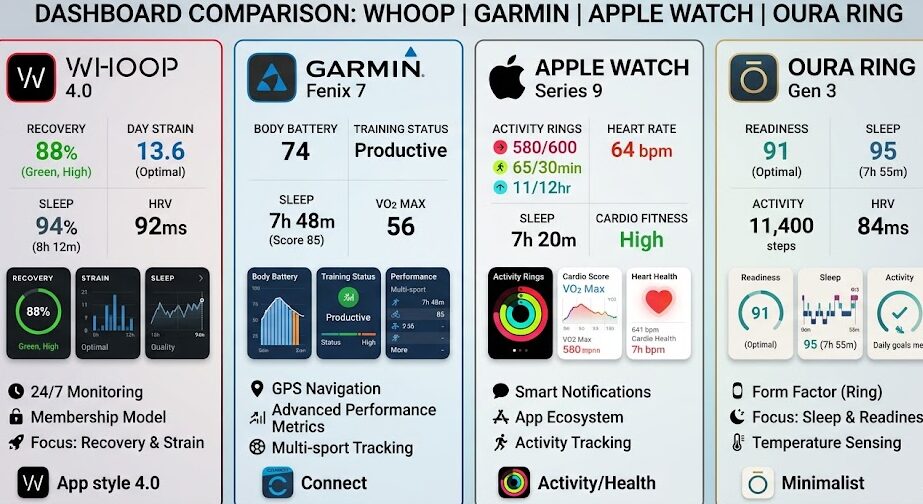
The best HRV tracking wearables combine accurate sensors, useful recovery insights, and easy-to-understand data trends.
WHOOP Recovery Tracking
WHOOP focuses heavily on recovery, strain, and sleep optimization through continuous HRV analysis.
Best for:
- Athletes
- Recovery-focused users
- Data-driven training
Potential drawback:
- Subscription-based pricing
Apple Watch HRV
Apple Watch provides accessible HRV tracking integrated into a broader health ecosystem.
Best for:
- iPhone users
- Beginners
- General wellness tracking
Potential drawback:
- HRV data can feel less recovery-focused without third-party apps
Garmin HRV Status
Garmin HRV status tools focus strongly on endurance training and readiness analysis.
Best for:
- Runners
- Cyclists
- Triathletes
Potential drawback:
- Advanced metrics may overwhelm beginners
Oura Ring HRV
Oura Ring specializes in sleep recovery and nighttime HRV tracking.
Best for:
- Sleep optimization
- Wellness users
- Minimalist wearables
Potential drawback:
- Less workout-specific analysis
| Device | Best For | Main Strength |
|---|---|---|
| WHOOP | Recovery optimization | Coaching insights |
| Apple Watch | General wellness | Accessibility |
| Garmin | Endurance athletes | Training readiness |
| Oura Ring | Sleep & recovery | Overnight accuracy |
Is HRV Tracking Useful for Non-Athletes?
HRV tracking is useful for non-athletes because stress recovery and nervous system health affect everyone.
Additionally, HRV data can help professionals, students, and parents understand how lifestyle habits affect recovery capacity.
For example, office workers often notice lower HRV during:
- High-stress work weeks
- Poor sleep periods
- Emotional burnout
- Travel fatigue
HRV for Mental Wellness and Burnout Prevention
HRV can help identify chronic stress patterns before burnout symptoms become severe.
Research from Harvard Medical School linked mindfulness practices with improved autonomic nervous system regulation — Source: Harvard Medical School, 2024.
For example, noticing a consistent HRV decline over several weeks may encourage earlier recovery interventions.
Should You Train Hard on Low HRV Days?
Low HRV days do not automatically mean you should skip exercise completely.
Instead, HRV should guide training adjustments based on context and trends.
For example:
- One low reading after poor sleep may not matter
- Several low readings combined with fatigue may justify lighter training
Many athletes use a simple recovery framework:
| HRV Trend | Suggested Action |
|---|---|
| Normal or elevated | Hard training possible |
| Slightly reduced | Moderate training |
| Significantly low for several days | Recovery focus |
This approach can improve recovery consistency while reducing injury risk.
How Can You Improve HRV Naturally Through Lifestyle Changes?
You can improve HRV naturally by prioritizing sleep, stress management, balanced exercise, hydration, and recovery-focused habits.
Long-term improvement usually happens gradually rather than overnight.
Daily Habits That Support Better HRV
Consistent recovery habits improve HRV more effectively than isolated “biohacks.”
Most effective habits include:
- Consistent sleep schedule
- Moderate exercise
- Proper hydration
- Reduced alcohol intake
- Mindfulness practice
- Recovery-focused nutrition
For example, improving bedtime consistency alone often improves wearable recovery scores within 2–3 weeks.
Beginner-Friendly HRV Improvement Routine
A simple recovery routine can help beginners use HRV data more effectively.
Try this framework:
- Measure HRV every morning
- Sleep 7.5–9 hours consistently
- Walk daily
- Manage stress proactively
- Avoid excessive alcohol
- Adjust workout intensity based on recovery trends
What to Do With Your HRV Data Next
HRV data becomes valuable when you use it to improve recovery decisions rather than obsess over numbers.
Many people collect wearable data without changing their habits. However, HRV works best when paired with actionable lifestyle adjustments.
Build a Recovery-Focused Routine
A recovery-focused routine combines sleep, training balance, nutrition, and stress management into a sustainable system.
For example, you can use HRV trends to:
- Schedule deload weeks
- Improve sleep consistency
- Reduce burnout risk
- Optimize training intensity
- Identify lifestyle stressors
Track Long-Term Trends Instead of Daily Noise
Long-term HRV trends provide more useful insights than isolated daily fluctuations.
Additionally, wearable data becomes more accurate after several weeks of consistent tracking.
For example, noticing gradual HRV improvements over months often reflects:
- Better sleep
- Improved fitness
- Lower chronic stress
- More effective recovery habits
Conclusion
HRV tracking is one of the most practical ways to understand how your body responds to stress, sleep, exercise, and recovery.
At the same time, the goal is not to chase perfect numbers every day. Instead, focus on consistent measurements, long-term trends, and actionable recovery habits.
By improving sleep, balancing training, managing stress, and tracking your baseline over time, you can turn HRV data into meaningful health improvements rather than confusing metrics. The most successful HRV users stay consistent, avoid obsessing over daily fluctuations, and use recovery data to support sustainable performance and wellness.
FAQ
What is HRV tracking?
HRV tracking measures heart rate variability, which is the variation in time between heartbeats and an indicator of recovery, stress, and nervous system balance.
What does HRV stand for?
HRV stands for Heart Rate Variability.
Why is HRV important?
HRV can provide insights into recovery, stress levels, sleep quality, fitness readiness, and overall health.
What is a good HRV score?
A good HRV score varies by age, fitness level, and individual baseline, so personal trends matter more than a single number.
Can HRV tracking improve workout performance?
Yes, HRV tracking may help guide training intensity and recovery to reduce overtraining and improve performance.
How does sleep affect HRV?
Good sleep quality often improves HRV, while poor sleep and sleep deprivation may lower it.
Can stress lower HRV?
Yes, physical and emotional stress commonly reduce HRV because they increase strain on the nervous system.
What devices can track HRV?
Many smartwatches, fitness trackers, chest straps, and health apps can monitor HRV.
How can you improve HRV naturally?
Better sleep, stress management, hydration, exercise, recovery, and healthy lifestyle habits may help improve HRV over time.
Should you measure HRV every day?
Daily tracking is often recommended because long-term trends provide more useful insights than occasional readings.