
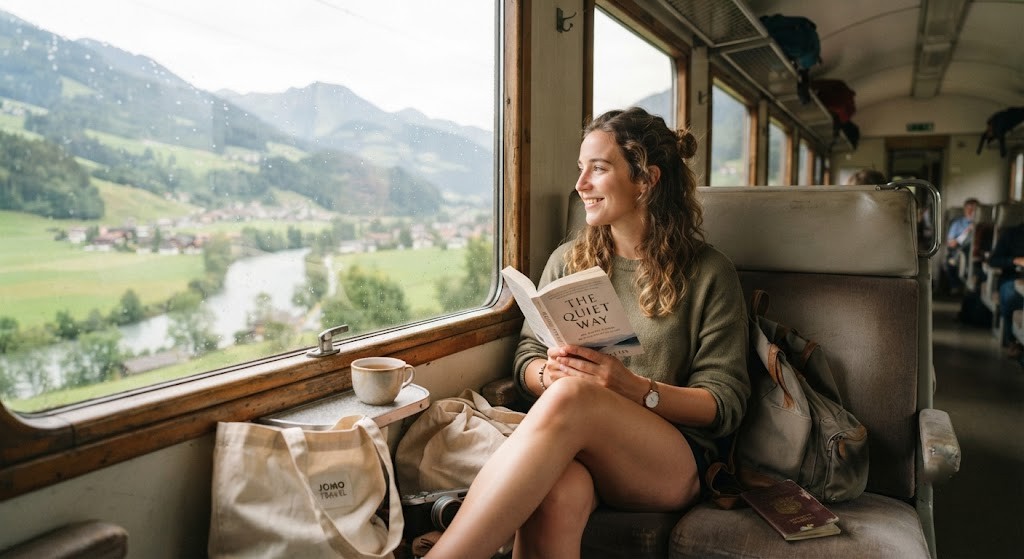
You’ve probably planned trips packed with attractions, restaurants, tours, activities, and places worth checking off your list. Yet when every hour is scheduled, a vacation can start feeling surprisingly similar to everyday life: busy, rushed, and driven by a constant need to do more.
That’s where JOMO Travel comes in.
JOMO stands for the Joy of Missing Out, and JOMO Travel is about intentionally choosing fewer experiences so you can enjoy the ones that matter more. Instead of worrying about everything you could be missing, you give yourself permission to slow down, disconnect, explore naturally, and actually experience the destination.
In this guide, you’ll learn what JOMO Travel means, why it is becoming popular, how it differs from slow travel, how to create a JOMO-friendly itinerary, which experiences work best, and how to use digital boundaries to make your next vacation feel more restorative.
What Is JOMO Travel and What Does JOMO Mean?
JOMO Travel is an intentional travel style centered on enjoying the present moment instead of worrying about experiences you might be missing. JOMO stands for the Joy of Missing Out, and in travel, it means deliberately choosing less so you can experience more deeply.
Traditional sightseeing often encourages travelers to maximize their time. That might mean visiting several attractions in one day, changing hotels frequently, booking restaurants weeks in advance, and trying to fit every recommended activity into a short trip.
JOMO Travel takes the opposite approach.
For example, instead of visiting five attractions before lunch, a JOMO traveler might spend the morning drinking coffee, walking around the neighborhood, reading, or simply enjoying the accommodation before choosing one meaningful activity.
The idea became more visible as a travel trend through Expedia Group’s 2025 travel outlook, which identified JOMO Travel as a trend emphasizing doing less on vacation to escape everyday hustle and reconnect with yourself and loved ones.
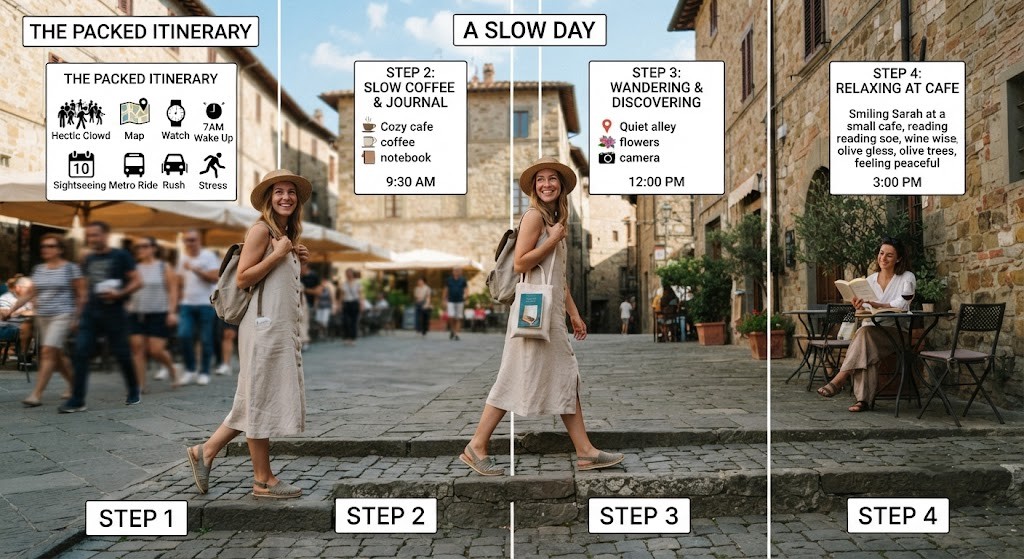
Ultimately, JOMO Travel is not about avoiding experiences. It is about becoming more selective about which experiences deserve your attention.
Why Is JOMO Travel Becoming Popular?
JOMO Travel is becoming popular because travelers increasingly want vacations that feel restorative rather than demanding. A slower trip can reduce the pressure associated with constant scheduling, digital distractions, transportation changes, and the fear of missing a supposedly essential attraction.
A packed itinerary may look exciting on paper, but it can also create decision fatigue. When travelers are constantly checking times, directions, reservations, transportation schedules, and social media recommendations, there may be very little mental space left for simply enjoying the destination.
For example, Expedia Group reported that 62% of travelers said JOMO-style trips could reduce stress and anxiety, while nearly half said these trips could improve quality time with loved ones. — Source: Expedia Group, 2024.
At the same time, social media can intensify travel FOMO by repeatedly showing carefully selected vacations, restaurants, hotels, attractions, and scenic locations. Expedia reported that 61% of travelers were getting trip inspiration from social media in its 2025 Traveler Value Index, illustrating how strongly online content can influence travel decisions. — Source: Expedia, 2025.
This creates an interesting contradiction: the same platforms that inspire people to travel can also make travelers feel that their own vacation is incomplete.
JOMO Travel replaces vacation optimization with vacation enjoyment.
For example, you might intentionally skip a viral viewpoint because spending two quiet hours at your accommodation, walking through a local neighborhood, or having a long meal feels more valuable.
What Are the Main Principles of JOMO Travel?
The main principles of JOMO Travel are intentional planning, slower pacing, flexibility, presence, digital boundaries, local experiences, and quality over quantity. Together, these principles transform a vacation from a checklist into a more personal experience.
Intentional Planning
Intentional travel means choosing activities because they genuinely interest you rather than because they are popular online.
Before booking an activity, ask yourself whether you actually want to do it. A destination may have dozens of famous attractions, but that does not mean every traveler needs to visit them.
For example, a traveler who loves food might choose one neighborhood food tour instead of visiting three museums simply because they appear on a “top 10” list.
Intentional planning also means understanding the purpose of your trip. If your goal is relaxation, your itinerary should support relaxation. If your goal is connection, prioritize experiences that allow meaningful time with family, friends, or a partner.
Slower Pacing
Slower pacing means leaving enough time between experiences to rest and respond to the destination naturally.
A two-hour café stop, afternoon nap, scenic walk, or spontaneous neighborhood exploration does not have to be considered wasted time. These unplanned moments can become some of the most memorable parts of a trip.
Instead of asking, “What can I fit into this free hour?” JOMO Travel encourages you to ask, “What would I actually enjoy doing right now?”
Quality Over Quantity
JOMO Travel prioritizes meaningful experiences over the number of places visited.
Visiting ten attractions does not necessarily create better travel memories than visiting three. In many cases, fewer experiences allow travelers to slow down and pay closer attention.
For example, spending a full morning hiking one scenic trail may create stronger memories than rushing through four attractions before dinner.
Flexibility and Presence
Flexible travel leaves room for weather, mood, local recommendations, and spontaneous discoveries.
A rigid itinerary assumes that everything will go exactly according to plan. A JOMO itinerary accepts that plans may change—and that change can be part of the experience.
A traveler might cancel an afternoon activity because a quiet beach, local festival, interesting café, or scenic walking route becomes more appealing.
This flexibility also gives you permission to rest when you need to instead of treating rest as something that must be earned.
How Do You Plan a JOMO-Friendly Trip?
JOMO travel planning involves choosing fewer activities, leaving unstructured time, and prioritizing meaningful experiences over a packed itinerary. The goal is not to eliminate planning but to plan enough that the trip remains comfortable without controlling every hour.
A useful JOMO approach begins before you leave home.
1. Choose Fewer Destinations
Start by choosing one primary destination or a small number of nearby destinations.
Moving hotels every night can create unnecessary packing, transportation, check-in, and check-out tasks. Even when each individual transfer seems manageable, the cumulative effect can make a vacation feel rushed.
Staying longer in one place also gives you more opportunities to discover local cafés, walking routes, markets, parks, and neighborhoods that may not appear on traditional sightseeing lists.
2. Limit Your Daily Schedule
Second, limit your daily schedule to one major activity.
A simple JOMO-friendly day might look like this:
- Morning: Slow breakfast and local walk.
- Midday: One planned attraction or experience.
- Afternoon: Free time.
- Evening: Local dinner or spontaneous exploration.
This structure creates an anchor for the day without turning every hour into an obligation.
3. Leave Open Blocks in Your Schedule
Avoid booking every meal, tour, and activity before departure.
Essential transportation and accommodation should be organized, but several blocks should remain open. This gives you room to respond to the destination instead of constantly following a predetermined schedule.
You may discover that a local café is worth lingering in, that the weather is perfect for a walk, or that you simply want to spend the afternoon reading.
4. Pack Less
A JOMO-friendly trip can also benefit from a minimalist packing list.
Carrying fewer unnecessary items makes transfers and daily movement easier. It can also reduce the mental burden of repeatedly organizing luggage.
The overall principle is simple: prepare for what you genuinely need and avoid allowing possessions to create additional work during the trip.
What Are the Best JOMO Travel Experiences?
The best JOMO travel experiences are activities that encourage presence, relaxation, local connection, or unhurried exploration. These experiences can work for solo travelers, couples, friends, and families.
Popular JOMO-friendly ideas include:
- Slow mornings with coffee, breakfast, and reading.
- Scenic train journeys where the journey itself becomes the experience.
- Nature stays in forests, mountains, lakes, or countryside settings.
- Reading retreats with limited schedules and quiet surroundings.
- Wellness trips involving yoga, spa treatments, meditation, or restorative activities.
- Local food experiences at neighborhood cafés, markets, and family-run restaurants.
- Quiet beaches where relaxation matters more than sightseeing.
- Countryside stays with walks, gardens, and local activities.
- Easy hiking without turning every trail into a fitness challenge.
- Unplanned exploration through local streets and neighborhoods.
The best JOMO experience does not necessarily need to be expensive or exclusive. Often, simple activities work particularly well because they do not require complicated logistics.
For example, a couple could spend three days at a coastal rental, cook breakfast, walk along the beach, visit one local restaurant, and leave an entire afternoon completely unscheduled.
That trip may contain fewer conventional attractions than a traditional sightseeing vacation, but it can create more space for conversation, relaxation, and genuine connection.
How Is JOMO Travel Different From Slow Travel?
Slow travel and JOMO Travel both emphasize quality over quantity, but JOMO specifically focuses on letting go of the pressure to participate in everything.
Slow travel generally emphasizes spending more time in fewer places, experiencing local culture, and reducing the rushed nature of conventional tourism. JOMO Travel shares many of these characteristics but adds a stronger psychological focus on escaping FOMO—the fear of missing out.
| Travel Style | Main Focus | Typical Approach |
|---|---|---|
| Traditional tourism | See more | Multiple attractions per day |
| Slow travel | Experience deeply | Longer stays and local immersion |
| JOMO Travel | Enjoy without FOMO | Fewer commitments and more freedom |
| Digital detox travel | Disconnect | Reduced phone and social-media use |
For example, a slow traveler might spend a week exploring one city, while a JOMO traveler may intentionally skip several famous sights because they prefer relaxed mornings and spontaneous experiences.
The two approaches can also overlap. A traveler can practice slow travel by staying in one destination for a week and practice JOMO Travel by refusing to fill that week with activities.
How Can You Practice a Digital Detox While Traveling?
Digital detox travel means deliberately reducing unnecessary screen use so your attention remains focused on the destination and people around you.
You do not need to abandon your phone completely. Instead, the goal is to prevent your device from controlling your vacation.
Start by turning off nonessential notifications before leaving. Then establish specific phone-free periods, such as breakfast, a two-hour nature walk, or dinner.
These small boundaries can make a significant difference to the way a trip feels.
Use Your Phone as a Tool
Your phone can still perform important travel functions.
Keep essential features such as:
- Maps and navigation
- Boarding passes
- Reservations
- Translation
- Emergency communication
- Weather information
available when needed.
However, recreational scrolling does not need to occupy every quiet moment.
Photograph Less, Experience More
Photography can be an important part of travel, but documenting every moment can sometimes take attention away from the experience itself.
Take photographs intentionally rather than documenting everything. For example, capture a sunset for a few minutes, then put the phone away and watch the rest without a screen.
A JOMO-friendly phone is a travel tool, not the center of the vacation.
What Should You Leave Out of a JOMO Travel Itinerary?
A JOMO itinerary should leave out activities that add pressure without adding meaningful value.
You do not necessarily need to remove every popular attraction. Instead, identify which commitments are present simply because you feel you are supposed to do them.
Consider removing:
- Back-to-back tours.
- Multiple hotel changes.
- Attractions chosen only because they are viral.
- Excessive restaurant reservations.
- Early-morning activities every day.
- Unnecessary shopping stops.
- Constant social-media posting.
- Long transportation detours for minor attractions.
For example, replacing three minor attractions with one relaxed neighborhood exploration can create more time for local food, conversation, rest, and unexpected discoveries.
A useful test is to ask: “If nobody knew I had visited this place, would I still want to go?”
If the answer is no, that activity may not deserve space on your itinerary.
What Are the Best Destinations for a JOMO Vacation?
The best destinations for a JOMO vacation are places that naturally support relaxation, nature, local immersion, and slower exploration.
There is no single “best” JOMO destination because the ideal choice depends on your interests, budget, travel season, and preferred level of solitude.
Instead of selecting a destination only because it is famous, look for places that make slower travel easy.
Consider destinations with:
- Quiet coastal areas.
- Mountain villages.
- Lakeside accommodations.
- Rural countryside.
- Walkable small towns.
- Forest retreats.
- Wellness-focused properties.
- Cultural neighborhoods away from major tourist centers.
Expedia’s 2025 research found that 63% of consumers said they were likely to visit a lesser-known “Detour Destination”, showing growing interest in alternatives to heavily visited tourist hubs. — Source: Expedia Group, 2024.
off-the-beaten-path destinations
A JOMO destination does not have to be completely remote. Even a busy city can support JOMO Travel if you stay in one neighborhood, reduce transportation between attractions, and intentionally avoid over-scheduling.
How Can You Create a JOMO Travel Itinerary?
A JOMO travel itinerary works best when it combines one meaningful activity with generous free time each day.
Rather than building an itinerary around everything you could possibly do, create a framework around the experiences you genuinely value.
One-Activity-Per-Day Itinerary
A one-activity-per-day itinerary gives travelers one anchor experience without filling the remaining hours.
For example, schedule a museum visit at 11 a.m. and leave the afternoon open for lunch, walking, reading, shopping locally, or rest.
This format works particularly well for travelers who normally feel pressure to maximize every day.
Two-Destination Slow Trip
A two-destination slow trip limits movement while still providing variety.
For example, spend four nights in a city and three nights in a nearby countryside or coastal area instead of changing destinations every one or two days.
This creates variety without making transportation the central feature of the vacation.
Weekend Digital Detox
A weekend digital detox trip combines a short getaway with strict screen boundaries.
Choose a nature stay, download maps beforehand, keep notifications off, and reserve time for hiking, reading, meals, and conversation.
Because the trip is short, it can also serve as an accessible introduction to JOMO Travel for people who cannot take a long vacation.
Nature-Focused Retreat
A nature-focused JOMO itinerary uses the environment itself as the main attraction.
A typical day might include breakfast outdoors, one trail, an afternoon nap, sunset viewing, and an unhurried dinner.
The goal is not to complete every trail or attraction. The environment provides the setting for a slower experience.
What Tools and Planning Methods Support JOMO Travel?
JOMO travel tools should simplify logistics rather than add more decisions to your vacation.
The best approach is to prepare essential information offline before departure. This allows you to use technology when it is useful without needing to stay constantly connected.
Useful tools include:
- Offline maps for navigation without constant connectivity.
- Weather apps for adjusting flexible outdoor plans.
- Digital boarding passes for easier airport or station access.
- Downloaded e-books for screen-light entertainment.
- Downloaded shows or podcasts for transportation.
- Minimalist packing lists for easier movement.
- Flexible accommodation options when plans may change.
- Offline translation tools for local communication.
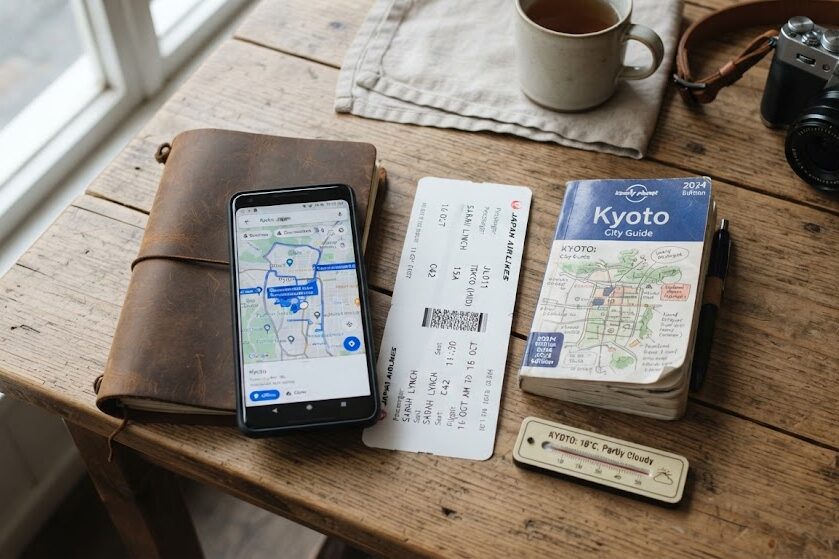
For example, download your destination map before leaving your hotel each morning rather than repeatedly searching online while walking.
The purpose of these tools is not to make your trip more technologically advanced. Instead, they should reduce friction and help you spend less time solving logistical problems while traveling.
The best travel-planning system reduces decisions during the trip.
Free tools such as offline map features, weather services, phone notes, and downloadable documents can handle many essential tasks without requiring specialized paid software.
JOMO Travel for Solo Travelers, Couples, and Families
JOMO Travel can be adapted to almost any type of traveler because its central principle is choosing what matters rather than following a fixed vacation formula.
JOMO Travel for Solo Travelers
Solo travelers may find JOMO Travel especially flexible because they can adjust plans based entirely on their own energy, interests, and mood.
A solo JOMO itinerary could include a slow breakfast, one cultural activity, an afternoon walk, and an evening spent reading or enjoying a local meal.
JOMO Travel for Couples
For couples, JOMO Travel can create more opportunities for conversation and shared experiences.
Instead of spending an entire day rushing between attractions, couples might choose one meaningful activity and leave the rest of the day open for meals, walks, scenic views, or simply spending time together.
JOMO Travel for Families
Families can also use JOMO principles by reducing the number of daily commitments.
Rather than trying to entertain children continuously, families can choose one major activity and allow time for swimming, playing, exploring locally, resting, or enjoying the accommodation.
The result can be a vacation with less rushing and fewer conflicts over schedules.
How Can You Start Practicing JOMO Travel on Your Next Trip?
The simplest way to practice JOMO Travel is to remove unnecessary activities from your itinerary and deliberately leave time for spontaneous or restful experiences.
You do not need a week-long retreat, remote cabin, or expensive wellness resort to begin.
Start with these five steps:
- Choose one destination instead of combining too many places.
- Remove one unnecessary activity from every full day.
- Schedule unstructured time before filling the itinerary.
- Set phone boundaries for meals, mornings, or evenings.
- Define what you actually want from the trip before researching attractions.
For example, if your goal is relaxation, do not let a list of ten “must-see” attractions determine your schedule.
Choose two or three experiences that genuinely support that goal and let the rest remain optional.
You can also start smaller by applying JOMO principles to a single day. Pick one activity, turn off unnecessary notifications, avoid rushing between locations, and leave several hours completely open.
JOMO Travel is not about doing nothing; it is about doing what matters.
A relaxed morning, meaningful meal, scenic train ride, quiet conversation, local walk, or peaceful afternoon can be the most memorable part of a journey.
Conclusion
JOMO Travel is a more intentional way to experience a vacation by choosing presence, flexibility, and meaningful experiences over constant activity.
It does not mean avoiding famous destinations, refusing to explore, or eliminating all planning. Instead, it means deciding which experiences genuinely deserve your time and allowing yourself to miss the rest without feeling guilty.
A strong JOMO trip may be surprisingly simple: one destination, one meaningful activity each day, plenty of free time, and fewer digital distractions.
Expedia’s research indicates that travelers increasingly recognize the value of less crowded, more restorative travel, while its JOMO findings specifically connect doing less with reduced stress and greater reconnection.
Ultimately, the Joy of Missing Out is about changing the question you ask while traveling. Instead of wondering, “How much can I see?” you can ask, “How deeply can I experience this place?”
You do not have to miss out on travel to experience JOMO; you only need to miss out on the pressure to do everything.
FAQs
What is JOMO Travel?
JOMO Travel means “Joy of Missing Out” travel, where you slow down, enjoy the present, and avoid overpacking your itinerary.
What does JOMO mean in travel?
JOMO means choosing meaningful travel experiences without worrying about what you might be missing.
Is JOMO Travel the same as slow travel?
Not exactly. Slow travel focuses on fewer destinations, while JOMO Travel focuses on letting go of FOMO.
How do you plan a JOMO vacation?
Choose fewer activities, leave free time, and focus on experiences that genuinely interest you.
What are the best JOMO Travel experiences?
Nature stays, scenic train journeys, slow mornings, local food, easy hikes, and wellness retreats.
Can JOMO Travel reduce vacation stress?
Yes. It can reduce pressure from packed schedules, digital distractions, and travel FOMO.
How can I practice JOMO Travel?
Remove unnecessary activities, schedule free time, and limit phone use while traveling.
Is JOMO Travel good for solo travelers?
Yes. Solo travelers can choose their own pace, activities, and rest periods.
How is JOMO Travel different from FOMO travel?
FOMO encourages doing everything, while JOMO focuses on enjoying the experiences you choose.
What should you avoid on a JOMO vacation?
Avoid back-to-back activities, excessive reservations, frequent hotel changes, and unnecessary sightseeing.
Do I need to completely disconnect from my phone?
No. Use your phone for essential travel needs while limiting unnecessary scrolling.