
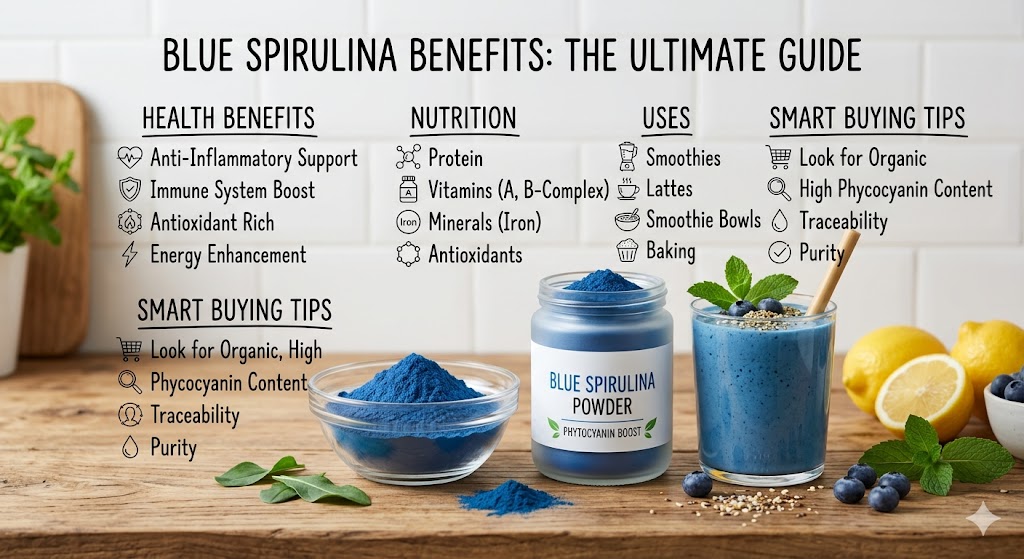
You’ve probably seen bright blue smoothies and wellness bowls all over social media. But many people still don’t know whether blue spirulina is just trendy food coloring or a genuinely useful superfood. In this guide, you’ll learn what blue spirulina is, its real benefits, how to use it, and what to watch out for before buying.
Key Takeaways
- Blue spirulina is a blue pigment extract from spirulina algae called phycocyanin. It is commonly used as a colorful superfood ingredient and supplement.
- Antioxidants in blue spirulina may help support cellular health and reduce oxidative stress.
- Taste is usually milder than green spirulina, making it easier to add to smoothies and recipes.
- Daily use can fit into wellness routines through powders, bowls, drinks, or capsules.
- Quality control matters because purity testing and reputable sourcing help reduce contamination risks.
- Healthy habits like balanced nutrition, sleep, and exercise amplify the value of any supplement routine.
- Medical guidance is wise if you have a health condition, take medication, or are pregnant.
What Is Blue Spirulina?
Blue spirulina is a concentrated extract of spirulina algae that contains the blue antioxidant pigment called phycocyanin. Unlike regular green spirulina, it is processed to isolate the blue compounds while reducing the stronger algae taste many people dislike.
First, regular spirulina is a nutrient-rich cyanobacteria often sold as a green powder. Blue spirulina removes much of the green chlorophyll and earthy flavor, leaving a bright blue ingredient popular in smoothies, yogurt bowls, and wellness drinks.
For example, many cafés use blue spirulina because it adds vibrant color without artificial dyes. This can help people choose visually appealing foods with plant-based ingredients.
Blue spirulina has a milder taste than regular green spirulina, which makes it easier to add to drinks and recipes.

Why Blue Spirulina Matters
Blue spirulina matters because it combines visual appeal, antioxidant support, and convenient nutrition in one easy-to-use ingredient. That combination explains why it has become popular in wellness trends.
Second, many people want healthier alternatives to synthetic food colorings. Blue spirulina offers a natural pigment source for smoothie bowls, desserts, and drinks. The global natural food colors market continues to grow as consumers prefer cleaner labels — Source: Grand View Research, 2025.
Moreover, taste matters for consistency. Some people stop using green spirulina because of its seaweed-like flavor. Blue spirulina often feels easier to maintain in a daily routine because it blends smoothly into fruit-based recipes.
In addition, convenience matters for busy lifestyles. A scoop added to breakfast can be faster than preparing multiple separate supplements.
What Is Blue Spirulina Nutrition Profile?
Blue spirulina nutrition depends on the product, but it usually provides phycocyanin, antioxidant compounds, trace protein, and low calories per serving. The exact values vary by brand and processing method.
First, the standout compound is phycocyanin, a natural pigment linked to antioxidant and anti-inflammatory activity in early research. This is the main reason blue spirulina gets attention in health circles.
Second, some products retain trace minerals and amino acids from the original algae. However, blue spirulina is usually less protein-dense than whole green spirulina because it is an extract rather than the full algae.
Moreover, most servings are small. A common serving size is 1–3 grams, which keeps calories low while still adding color and bioactive compounds.
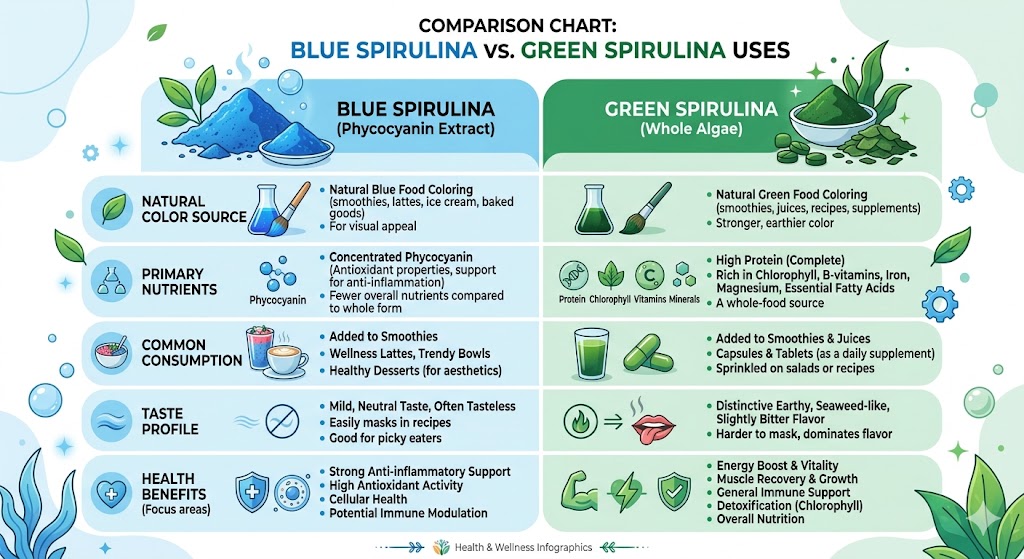
| Nutrient Factor | Blue Spirulina | Regular Spirulina |
|---|---|---|
| Main Compound | Phycocyanin | Whole algae nutrients |
| Color | Bright blue | Deep green |
| Taste | Mild | Stronger earthy taste |
| Protein | Lower | Higher |
| Chlorophyll | Lower | Higher |
| Best Use | Recipes, drinks, aesthetics | Broad nutrition support |
What Are the Top Blue Spirulina Benefits?
Blue spirulina benefits may include antioxidant support, immune support, and reduced oxidative stress when used as part of a healthy lifestyle. Results vary by person, product quality, and overall habits.
Antioxidant Support
Antioxidants help protect cells from oxidative stress caused by normal metabolism, pollution, and lifestyle factors. Phycocyanin is the hero compound here.
For example, oxidative stress increases during hard training, poor sleep, and chronic stress. Adding antioxidant-rich foods may help support recovery and resilience.
Anti-Inflammatory Potential
Blue spirulina may help support a balanced inflammatory response through its bioactive compounds. This does not replace medical treatment, but it may complement healthy habits.
For example, pairing a nutrient-rich diet with exercise and sleep often supports better recovery than supplements alone.
Immune Support
Blue spirulina may support immune health by contributing antioxidant compounds and overall nutrient intake. Immunity depends on many factors, including sleep, stress, and diet quality.
Research consistently shows sleep and nutrition strongly influence immune function — Source: National Institutes of Health, 2024.
immune boosting foods naturally
Energy and Recovery
Blue spirulina may support energy indirectly by helping recovery and complementing nutrient-rich meals. It is not a stimulant like caffeine.
For example, a post-workout smoothie with fruit, protein, and blue spirulina can feel more sustainable than relying only on sugary drinks.
Skin Health
Blue spirulina may support skin health because antioxidants help defend against environmental stressors. Healthy skin still depends on hydration, sleep, sunscreen, and overall nutrition.
For example, many people add blue spirulina to smoothie bowls alongside berries and seeds for a beauty-focused breakfast.
Gut-Friendly Uses
Blue spirulina is often easier on the palate than green spirulina, which can improve consistency in gut-friendly meal routines. Some users also report gentler digestion, though reactions differ.
Possible Detox Support
Blue spirulina does not “detox” the body in a magical way, because your liver and kidneys already do that job. However, antioxidant-rich foods may support normal body processes.
This realistic view helps avoid exaggerated supplement claims.
Is Blue Spirulina Better Than Regular Spirulina?
Blue spirulina is not universally better than regular spirulina because each has different strengths and best use cases. Your goal should guide your choice.
First, choose blue spirulina if you want better taste, vivid color, and phycocyanin-focused benefits. It works well in smoothies, oats, desserts, and wellness drinks.
Second, choose regular spirulina if you want a fuller nutrient profile, more protein, and whole-algae benefits. It may suit people comfortable with the stronger flavor.
That being said, some people use both at different times. Blue spirulina can be the daily recipe option, while green spirulina can be the broader nutrition option.
How Does Blue Spirulina Support Skin and Beauty Goals?
Blue spirulina supports beauty goals mainly through antioxidant support, not by acting as a miracle skincare product. Internal wellness habits still matter most.
First, antioxidants may help reduce damage linked to pollution and UV exposure. For example, diets rich in colorful plants often align with better skin health patterns.
Second, visually appealing healthy meals can increase consistency. A bright smoothie bowl may motivate healthier breakfast choices more often than bland options.
Moreover, consistency beats intensity. Daily basics like protein, hydration, sleep, and sunscreen usually matter more than any single powder.
Can Blue Spirulina Help With Energy and Recovery?
Blue spirulina can help with energy and recovery indirectly by supporting nutrient intake and post-exercise habits. It does not replace calories, protein, or rest.
First, exercise recovery improves when you combine carbs, protein, hydration, and sleep. Blue spirulina can be one add-on inside that bigger system.
For example, blend banana, yogurt, berries, oats, and blue spirulina after training. This meal provides energy plus recovery nutrients in one step.
Adults who sleep under recommended levels often report lower energy and recovery capacity — Source: CDC, 2025.
How Much Blue Spirulina Should You Take Daily?
Most people start with 1–3 grams of blue spirulina daily, but the best dose depends on the product label and your tolerance. Always follow brand guidance first.
First, begin small. A half scoop lets you test taste and digestion before increasing intake.
Second, consistency matters more than mega-doses. A modest daily habit often works better than occasional large servings.
Moreover, timing is flexible. Many people prefer morning smoothies, while others use it post-workout or in afternoon snacks.
Are There Any Blue Spirulina Side Effects or Risks?
Blue spirulina side effects can include digestive upset, allergies, or quality-related contamination issues if you choose poor products. Most healthy users tolerate it well in moderate amounts.
First, some people notice bloating or nausea when starting too high. Reducing the serving size often helps.
Second, contamination is the biggest practical concern. Poorly sourced algae products may contain heavy metals or unwanted compounds. That is why quality testing matters.
Third, people who are pregnant, have autoimmune conditions, or take medications should speak with a qualified healthcare professional first.
Choosing blue spirulina involves checking for third-party testing, ingredient purity, and reputable sourcing.
How Can You Use Blue Spirulina in Smoothies and Recipes?
Blue spirulina is easiest to use in cold foods and drinks where its color stands out and flavor stays mild. Heat can sometimes reduce visual impact.
Easy Daily Ideas
- Smoothie with banana, mango, and coconut water
- Greek yogurt bowl with berries
- Overnight oats with chia seeds
- Chia pudding topping
- Iced latte or lemonade
- Homemade energy bites
Simple Blue Spirulina Smoothie Recipe
- 1 frozen banana
- 1 cup milk or plant milk
- ½ cup mango
- 1 tsp blue spirulina
- Ice cubes
Blend until smooth and serve immediately.
healthy smoothie ideas for breakfast

What Should You Look for When Buying Blue Spirulina Powder?
The best blue spirulina powder combines purity, transparent sourcing, and independent testing. Fancy packaging alone does not guarantee quality.
First, look for third-party testing for contaminants and label accuracy. This adds trust.
Second, choose simple ingredient lists with no unnecessary fillers, dyes, or excess sweeteners.
Third, check brand transparency. Reputable companies explain sourcing, processing, and storage recommendations.
Fourth, store it properly. Keep powder sealed, cool, and dry to preserve quality.
What’s Next: How to Add Blue Spirulina to Your Routine
The smartest next step is to start small, stay consistent, and evaluate how blue spirulina fits your real lifestyle. Simplicity wins long term.
- Pick one product from a reputable brand.
- Use a small serving for one week.
- Add it to one easy breakfast recipe.
- Track taste, digestion, and consistency.
- Keep focusing on sleep, training, hydration, and whole foods.
Supplements like blue spirulina are most effective when combined with balanced nutrition, exercise, and consistent sleep habits.
how to build a supplement routine
Conclusion
Blue spirulina is a practical, colorful supplement ingredient with promising benefits centered on antioxidant support, convenience, and better taste than regular spirulina. It can be a useful addition to smoothies, bowls, and wellness routines when chosen carefully.
That being said, no powder replaces strong fundamentals. If you pair blue spirulina with balanced meals, movement, sleep, and consistency, you give any supplement the best chance to add value.
Written by: Suraj 5+ Blogger — Health content writer focused on SEO-driven wellness education, supplement research, and practical nutrition guides.
Reviewed by: Editorial Wellness Review Team — Experienced reviewers specializing in evidence-based nutrition, consumer health, and supplement safety.
Disclaimer: This article was initially drafted using AI assistance. However, the content has undergone thorough revisions, editing, and fact-checking by human editors and subject matter experts to ensure accuracy.