
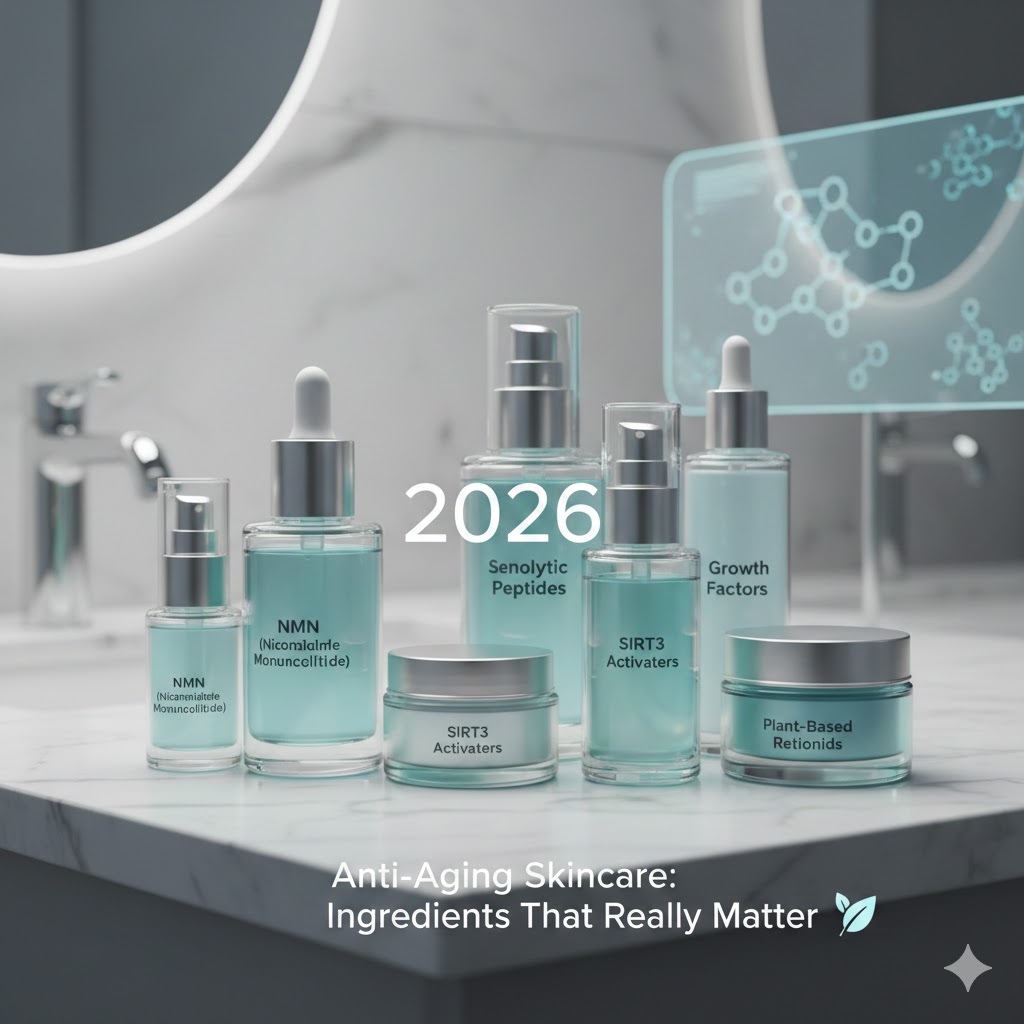
The anti-aging skincare industry is louder than ever—but also more confusing. Every year brings new buzzwords, miracle claims, and viral products. Yet as we move forward, one thing is becoming clear: Anti-Aging Skincare in 2026 is no longer about chasing trends. It’s about understanding ingredients, skin biology, and long-term results.
Consumers are smarter. Dermatology-backed science is louder than marketing. And skincare routines are shifting from aggressive treatments to barrier-friendly, preventative, and personalized care.
This blog breaks down the ingredients that actually matter in Anti-Aging Skincare in 2026, why some older trends are fading, and how to build a routine that works with your skin—not against it.
1. Why Anti-Aging Skincare Is Changing in 2026
For years, anti-aging focused on one goal: erase wrinkles at all costs. That approach is evolving.
1.1 Aging Is No Longer the Enemy
In Anti-Aging Skincare in 2026, the focus is on:
- Skin longevity
- Barrier health
- Cellular repair
- Graceful aging, not aggressive correction
The question has shifted from “How do I look younger fast?” to “How do I keep my skin healthy longer?”
2. Skin Longevity: The Core Philosophy of Anti-Aging Skincare in 2026
Longevity skincare targets how skin functions over time.
2.1 What Skin Longevity Means
- Strong skin barrier
- Efficient cell turnover
- Balanced inflammation
- Long-term collagen support
Instead of harsh exfoliation and over-treatment, Anti-Aging Skincare in 2026 prioritizes consistency and repair.
3. Retinoids: Still the Gold Standard (But Smarter)
Retinoids aren’t disappearing—but how they’re used is changing.
3.1 Why Retinoids Still Matter
Retinoids help with:
- Collagen stimulation
- Cell renewal
- Texture improvement
- Fine line reduction
3.2 How Retinoids Are Evolving in 2026
- Lower irritation formulas
- Encapsulated delivery systems
- Retinol alternatives for sensitive skin
In Anti-Aging Skincare in 2026, results matter—but so does tolerance.
4. Peptides: The Silent Powerhouses
Peptides are no longer supporting ingredients—they’re leading.
4.1 What Peptides Do
Peptides act as messengers that:
- Signal collagen production
- Support skin firmness
- Improve elasticity
4.2 Why Peptides Matter More Than Ever
They are:
- Gentle
- Barrier-friendly
- Suitable for long-term use
Peptides perfectly align with the philosophy of Anti-Aging Skincare in 2026.
5. Growth Factors and Bio-Active Signals
One of the most advanced areas of skincare.
5.1 What Growth Factors Target
- Skin regeneration
- Cellular communication
- Repair processes
5.2 Why They’re Gaining Attention
Instead of forcing change, growth factors support natural skin behavior. This makes them ideal for mature or sensitive skin.
6. Antioxidants: Beyond Vitamin C
Vitamin C remains important—but it’s no longer alone.
6.1 Next-Generation Antioxidants
In Anti-Aging Skincare in 2026, formulas focus on antioxidant blends, including:
- Ferulic acid
- Resveratrol
- Green tea extracts
- Astaxanthin
6.2 Why Antioxidant Pairing Matters
Antioxidants work better together, offering:
- Stronger environmental protection
- Reduced inflammation
- Slower visible aging
7. Barrier-Repair Ingredients Take Center Stage
Healthy skin ages better—this is non-negotiable.
7.1 Ingredients That Strengthen the Barrier
- Ceramides
- Cholesterol
- Fatty acids
- Panthenol
7.2 Why Barrier Health Is Anti-Aging
A damaged barrier accelerates aging by:
- Increasing moisture loss
- Triggering inflammation
- Reducing treatment tolerance
Barrier repair is foundational in Anti-Aging Skincare in 2026.
8. Niacinamide: Still Relevant, Used More Precisely
Niacinamide has matured from trend to staple.
8.1 What It Does Well
- Improves texture
- Supports barrier function
- Balances oil
- Enhances elasticity
8.2 The 2026 Shift
Instead of high percentages, formulas focus on balanced concentrations that support long-term skin health.
9. SPF: The Most Underrated Anti-Aging Ingredient
No anti-aging routine works without sun protection.
9.1 Why SPF Is Non-Negotiable
UV exposure remains the #1 cause of:
- Premature wrinkles
- Pigmentation
- Collagen breakdown
9.2 SPF Trends in 2026
- Lightweight textures
- Hybrid mineral-chemical filters
- Added skincare benefits
In Anti-Aging Skincare in 2026, SPF is treatment—not an afterthought.
10. Ingredients Losing Importance in 2026
Not everything stays relevant.
10.1 Declining Trends
- Overly harsh exfoliants
- High-alcohol formulations
- One-size-fits-all actives
Skin health now outweighs instant results.
11. Personalization: The Future of Anti-Aging Skincare
The biggest shift isn’t one ingredient—it’s customization.
11.1 Why Personalization Matters
Skin varies based on:
- Age
- Climate
- Lifestyle
- Genetics
11.2 What This Means for 2026
Anti-aging routines are becoming:
- Adaptive
- Minimal
- Skin-specific
This is the true evolution of Anti-Aging Skincare in 2026.
12. Building a 2026-Proof Anti-Aging Routine
A smart routine focuses on:
- One renewal ingredient
- One repair ingredient
- One protection step
More products don’t mean better skin.
Frequently Asked Questions (FAQ)
What is different about Anti-Aging Skincare in 2026?
It focuses on skin longevity, barrier health, and long-term results rather than aggressive short-term fixes.
Are retinoids still important in 2026?
Yes, but they are used in gentler, more advanced formulations to reduce irritation.
Which ingredients matter most for aging skin?
Retinoids, peptides, antioxidants, barrier-repair ingredients, and SPF are key.
Is sunscreen really anti-aging?
Absolutely. Daily SPF is the most effective anti-aging step you can take.
Are natural ingredients better than synthetic ones?
Not necessarily. Effectiveness depends on formulation, stability, and skin compatibility.
Do I need expensive products for anti-aging in 2026?
No. Consistency, correct ingredients, and proper use matter more than price.
Final Thoughts
The future of skincare isn’t louder, harsher, or more complicated.
Anti-Aging Skincare in 2026 is about respecting the skin’s biology, supporting it intelligently, and choosing ingredients that work with time, not against it.
Aging is inevitable.
Premature skin damage is not.
More Related Topics:
Skin Cycling Explained: Does This Viral Routine Work?
HGH for Fat Loss, Recovery, and Lean Muscle Growth
Arimidex vs Nolvadex: Key Differences Bodybuilders Should Know