
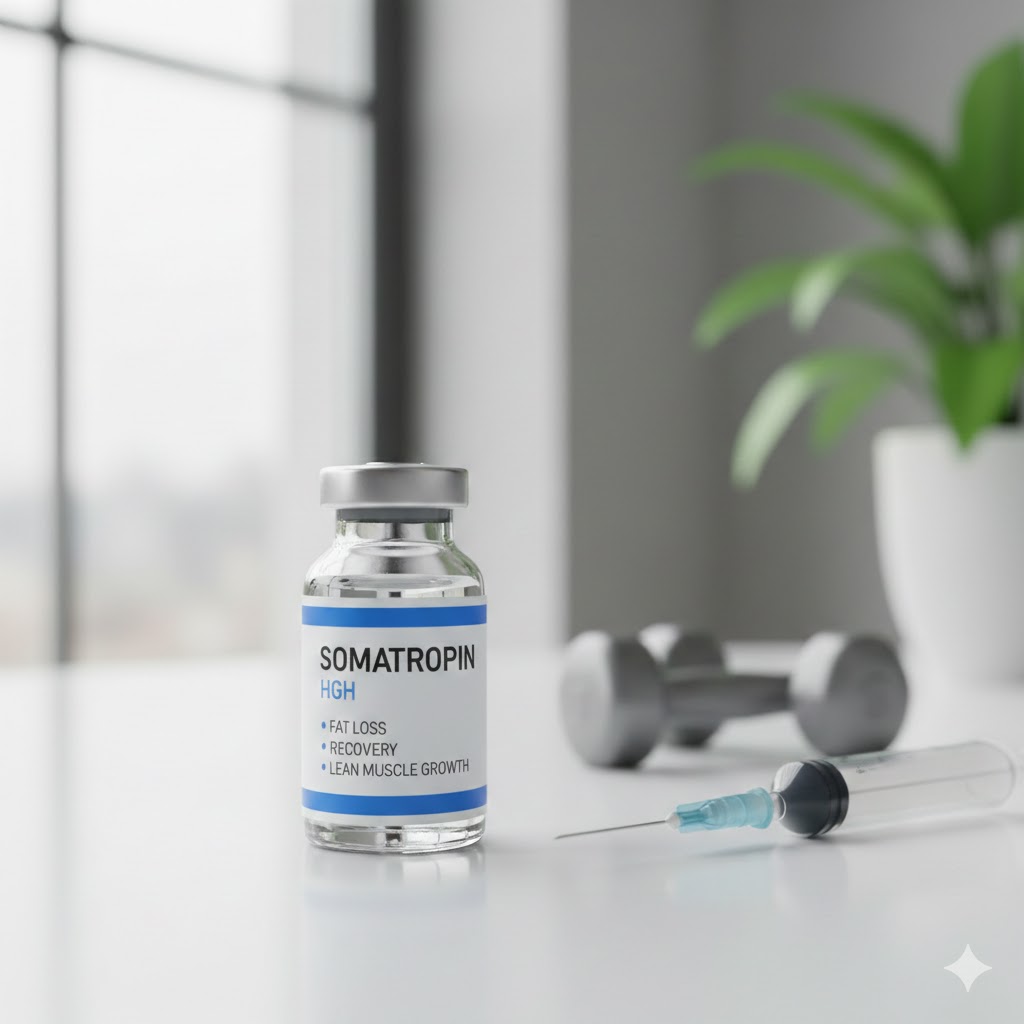
HGH for Fat Loss is widely discussed in fitness, anti-aging, and body recomposition circles. Human Growth Hormone (HGH) is a naturally occurring hormone produced by the pituitary gland that plays a key role in metabolism, tissue repair, and overall body composition. Because of these functions, HGH is often associated with fat loss, improved recovery, and lean muscle support.
However, HGH is frequently misunderstood. Expectations are often exaggerated, and many people confuse gradual physiological support with rapid, dramatic transformations. Understanding how HGH actually works helps separate realistic benefits from marketing hype.
What Is HGH and Why It Matters
HGH is essential for growth during childhood and continues to influence metabolic and recovery processes throughout adulthood.
Key roles of HGH include:
- Regulating fat metabolism
- Supporting tissue repair and recovery
- Preserving lean muscle mass
- Supporting bone, skin, and connective tissue health
These functions explain why HGH for Fat Loss is discussed more in the context of body recomposition rather than quick weight loss.
How HGH Supports Fat Loss
HGH contributes to fat loss primarily through a process called lipolysis, where stored fat is broken down and used for energy.
From a metabolic perspective, HGH:
- Encourages fat to be used as a fuel source
- Helps preserve lean tissue during calorie deficits
- Reduces reliance on carbohydrate stores
Unlike stimulants, HGH for Fat Loss does not sharply spike metabolism. Its effects are subtle and accumulate over time.
Fat Loss vs Weight Loss: Why the Scale Can Be Misleading
One reason HGH-related fat loss is misunderstood is that the scale may not change significantly.
Possible changes include:
- Lower body fat percentage
- Improved muscle definition
- Minimal short-term weight loss
Because fat loss and muscle preservation can occur simultaneously, visual and structural changes often appear before scale changes.
HGH and Recovery Benefits
Recovery is one of the most consistently reported benefits associated with HGH.
HGH supports recovery by:
- Enhancing tissue repair
- Supporting collagen synthesis
- Helping the body recover between intense workouts
- Indirectly improving sleep quality
This recovery support helps explain why HGH for Fat Loss is often discussed alongside training consistency and long-term physique improvement.
Lean Muscle Growth: What HGH Can Realistically Do
A common myth is that HGH directly builds large amounts of muscle. In reality, HGH is not a strong anabolic hormone like anabolic steroids.
HGH may help lean muscle growth by:
- Supporting recovery and repair
- Preserving muscle during fat loss
- Improving joint and connective tissue health
It creates a supportive environment for muscle maintenance rather than acting as a primary muscle-building agent.
Why Results Take Time
HGH works by improving internal processes rather than forcing rapid external changes.
Progress is slow because:
- Fat metabolism adapts gradually
- Tissue repair takes time
- Hormonal signaling is subtle
This is why HGH for Fat Loss is better viewed as a long-term support mechanism rather than a quick fix.
Health Risks and Medical Concerns
While HGH has legitimate medical uses, unsupervised or unnecessary use carries risks.
Potential concerns include:
- Fluid retention
- Joint or nerve discomfort
- Blood sugar regulation issues
- Long-term organ stress with misuse
Medical professionals consistently warn that hormone manipulation without supervision can disrupt metabolic balance.
Why Fat Loss from HGH Is Not Guaranteed
HGH does not override basic fat-loss principles.
Limitations include:
- Calorie balance still determines fat loss
- Poor diet can negate benefits
- Lack of activity reduces effectiveness
HGH for Fat Loss supports metabolic processes but cannot compensate for unhealthy habits.
Medical Perspective on HGH for Fat Loss
From a clinical standpoint, HGH is not approved as a general fat-loss treatment. Doctors emphasize that benefits are often overstated outside medical contexts.
Medical consensus highlights:
- Sustainable fat loss prioritizes metabolic health
- Hormones should not be used as shortcuts
- Lifestyle-based approaches outperform hormonal manipulation
Safer, Sustainable Alternatives
Health professionals recommend foundational strategies first.
These include:
- Resistance training
- Adequate protein intake
- Consistent sleep
- Gradual calorie control
- Stress management
These methods also support natural HGH production without added risk.
Frequently Asked Questions (FAQ)
Does HGH actually help with fat loss?
Yes, HGH for Fat Loss can support fat reduction by increasing fat utilization, but results are gradual and depend heavily on lifestyle factors.
How fast does HGH show fat-loss results?
Changes typically occur over weeks or months, not days. HGH does not cause rapid weight loss.
Does HGH burn fat without diet or exercise?
No. Calorie balance and activity remain essential. HGH alone is not enough.
Is fat loss from HGH permanent?
Only if healthy habits are maintained. Without them, fat regain is common.
Does HGH help preserve muscle during fat loss?
Yes, it may help preserve lean tissue by supporting recovery and reducing muscle breakdown.
Is HGH the same as anabolic steroids?
No. HGH works differently and does not directly stimulate large muscle growth.
What are the main risks of HGH use?
Fluid retention, joint pain, nerve issues, and blood sugar disruption are possible, especially without medical supervision.
Is HGH approved for fat loss?
No. HGH for Fat Loss is not an approved medical use in most countries.
Can natural HGH levels support fat loss?
Yes. Sleep, exercise, and nutrition naturally increase HGH and support fat loss safely.
Conclusion
HGH for Fat Loss is often portrayed as a powerful transformation tool, but in reality, it offers gradual metabolic support rather than dramatic change. HGH can aid fat metabolism, recovery, and lean tissue preservation, but it does not replace nutrition, training, or healthy habits.
Understanding HGH realistically helps set proper expectations and highlights why sustainable fat loss is best achieved through long-term lifestyle strategies rather than hormonal shortcuts.
More Related Topics:
Arimidex vs Nolvadex: Key Differences Bodybuilders Should Know
Clenbuterol for Fat Loss: How It Boosts Metabolism and Burns Calories
Testosterone Cypionate vs Enanthate: Which One Builds Better Muscle?