

You’ve probably imagined taking a trip simply because you suddenly have a free weekend. Maybe you want to escape your routine, discover somewhere new, or simply say yes to an unexpected opportunity. But without a traditional vacation plan, the idea of leaving at the last minute can also feel stressful.
The good news is that spontaneous trips do not mean careless travel. The best spontaneous adventures combine quick decisions with a few essential preparations. You can choose a destination, control your spending, pack efficiently, check the weather, confirm transportation and accommodation, and still leave plenty of room for unexpected experiences.
In this guide, you’ll learn what spontaneous trips are, why they are becoming increasingly appealing, how to choose a last-minute destination, what to pack, how to travel safely and affordibly, and how to turn an ordinary free weekend into a memorable getaway.
What Are Spontaneous Trips and How Do They Work?
Spontaneous trips are travel experiences planned with little advance notice, usually with flexible destinations, activities, or itineraries. Unlike traditional vacations that may involve weeks or months of planning, spontaneous travel focuses on making a relatively quick decision and organizing only the essentials before departure.
The meaning of spontaneous travel can vary from person to person. One traveler might decide on a nearby beach destination on Friday morning, while another might take an unplanned road trip after work.
Importantly, spontaneous travel does not require abandoning planning altogether. The safest approach to spontaneous travel is to plan the essentials—transportation, accommodation, budget, weather, documents, and emergency information—while keeping the rest of the itinerary flexible.
For example, you might book one night at a hotel, check the weather, save your route, and identify a few possible places to visit. Once you arrive, you can decide which attractions, restaurants, viewpoints, or local experiences are worth exploring.
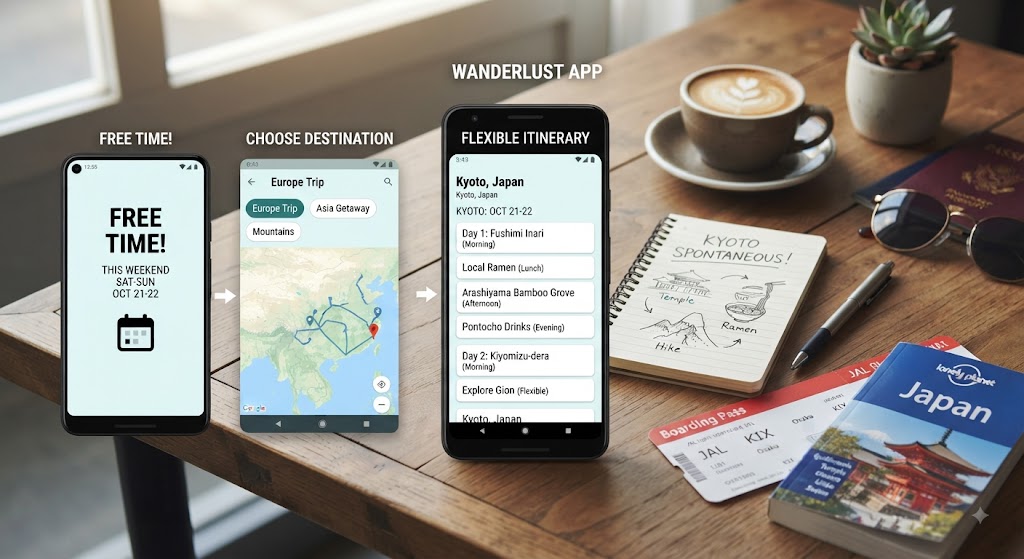
Why Are Spontaneous Trips So Appealing to Travelers?
Spontaneous trips are appealing because they break routine, reduce overplanning, and create more opportunities for unexpected experiences. Instead of following a strict schedule from morning to night, travelers can respond to what they discover along the way.
This flexibility can make even a short break feel like a genuine adventure. A free Saturday that would normally be spent at home can become a day trip, while an unexpected three-day weekend can turn into a road trip or short city escape.
Recent travel research also suggests that this style of travel is becoming particularly relevant among younger travelers. Seven in 10 Gen Z travelers in India surveyed by Airbnb preferred three short trips over one long annual holiday, while 95% wanted trips to feel personal and unique rather than typical or pre-planned.
Source: Airbnb, 2026.
Moreover, 66% of the surveyed Indian Gen Z travelers said they book within days or weeks of travel, and 64% deliberately leave parts of their itinerary unplanned.
Source: Airbnb, 2026.
These preferences help explain why short, flexible travel can be attractive. Instead of spending weeks researching every restaurant, attraction, and activity, travelers can book transportation and accommodation and discover a local café, viewpoint, market, or attraction after arriving.
At the same time, spontaneous trips can make short breaks more practical for busy professionals and people who cannot commit to long vacations. For more inspiration, explore these weekend getaway ideas before choosing your next short escape.
How Do You Plan a Spontaneous Trip Without Overplanning?
Planning a spontaneous trip involves choosing a realistic budget, checking transportation and accommodation, reviewing essential safety information, and leaving the daily itinerary flexible. The goal is to create a reliable safety net without turning your last-minute adventure into another rigid schedule.
1. Choose Your Available Dates
First, determine exactly how much time you have. A free Saturday may be enough for a nearby day trip, while a three-day weekend can support a longer road trip.
Knowing your departure and return windows immediately narrows your destination options and prevents you from choosing a place that requires more travel time than you actually have.
2. Set a Maximum Budget
Next, decide how much you can comfortably spend before choosing the destination. Your budget should account for:
- Transportation
- Accommodation
- Food and drinks
- Local transportation
- Activities
- Emergency expenses
Setting the maximum amount first helps prevent a last-minute booking from becoming an unnecessarily expensive trip.
3. Pick a Destination
Choose destinations that match your available time rather than forcing a distant destination into a short break.
The easiest spontaneous trips are usually short getaways, nearby road trips, day trips, and weekend adventures because they require less transportation time and preparation.
4. Book Only the Essentials
Once you have selected a destination, confirm your transportation and accommodation if needed. You do not necessarily need to reserve every meal, attraction, or activity.
5. Leave the Itinerary Open
Finally, identify one or two priority activities and leave the rest of your schedule flexible.
This approach provides enough structure to keep the trip practical while preserving the spontaneity that makes the experience enjoyable.
What Are the Best Types of Spontaneous Trips?
The best spontaneous trips are short, flexible adventures that match your available time, budget, and comfort level. Different trip types work better depending on whether you want relaxation, adventure, culture, nature, or independence.
| Trip Type | Ideal Duration | Best For | Planning Level |
|---|---|---|---|
| Day trip | 6–24 hours | Beginners | Very low |
| Weekend getaway | 2–3 days | Couples and friends | Low |
| Road trip | 1–4 days | Adventure seekers | Low–medium |
| Solo trip | 1–5 days | Independent travelers | Medium |
| Nature escape | 1–3 days | Relaxation | Low |
| City break | 1–3 days | Food and culture | Low |
| Beach trip | 1–3 days | Relaxation | Low |
Spontaneous Weekend Trips and Road Trips
Spontaneous weekend trips are among the easiest ways to experiment with unplanned travel. You can leave Friday evening, spend two nights away, and return Sunday without using a significant amount of vacation time.
Road trips provide even more flexibility because the journey itself can become part of the experience. You can stop at viewpoints, restaurants, small towns, markets, or attractions that were never part of your original plan.
Use road trip planning for a simple preparation framework.
Spontaneous Solo Trips and Nature Escapes
Solo trips can be especially flexible because one traveler does not need to coordinate schedules with friends, family, or a partner.
For example, you might choose a nearby hill town, national park, heritage town, or coastal destination based on weather and transportation availability.
Nature escapes can also work well because the experience often depends less on following a packed attraction schedule. A scenic trail, quiet landscape, viewpoint, or relaxed outdoor experience can become the main purpose of the trip.
Spontaneous City and Beach Breaks
City breaks and beach trips can be excellent choices when convenience is important.
A city with frequent transportation and multiple accommodation options can make a strong last-minute destination. Similarly, a nearby beach can provide a simple change of scenery without requiring an elaborate itinerary.
For more active options, explore adventure travel ideas for additional spontaneous getaway formats.
How Do You Choose a Destination for a Spontaneous Trip?
Choosing a spontaneous destination means matching your available time, budget, weather, transportation, and interests before committing to a booking. The best destination is not necessarily the most famous destination; it is the place that fits your circumstances right now.
Start by setting a realistic travel-time limit. For example, you might decide that you will only consider destinations reachable within three hours by car, train, or flight.
Then filter your options using five simple questions:
- Can I reach it easily?
- Is the weather suitable?
- Can I afford accommodation?
- Do I have enough time to enjoy it?
- Does it match what I want to do?
These questions quickly eliminate destinations that may sound exciting but are impractical for your particular weekend.
Try the Pick-a-Direction Method
If you genuinely cannot decide where to go, use the pick-a-direction method.
Choose north, south, east, or west. Then identify three destinations within your travel radius and compare them based on price, weather, travel time, and the type of experience available.
This method turns an overwhelming number of possibilities into a manageable shortlist.
For travelers looking beyond heavily promoted locations, explore hidden travel destinations and consider smaller destinations as alternatives.
What Should You Pack for a Last-Minute Trip?
A last-minute trip packing setup should prioritize versatile clothing, identification, chargers, toiletries, medications, weather protection, and essential emergency items. Keeping your luggage lightweight reduces preparation time and makes short spontaneous trips easier.
A basic travel kit can include:
- Identification and payment cards
- Phone and charging cable
- Power bank
- Essential medications
- Toiletries
- One versatile jacket
- Comfortable shoes
- Weather-appropriate clothing
- Basic first-aid supplies
- Reusable water bottle
Instead of packing for every possible situation, choose items that can serve multiple purposes.
For example, one pair of comfortable trousers, two tops, and a lightweight outer layer can cover a short weekend without excessive luggage.
For a more detailed preparation system, use this travel packing checklist before leaving.
How Can You Take a Spontaneous Trip on a Budget?
Cheap spontaneous trips become easier when travelers prioritize nearby destinations, flexible dates, alternative transportation, and simple accommodation. However, last-minute travel is not automatically cheaper. Flexibility is often more valuable than simply booking late.
Compare Transportation Options
Instead of automatically choosing a flight, compare multiple transportation methods.
Depending on the distance, a train, bus, rideshare, or personal vehicle may offer better value. For short trips, reducing transportation costs can leave more money available for food and activities.
Consider Alternative Destinations
Nearby or less-demanded destinations can sometimes provide similar experiences at a lower cost.
Expedia reported in 2026 that travelers were increasingly considering alternative destinations with hotel prices nearly 25% lower on average than certain higher-demand options.
Source: Expedia, 2026.
This makes destination flexibility particularly useful for spontaneous travelers. If your preferred destination is unusually expensive, look for another location offering a similar experience.
Keep Accommodation Simple
Accommodation can become one of the largest last-minute expenses. When luxury features are not important, choose simple, well-reviewed accommodation that fits your budget and location needs.
For example, a two-night nearby road trip can cost considerably less than a last-minute flight to a major tourist destination.
More practical money-saving strategies are available in budget travel tips.
What Are the Best Spontaneous Trip Ideas for Couples?
The best spontaneous trips for couples combine easy logistics with shared experiences rather than complicated itineraries. A short trip can feel special when both travelers have enough freedom to explore together.
Try a Couple Road Trip
A couple road trip can be one of the simplest spontaneous travel options.
Choose a scenic town two or three hours away and identify a few optional stops along the route. You can stop whenever you discover an interesting café, viewpoint, market, local attraction, or scenic location.
Consider a Last-Minute Nature or Beach Escape
Other options include:
- A last-minute nature stay
- A beach escape
- A food-focused city break
- An overnight cabin
- A short scenic road trip
These formats generally require less planning while still creating opportunities for shared experiences.
Recent Airbnb research found that three in four surveyed Indian Gen Z travelers said who they travel with matters more than where they go.
Source: Airbnb, 2026.
This supports the idea that the company can matter as much as the destination when planning an enjoyable spontaneous trip.
For more ideas, use couple road trips when planning an impromptu escape together.
What Are the Best Spontaneous Trip Ideas for Solo Travelers?
The best spontaneous solo trips use simple transportation, reliable accommodation, and destinations with enough activities to explore independently. Solo travel provides maximum flexibility because you only need to coordinate with yourself.
A nearby city, nature destination, cultural town, or scenic road-trip route can work well.
For example, you could leave early Saturday, explore local food and attractions, stay one night, and return Sunday afternoon.
Prioritize Basic Solo Travel Safety
Before leaving, keep someone you trust informed about your destination and basic schedule.
Also:
- Save important addresses offline.
- Maintain access to emergency contacts.
- Choose accommodation with strong recent reviews.
- Prioritize convenient locations over extremely low prices.
- Check local transportation options before arriving.
These simple steps help preserve the freedom of spontaneous solo travel without ignoring basic preparation.
Which Travel Apps and Tools Help With Last-Minute Trips?
Travel apps help spontaneous travelers compare destinations, check conditions, navigate unfamiliar places, and organize essential bookings quickly. The right tools can reduce decision-making without forcing you into a rigid itinerary.
Useful categories include:
- Maps: Google Maps or another reliable navigation app
- Weather: Local weather apps and official weather services
- Transportation: Airline, railway, bus, or rideshare apps
- Accommodation: Hotel and vacation-rental booking platforms
- Budgeting: Spreadsheet or travel-budget apps
- Destination discovery: Search engines, maps, and destination generators
- AI planning: An AI travel companion for brainstorming routes and activity ideas
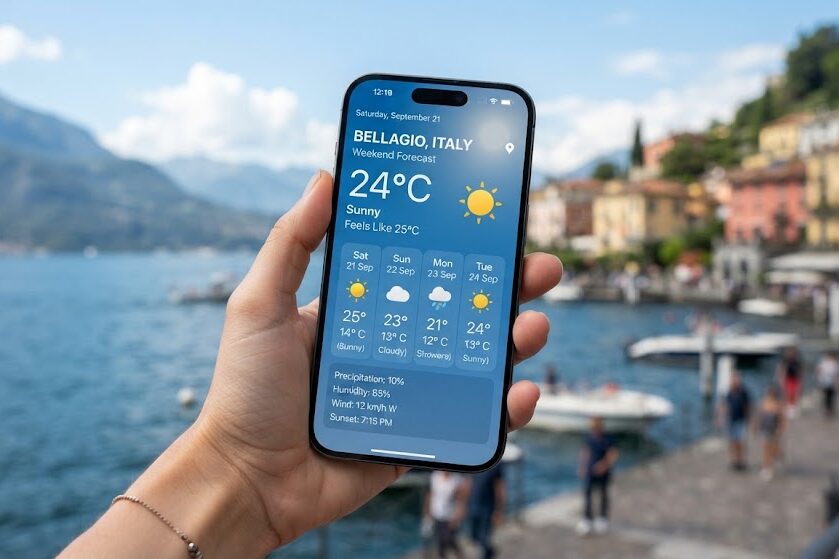
Technology can make last-minute decisions easier, but it should not replace verification.
Before departure, verify important information directly with transportation providers, accommodation providers, and official destination sources.
How Can You Stay Safe on a Spontaneous Trip?
Spontaneous travel is safest when travelers prepare essential safety information before leaving while keeping the itinerary flexible. A few minutes of preparation can prevent major problems later.
Check Conditions Before Departure
Review:
- Weather conditions
- Transportation disruptions
- Local restrictions
- Accommodation reviews
- Emergency information
A destination that looks perfect online may be unsuitable if severe weather or significant transportation disruptions are expected.
Protect Important Information
Keep both digital and physical copies of important identification and booking information where practical.
Avoid sharing sensitive travel details publicly in real time, particularly when traveling alone.
Tell Someone About Your Plans
If you are traveling alone or visiting remote areas, tell someone you trust where you are going.
You can maintain flexibility while still making sure another person knows your general destination and expected schedule.
How Can You Turn a Free Weekend Into a Spontaneous Getaway?
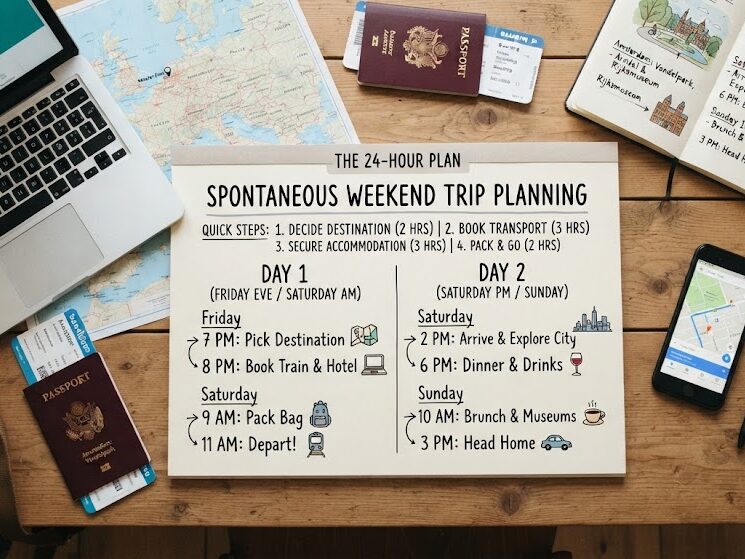
You can turn a free weekend into a spontaneous getaway by using a simple five-step decision framework: time, budget, distance, essentials, and flexibility. This system allows you to make a quick decision without making the trip careless.
Use the 30-Minute Planning Formula
Follow these five steps:
- Check your time: Decide when you can leave and return.
- Set your budget: Choose an all-in spending limit.
- Pick your radius: Consider destinations within a realistic travel time.
- Book the essentials: Confirm transportation and accommodation.
- Leave room for discovery: Choose only one or two must-do activities.
This process gives you enough structure to make a practical decision while preserving flexibility once you arrive.
Consider a 24-Hour Adventure
A full week is not necessary for a meaningful adventure.
Expedia reported in 2026 that one in four U.S. Millennial and Gen Z travelers planned a one-day international trip, showing how short-form travel is becoming a recognizable travel format.
Source: Expedia, 2026.
For example, a simple weekend formula could be:
Friday evening departure → Saturday exploration → Sunday morning activity → Sunday afternoon return.
How Can You Build a Repeatable Spontaneous Travel System?
The next step is to create a repeatable spontaneous travel system that makes future trips easier to organize. You do not have to wait for a long vacation or a perfect itinerary to explore somewhere new.
Keep a Shortlist of Nearby Destinations
Save three nearby destinations that you could realistically visit within a weekend.
Your list might include a combination of city breaks, nature escapes, beach destinations, and scenic road-trip locations.
Keep a Small Travel Bag Ready
Maintain a small travel bag containing frequently needed essentials. Having basic items prepared reduces the time between deciding to travel and actually leaving.
Create a Simple Decision Process
When an unexpected free weekend appears:
- Check the weather.
- Set your budget.
- Choose a realistic destination.
- Confirm transportation.
- Book essential accommodation.
- Pack light.
- Leave room for unexpected experiences.
The objective is not to remove planning. Instead, the objective is to make planning simple enough that it does not prevent you from traveling.
What Makes Spontaneous Trips Successful?
Successful spontaneous trips balance preparation and flexibility. Too little preparation can create unnecessary stress, while too much planning can remove the freedom that makes spontaneous travel attractive.
A practical balance looks like this:
| Plan in Advance | Keep Flexible |
| Transportation | Daily schedule |
| Accommodation | Restaurants |
| Budget | Optional attractions |
| Weather | Stops and discoveries |
| Documents | Free-time activities |
| Emergency information | Exact itinerary |
This balance allows you to protect the essentials while still responding naturally to the destination.
The best spontaneous trips are therefore not completely unplanned. They are lightly planned adventures with enough flexibility to change direction when something interesting appears.
What’s Next: How Can You Turn Free Time Into Your Next Adventure?
The next step is to create a repeatable spontaneous travel system that makes future trips easier to organize. You do not need to wait for a long vacation or perfect itinerary to explore somewhere new.
First, save three nearby destinations that you could realistically visit within a weekend. Second, keep a small travel bag prepared with your essential items and maintain a short list of reliable transportation and accommodation options.
Finally, when an unexpected free weekend appears, check the weather, set the budget, choose the destination, book the essentials, and go. The planning should create freedom rather than eliminate it.
Conclusion
Spontaneous trips are flexible travel experiences that combine basic preparation with room for unexpected discovery. They can take the form of weekend getaways, road trips, solo adventures, couple escapes, nature breaks, city visits, or simple day trips.
Spontaneous travel does not require reckless decisions or expensive last-minute bookings. A realistic budget, transportation check, suitable accommodation, weather review, essential documents, and basic safety preparation provide the foundation for a flexible trip.
The most important part is finding the right balance. Plan the essentials, but avoid filling every hour with reservations and activities. Give yourself enough structure to travel confidently and enough freedom to discover something you never expected.
Finally, your next adventure may be much closer than you think. When a free weekend appears, choose a realistic destination, pack light, prepare the essentials, and leave some space for the experience to surprise you.
FAQs
What are spontaneous trips?
Spontaneous trips are last-minute adventures planned with little advance notice.
Why are spontaneous trips popular?
Spontaneous trips are popular because they offer freedom, flexibility, and unexpected experiences.
How do you plan a spontaneous trip?
Plan your budget, transportation, accommodation, and safety essentials before leaving.
What are the best spontaneous trip ideas?
Day trips, weekend getaways, road trips, beach escapes, and nature trips are popular choices.
Are spontaneous trips expensive?
Spontaneous trips can be affordable when you choose nearby destinations and compare prices.
What should you pack for a spontaneous trip?
Pack essential documents, clothing, toiletries, medications, chargers, and weather-appropriate items.
Are spontaneous trips safe?
Spontaneous trips can be safe when you check weather, transportation, accommodation, and local conditions.
What are the best spontaneous trips for couples?
Weekend getaways, road trips, beach escapes, and nature stays are great options for couples.
What are the best spontaneous trips for solo travelers?
Day trips, city breaks, nature escapes, and short road trips are good solo options.
How long do spontaneous trips last?
Spontaneous trips can last from a few hours to several days.
Can spontaneous trips be budget-friendly?
Yes, nearby destinations and flexible transportation can help keep costs low.
What apps help with spontaneous trips?
Maps, weather, booking, transportation, budgeting, and AI travel apps can simplify planning.