
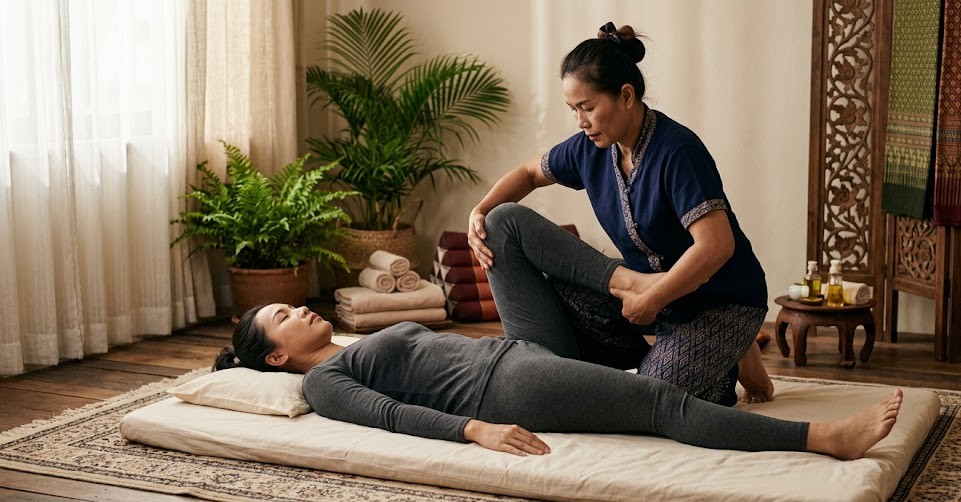
You’ve probably heard that Thai massage can help with stress, stiffness, and relaxation — but most people don’t actually know what happens during a session or why it feels so different from traditional massages. The truth is, Thai massage combines stretching, movement, and pressure techniques in ways many first-time clients never expect. In this guide, you’ll learn exactly what Thai massage is, how it works, its benefits, risks, and how to decide whether it’s the right wellness treatment for you.
Key Takeaways
- Thai massage is a traditional bodywork therapy that combines stretching, pressure techniques, and assisted movement to improve relaxation and mobility.
- Traditional Thai massage differs from Western massage because it focuses on movement, flexibility, and energy lines instead of only muscle rubbing.
- Thai massage therapy may help reduce stress, improve circulation, relieve muscle tension, and support flexibility and posture.
- A typical Thai massage session involves fully clothed stretching and pressure-point therapy performed on a padded floor mat.
- Different types of Thai massage include traditional Thai massage, Thai oil massage, Thai foot massage, and herbal compress therapy.
- Aftercare habits like hydration, gentle movement, and rest can maximize recovery and relaxation benefits after a session.
- Licensed therapists improve safety and create a more comfortable and personalized Thai massage experience.
What Is Thai Massage and How Does It Work?
Thai massage is a traditional healing therapy that combines assisted stretching, pressure techniques, and rhythmic body movements. Unlike many Western massage styles, Thai massage focuses on mobility, energy flow, and full-body movement rather than only rubbing muscles with oils.
First, Thai massage originated in Thailand more than 2,500 years ago and draws influence from Ayurveda, yoga, and traditional Asian healing systems. Many historians believe the practice was developed by physicians connected to Buddhist traditions. Today, it remains one of the most recognized forms of bodywork in global wellness culture.
Moreover, traditional Thai massage differs from Swedish massage because it focuses on mobility, stretching, and energy-line work rather than oil-based muscle rubbing. Therapists use their hands, elbows, knees, and even feet to guide your body through assisted stretches that resemble yoga poses.
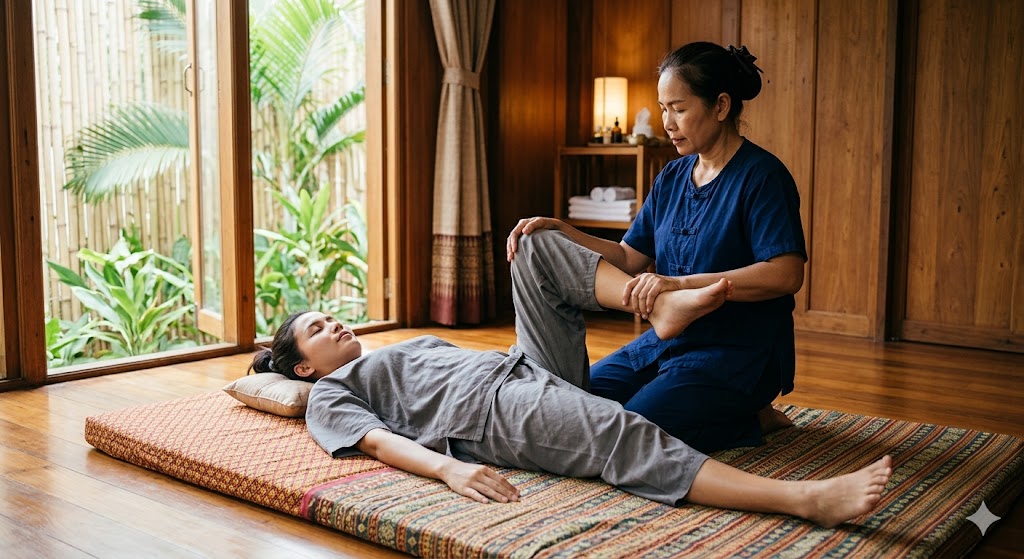
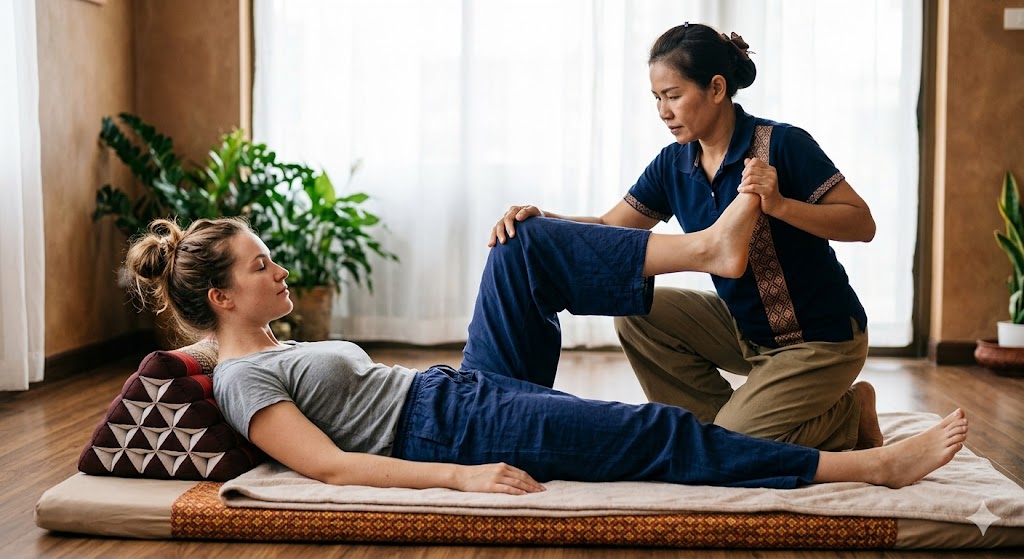
For example, during a session, a therapist may gently pull your legs, rotate your shoulders, or apply pressure to specific body points to release tension. This approach can improve flexibility while also helping muscles relax naturally.
Thai massage therapy may help improve flexibility, reduce muscle tension, and promote relaxation through guided stretching techniques.
Statistic: The global wellness economy exceeded $5.6 trillion in value, with massage and bodywork therapies seeing strong growth worldwide — Source: Global Wellness Institute, 2024.
What Are Sen Energy Lines?
Sen lines are traditional Thai massage energy pathways believed to influence physical and emotional wellness. Thai massage practitioners use pressure-point techniques along these lines to encourage balance and relaxation.
Additionally, the concept resembles energy meridians used in traditional Chinese medicine. While modern science does not fully validate Sen lines, many clients report reduced stress and improved body awareness after treatment.
Why Is Thai Massage Performed on a Floor Mat?
Traditional Thai massage is commonly performed on a padded floor mat because therapists need space for movement and stretching. A floor setup allows the practitioner to use leverage and body positioning more effectively.
For example, therapists often kneel beside clients while performing assisted yoga-style stretches. This technique would be difficult on a narrow massage table.
Why Does Thai Massage Matter for Modern Wellness?
Thai massage matters because it combines relaxation, movement, and recovery into one therapeutic experience. Many people today spend long hours sitting at desks, exercising intensely, or dealing with chronic stress, making mobility and recovery increasingly important.
First, stress-related health concerns continue to rise globally. According to the World Health Organization, stress and anxiety contribute significantly to sleep issues, fatigue, and reduced productivity — Source: WHO, 2024.
Moreover, Thai massage supports multiple wellness goals simultaneously. It can help improve circulation, loosen tight muscles, encourage better posture, and promote mental calmness through rhythmic movement and deep breathing.
For example, office workers often experience tight hips and upper-back stiffness from prolonged sitting. Thai massage stretches can help counter these posture-related issues by increasing joint mobility and reducing muscle tension.
At the same time, athletes and gym-goers often use Thai massage for active recovery. Assisted stretching may improve flexibility and range of motion after intense training sessions.
best recovery methods after workouts
Statistic: Research published in the Journal of Bodywork and Movement Therapies found that Thai massage may significantly reduce perceived stress levels and improve flexibility in participants — Source: Journal of Bodywork and Movement Therapies, 2023.
Can Thai Massage Help With Back Pain and Flexibility?
Thai massage may help with back pain and flexibility by reducing muscle tightness and improving mobility. Gentle stretching and pressure techniques can release tension around the hips, spine, and shoulders.
Furthermore, flexibility improvements often occur gradually over multiple sessions. Beginners may notice easier movement and less stiffness after just one appointment.
natural ways to improve flexibility
What Are the Main Benefits of Thai Massage?
Thai massage benefits include stress reduction, muscle relief, improved flexibility, and enhanced relaxation. Many people choose Thai massage because it supports both physical recovery and mental wellness.
Stress Reduction and Mental Relaxation
Thai massage can reduce stress by calming the nervous system and encouraging deep relaxation. Rhythmic pressure and controlled stretching may help lower physical tension linked to anxiety.
For example, many clients report feeling mentally lighter and calmer after a session. Slow breathing during stretching also contributes to relaxation.
Muscle Tension Relief
Thai massage techniques can release muscle tightness through pressure-point therapy and stretching. Therapists target areas like the shoulders, lower back, calves, and hips.
Additionally, pressure techniques may improve circulation around tense muscles. Better blood flow can support faster recovery and reduced soreness.
Improved Flexibility and Mobility
Thai massage stretches may increase flexibility by gently lengthening muscles and improving joint movement. This is why Thai massage is often called Thai yoga massage.
For example, yoga enthusiasts and athletes frequently use Thai massage to improve mobility before or after training sessions.
Better Posture Support
Thai massage may improve posture by reducing tightness caused by prolonged sitting and repetitive movement patterns. Tight hip flexors and rounded shoulders are common posture problems among office workers.
Statistic: Nearly 80% of adults experience lower back pain at some point in life — Source: National Institute of Neurological Disorders and Stroke, 2024.
What Happens During a Traditional Thai Massage Session?
A typical Thai massage session involves fully clothed stretching and pressure-point therapy performed on a padded floor mat. Sessions usually last between 60 and 120 minutes depending on the treatment style.
What Should You Wear to a Thai Massage Appointment?
Loose and comfortable clothing is best for Thai massage because the therapist needs freedom of movement for stretching techniques. Many spas provide lightweight cotton clothing for clients.
For example, yoga pants, athletic wear, or soft T-shirts usually work well. Tight jeans or restrictive clothing can limit flexibility during stretches.
What Techniques Do Therapists Use?
Thai massage therapists use stretching, compression, rocking motions, and pressure-point work during treatment. Unlike Swedish massage, oils are not always used in traditional sessions.
Additionally, therapists may use elbows, knees, and feet to apply controlled pressure safely. This full-body approach creates a dynamic and interactive experience.
Is Thai Massage Painful for Beginners?
Thai massage can feel intense for beginners, but it should not cause sharp or harmful pain. Mild discomfort during deep stretches is common, especially if your muscles are tight.
For example, beginners with limited flexibility may feel strong stretching sensations around the hips or hamstrings. However, a qualified therapist should always adjust pressure based on your comfort level.
What Are the Different Types of Thai Massage?
Different types of Thai massage focus on relaxation, stretching, recovery, or targeted pressure techniques. Understanding these styles can help you choose the best treatment for your goals.
| Thai Massage Type | Main Focus | Best For |
|---|---|---|
| Traditional Thai Massage | Stretching and pressure points | Flexibility and recovery |
| Thai Oil Massage | Relaxation with oils | Stress relief |
| Thai Herbal Compress Massage | Heated herbal therapy | Muscle soreness |
| Thai Foot Massage | Foot pressure points | Circulation and fatigue |
| Thai Sports Massage | Athletic recovery | Performance and mobility |
Traditional Thai Massage
Traditional Thai massage focuses on stretching, mobility, and pressure-point therapy. It is the most authentic and widely recognized form of Thai bodywork.
Thai Oil Massage
Thai oil massage combines Thai techniques with relaxing oil-based massage strokes. This version usually feels gentler and more spa-oriented than traditional sessions.
Thai Herbal Compress Massage
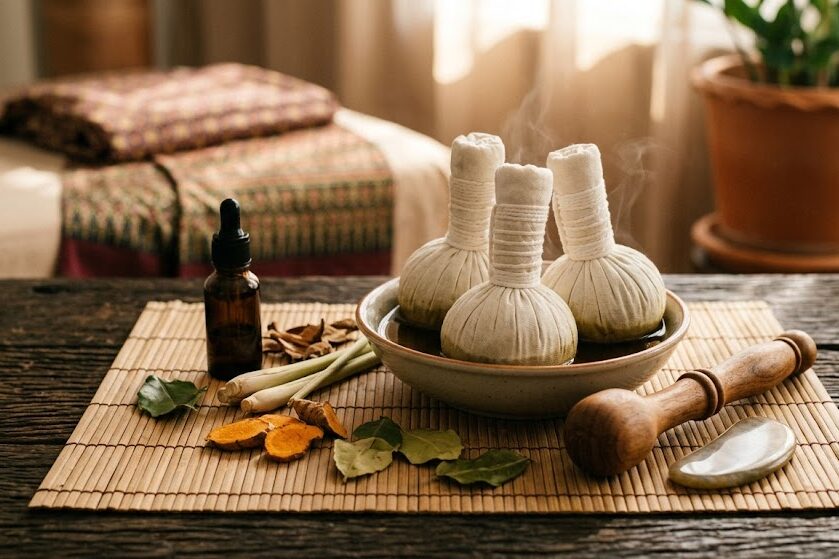
Thai herbal compress massage uses heated herbal pouches to relax muscles and improve circulation. Herbs like lemongrass and turmeric are commonly used.
Thai Foot Massage
Thai foot massage targets pressure points in the feet and lower legs to reduce fatigue and improve relaxation. Many spas market this treatment toward travelers and people who stand for long periods.
How Is Thai Massage Different From Swedish Massage?
Thai massage differs from Swedish massage because it emphasizes stretching and movement instead of oil-based muscle rubbing. Both massage styles can reduce stress, but they create very different experiences.
Thai Massage vs Swedish Massage
Swedish massage focuses on relaxation through long, flowing strokes and oils. Thai massage focuses more on flexibility, body positioning, and active movement.
For example, Swedish massage clients usually lie passively on a table while therapists massage muscles. In contrast, Thai massage clients are stretched and repositioned throughout the session.
Thai Massage vs Deep Tissue Massage
Deep tissue massage targets deeper muscle layers with concentrated pressure, while Thai massage combines stretching with pressure techniques. Deep tissue therapy often feels more localized and intense.
Additionally, deep tissue massage usually focuses on muscle knots and chronic tension. Thai massage creates a more full-body movement experience.
Thai Massage vs Sports Massage
Sports massage is designed for athletic performance and recovery, while Thai massage blends recovery with flexibility and relaxation. Athletes may benefit from both approaches depending on their goals.
Statistic: Massage therapy usage among athletes has increased steadily as recovery science gains popularity — Source: American Massage Therapy Association, 2024.
Who Should Avoid Thai Massage Therapy?
People with certain injuries, medical conditions, or pregnancy complications should avoid Thai massage unless approved by a healthcare provider. Safety depends on your physical condition and the intensity of the treatment.
Is Thai Massage Safe During Pregnancy?
Thai massage during pregnancy may be safe when performed by a trained prenatal therapist, but some techniques should be avoided. Deep twisting stretches and pressure on sensitive areas can create risks.
For example, pregnant clients should only visit therapists experienced in prenatal massage therapy.
When Should You Consult a Doctor?
You should consult a doctor before Thai massage if you have severe osteoporosis, recent surgery, blood clotting disorders, or serious spinal conditions. Certain stretches may aggravate injuries.
How Can You Find a Qualified Therapist?
Qualified Thai massage therapists should have professional training, certifications, and strong client reviews. Reputable spas also prioritize hygiene, communication, and safety assessments.
What Tools and Techniques Are Used in Thai Massage?
Thai massage tools and techniques enhance stretching, relaxation, and muscle recovery. Many spas combine traditional methods with modern wellness experiences.
Herbal Compresses and Aromatherapy Oils
Herbal compresses use heated fabric pouches filled with therapeutic herbs to soothe muscles and improve relaxation. Aromatherapy oils are more common in Thai oil massage sessions.
For example, eucalyptus and lavender oils are often used for calming spa experiences.
Stretching Tools and Spa Environments
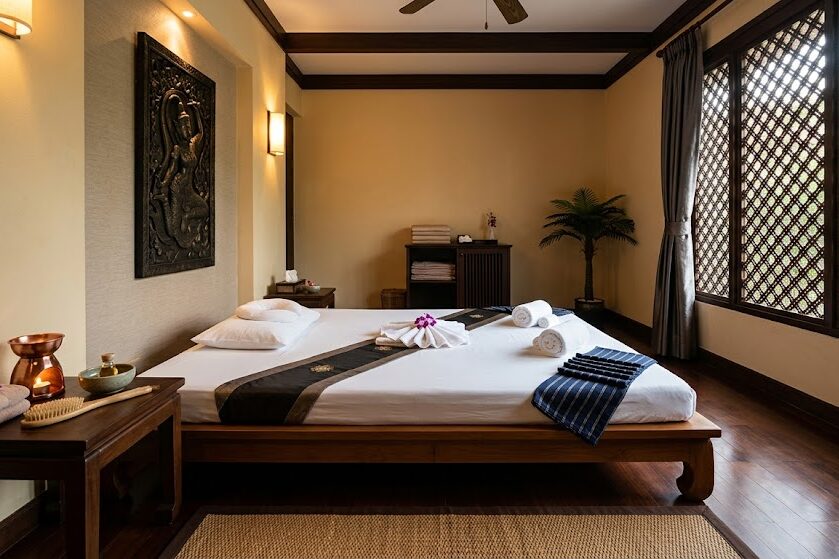
Some Thai massage spas use cushions, bolsters, and supportive mats to improve comfort during stretches. Relaxing music and dim lighting also contribute to the overall experience.
At-Home Thai Massage Tools
Foam rollers, massage balls, and stretching straps can support Thai massage-inspired recovery at home. These tools are useful between professional appointments.
What Should You Do After a Thai Massage Session?
Thai massage aftercare usually includes hydration, light movement, and rest to support muscle recovery and relaxation. Proper aftercare helps maximize the benefits of the session.
Drink Water and Stay Hydrated
Hydration supports muscle recovery after Thai massage by helping the body recover from physical manipulation and stretching. Drinking water may also reduce temporary soreness.
Move Gently and Rest
Light walking and gentle stretching can help maintain flexibility improvements after treatment. However, intense exercise immediately after a session may increase soreness.
How Often Should You Get a Thai Massage?
Most people benefit from Thai massage once or twice per month depending on stress levels, activity, and recovery needs. Athletes or individuals with chronic tension may schedule sessions more frequently.
For example, office workers often use monthly sessions for posture maintenance, while active athletes may book weekly recovery treatments.
What Are the Next Steps for Trying Thai Massage?
The next step for trying Thai massage is choosing the right treatment style based on your wellness goals and comfort level. Beginners often start with gentler sessions before exploring deeper stretching techniques.
First, decide whether you want relaxation, flexibility improvement, or sports recovery support. This helps narrow down the best Thai massage style for your needs.
Second, research local spas carefully and verify therapist qualifications before booking. Reading client reviews can improve your confidence and comfort level.
Third, communicate openly during your appointment. Let the therapist know about injuries, flexibility limitations, or pressure preferences before the session begins.
Conclusion
Thai massage is a unique wellness therapy that combines stretching, movement, and pressure techniques to support relaxation and recovery. Unlike many Western massage styles, Thai massage creates an active, full-body experience that can improve flexibility, posture, and stress relief simultaneously.
Moreover, beginners do not need to be flexible or experienced to enjoy Thai massage safely. By choosing a qualified therapist and communicating your comfort level, you can create a relaxing and effective experience tailored to your needs.
Ultimately, wellness is not only about reducing stress — it is also about improving how your body feels and moves every day. Whether you want better mobility, muscle recovery, or simple relaxation, Thai massage can become a valuable part of your long-term self-care routine.
FAQ
What is Thai massage?
Thai massage is a traditional bodywork therapy that combines stretching, pressure techniques, and assisted movements to improve relaxation and flexibility.
What are the benefits of Thai massage?
It may help improve flexibility, reduce muscle tension, support circulation, and promote full-body relaxation.
How is Thai massage different from regular massage?
Thai massage involves stretching and body movements, while many traditional massages mainly use rubbing and kneading techniques.
Do you wear clothes during a Thai massage?
Yes, loose and comfortable clothing is typically worn during a Thai massage session.
Is Thai massage painful?
It can feel intense in tight areas, but it should not be excessively painful when performed properly.
Can Thai massage improve flexibility?
Yes, stretching techniques used in Thai massage may help increase flexibility and mobility.
Is Thai massage good for back pain?
It may help reduce muscle stiffness and tension associated with mild back discomfort.
How long does a Thai massage session last?
Most Thai massage sessions last between 60 and 120 minutes.
Can beginners try Thai massage?
Yes, beginners can enjoy Thai massage, and therapists can adjust the pressure and stretches based on comfort levels.
What should you do after a Thai massage?
Drink water, rest if needed, and allow the body time to recover and relax after the session.
Written by: Suraj — Wellness & Lifestyle Blogger with 5+ years of experience covering fitness recovery, massage therapy, and holistic wellness topics.
Reviewed by: Editorial Wellness Review Team — Specialists in wellness education, recovery therapies, and evidence-based lifestyle content.
Disclaimer: This article was initially drafted using AI assistance. However, the content has undergone thorough revisions, editing, and fact-checking by human editors and subject matter experts to ensure accuracy.