
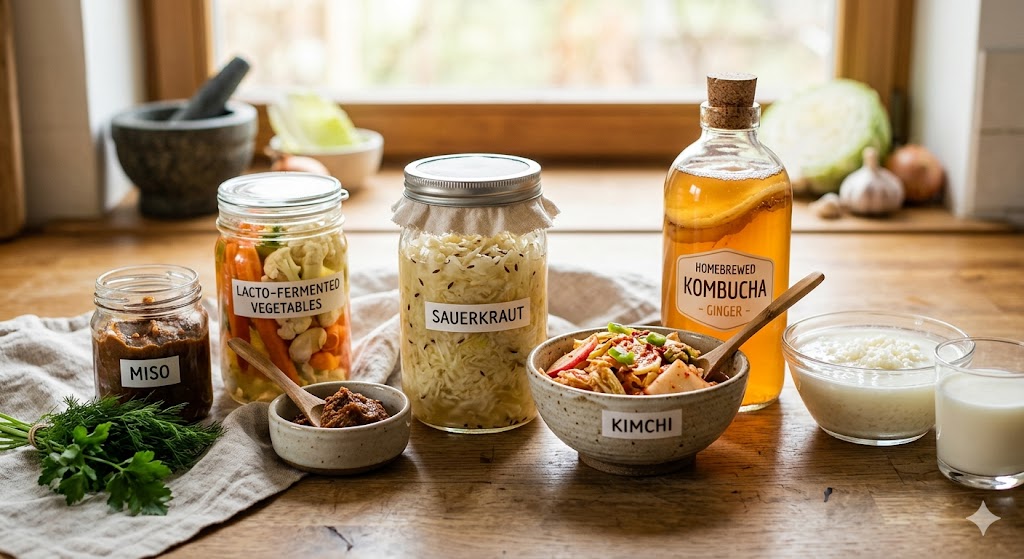
You already know that what you eat affects digestion and energy. What many people miss is that fermented foods for gut health may support the microbiome in ways regular foods do not. In this guide, you’ll learn the best fermented foods, how they work, and how to add them to your routine safely.
Key Takeaways
- Fermented foods are foods transformed by beneficial microbes through a natural fermentation process.
- Many fermented foods contain probiotics or compounds that may support a healthy gut microbiome.
- Yogurt, kefir, kimchi, sauerkraut, miso, and tempeh are common fermented foods linked to digestive wellness.
- Starting small servings can improve comfort when adding fermented foods to your routine.
- Consistency matters more than eating large amounts occasionally.
- Fermented foods work best alongside fiber-rich meals, hydration, and balanced nutrition.
- One daily habit with a fermented food can be an easy first step for gut support.
What Are Fermented Foods and How Do They Support Gut Health?
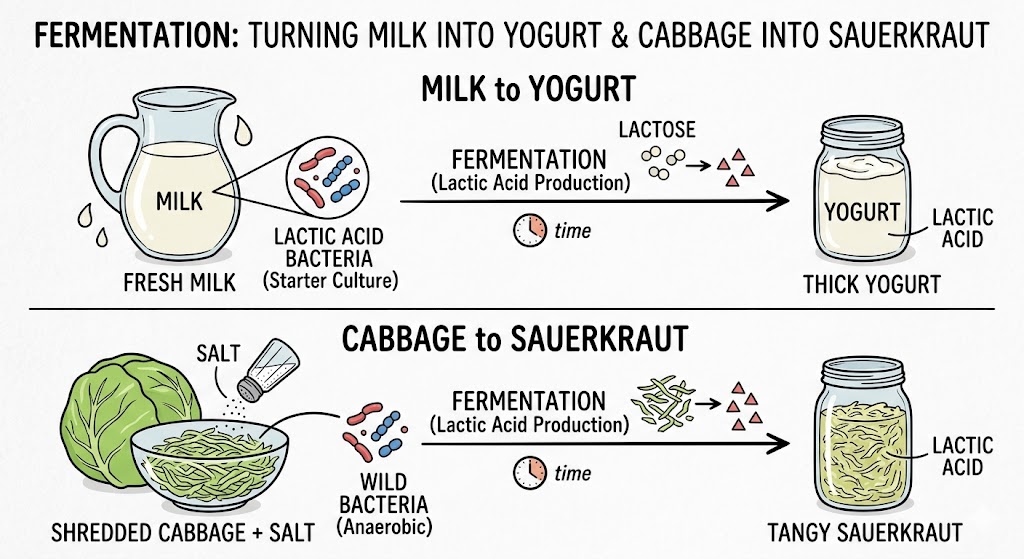
Fermented foods are foods produced through controlled microbial growth that changes flavor, texture, and nutritional properties. During fermentation, helpful bacteria or yeasts break down sugars and starches into acids, gases, or alcohol. This natural process can create beneficial compounds and improve food preservation.
First, fermentation often introduces probiotics, which are live microorganisms that may benefit health when consumed in adequate amounts. For example, live-culture yogurt contains active bacterial strains that help balance gut bacteria.
Second, fermented foods may also provide postbiotics, which are useful compounds created by microbes during fermentation. These include organic acids and peptides that may support digestion and gut barrier health.
Moreover, not every fermented food contains live probiotics by the time you eat it. For example, baked sourdough bread is fermented during preparation, but heat may destroy live microbes. That said, it can still offer improved digestibility.
Statistic: Around 70% of the immune system is located in the gut-associated lymphoid tissue — Source: Harvard Health Publishing, 2024.
best probiotics for gut health
Why Do Fermented Foods Matter for Gut Health?
Fermented foods matter for gut health because the gut microbiome influences digestion, immunity, nutrient absorption, and overall wellness. Your microbiome is the community of bacteria, fungi, and other microbes living in your digestive tract.
First, a balanced microbiome helps break down certain fibers your body cannot digest alone. For example, gut bacteria convert fiber into short-chain fatty acids that nourish colon cells.
Second, healthy gut bacteria may influence immune response. For example, researchers continue to study how diverse gut microbes interact with inflammation and immune signaling.
In addition, digestion comfort often depends on microbial balance. Some people notice less bloating and more regularity when they improve food quality and include fermented foods consistently.
Statistic: The human gut contains trillions of microbes, with genes vastly outnumbering human genes — Source: NIH Human Microbiome Project, 2023.
immune boosting foods guide
What Are the Best Fermented Foods for Gut Health?
The best fermented foods for gut health are nutrient-dense foods that are easy to tolerate, practical to eat regularly, and made with active cultures when possible. The best option for you depends on taste, diet style, and digestion tolerance.
Top Fermented Foods List
| Food | Main Benefit | Best For | Beginner Friendly |
|---|---|---|---|
| Yogurt | Probiotics + protein | Daily breakfast | Yes |
| Kefir | Diverse cultures | Digestion support | Yes |
| Kimchi | Flavor + fiber | Savory meals | Moderate |
| Sauerkraut | Tangy probiotics | Sandwiches, bowls | Yes |
| Kombucha | Fizzy fermented tea | Soda alternative | Moderate |
| Miso | Umami flavor | Soups, sauces | Yes |
| Tempeh | Fermented protein | Plant-based meals | Yes |
| Natto | Unique probiotic food | Advanced users | No |
| Naturally Fermented Pickles | Crunchy side dish | Snacks/meals | Moderate |
Yogurt for Gut Health
Yogurt is fermented milk made with live cultures and is one of the easiest probiotic foods to start with. Choose plain yogurt with “live and active cultures” on the label. Greek yogurt also adds extra protein.
For example, add berries, oats, and seeds for a balanced breakfast.
Kefir Benefits for Digestion
Kefir is a fermented dairy drink that usually contains more strains of microbes than standard yogurt. Many people use kefir as a smoothie base or quick breakfast.
For example, blend kefir with banana and chia seeds.
Kimchi Gut Health Benefits
Kimchi is a spicy fermented vegetable dish that may support gut health while adding fiber and flavor. Because it can be spicy and salty, start with small servings.
Sauerkraut Probiotics
Sauerkraut is fermented cabbage that can provide probiotics when sold raw and unpasteurized. Add it to bowls, wraps, or salads.
Miso Benefits for Digestion
Miso is fermented soybean paste used in soups, marinades, and dressings. It adds savory flavor with a small serving size.
Tempeh for Plant-Based Eaters
Tempeh is fermented soy made into firm blocks that provide protein and texture. It is ideal for stir-fries and sandwiches.

Is Yogurt or Kefir Better for Gut Health?
Yogurt and kefir can both support gut health, but kefir often contains a wider variety of cultures while yogurt may be easier to enjoy daily. The better choice depends on your routine and taste preferences.
First, choose yogurt if you want a spoonable, protein-rich breakfast. For example, yogurt works well with fruit and granola.
Second, choose kefir if you prefer a drinkable option or smoothie ingredient. For example, kefir can replace milk in shakes.
That being said, the best fermented food is the one you will eat consistently.
Statistic: Protein-rich breakfasts may improve satiety and appetite control — Source: British Journal of Nutrition, 2023.
How Do Fermented Foods Work in the Body?
Fermented foods work in the body by interacting with digestion, gut microbes, and the compounds produced during fermentation. They are not magic foods, but they can support healthy habits.
Probiotics and Live Cultures
Probiotics are live microorganisms that may temporarily support the gut environment. Some pass through the gut while influencing microbial balance.
Acids and Enzymes
Fermentation creates acids and enzymes that may help food breakdown and preservation. For example, lactic acid gives yogurt and sauerkraut their tangy taste.
Fiber Synergy
Fiber feeds beneficial gut microbes, so fermented foods often work best with fiber-rich meals. For example, yogurt with oats may offer more benefit than yogurt alone.
Consistency Over Time
Consistency matters because the microbiome responds to repeated dietary patterns more than occasional one-off meals. A daily spoon of yogurt often beats a monthly health kick.
How Much Fermented Food Should You Eat Per Day?
How much fermented food you should eat per day depends on tolerance, product type, and your overall diet. There is no universal number for everyone.
First, beginners often start with 1-2 tablespoons of kimchi or sauerkraut, or ½ cup yogurt, or 100-150 ml kefir. This gradual approach can reduce discomfort.
Second, increase slowly over 1-2 weeks if you feel well. For example, many people settle into one or two servings daily.
Plus, more is not always better. Excess intake can mean too much sodium, sugar, or digestive upset depending on the product.
Statistic: Many adults do not meet daily fiber intake recommendations — Source: USDA Dietary Guidelines, 2025.
Can Fermented Foods Help with Bloating and Digestion?
Fermented foods may help with bloating and digestion for some people, but responses vary widely. Some individuals feel better with small, regular servings, while others need different strategies.
First, bloating can come from low fiber, fast eating, food intolerances, stress, or constipation. For example, adding kimchi alone may not solve bloating caused by eating too quickly.
Second, fermented foods can sometimes worsen symptoms at first. For example, spicy kimchi or fizzy kombucha may irritate sensitive stomachs.
That being said, track your own response for two to four weeks before deciding what works for you.
What Is the Best Time to Eat Fermented Foods?
The best time to eat fermented foods is the time you can use them consistently without discomfort. There is no single perfect hour.
First, many people enjoy yogurt or kefir at breakfast because it is easy and routine-based. For example, pairing it with oats creates a balanced meal.
Second, savory options like kimchi, sauerkraut, and miso fit lunch or dinner. For example, add miso soup before meals or kimchi beside rice bowls.
In addition, if a product bothers your stomach on an empty stomach, try it with meals instead.
Are Store-Bought Fermented Foods Still Beneficial?
Store-bought fermented foods can still be beneficial if you choose quality products with suitable ingredients and storage methods. Labels matter.
Look for:
- Live and active cultures
- Refrigerated storage when required
- Low added sugar
- Reasonable sodium
- Short ingredient lists
For example, plain yogurt with live cultures is usually a stronger choice than sugary dessert yogurt.

Who Should Be Careful With Fermented Foods?
Some people should be careful with fermented foods because ingredients, histamines, sodium, or acidity may not suit every body.
You may need caution if you have:
- Severe digestive conditions
- Histamine sensitivity
- High blood pressure requiring low sodium intake
- Diabetes concerns with sugary kombucha products
- Food allergies
- Weakened immunity (ask a healthcare professional)
For example, someone limiting sodium may prefer plain yogurt over salty pickled vegetables.
Tools, Examples, and Practical Applications for Daily Gut Health
Practical applications help turn nutrition advice into habits you can actually follow. Small systems often beat perfect plans.
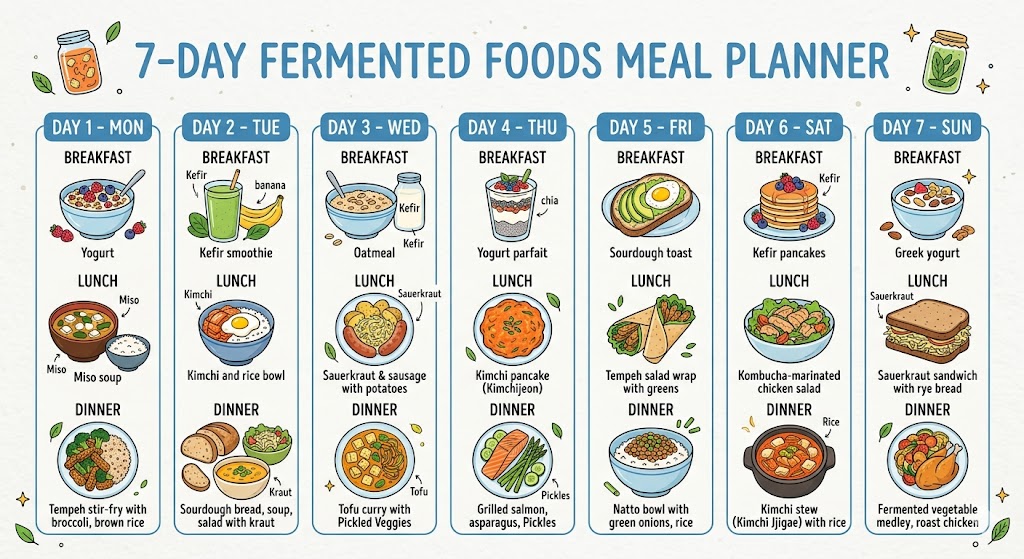
Simple 7-Day Gut Health Meal Ideas
- Day 1: Yogurt + berries breakfast
- Day 2: Kefir smoothie snack
- Day 3: Rice bowl + kimchi
- Day 4: Salad + sauerkraut side
- Day 5: Miso soup with lunch
- Day 6: Tempeh stir-fry dinner
- Day 7: Repeat your favorite option
Shopping Tips
- Buy one fermented food first
- Check sugar and sodium
- Choose flavors you enjoy
- Store properly after opening
Easy Homemade Starter Ideas
- Overnight yogurt bowl
- Simple cabbage ferment
- Miso dressing for salads
What’s Next: Action Steps to Improve Gut Health Naturally
The best next steps are simple, measurable habits you can sustain for several weeks. Big changes are not required.
- Choose one fermented food you enjoy.
- Eat it 3-5 times weekly.
- Add a fiber-rich food daily.
- Drink enough water.
- Track bloating, energy, and regularity.
- Adjust portions based on tolerance.
For example, start with yogurt at breakfast and fruit every morning for two weeks.
foods to avoid for gut health
hydration tips for digestion
7 day healthy eating plan
Conclusion
Fermented foods for gut health are a simple, flavorful, and sustainable way to support better digestion habits. They may help through probiotics, useful fermentation compounds, and improved meal quality when used consistently. Start small, stay consistent, and pair fermented foods with fiber, hydration, movement, and balanced nutrition. Your gut health improves through habits, not hacks.
Written by Suraj — Health Content Writer with 5+ years of blogging experience focused on SEO, nutrition education, and practical wellness content.
Reviewed by Editorial Review Team — Wellness researchers and nutrition content specialists focused on evidence-based health guidance.
Disclaimer: This article was initially drafted using AI assistance. However, the content has undergone thorough revisions, editing, and fact-checking by human editors and subject matter experts to ensure accuracy.