

You already know aging is inevitable, and you’ve probably seen endless ads promising to “turn back the clock.” What most people miss is that only a small number of supplements have meaningful evidence—and results depend on choosing the right one for your goal. In this guide, you’ll learn which longevity supplement options matter, how they work, and how to build a smarter healthy-aging routine.
Key Takeaways
- Longevity supplements are products designed to support healthy aging, but they do not replace sleep, exercise, nutrition, or stress control.
- Evidence-backed options often include omega-3s, magnesium, creatine, vitamin D, and CoQ10 depending on individual needs.
- Different supplements support different goals such as energy, cognition, heart health, mobility, or muscle preservation.
- Quality matters because third-party testing, accurate labeling, and effective doses improve trust and results.
- Safety matters because supplements can interact with medications or worsen some health conditions.
- Personalized routines based on age, diet, and health goals usually outperform random supplement stacking.
- Daily habits amplify supplement benefits more than any single pill ever can.
What Is a Longevity Supplement and How Does It Work?
A longevity supplement is a dietary supplement intended to support healthy aging through targeted nutritional or functional support. These products usually focus on areas such as cellular health, inflammation balance, metabolic function, brain performance, mitochondrial energy, and nutrient status.
First, aging is influenced by many factors. These include genetics, environment, lifestyle, and nutrient intake. For example, someone with low vitamin D may benefit from correcting deficiency, while someone under chronic stress may gain more from sleep and magnesium support.
Second, longevity supplements do not “stop aging.” Instead, they may help you age better by supporting systems that often decline over time. Healthy aging depends more on sleep, exercise, nutrition, and stress management than on any single supplement.
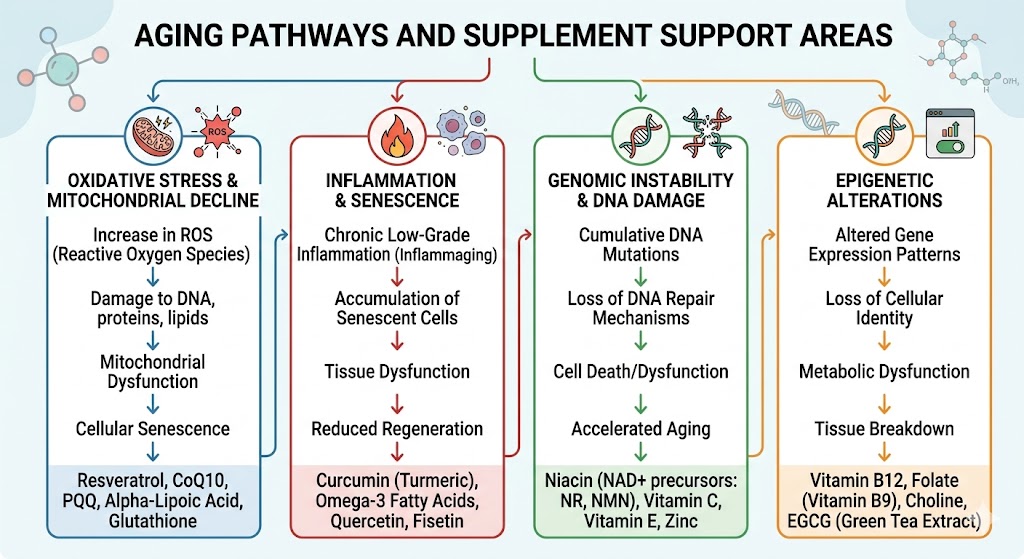
Third, supplements work through common mechanisms:
- Antioxidant support helps manage oxidative stress.
- Mitochondrial support helps cells produce energy efficiently.
- Inflammation modulation supports recovery and joint comfort.
- Nutrient replenishment corrects common deficiencies.
- Muscle support helps preserve strength and function.
- Cognitive support may help focus and memory.
foods that reduce inflammation naturally
Why Longevity Supplements Matter
Longevity supplements matter because modern lifestyles often create nutrient gaps and stressors that affect healthy aging. While habits remain the foundation, targeted supplementation can support specific weaknesses.
First, nutrient insufficiency is common worldwide. Vitamin D inadequacy affects large populations depending on sun exposure, skin tone, and location — Source: Endocrine Society, 2024.
Second, adults naturally lose muscle mass with age if they do not strength train or consume enough protein. This age-related decline can reduce mobility, balance, and independence. For example, adding resistance training plus protein can help preserve lean mass.
Moreover, mitochondrial efficiency may decline with age. That means some people notice lower energy, slower recovery, or reduced exercise tolerance. This is where compounds like CoQ10 or creatine may be relevant.
Plus, brain health becomes a priority over time. Cognitive resilience is linked to sleep, exercise, blood sugar control, social connection, and targeted nutrients.
healthy aging diet plan
vitamin D deficiency symptoms
Do Longevity Supplements Really Help You Age Better?
Longevity supplements can help some people age better when they solve a real need, but they are not universal magic solutions. Results depend on the ingredient, dose, product quality, and your starting health status.
First, evidence is strongest for supplements that address a known issue. For example, creatine can improve strength performance, vitamin D can help when deficient, and omega-3s may support heart and brain health.
Second, expectations should stay realistic. Supplements usually create incremental gains, not dramatic overnight transformations. That matters because consistent small improvements in sleep, recovery, and mobility compound over years.
Third, lifestyle still wins. Regular exercise reduces mortality risk significantly across many populations — Source: WHO, 2024. That means your walking habit may matter more than your capsule stack.
Evidence-backed longevity supplements may include omega-3s, magnesium, creatine, CoQ10, and vitamin D when appropriate.
What Are the Best Longevity Supplements Backed by Science?
The best longevity supplements backed by science are the ones that match your health goal and have credible human evidence. There is no single best product for everyone.
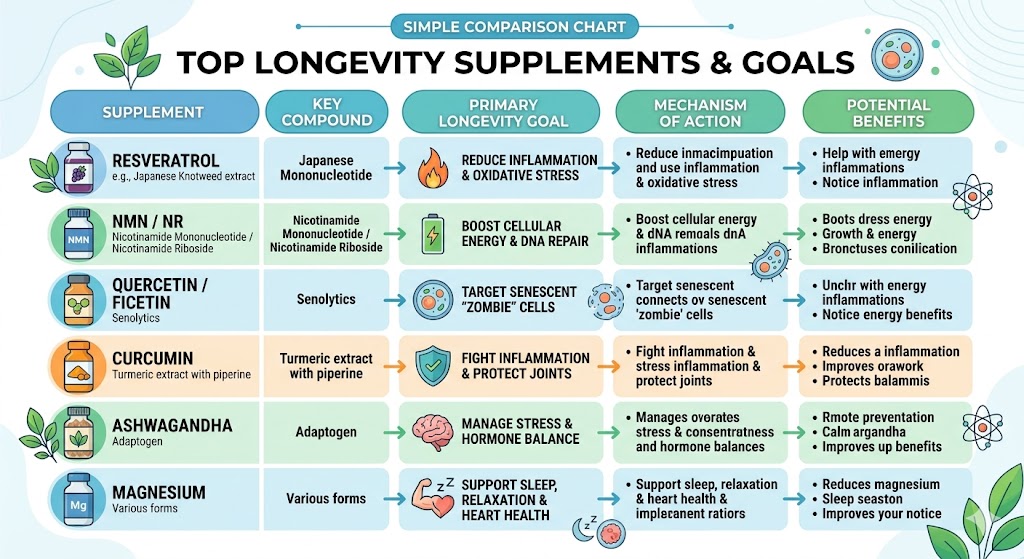
Ranked List of Popular Options
| Supplement | Main Benefit | Best For | Key Note |
|---|---|---|---|
| Omega-3 | Heart + brain support | General wellness | Choose tested fish oil/algae oil |
| Magnesium | Sleep + stress + muscle function | Poor sleep, cramps | Pick glycinate/citrate forms |
| Creatine | Strength + brain energy | Adults 30+ | One of the best studied |
| Vitamin D | Bone + immune support | Low sun exposure | Test levels first |
| CoQ10 | Mitochondrial support | Energy, statin users | Best with meals |
| Curcumin | Inflammation support | Joint comfort | Better with absorption enhancer |
| Protein | Muscle preservation | Aging adults | Hit daily protein targets |
| Probiotics | Gut support | Digestive issues | Strain-specific results |
| Green Tea Extract | Antioxidant support | Metabolic support | Avoid excess doses |
| NMN/NAD+ | Emerging interest | Biohackers | Evidence still evolving |
Omega-3
Omega-3 fatty acids support cardiovascular and brain health. For example, EPA and DHA are studied for triglycerides and cognitive aging support.
omega-3 benefits for heart and brain
Magnesium
Magnesium supports hundreds of enzymatic reactions linked to sleep, nerve function, and recovery. For example, glycinate is often chosen for relaxation.
magnesium benefits and types explained
Creatine
Creatine supports energy production in muscles and the brain. For example, 3–5 g daily is commonly used in research.
creatine benefits beyond muscle gain
Vitamin D
Vitamin D supports bone and immune health, especially when levels are low. Testing helps avoid guesswork.
CoQ10
CoQ10 helps mitochondrial energy production and acts as an antioxidant. It is often discussed for fatigue or statin-related depletion.
Which Longevity Supplements Support Energy and Mitochondrial Health?
Energy-focused longevity supplements support how cells create and use energy, especially inside mitochondria. They are most useful when fatigue is linked to recovery, age, poor sleep, or nutritional gaps.
Best Options for Energy
First, CoQ10 is popular for mitochondrial support. It plays a role in electron transport, which helps cells make ATP.
Second, creatine helps recycle quick energy during intense effort and may support mental energy during demanding tasks.
Third, magnesium supports ATP processes and nervous system function. For example, low magnesium can worsen fatigue or poor sleep.
Fourth, B vitamins may matter when intake is low, especially in restrictive diets.
Practical Routine Example
- Morning: Omega-3 + Vitamin D (if needed)
- Pre-workout: Creatine
- With lunch: CoQ10
- Evening: Magnesium glycinate
best morning routine for energy
What Is the Best Longevity Supplement for Brain Health and Memory?
The best longevity supplement for brain health depends on whether your main issue is focus, stress, memory, or poor sleep. Brain performance is multifactorial.
First, omega-3s are among the most researched nutrients for brain structure and function. DHA is a major component of brain tissue.
Second, creatine may support demanding mental tasks, especially during sleep loss or vegetarian diets.
Third, magnesium threonate is often marketed for cognitive support, though evidence is still developing.
Fourth, curcumin is studied for inflammation pathways that may influence cognitive aging.
Moreover, sleep quality strongly predicts memory performance. Adults sleeping under recommended ranges often report worse focus — Source: Sleep Foundation, 2025.
how to improve sleep quality naturally
How Do You Choose a Safe and Effective Longevity Supplement?
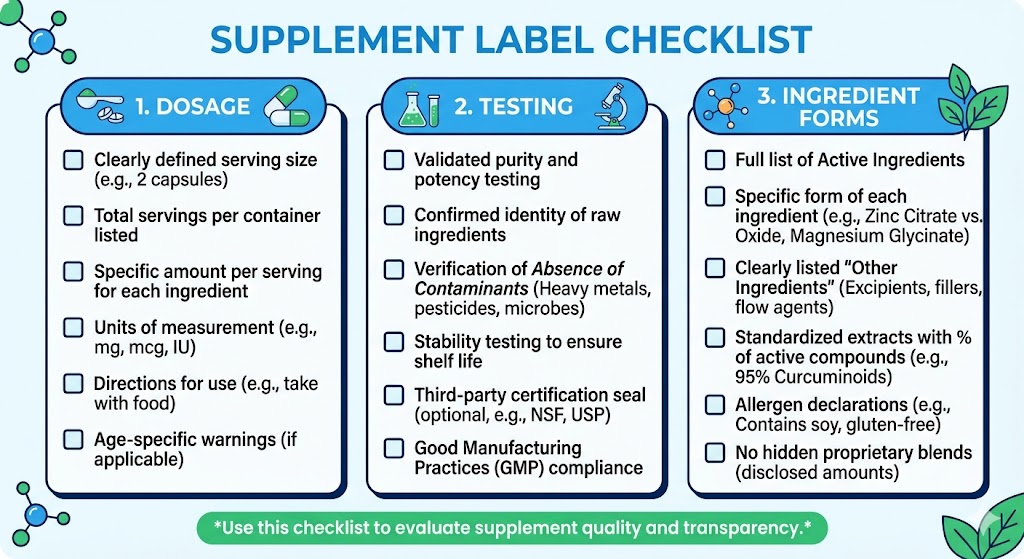
A safe and effective longevity supplement has transparent labeling, appropriate dosage, quality testing, and a clear reason for use. Buying based on hype alone is risky.
Smart Buying Checklist
- Define your goal. Energy, sleep, joints, brain, or muscle?
- Check the ingredient form. Magnesium glycinate differs from oxide.
- Review dosage transparency. Avoid hidden proprietary blends.
- Look for third-party testing. NSF, USP, Informed Choice, or similar.
- Assess interactions. Check with a clinician if you take medications.
- Start simple. Add one product at a time.
- Track outcomes. Use sleep, strength, labs, or symptoms.
Supplement quality involves transparent labeling, effective dosages, and third-party testing for purity.
Are NMN, NAD+, and Resveratrol Worth Taking for Longevity?
NMN, NAD+, and resveratrol are promising but still evolving options rather than guaranteed essentials. Interest is high because they relate to cellular energy and stress-response pathways.
First, NMN and related NAD+ precursors aim to support declining NAD+ levels with age. Human research is growing, but long-term outcomes are still being studied.
Second, resveratrol gained attention from laboratory research, but human results are mixed and often depend on dose and formulation.
Third, these compounds may appeal more to advanced users than beginners. For most people, basics like sleep, exercise, protein intake, omega-3s, and magnesium likely deserve priority first.
That being said, if you are curious, discuss it with a qualified healthcare professional and choose reputable brands.
What Side Effects Can Longevity Supplements Cause?
Longevity supplements can cause side effects ranging from mild digestive upset to serious drug interactions. Safety depends on dose, ingredient, health status, and combinations used.
First, fish oil may increase bleeding risk in some contexts. Second, magnesium can cause loose stools in some forms. Third, stimulatory formulas may worsen anxiety or sleep. Fourth, herbs can interact with medications.
People who should be extra careful include:
- Pregnant or breastfeeding adults
- People on blood thinners
- Those with kidney or liver disease
- People managing multiple prescriptions
- Anyone preparing for surgery
Moreover, over-supplementation is common. More is not better. High doses can create new problems instead of solving old ones.
Can You Take Multiple Longevity Supplements Together?
You can take multiple longevity supplements together when they are complementary, appropriately dosed, and medically appropriate. Stacking without a plan increases cost and confusion.
Beginner Stack: Healthy Aging Basics
- Omega-3
- Magnesium
- Vitamin D (if needed)
- Protein support if intake is low
Beginner Stack: Energy + Productivity
- Creatine
- Magnesium
- CoQ10
Beginner Stack: Muscle Preservation Over 40
- Creatine
- Protein powder or higher protein meals
- Vitamin D if deficient
beginner biohacking habits that work
The smartest rule is simple: add one supplement, test for 2–4 weeks, then decide whether it earns a place.
What Lifestyle Habits Matter More Than Longevity Supplements?
Lifestyle habits matter more than longevity supplements because they influence nearly every aging pathway at once. Supplements can support the process, but habits drive the biggest returns.
Priority Habits
First, strength training preserves muscle, insulin sensitivity, and bone health.
Second, walking daily supports heart health and recovery.
Third, sleep improves hormones, memory, and appetite control.
Fourth, protein intake helps maintain lean mass.
Fifth, stress management lowers chronic wear and tear.
Sixth, social connection is linked to better long-term health outcomes.
Seventh, preventive screening catches issues earlier.
For example, combining walking, lifting, protein, and sleep can outperform an expensive supplement stack.
strength training for beginners over 40
annual health checkup checklist
Tools and Practical Application: Build Your Personal Longevity Plan
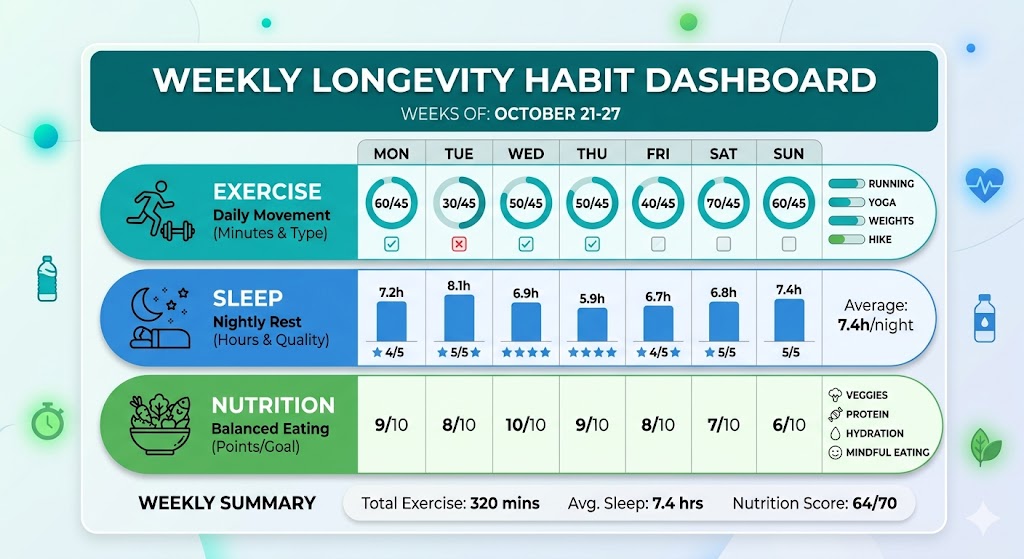
A practical longevity plan starts with goals, baseline habits, and simple tracking. You do not need a drawer full of capsules.
Use These Tools
- Blood tests: Vitamin D, B12, glucose, lipids, iron when relevant
- Wearables: Sleep, heart rate, activity trends
- Food tracker: Protein and calorie awareness
- Training log: Strength progress over time
- Symptom journal: Energy, digestion, focus, recovery
30-Day Action Plan
- Fix sleep schedule.
- Walk daily.
- Strength train twice weekly.
- Hit protein targets.
- Add one evidence-backed supplement.
- Review results after 30 days.
What’s Next: How to Upgrade Your Healthy Aging Strategy
The next step is consistency, not complexity. Most people improve faster by mastering basics than by chasing exotic stacks.
First, choose one health goal this month. Second, support it with one habit and one supplement. Third, measure progress. Fourth, adjust slowly.
Longevity supplement routines should be personalized to age, diet, medications, and health goals. That sentence matters because personalization beats trends.
Conclusion
A longevity supplement can be a useful tool, but it is never the whole strategy. The strongest evidence still points to sleep, movement, strength training, nutrition, stress control, and regular screening. Start with fundamentals, add only what fits your needs, and build a plan you can follow for years—not weeks.
Written by: Suraj — 5+ Blogger, health and SEO content creator focused on evidence-based wellness guides and reader-first educational content.
Reviewed by: Editorial Review Team — Research-focused wellness editors specializing in nutrition, supplementation, and consumer health content quality.
Disclaimer: This article was initially drafted using AI assistance. However, the content has undergone thorough revisions, editing, and fact-checking by human editors and subject matter experts to ensure accuracy.