
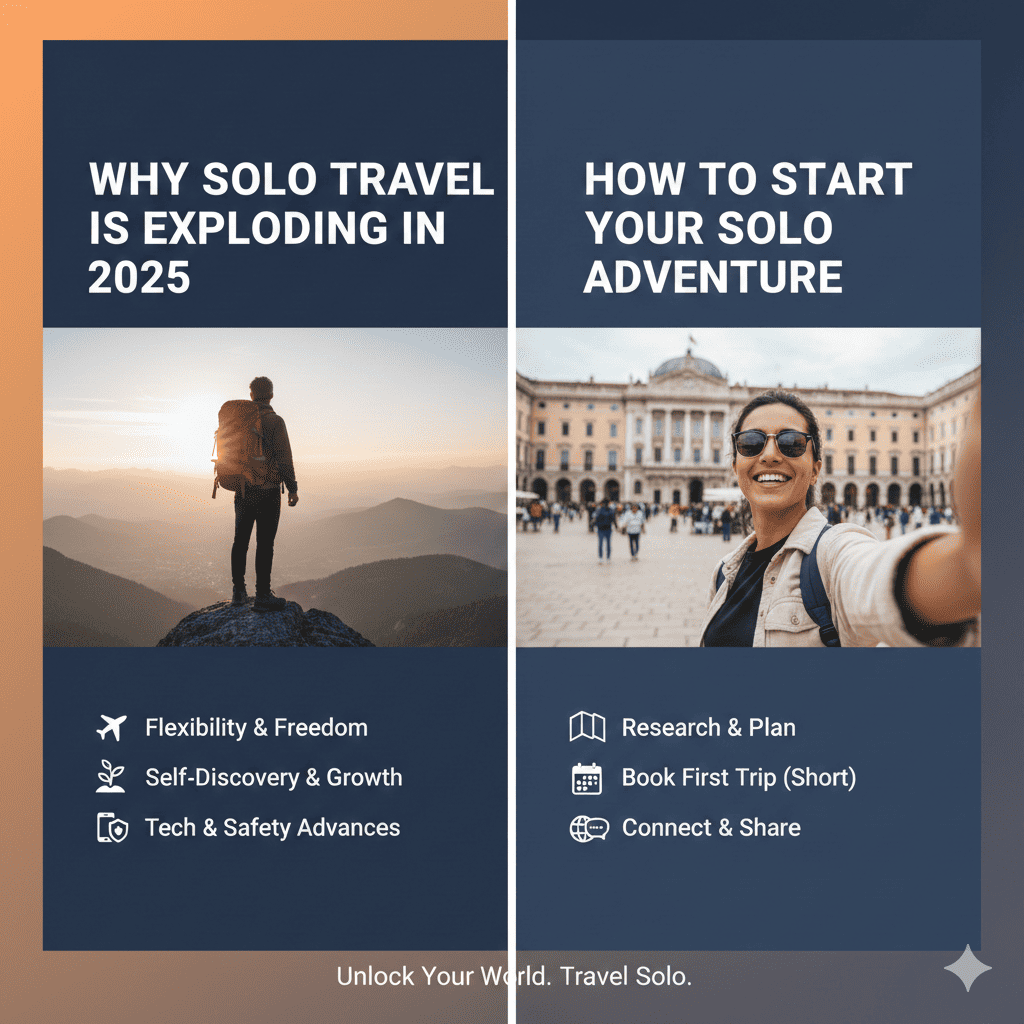
Solo travel Something remarkable is happening across airports, hostels, and scenic destinations worldwide—solo travelers are everywhere. What was once considered unconventional or even concerning has become one of the fastest-growing travel trends of 2025. Solo travel isn’t just a passing fad; it’s a cultural movement that’s reshaping how we think about adventure, self-discovery, and personal freedom.
If you’ve been contemplating taking that first trip alone, you’re not alone in your curiosity. Millions of people are discovering that solo travel offers experiences that group trips and couple vacations simply cannot match. This comprehensive guide reveals why solo travel has exploded in popularity and, more importantly, provides you with everything you need to confidently embark on your own solo adventure.
The Solo Travel Revolution: By the Numbers
The statistics paint a compelling picture. According to recent travel industry reports, solo travel bookings have surged by 42% since 2023, with projections showing continued growth throughout 2025 and beyond. Hotels report that single-occupancy bookings now account for nearly 25% of all reservations, up from just 15% five years ago. Tour operators have responded by creating hundreds of solo travel specific packages, many eliminating the dreaded single supplement fee that once penalized independent travelers.
But numbers only tell part of the story. Behind these statistics are real people—professionals taking sabbaticals, retirees exploring long-held dreams, young adults gap-year traveling, and individuals simply seeking a break from routine. They’re discovering that traveling alone doesn’t mean being lonely; it means having the freedom to create exactly the adventure they desire.
1. The Cultural Shift: Why Solo Travel Became Mainstream
Solo travel has moved from niche to normal thanks to several converging cultural factors that have fundamentally changed how we view independence and personal growth.
The Remote Work Revolution:
The rise of remote work has been a game-changer for solo travelers. With millions of professionals now working from anywhere, the traditional two-week vacation constraint has dissolved. Digital nomads and remote workers are extending trips from days to weeks or months, choosing destinations based on personal interest rather than tour group schedules. Co-working spaces in Bali, Lisbon, and Medellín have become hubs where solo travelers work, network, and explore simultaneously.
Social Media Demystification:
Instagram, TikTok, and YouTube have transformed solo travel from mysterious to mainstream. Thousands of creators document their solo adventures daily, showing followers that traveling alone is not only safe but incredibly rewarding. These digital storytellers have demystified destinations, shared practical tips, and created communities that make solo travel feel accessible and achievable. The fear of the unknown has been replaced by excitement fueled by authentic experiences shared online.
Delayed Life Milestones:
Today’s generation is marrying later, having children later, and making career changes more frequently. This shift has created larger windows of opportunity for personal pursuits like solo travel. Rather than waiting for a travel partner with matching schedules and interests, people are seizing the moment and booking tickets for one.
Mental Health Awareness:
Society’s growing recognition of mental health importance has positioned solo travel as a legitimate form of self-care. Traveling alone provides space for reflection, stress reduction, and personal reset that group dynamics often complicate. Therapists and wellness experts increasingly recommend solo trips as tools for building confidence, processing life transitions, and rediscovering personal identity.
Changing Gender Dynamics:
Perhaps most significantly, women are traveling solo in unprecedented numbers. Once discouraged or considered risky, female solo travel has become normalized and celebrated. Travel companies, accommodations, and destinations have responded by creating safer environments and female-focused experiences, further accelerating this trend.
2. The Transformative Benefits That Keep People Coming Back
First-time solo travelers often return transformed, immediately planning their next independent adventure. What makes solo travel so compelling that it creates lifelong enthusiasts?
Absolute Freedom and Flexibility:
This is the crown jewel of solo travel. Want to spend three hours in a museum? Do it. Feel like skipping the famous tourist attraction everyone raves about? Skip it guilt-free. Prefer eating dinner at 5 PM or 10 PM? Your choice entirely. Solo travel means your itinerary serves only you. There’s no compromising on wake-up times, no negotiating restaurant choices, and no accommodating someone else’s energy levels or interests.
This freedom extends beyond logistics to experiences themselves. You might discover a hidden bookshop and spend an afternoon reading in a corner café. You could strike up a conversation with a local that leads to an unplanned adventure. These spontaneous moments—the ones that become treasured memories—happen more naturally when you’re traveling solo because you’re open, present, and flexible.
Accelerated Personal Growth:
Solo travel pushes you outside comfort zones in the best possible way. You navigate foreign transportation systems alone. You communicate across language barriers. You make decisions quickly and trust your instincts. Each small challenge overcome builds confidence that extends far beyond travel.
Many solo travelers report that their trips served as catalysts for significant life changes. The clarity gained while hiking alone in Patagonia leads to career pivots. The confidence built navigating Tokyo’s subway system translates to finally starting that business. The self-sufficiency discovered backpacking through Southeast Asia ends a toxic relationship. Solo travel creates space for honest self-assessment and bold decision-making.
Deeper Cultural Immersion:
Traveling with companions often creates an insular bubble. You talk to each other, eat together, and unconsciously close yourself off from surroundings. Solo travelers, by contrast, are far more approachable and more motivated to engage with locals and fellow travelers.
Without the comfort of familiar company, you’re more likely to accept invitations, join group activities, and strike up conversations. These interactions lead to authentic cultural exchanges that packaged tours rarely deliver. You might be invited to a local family’s home for dinner, receive insider tips about hidden gems, or make friendships that span continents.
Enhanced Mindfulness and Presence:
Without the distraction of travel companions, solo travelers report being more present in experiences. You notice details—the way morning light hits ancient temple stones, the aroma of street food carts, the rhythm of foreign languages surrounding you. This heightened awareness transforms travel from a series of photo opportunities into profound, sensory experiences.
Building Unshakeable Self-Reliance:
There’s something empowering about successfully navigating challenges alone. When you miss a train in rural Italy and figure out an alternative route, when you overcome food poisoning in Thailand without falling apart, when you confidently explore a new city using only a map and basic language skills—you prove to yourself that you’re capable of handling whatever life presents.
This self-reliance doesn’t fade when you return home. Solo travelers consistently report increased confidence in professional settings, better problem-solving abilities, and reduced anxiety about uncertainty.
3. Where Solo Travelers Are Heading in 2025
Not all destinations are equally suited for first-time solo adventurers. These locations have emerged as solo travel hotspots due to excellent infrastructure, safety records, welcoming cultures, and thriving communities of independent travelers.
Japan: The Gold Standard for Solo Travel:
Japan consistently ranks as the top destination for solo travelers, particularly first-timers. Why? Exceptional safety, efficient public transportation, helpful locals despite language barriers, and a culture that respects solitude. Cities like Tokyo and Kyoto offer endless exploration opportunities, while the countryside provides serene retreats. The prevalence of single-person dining (many restaurants have solo counter seating) eliminates the awkwardness some travelers fear about eating alone.
Portugal: Europe’s Solo Travel Darling:
Lisbon and Porto have become magnets for solo travelers seeking European charm without European prices. Portugal offers stunning architecture, delicious cuisine, safe streets perfect for aimless wandering, and a thriving digital nomad community. English is widely spoken, making navigation easy. The country’s compact size means you can experience coastal beauty, historic cities, and wine country all in one trip.
New Zealand: Adventure Seeker’s Paradise:
For outdoor enthusiasts, New Zealand provides unmatched scenery and adventure activities with top-notch safety standards. The country’s tourism infrastructure caters extensively to solo travelers, with hostel cultures that facilitate easy socializing. Whether hiking the Milford Track, exploring geothermal wonders, or adrenaline-pumping activities in Queenstown, you’ll find countless solo travelers pursuing similar adventures.
Vietnam: Budget-Friendly Cultural Immersion:
Southeast Asia remains beloved by solo travelers, and Vietnam exemplifies why. Incredibly affordable (making extended stays feasible), safe for solo travelers, well-established backpacker routes, stunning natural beauty, and rich history create an ideal combination. Cities like Hanoi and Ho Chi Minh City pulse with energy, while destinations like Hoi An and Hue offer more relaxed atmospheres.
Iceland: Solo Travel in Dramatic Landscapes:
Iceland’s combination of breathtaking natural wonders, excellent safety record, and compact geography makes it perfect for solo adventurers. While more expensive than Southeast Asian destinations, Iceland’s small size means you can see incredible diversity—waterfalls, glaciers, hot springs, volcanic landscapes—in a week or two. Most Icelanders speak perfect English, and the country’s tourism infrastructure is outstanding.
Mexico: Accessible Latin American Gateway:
For North American travelers, Mexico offers incredible diversity—colonial cities, Caribbean beaches, ancient ruins, vibrant food scenes—all relatively close to home. Cities like Oaxaca, San Miguel de Allende, and Mérida have established themselves as solo travel havens with welcoming expat communities, affordable costs, and rich cultural experiences.
Solo Travel Hubs for Digital Nomads:
Certain cities have become unofficial headquarters for remote workers and long-term solo travelers: Bali’s Canggu neighborhood, Lisbon’s creative districts, Medellín’s Poblado area, and Chiang Mai’s old city. These destinations offer coworking spaces, community events, affordable living, and built-in social scenes that make extended solo stays both productive and socially fulfilling.
4. Overcoming the Fear: Addressing Solo Travel Concerns
The psychological barrier is often the biggest obstacle to solo travel. Let’s address the most common concerns honestly and practically.
“Won’t I Be Lonely?”:
This is the top concern, and the answer surprises most first-time solo travelers: you control your level of social interaction completely. Stay in hostels and join common area activities if you want constant socialization. Book private accommodations if you prefer solitude with occasional interaction. The beauty is flexibility—you can be alone when you want and social when you choose.
Most solo travelers report making more meaningful connections than they do on group trips. Shared experiences with fellow solo travelers—bonding over navigation mishaps, recommending discoveries, or joining spontaneous adventures—often create deeper friendships than traveling with existing companions.
“Is It Safe?”:
Safety concerns are valid and worth addressing thoughtfully. The truth? Solo travel safety depends largely on destination choice, common sense, and preparation. Millions of people travel solo annually without incident by following basic precautions: researching destinations, staying aware of surroundings, trusting instincts, avoiding excessive alcohol, keeping valuables secure, and staying connected with people back home.
Many solo travelers report feeling safer than expected because traveling alone keeps you more alert and cautious than when traveling with others. You’re less likely to take unnecessary risks, more aware of your surroundings, and more careful about decision-making.
“What If Something Goes Wrong?”:
Modern technology has dramatically reduced solo travel risks. Smartphones provide instant access to translation apps, navigation, emergency services, and communication with home. Travel insurance handles medical emergencies and trip disruptions. Embassy services support citizens abroad. Hotel staff, tourist information centers, and fellow travelers provide assistance.
Furthermore, problems often become stories. The night you got lost in Barcelona and discovered an incredible local restaurant. The missed connection that led to an unexpected day exploring a city you hadn’t planned to visit. The food poisoning that resulted in local strangers caring for you with remarkable kindness. Many solo travelers’ best stories involve something going slightly wrong and discovering human kindness or personal resilience.
“Won’t Eating Alone Be Awkward?”:
Restaurant anxiety is common but quickly dissipates. In 2025, dining solo is completely normalized in most destinations. Bring a book, journal, or phone for company if you feel self-conscious initially. Choose counter seating where you can watch food preparation or street activity. Many solo travelers discover that eating alone becomes enjoyable—you actually taste your food, you can people-watch freely, and you’re more likely to chat with servers or neighboring diners.
Alternative options abound: food markets, street food, picnics in parks, cooking in hostel kitchens, or food tours where solo travelers dine together.
“Can I Afford It?”:
The perception that solo travel is expensive stems from single supplement fees at hotels and lack of cost-sharing. However, solo travel can actually be quite budget-friendly. Hostels offer affordable private rooms. Vacation rentals no longer penalize single occupancy. Budget airlines make getting around cheap. Street food, markets, and self-catering reduce food costs. Many destinations—Southeast Asia, Central America, Eastern Europe—offer incredible value.
Additionally, traveling solo means you control spending completely. Want to splurge on a nice dinner? Go ahead. Prefer street food three meals daily to save for activities? That’s fine too. Without negotiating budgets with travel partners, you align spending perfectly with personal priorities.
5. Planning Your First Solo Adventure: A Step-by-Step Guide
Ready to book your first solo travel experience? Follow this comprehensive roadmap from decision to departure.
Step 1: Choose Your Destination Wisely (Week 1):
For your first solo trip, prioritize ease over exotic. Choose destinations known for welcoming solo travelers, good English prevalence (if you’re not multilingual), reliable infrastructure, and established tourist routes. Save challenging destinations for after you’ve built confidence. Research solo traveler forums, blogs, and recent experiences. Look for destinations with active hostels or guesthouses where you can meet others if desired.
Consider trip length: 5-7 days is perfect for first-timers—long enough to immerse yourself but short enough that homesickness or anxiety won’t overwhelm. You can always extend future trips.
Step 2: Handle Logistics Early (Week 2-3):
Book flights during sales or use points if possible. Consider travel insurance that covers medical emergencies, trip cancellations, and lost belongings—it’s worth the peace of mind. Ensure your passport is valid for at least six months beyond your trip. Research visa requirements early.
Arrange accommodation for at least the first few nights. Many solo travelers book initial accommodation from the airport area or city center for ease, then remain flexible for the rest of their trip. Consider hostels with private rooms (private space but social common areas), boutique hotels, or well-reviewed guesthouses.
Step 3: Build Your Rough Itinerary (Week 3-4):
Research top attractions but build in flexibility. Over-scheduling removes the spontaneity that makes solo travel magical. Plan one or two activities per day maximum, leaving space for serendipitous discoveries. Identify must-see experiences and nice-to-see options.
Join one or two group tours or experiences—cooking classes, walking tours, day trips—which provide built-in social interaction and local expertise while maintaining your independence. Download offline maps of your destination. Research transportation options from airport to accommodation.
Step 4: Prepare Practically (Final 2 Weeks):
Notify your bank of travel dates to prevent card blocks. Set up international phone options—local SIM cards are usually cheapest. Download essential apps: Google Maps, Google Translate, currency converter, local transportation apps, and accommodation confirmations. Make copies of important documents (passport, insurance, reservations) both digital and physical.
Pack light—you’re carrying everything yourself. One carry-on backpack or suitcase is ideal. Remember that you can buy forgotten items at most destinations. Pack an external battery pack, universal adapter, basic first aid supplies, and any prescription medications with extra days.
Step 5: Inform and Connect (Week Before Departure):
Share your itinerary with someone trustworthy back home. Provide accommodation details, flight information, and planned check-in schedule. Join online communities for your destination—Reddit travel forums, Facebook groups, or Meetup events. Many solo travelers arrange meetups with others traveling similar dates.
Set up regular check-ins with family or friends—video calls, messaging, or social media updates that signal you’re safe without requiring constant communication.
Step 6: Embrace the Experience (Upon Arrival):
Your first day will likely involve some anxiety—this is completely normal. Focus on accomplishing small wins: successfully navigating from airport to accommodation, finding a good restaurant, orienting yourself to the neighborhood. Each success builds confidence.
Talk to people. Fellow travelers, hotel staff, baristas, shop owners—most people enjoy brief conversations and offering recommendations. Say yes to safe opportunities that arise. Accept the invitation to join others for dinner. Take the side trip a local suggests. Visit the attraction a fellow traveler raves about.
Document your experience through photos, journaling, or videos—not for social media necessarily, but for yourself. Solo travel provides incredible clarity and perspective that you’ll want to remember.
Step 7: Reflect and Plan Next Steps (Return Home):
Give yourself a day or two after returning to process the experience. Many solo travelers experience post-trip blues as they transition back to routine. Journal about highlights, challenges overcome, and personal insights gained. Often, the true impact of solo travel becomes clear in the weeks following your return as newfound confidence manifests in daily life.
Start planning your next trip. Most solo travelers immediately want more. The first trip is about proving you can do it; subsequent trips become about increasingly adventurous destinations and experiences.
6. Essential Solo Travel Tips from Seasoned Adventurers
These practical insights come from experienced solo travelers who’ve collectively visited hundreds of countries independently.
Stay Somewhere Social First:
Even if you prefer solitude, consider staying at a hostel, guesthouse, or hotel with communal spaces for at least your first few nights. This provides optional social interaction, practical advice from staff and travelers, and safety in numbers as you acclimate.
Learn Basic Local Phrases:
“Hello,” “thank you,” “please,” “excuse me,” and “I don’t understand” in the local language go incredibly far. Locals appreciate the effort, even when your pronunciation is terrible. These simple phrases open doors and create goodwill.
Trust Your Instincts Always:
If a situation, person, or place feels wrong, leave immediately. Don’t worry about being polite or overthinking. Your intuition is your best safety tool. Solo travelers who trust their gut consistently report avoiding problems.
Establish Daily Routines:
Finding a local coffee shop for morning coffee, walking the same park at sunset, or visiting a particular market creates comforting rhythms during solo travel. These routines provide stability while the rest of your experience remains adventurous.
Take Breaks from Being “On”:
Solo travel is stimulating and occasionally exhausting. Give yourself permission for down days where you sleep in, watch Netflix in your room, or simply sit in a café without exploring. Pushing yourself constantly leads to burnout.
Document But Don’t Perform:
Take photos and videos for yourself, not just social media. The pressure to create content can actually diminish experiences. Be present first, document second. Some of the best solo travel moments aren’t photogenic but are deeply meaningful.
Embrace Solo Dining:
Start with breakfast or lunch if dinner feels intimidating. Choose restaurants with counter seating, outdoor tables with people-watching opportunities, or bustling food markets. Bring entertainment but remain open to conversations. Many friendships begin over adjacent restaurant tables.
Schedule Flexibility Is Freedom:
Resist the urge to over-plan. Book accommodation for a few days rather than your entire trip. This allows you to extend stays in places you love, skip destinations that disappoint, and follow recommendations from travelers you meet. The spontaneity often creates the best experiences.
Join Free Walking Tours:
Nearly every tourist destination offers free (tip-based) walking tours. They’re fantastic for orientation, historical context, meeting fellow travelers, and getting local recommendations. The best part? You can leave if it’s not engaging, and there’s built-in social interaction without long-term commitment.
Leverage Technology Wisely:
Apps like Meetup, Couchsurfing (for events, not necessarily accommodation), and TourBar help solo travelers find companions for specific activities. Use WhatsApp groups for your destination. Join location-specific Facebook groups where locals offer advice and travelers coordinate meetups.
7. Solo Travel for Different Life Stages
Solo travel enriches lives regardless of age or circumstance. Here’s how different groups approach independent adventures.
Young Adults and Gap Year Travelers:
For twenty-somethings, solo travel often represents freedom and self-discovery before career commitments. Budget-conscious approaches work well: hostels, working holidays, volunteering abroad, and slow travel through less expensive regions. This demographic typically stays in social accommodation, joins group activities easily, and prioritizes experiences over comfort. Many use solo travel as a time to gain perspective on career paths, recover from relationships, or simply adventure before settling down.
Professionals Taking Sabbaticals:
Mid-career professionals increasingly take extended breaks for solo travel. These trips blend rest, adventure, and personal development. They might combine remote work with travel, creating “workcations” in appealing destinations. Professional travelers often have higher budgets, allowing for comfort without sacrificing authenticity. Many use solo travel to prevent or recover from burnout, reassess career trajectories, or pursue long-postponed dreams.
Solo Female Travelers:
Women represent the fastest-growing segment of solo travelers. While safety considerations remain important, millions of women travel independently every year without incident. Female-specific resources have proliferated: women-only accommodation, female traveler forums, guided trips for solo women, and apps connecting female travelers. Many women report that solo travel provides empowerment, confidence, and freedom impossible to replicate in daily life. The supportive global community of female solo travelers shares advice, meets up for safety and companionship, and champions each other’s adventures.
Empty Nesters and Retirees:
With children grown and careers winding down, many older adults embrace solo travel with enthusiasm. They typically have more time and financial resources, allowing for longer trips and greater comfort. Mature travelers often seek cultural immersion, educational experiences, and slower-paced exploration. Many prefer small group tours that provide structure while maintaining independence, river cruises with single-friendly pricing, or home exchanges that provide comfortable bases for extended stays.
Post-Divorce or Life Transition Travelers:
Solo travel often marks significant life transitions. After divorce, job loss, or other major changes, many people choose solo trips as a form of intentional healing and reinvention. These travelers frequently report that their trips provided clarity, confidence, and a sense of control during otherwise uncertain times. The physical distance from old situations combined with new experiences creates space for personal transformation.
8. The Solo Travel Mindset: Mental Preparation Matters
Practical preparation is one thing; mental readiness is another. Cultivating the right mindset makes the difference between a stressful trip and a transformative one.
Reframe Loneliness as Solitude:
Loneliness is feeling unwanted isolation; solitude is chosen peaceful aloneness. Solo travel provides solitude—precious time for self-reflection, creativity, and rest that modern life rarely offers. When moments of loneliness arise (and they might occasionally), recognize them as temporary and reach out: call home, join a group activity, strike up a conversation, or write in your journal.
Embrace Uncertainty as Adventure:
The things that go “wrong” during solo travel often become the best stories and most valuable lessons. The missed train, the language confusion, the wrong turn that leads somewhere unexpected—these aren’t failures but adventures. Adopt a mindset that views challenges as puzzles to solve rather than disasters to avoid.
Practice Self-Compassion:
You’ll make mistakes. You’ll feel overwhelmed at times. You might have moments of doubt about your decision to travel solo. This is all completely normal. Treat yourself with the kindness you’d offer a good friend. Acknowledge difficult moments without self-criticism. Celebrate small victories without dismissing them. Solo travel is growth, and growth involves discomfort.
Release Productivity Pressure:
You don’t need to see everything, do everything, or optimize every moment. It’s perfectly acceptable to spend an afternoon reading in a park, to skip major attractions that don’t interest you, or to change plans completely. Your trip serves you alone—there’s no one to disappoint except yourself, so release the pressure to perform or achieve.
Stay Present:
Solo travel provides rare opportunity for complete presence. Without companions to chat with, you’re free to fully engage with surroundings. Practice mindfulness: savor your food, observe details around you, listen to ambient sounds, notice how different environments make you feel. This presence transforms travel from a checklist into a rich sensory and emotional experience.
9. Budget Strategies for Extended Solo Travel
Many people avoid solo travel assuming it’s prohibitively expensive. With smart strategies, you can travel affordably for extended periods.
Choose Value Destinations:
Your destination dramatically impacts costs. Southeast Asia, Central America, Eastern Europe, and parts of South America offer incredible value. Daily budgets of ₹1,500-₹2,500 (roughly $20-30 USD) including accommodation, food, and local transportation are achievable in countries like Vietnam, Guatemala, Albania, or Bolivia.
Accommodation Hacks:
Hostels offer private rooms at reasonable prices (₹800-₹1,500 nightly in budget destinations). Guesthouse single rooms run slightly higher but provide more privacy. Consider monthly apartment rentals through Airbnb for stays exceeding two weeks—monthly rates are significantly cheaper. House-sitting platforms connect travelers with homeowners needing property caretakers, providing free accommodation in exchange for responsibilities. Work exchanges through WWOOF, Workaway, or HelpX offer accommodation and meals for several hours of daily work.
Transportation Tactics:
Travel slowly to reduce transportation costs—the fewer times you change locations, the less you spend. Use local transportation over tourist options: public buses instead of private transfers, overnight trains instead of flights plus hotels. Book flights far in advance or last-minute for deals. Consider open-jaw tickets (flying into one city, out of another) to avoid backtracking.
Food Economics:
Eat where locals eat—street food and small family restaurants offer authentic cuisine at local prices. Shop at markets and grocery stores for snacks, breakfast, and picnic supplies. Cook in hostel or apartment kitchens. Save restaurant meals for occasional treats rather than every meal. In expensive destinations, make breakfast and lunch budget meals so you can enjoy nicer dinners.
Free and Low-Cost Experiences:
Walking tours, hiking, beaches, parks, markets, and people-watching cost nothing. Many museums offer free days or discounted evening hours. Temples, churches, and cultural sites often have free or minimal entry fees. The best experiences frequently cost the least.
Work While Traveling:
Remote work allows indefinite travel. Freelancing, online teaching, writing, programming, virtual assistance, and countless other digital services can fund travel indefinitely. Even non-remote workers can pursue working holidays in countries offering special visas for young people (Australia, New Zealand, Canada, and others).
10. Coming Home: Processing the Solo Travel Experience
The trip doesn’t end when you board your return flight. The true impact of solo travel often reveals itself in the weeks and months after returning home.
Expect Reverse Culture Shock:
After immersion in different cultures, returning home sometimes feels strange. Your usual environment might seem boring, your routine might feel restrictive, or you might struggle to relate to friends who haven’t shared your experiences. This reverse culture shock is completely normal and temporary. Give yourself grace as you readjust.
Integrate Lessons Learned:
Solo travel teaches tangible skills and mindset shifts. Identify specific insights gained: perhaps patience, flexibility, confidence, or communication abilities. Consciously apply these lessons to daily life. The person who successfully navigated Bangkok’s streets can handle a difficult work project. The traveler who tried intimidating foods can take other personal risks.
Maintain Connections:
Follow up with people you met during travel. Social media makes maintaining global friendships easier than ever. These connections provide ongoing cultural exchange, future travel companions or accommodations, and reminders that the world is more connected than it sometimes feels.
Share Selectively:
Not everyone will understand your solo travel experience. Some friends and family might dismiss it as just a vacation, unable to grasp the personal transformation. Share your experiences with people who are genuinely interested, but don’t feel obligated to justify or explain the trip’s significance to skeptics. Find communities—online or local—of travelers who understand.
Start Planning Your Next Adventure:
Most solo travelers immediately want to plan their next trip. That wanderlust is healthy. Even if circumstances prevent immediate travel, having a future trip to plan and anticipate provides motivation and happiness. Make travel a priority rather than something you’ll do “someday.”
The Solo Travel Movement Is Just Beginning
The explosion of solo travel in 2025 represents more than a tourism trend—it’s a cultural shift toward personal autonomy, authentic experience, and intentional living. As remote work continues expanding, as social attitudes toward independence evolve, and as destinations increasingly cater to solo travelers, this movement will only accelerate.
The barriers that once made solo travel seem daunting—safety concerns, social stigma, logistical challenges—have largely dissolved. Technology, infrastructure improvements, and cultural normalization have created the ideal environment for independent exploration.
Every solo traveler shares a common origin story: the mixture of excitement and fear before their first trip, the moment of boarding that initial flight alone, the exhilaration of navigating a foreign place independently. They also share the universal outcome: the realization that they’re more capable, adaptable, and brave than they previously believed.
Your solo travel story is waiting to begin. The destination doesn’t matter as much as the decision to go. Whether it’s a weekend in a nearby city or months backpacking across continents, solo travel offers rewards that extend far beyond vacation photos. It offers transformation, confidence, perspective, and freedom.
Also read this:
How People Are Secretly Making ₹50,000/Month With AI Tools
Plan a Perfect Trip in Under 10 Minutes
Simple Daily Habits That Make You Look More Attractive in 2025