
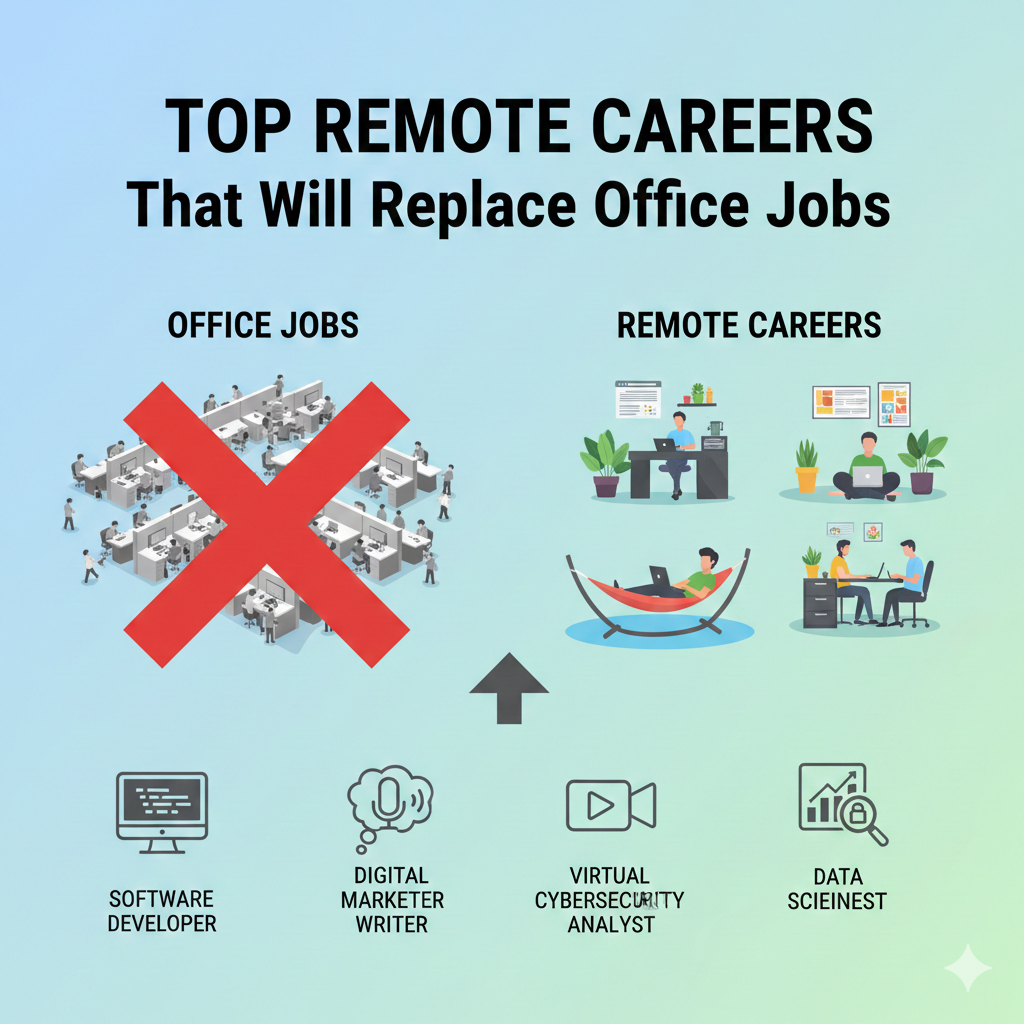
The workplace revolution is here, and it’s happening from home offices, coffee shops, and co-working spaces around the globe. Remote careers have transformed from a rare perk to a fundamental shift in how we work, offering professionals unprecedented freedom and flexibility. As traditional office jobs continue to evolve, certain remote careers are emerging as the future of work, providing lucrative opportunities without the daily commute.
Whether you’re looking to escape the 9-to-5 grind, seeking better work-life balance, or simply wanting to explore new professional horizons, understanding which remote careers are gaining momentum can help you make informed decisions about your future. Let’s explore the top opportunities that are reshaping the employment landscape.
1. Software Development and Engineering
Software developers have been at the forefront of the remote work revolution, and for good reason. The nature of coding and software engineering makes it perfectly suited for remote work, requiring only a computer and internet connection to build applications, websites, and systems that power our digital world.
Remote careers in software development span multiple specializations. Front-end developers create user interfaces and experiences, while back-end developers build the server-side logic that powers applications. Full-stack developers handle both, making them highly versatile professionals in the remote job market. Mobile app developers, DevOps engineers, and quality assurance testers also find abundant remote opportunities.
The demand for software developers continues to surge as every industry undergoes digital transformation. Companies have realized that talented developers can contribute effectively from anywhere, leading to a highly competitive job market where remote positions often offer six-figure salaries. Many tech companies, including major players like GitLab, Automattic, and Zapier, operate as fully remote organizations.
Learning programming languages like Python, JavaScript, Java, or specialized frameworks like React or Node.js opens doors to countless remote opportunities. Bootcamps, online courses, and self-study paths make this career accessible to career changers. The strong earning potential, combined with the ability to work from anywhere, makes software development one of the most attractive remote careers available today.
2. Digital Marketing and SEO Specialists
Digital marketing has exploded as businesses recognize the importance of online presence. Remote careers in this field encompass various specializations, from search engine optimization (SEO) to social media management, content marketing, email campaigns, and paid advertising.
SEO specialists optimize websites to rank higher in search engines, driving organic traffic to businesses. This role requires analytical skills, understanding of search algorithms, and content strategy expertise. Social media managers craft brand voices across platforms, engage communities, and run campaigns that convert followers into customers. Content marketers develop strategies that attract and retain audiences through valuable, relevant content.
The beauty of digital marketing as a remote career lies in its measurability. Results are tracked through analytics, making location irrelevant to performance. Marketing teams collaborate seamlessly using project management tools, video conferences, and shared dashboards. Many marketers work as freelancers or consultants, managing multiple clients simultaneously.
Entry into digital marketing doesn’t necessarily require formal education, though certifications from Google, HubSpot, or Facebook can boost credibility. Starting a blog, managing social media for local businesses, or taking on freelance projects builds the portfolio needed to land remote positions. With businesses of all sizes investing heavily in digital presence, skilled marketers command excellent salaries while enjoying complete location independence.
3. Content Creation and Copywriting
Words have power, especially in the digital economy. Content creators and copywriters form the backbone of online communication, crafting everything from blog posts and articles to website copy, email campaigns, and video scripts. These remote careers thrive on creativity, research skills, and the ability to engage audiences through compelling narratives.
Copywriters specialize in persuasive writing that drives action—sales pages, advertisements, landing pages, and product descriptions. Content writers focus on informative, educational material that builds authority and trust. Technical writers translate complex information into clear documentation, while ghostwriters pen books, speeches, and thought leadership pieces for executives and entrepreneurs.
The remote nature of writing careers is almost inherent. Writers need quiet spaces for concentration, access to research materials, and the freedom to work during their most creative hours. Many successful remote writers build careers as freelancers, establishing relationships with multiple clients or agencies. Others join content marketing teams at companies that value remote work.
Breaking into remote writing requires building a strong portfolio. Starting a personal blog, contributing to Medium or LinkedIn, offering services on platforms like Upwork or Contently, or pitching guest posts to websites establishes credibility. Specializing in lucrative niches like technology, finance, healthcare, or SaaS products can significantly increase earning potential. Experienced copywriters and content strategists often earn substantial incomes while working from anywhere with internet access.
4. Graphic Design and Creative Services
Visual communication dominates our digital world, creating enormous demand for talented graphic designers. Remote careers in design encompass brand identity creation, logo design, marketing materials, user interface (UI) design, infographics, social media graphics, and illustration.
Designers working remotely leverage powerful software like Adobe Creative Suite, Figma, Sketch, and Canva to create stunning visuals for clients worldwide. The digital nature of design files makes collaboration seamless—designers can share work instantly, receive feedback through comments, and iterate quickly without geographical constraints.
UI/UX designers focus specifically on digital products, crafting interfaces that are both beautiful and functional. This specialization combines design skills with understanding of user psychology and behavior. Motion graphics designers and video editors add another dimension, creating animated content for marketing, entertainment, and education.
Building a remote design career starts with developing a compelling portfolio showcasing diverse projects and styles. Platforms like Behance, Dribbble, and personal websites display work to potential clients and employers. Freelance designers often find work through sites like 99designs, Upwork, or Fiverr, while others secure positions with remote-friendly agencies or in-house teams. The creative freedom, flexible schedules, and ability to serve clients globally make graphic design one of the most fulfilling remote careers.
5. Virtual Assistance and Administrative Support
Virtual assistants (VAs) provide administrative, technical, or creative support to clients from remote locations. This broad category encompasses countless specialized remote careers, from general administrative tasks to specialized services like podcast editing, calendar management, customer service, or bookkeeping.
The rise of solopreneurs, small businesses, and busy executives has created massive demand for skilled virtual assistants. Clients need help managing email, scheduling appointments, organizing travel, conducting research, managing social media accounts, and handling countless other tasks that keep businesses running smoothly. Virtual assistants allow entrepreneurs to focus on high-value activities while delegating routine tasks.
Successful VAs often specialize in specific industries or services. Executive assistants support C-level professionals with sophisticated scheduling and communication needs. E-commerce VAs help online store owners manage inventory, customer service, and order fulfillment. Real estate VAs handle transaction coordination, client communication, and marketing tasks.
Starting a VA career requires minimal investment—primarily time to develop skills and systems. Many VAs begin with general administrative services and gradually specialize as they discover their strengths and market needs. Platforms like Belay, Time Etc, and Fancy Hands connect VAs with clients, while others build independent businesses. The flexibility, variety of work, and low barrier to entry make virtual assistance an accessible entry point into remote careers.
6. Online Teaching and E-Learning
Education has undergone radical transformation, with online learning becoming mainstream. Remote careers in education range from teaching English as a second language to creating online courses, tutoring students worldwide, and developing educational content for digital platforms.
English teachers find abundant opportunities with companies like VIPKid, Cambly, and iTalki, teaching students in Asia, South America, and elsewhere. These positions typically require a bachelor’s degree and TEFL certification but offer flexible schedules and decent pay. Subject matter experts teach specialized topics through platforms like Udemy, Teachable, or Skillshare, creating courses that generate passive income.
Online tutors help students with specific subjects, test preparation, or academic skills. Platforms like Tutor.com, Chegg, and Wyzant connect tutors with students seeking personalized assistance. Corporate trainers develop and deliver professional development programs for businesses transitioning to remote workforces.
The most successful remote educators combine subject expertise with understanding of online pedagogy. Creating engaging virtual learning experiences requires different skills than traditional classroom teaching. Video production, community management, and digital marketing complement teaching abilities. The satisfaction of impacting students globally, combined with schedule flexibility and income potential, makes online education among the most rewarding remote careers.
7. Data Analysis and Business Intelligence
Data drives modern business decisions, creating high demand for analysts who can transform raw information into actionable insights. Remote careers in data analysis include business analysts, data scientists, market researchers, and business intelligence specialists who help organizations understand trends, optimize operations, and predict outcomes.
Data analysts collect, process, and perform statistical analyses on large datasets. They create visualizations and reports that help stakeholders understand complex information. Business intelligence specialists build dashboards and reporting systems that provide real-time insights into business performance. Data scientists apply advanced statistical methods and machine learning to solve complex problems and predict future trends.
The technical nature of data work makes it highly suitable for remote positions. Analysts access data systems through secure connections, collaborate through project management tools, and present findings via video conferences. Many analysts work independently, diving deep into datasets without the distractions of office environments.
Breaking into remote data careers typically requires strong quantitative skills, proficiency with tools like SQL, Python, R, and visualization platforms like Tableau or Power BI. Many successful analysts hold degrees in mathematics, statistics, computer science, or economics, though bootcamps and online courses provide alternative paths. The combination of strong demand, excellent compensation, and intellectual challenge makes data analysis attractive for those seeking meaningful remote careers.
8. Project Management and Consulting
Project managers orchestrate complex initiatives, coordinating teams, resources, and timelines to deliver results. As companies embrace distributed teams, remote careers in project management have flourished, proving that effective leadership doesn’t require physical presence.
Remote project managers utilize collaboration tools like Asana, Trello, Jira, and Monday.com to track progress, assign tasks, and maintain transparency. They conduct stand-up meetings via video, manage budgets through cloud-based systems, and communicate constantly through Slack or Microsoft Teams. Agile methodologies and scrum frameworks adapt particularly well to remote environments.
Specialized project managers focus on specific industries or methodologies. IT project managers oversee software development and technology implementations. Construction project managers coordinate building projects remotely by leveraging BIM software and digital documentation. Marketing project managers orchestrate campaigns across distributed creative teams.
Consultants provide expert advice on business strategy, operations, technology implementation, and organizational change. Remote consulting has exploded as businesses seek specialized expertise without geographical limitations. Independent consultants build practices serving clients globally, while consulting firms staff remote teams that travel only when absolutely necessary. The strategic nature of consulting work, combined with premium compensation and diverse challenges, attracts experienced professionals to these remote careers.
9. Customer Success and Support
Customer-facing roles have transformed dramatically with remote work adoption. Remote careers in customer success and support include customer service representatives, technical support specialists, account managers, and customer success managers who ensure clients achieve desired outcomes with products or services.
Customer service representatives handle inquiries, troubleshoot problems, and provide assistance through phone, email, chat, or social media. Technical support specialists help users resolve software or hardware issues, often requiring specialized product knowledge. Customer success managers take proactive approaches, working closely with clients to drive adoption, satisfaction, and retention.
Companies have discovered that remote customer support often delivers better results than traditional call centers. Agents working from home report higher job satisfaction, lower stress, and better work-life balance, translating to improved customer interactions. Technology enables sophisticated routing, monitoring, and collaboration regardless of agent location.
Breaking into remote customer support typically requires strong communication skills, patience, empathy, and problem-solving abilities. Technical support roles may require specific certifications or product knowledge. Many companies provide comprehensive training for remote support teams. Career progression leads to team leadership, training roles, or specialization in customer success management. The abundance of entry-level positions makes customer support an accessible gateway to remote careers.
10. Accounting and Financial Services
Financial professionals have successfully transitioned to remote work, handling bookkeeping, tax preparation, financial planning, and accounting services from home offices. Remote careers in finance leverage cloud-based accounting software, secure document sharing, and video conferencing to serve clients effectively.
Bookkeepers manage day-to-day financial transactions, reconcile accounts, and prepare financial statements for businesses. Many work with multiple small business clients, providing part-time services through platforms like Bench or QuickBooks Live. Tax preparers and CPAs serve individuals and businesses remotely, especially during tax season when demand surges.
Financial advisors and planners have embraced remote consulting, meeting clients via video to discuss investments, retirement planning, and wealth management. Cryptocurrency and blockchain analysts represent emerging specializations in the financial sector, analyzing digital assets and advising on investment strategies.
Remote financial careers typically require certifications like CPA, CFA, CFP, or bookkeeping credentials. Strong attention to detail, ethical standards, and understanding of financial regulations are essential. The trust-based nature of financial services initially created skepticism about remote work, but technology has proven that professional relationships can flourish virtually. High earning potential and respected professional standing make financial services appealing remote careers.
11. Human Resources and Recruitment
HR professionals have adapted remarkably well to remote work, managing recruitment, employee relations, benefits administration, and organizational development from distributed locations. Remote careers in human resources span talent acquisition, HR generalists, compensation specialists, and training coordinators.
Remote recruiters source candidates, conduct video interviews, coordinate hiring processes, and onboard new employees entirely virtually. The shift to remote work has actually expanded recruiter effectiveness, allowing them to tap into global talent pools without geographical constraints. HR generalists handle employee relations, policy development, and compliance matters through digital platforms.
People operations specialists focus on employee experience, engagement, and culture in remote or hybrid environments. They develop programs that connect distributed teams, maintain company values, and support employee well-being. Benefits administrators help employees navigate health insurance, retirement plans, and other perks through digital tools.
Successful remote HR professionals combine traditional human resources knowledge with understanding of remote work dynamics. They leverage applicant tracking systems, HRIS platforms, and communication tools to maintain human connection despite physical distance. Professional certifications like SHRM-CP or PHR enhance credibility. The central role HR plays in organizational success, combined with growing recognition of remote work’s permanence, ensures strong demand for these remote careers.
12. Sales and Business Development
Sales professionals have proven that building relationships and closing deals doesn’t require in-person meetings. Remote careers in sales include inside sales representatives, account executives, business development representatives, and sales managers who drive revenue from anywhere.
Inside sales reps contact prospects through phone, email, and video, qualifying leads and moving them through sales pipelines. Account executives manage larger deals, often in B2B contexts, conducting product demonstrations and negotiations virtually. Business development representatives focus on outbound prospecting, identifying opportunities and setting appointments for sales teams.
Remote sales careers leverage CRM systems like Salesforce, HubSpot, or Pipedrive to track interactions, manage pipelines, and forecast revenue. Video conferencing platforms enable face-to-face connections with prospects. Sales enablement tools provide resources, training, and content that support remote selling.
Successful remote salespeople possess strong communication skills, resilience, and self-motivation. Many work on commission structures, creating unlimited earning potential for high performers. The digital transformation of sales processes has made remote positions the norm rather than exception. Companies hiring remote sales teams access broader talent pools while reducing overhead costs. For driven individuals who thrive on achievement and independence, sales represents one of the most lucrative remote careers.
Conclusion: Embracing the Future of Work
The landscape of professional work has fundamentally changed, and remote careers are leading this transformation. The opportunities explored here represent just a fraction of the positions that have successfully transitioned away from traditional offices. Technology, changing attitudes, and proven productivity gains ensure that remote work will continue expanding across industries.
Choosing among remote careers requires honest self-assessment. Remote work demands discipline, self-motivation, and excellent communication skills. Success requires creating effective home office setups, establishing boundaries between work and personal life, and developing strategies for staying connected with colleagues and clients.
The benefits, however, are substantial. Remote careers eliminate commutes, reduce expenses, provide schedule flexibility, and enable geographic freedom. They open opportunities for those who need flexible arrangements due to family responsibilities, health conditions, or lifestyle preferences. They allow living in lower-cost areas while earning salaries from higher-cost markets.
For those considering transitions into remote careers, the path forward involves identifying transferable skills, investing in necessary training or certifications, building portfolios or online presence, and networking within remote work communities. Start by exploring which of these careers aligns with your interests, strengths, and circumstances.
The future of work isn’t coming—it’s already here. Remote careers offer paths to professional fulfillment, financial success, and personal freedom that previous generations couldn’t imagine. Whether you’re just starting your career journey or seeking a change after years in traditional employment, the remote work revolution provides unprecedented opportunities to design work around your life rather than the reverse.
Also read this:
Careers That Will Boom in 2026 (Start Preparing Now)