
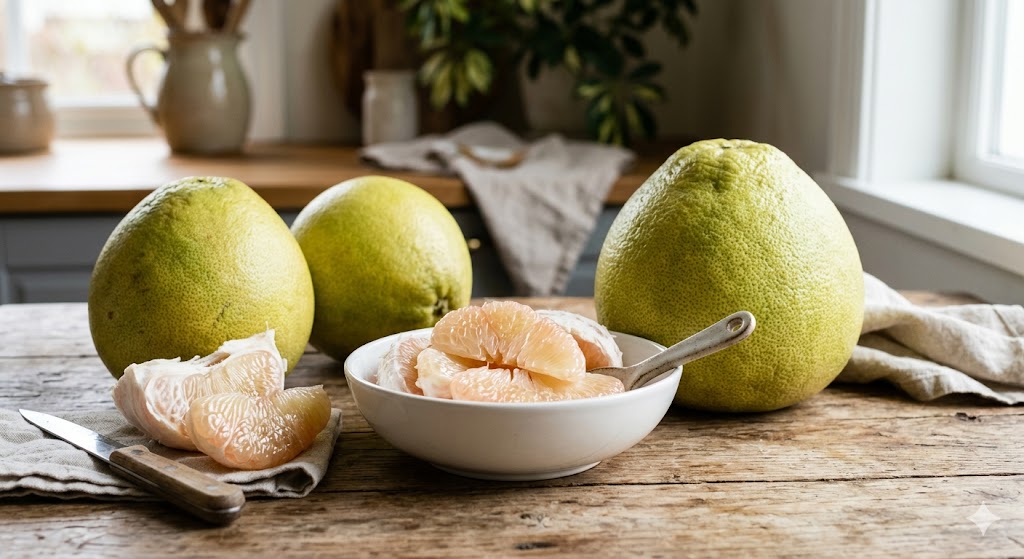
You’ve probably seen pomelo in grocery stores, Asian markets, or trendy fruit bowls, but many people still confuse it with grapefruit. What most readers miss is that pomelo is sweeter, less bitter, incredibly nutritious, and surprisingly easy to prepare at home. In this guide, you’ll learn exactly what pomelo is, its health benefits, nutrition facts, how to peel and eat it, and the best ways to add it to your daily diet.
Key Takeaways
- Pomelo is the largest citrus fruit and is naturally sweeter and less bitter than grapefruit.
- Pomelo nutrition includes vitamin C, antioxidants, potassium, and dietary fiber that support immune and digestive health.
- Pomelo calories are relatively low, making the fruit suitable for balanced and weight-management-friendly diets.
- Fresh pomelo works well in salads, smoothies, fruit bowls, desserts, and healthy snack combinations.
- Ripe pomelo feels heavy for its size and usually has slightly soft skin with a citrus aroma.
- Pomelo vs grapefruit differences include sweetness, bitterness, size, and citrus intensity.
- Stored pomelo can remain fresh for several weeks when refrigerated correctly.
What Is Pomelo and Why Is It Different From Grapefruit?
Pomelo is the largest citrus fruit and is naturally sweeter and less bitter than grapefruit. Pomelo fruit belongs to the citrus family and is considered one of the original citrus species from which grapefruit was later developed. The fruit has thick green or yellow skin, pale pink or yellow flesh, and a mild citrus flavor.
First, pomelo originated in Southeast Asia and has been cultivated for centuries in countries like Thailand, China, Vietnam, and Malaysia. Today, it is widely enjoyed around the world because of its refreshing taste and impressive nutritional profile. According to the Food and Agriculture Organization, global citrus consumption continues to rise due to increased interest in healthy eating — Source: FAO, 2024.
Moreover, pomelo differs from grapefruit in several important ways. Grapefruit is usually smaller, more tart, and noticeably bitter. Pomelo, by comparison, tastes sweeter and milder with less acidic sharpness. This makes pomelo especially appealing for beginners who dislike the bitterness commonly associated with grapefruit.
What Does Pomelo Taste Like?
Pomelo taste is sweet, mildly tangy, and less acidic than grapefruit. The fruit has juicy flesh with a soft but slightly firm texture that separates into large citrus segments.
For example, many people describe pomelo as a mix between grapefruit, orange, and mandarin. Some varieties taste floral and honey-like, while others have refreshing tropical notes. Unlike grapefruit, pomelo usually lacks the strong bitter aftertaste.
What Does Pomelo Look Like?
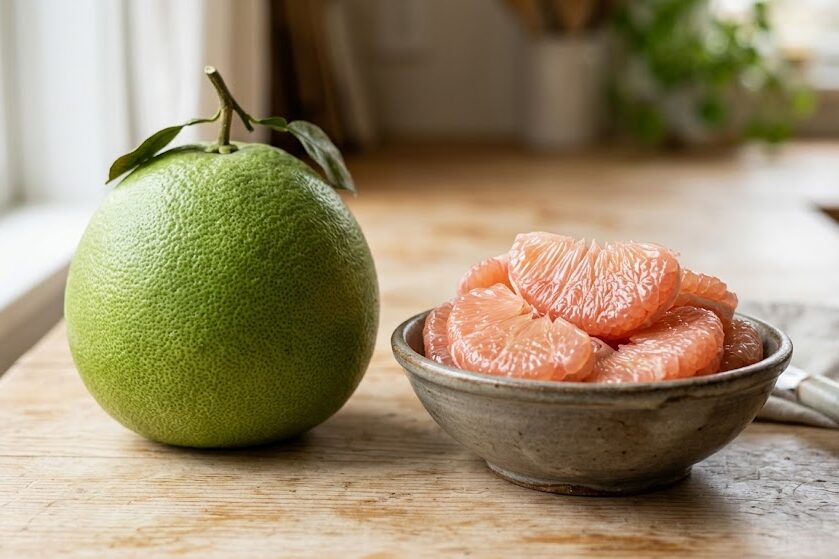
Pomelo fruit is large, round or pear-shaped, with thick skin and pale citrus flesh. Some pomelos can grow larger than a cantaloupe and weigh several pounds.
Additionally, the rind is much thicker than oranges or grapefruit. Inside, the flesh may appear pale yellow, pink, or light coral depending on the variety. The thick peel protects the fruit and helps it stay fresh longer than many other citrus fruits.
Why Does Pomelo Matter for Healthy Eating?
Pomelo matters because it provides vitamin C, antioxidants, hydration, and fiber in a naturally low-calorie fruit. Many health-conscious consumers include pomelo in wellness-focused diets because it supports multiple areas of health without adding excessive calories.
First, pomelo contains high levels of vitamin C, which helps support immune function and collagen production. One peeled pomelo can provide more than 100% of the daily recommended vitamin C intake for many adults — Source: USDA FoodData Central, 2025.
Second, pomelo contains antioxidants that help protect cells from oxidative stress. Antioxidants from citrus fruits are associated with heart and skin health support. For example, citrus flavonoids have been studied for their anti-inflammatory potential — Source: Harvard T.H. Chan School of Public Health, 2024.
Additionally, pomelo contains large amounts of water and dietary fiber. This combination can help support fullness and hydration throughout the day. By eating water-rich fruits, you can naturally increase satiety while controlling calorie intake.
How Many Calories Are in Pomelo?
Pomelo is a low-calorie fruit commonly included in weight-loss-friendly diets because of its high water and fiber content. A typical serving of pomelo contains relatively few calories compared to processed snacks and sugary desserts.
Pomelo Nutrition Facts
Pomelo nutrition includes carbohydrates, fiber, vitamin C, potassium, and antioxidants with very little fat. The fruit is naturally nutrient-dense and hydrating.
| Nutrient (Per 100g) | Pomelo | Grapefruit | Orange |
|---|---|---|---|
| Calories | 38 | 42 | 47 |
| Carbohydrates | 9.6g | 10.7g | 11.8g |
| Fiber | 1g | 1.6g | 2.4g |
| Vitamin C | 61mg | 31mg | 53mg |
| Sugar | 7g | 7g | 9g |
— Source: USDA FoodData Central, 2025
Furthermore, pomelo contains beneficial micronutrients like potassium and small amounts of magnesium. Potassium helps regulate fluid balance and supports healthy blood pressure levels.
Is Pomelo Good for Weight Loss?
Pomelo can support weight management because it is filling, hydrating, and relatively low in calories. Many people use pomelo as a substitute for high-calorie desserts or processed snacks.
For example, eating pomelo segments with yogurt or nuts can create a satisfying snack with fiber and protein. This combination can reduce cravings while helping you stay fuller longer.
Additionally, research shows that higher fruit intake is associated with healthier body weight and improved dietary quality — Source: CDC Nutrition Report, 2024.
What Are the Health Benefits of Pomelo?
Pomelo health benefits include immune support, digestive health improvement, heart support, hydration, and antioxidant protection. The fruit delivers several nutrients that contribute to overall wellness.
Pomelo Supports Immune Health
Pomelo contains vitamin C, antioxidants, and dietary fiber that support immune and digestive health. Vitamin C helps the body produce immune cells and supports tissue repair.
For example, one large pomelo can contain more vitamin C than several oranges combined. This makes the fruit especially popular during cold and flu seasons.
Pomelo Supports Digestive Health
Pomelo fiber helps support digestion and gut health. Fiber can help maintain regular bowel movements and improve fullness after meals.
Moreover, citrus fruits contain compounds that may support beneficial gut bacteria. By increasing fiber intake gradually, you can improve digestive comfort over time.
Pomelo May Support Heart Health
Pomelo contains antioxidants and potassium that may contribute to cardiovascular wellness. Potassium helps maintain healthy blood pressure, while antioxidants help combat oxidative stress.
Research suggests diets rich in citrus fruits are linked to improved heart-health markers — Source: American Heart Association, 2024.
Pomelo Benefits for Skin and Hydration
Pomelo hydration and vitamin C content can help support healthy skin. Vitamin C contributes to collagen formation, which supports skin elasticity and repair.
For example, many smoothie recipes combine pomelo with berries and yogurt to create nutrient-rich skin-supportive snacks.
How Do You Peel and Eat Pomelo Properly?
Peeling pomelo involves removing the thick rind first and separating the flesh into individual segments. The process is easier than most beginners expect.
Step-by-Step Guide to Peeling Pomelo
- Cut off the top of the pomelo.
- Score the rind vertically into sections.
- Pull away the thick peel using your hands.
- Remove the white pith surrounding the fruit.
- Separate the segments gently.
- Peel away the membrane if desired.
For example, many people chill pomelo before serving because cold citrus tastes extra refreshing.

Common Mistakes When Cutting Pomelo
Many people waste pomelo flesh by not removing the thick pith correctly. The white inner layer is edible but often too bitter or chewy for most recipes.
Additionally, some beginners try peeling pomelo like an orange. Because the rind is much thicker, using a knife to score the peel first works better.
Best Ways to Eat Pomelo
Fresh pomelo can be eaten raw, added to salads, blended into smoothies, or used in citrus-based desserts. The fruit works well in both sweet and savory dishes.
Popular serving ideas include:
- Pomelo with Greek yogurt
- Citrus fruit bowls
- Pomelo avocado salads
- Pomelo smoothies
- Chilled pomelo dessert cups
- Pomelo salsa for grilled fish
What Are the Best Pomelo Recipes to Try at Home?
Pomelo recipes often combine the fruit with fresh herbs, yogurt, tropical fruits, or light dressings. The fruit’s mild sweetness pairs well with many healthy ingredients.
Pomelo Salad Ideas
Pomelo salad is a refreshing dish commonly used in Asian cuisine. Thai-inspired pomelo salads often combine herbs, peanuts, lime juice, and chili.
For example, combining pomelo with cucumber, mint, shrimp, and lime dressing creates a balanced sweet-and-savory meal.
Pomelo Smoothie Recipes
Pomelo smoothies are hydrating drinks that blend citrus flavor with creamy ingredients. Many recipes combine pomelo with banana, mango, or pineapple.
Simple pomelo smoothie recipe:
- 1 cup pomelo segments
- 1 frozen banana
- ½ cup Greek yogurt
- ½ cup coconut water
- Ice cubes
Blend until smooth and serve chilled.
Healthy Breakfast Bowls Using Pomelo
Pomelo breakfast bowls combine fiber-rich fruits with protein and healthy fats. These bowls work well for quick morning meals.
For example, you can combine pomelo, oats, chia seeds, berries, and almond butter for a balanced breakfast.
healthy breakfast bowl recipes

How Do You Choose a Sweet and Ripe Pomelo?
A ripe pomelo feels heavy for its size and has slightly soft, fragrant skin. Weight and aroma are usually the best indicators of freshness.
Signs of a Sweet Pomelo
Sweet pomelo usually has smooth skin, a citrus aroma, and balanced firmness. Extremely hard or dry fruit may be underripe.
Additionally, yellow or pale green skin is normal depending on the variety. Color alone does not always determine ripeness.
What Is the Best Season to Buy Pomelo?
Pomelo season typically peaks during late fall through early spring. Many grocery stores stock fresh pomelo between November and March.
Asian markets often carry several varieties during peak citrus season.
How Should You Store Pomelo for Maximum Freshness?
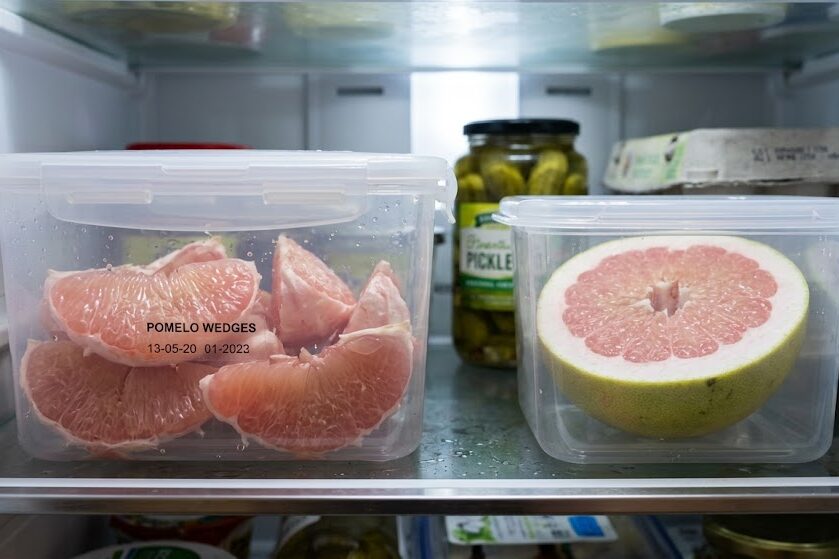
Whole pomelo can stay fresh for weeks when refrigerated or stored in a cool environment. Once cut, the fruit should be refrigerated in an airtight container.
Storage guidelines:
- Whole pomelo: 2-4 weeks refrigerated
- Cut pomelo: 3-5 days refrigerated
- Frozen pomelo: Up to 3 months
What Is the Difference Between Pomelo and Grapefruit?
Pomelo and grapefruit differ in sweetness, size, bitterness, and overall citrus intensity. Although related, the fruits have distinct flavors and nutritional profiles.
Pomelo vs Grapefruit Taste Comparison
Pomelo tastes sweeter and milder, while grapefruit tastes tangier and more bitter. This difference makes pomelo easier for some beginners to enjoy.
Pomelo vs Grapefruit Nutrition Comparison
Both fruits provide vitamin C and hydration, but pomelo often contains slightly fewer calories and less bitterness. Grapefruit may contain more tart compounds and stronger citrus oils.
Which Fruit Is Better for Specific Diets?
Pomelo works well for people seeking milder citrus flavor, while grapefruit appeals to those who enjoy tartness. Both fruits can fit into balanced diets.
Importantly, grapefruit may interact with certain medications. Pomelo can potentially have similar interactions in some cases, so individuals taking medications should consult healthcare professionals before frequent consumption — Source: FDA Citrus Interaction Advisory, 2025.
What Tools and Practical Applications Make Pomelo Easier to Use?
Simple kitchen tools can make pomelo preparation faster and less messy. Many beginners find the fruit easier to enjoy with proper preparation methods.
Useful tools include:
- Citrus peelers
- Sharp paring knives
- Airtight storage containers
- Smoothie blenders
- Citrus segment bowls

Healthy Meal Prep Ideas Using Pomelo
Pomelo meal prep helps you add healthy fruit options into busy routines. Preparing segments in advance makes healthy snacking easier.
For example, you can store peeled pomelo in containers alongside nuts, yogurt, or berries for quick snacks during the week.
Pomelo Snack Pairings
Pomelo pairs well with protein-rich and fiber-rich foods. Balanced pairings can help improve fullness and nutritional quality.
Healthy combinations include:
- Pomelo with cottage cheese
- Pomelo and almonds
- Pomelo with dark chocolate
- Pomelo and chia pudding
- Pomelo with mint and cucumber
What’s Next: Adding Pomelo to Your Diet
Adding pomelo to your diet works best when you start with simple recipes and consistent habits. The fruit is versatile enough for snacks, breakfasts, salads, and smoothies.
First, try eating pomelo raw two or three times weekly. This approach helps you become familiar with the flavor and texture before experimenting with recipes.
Second, combine pomelo with other nutrient-dense foods. Pairing pomelo with berries, yogurt, oats, chia seeds, or leafy greens can increase overall nutrient intake.
Additionally, creating healthy fruit-based routines can improve long-term eating habits. For example, replacing sugary desserts with fresh citrus bowls may reduce excess calorie intake over time.
Conclusion
Pomelo is a nutritious citrus fruit that combines sweet flavor, hydration, fiber, and vitamin C in a naturally low-calorie package. From salads and smoothies to breakfast bowls and healthy snacks, pomelo fits easily into many eating styles.
Moreover, pomelo stands out because of its mild sweetness and versatility. Whether you want better hydration, more antioxidants, or healthier snack options, this fruit offers practical benefits without complicated preparation.
As you explore healthier eating habits, pomelo can become an easy and refreshing addition to your weekly routine. Try experimenting with new recipes, pairings, and meal ideas to discover your favorite way to enjoy this unique citrus fruit.
FAQ
What is a Pomelo?
Pomelo is a large citrus fruit with a thick rind and sweet, mildly tangy flesh, often considered the ancestor of grapefruit.
What does pomelo taste like?
Pomelo tastes sweet and refreshing with a mild citrus flavor that is less bitter than grapefruit.
Is pomelo healthy?
Yes, pomelo is rich in vitamin C, antioxidants, fiber, and nutrients that support immunity and overall health.
Can pomelo help with weight loss?
Yes, pomelo is low in calories and high in fiber, which can help keep you full longer.
How do you eat pomelo?
Cut through the thick peel, remove the segments, and eat the juicy flesh fresh or add it to salads and desserts.
What are the nutritional benefits of pomelo?
Pomelo provides vitamin C, potassium, antioxidants, and fiber that support heart health and digestion.
Is pomelo the same as grapefruit?
No, pomelo is larger, sweeter, and less bitter than grapefruit.
Can you eat pomelo every day?
Yes, eating pomelo in moderation can be part of a healthy diet.
What recipes can you make with pomelo?
Pomelo can be used in salads, smoothies, fruit bowls, desserts, and refreshing drinks.
Does pomelo boost immunity?
Yes, its high vitamin C and antioxidant content may help strengthen the immune system.
Written by: Suraj | 5+ years of blogging experience specializing in nutrition, wellness, healthy recipes, and SEO-focused food content.
Reviewed by: Editorial Wellness Review Team | Expertise in nutrition research, healthy eating trends, and evidence-based wellness content.
Disclaimer: This article was initially drafted using AI assistance. However, the content has undergone thorough revisions, editing, and fact-checking by human editors and subject matter experts to ensure accuracy.